
Review · CHIANG MAI
Full-Day Chiang Rai Temples Tour from Chiang Mai with Hot Spring
Chiang Rai’s White, Blue, and Red Temples make this one of northern Thailand’s most striking day trips. You’ll see mirrored white architecture, bold blue interiors, and a towering Guan Yin statue, with a short hot spring stop on the way.
I like the small maximum group of 12, which should make hotel pickup and temple visits easier to manage. I also like the cultural focus: guide Goi, praised for explaining Buddhism as well as the temples, can help turn an attractive photo stop into a more meaningful visit.
The catch is the clock. This is an approximately 11-hour day, much of it spent getting between Chiang Mai and Chiang Rai. Visit times may also be shorter than the advertised hour at some temples, and an extra village stop can change the pace.
Key points to know before booking
- Three very different temples: Wat Rong Khun is white and reflective, Wat Rong Seur Ten is richly blue, and Wat Huay Pla Kang centers on a giant Guan Yin figure.
- Mae Khachan Hot Spring is a viewing stop: You’ll see steam rising from mineral-rich water, but this is not a swimming visit.
- A 7:00 am start protects your sightseeing time: Chiang Rai is far enough from Chiang Mai that an early departure matters.
- Small-group transport is part of the value: The tour accepts no more than 12 people and includes pickup and drop-off in Chiang Mai.
- Guide quality can shape the day: Goi is specifically praised for clear explanations of the temples and Buddhism.
- Expect a full day, not a relaxed outing: The listed temple visits total about three hours, with the rest taken up by driving and stops.
Why these Chiang Rai temples are worth the long ride
Chiang Rai is not a quick side trip from Chiang Mai. The distance makes this a commitment, but the three temples give you a clear reason to make it. Each has a different look, mood, and religious setting, so the day does not feel like a repeat of the same building in three colors.
The White Temple is the visual star. The Blue Temple gives you a stronger sense of interior decoration and color. Wat Huay Pla Kang offers a large religious complex, a towering Guan Yin image, and views across the surrounding countryside.
I like that the tour includes all three. If you drove yourself, you would need to plan the route, parking, opening arrangements, and return trip. Here, you can focus on looking out the window and listening to explanations while someone else handles the long road.
Still, keep your expectations realistic. This is not a slow temple retreat. You leave Chiang Mai at 7:00 am, visit several major sights, and return after a long day. If you prefer lingering over lunch, wandering without a schedule, or taking dozens of careful photographs at each stop, an overnight stay in Chiang Rai would suit you better.
More Hot Spring Day Trips in Thailand
- Chiang Mai: Chiang Rai Famous Temples & Hot Springs Day Trip
★ 4.0 · 129 reviews - Chiang Mai Pai Full Day Sai Ngam Hot Spring, Pai Canyon, White Buddha, Santichon
★ 4.0 · 3 reviews - Ao Nang: Hot Springs, Emerald Pool, and Tiger Cave Day Tour
★ 4.2 · 90 reviews
Mae Khachan Hot Spring: a brief first stop
The first stop is Mae Khachan Hot Spring, reached before the White Temple. You get about 15 minutes here, with admission included.
This is a quick chance to see steam rising from mineral-rich water. It helps break up the drive and gives you a glimpse of northern Thailand beyond its temples. The stop is more about observing the hot spring than using it.
Do not pack your expectations around swimming. The information for this tour clearly says the spring is not a swimming location. If you are hoping for a soak, this stop may feel too brief and limited. If you treat it as a leg stretch and a look at a natural feature, it fits the day well.
Because the visit is short, stay aware of the meeting time. A 15-minute stop can pass quickly, especially if you want photographs or need to use nearby facilities.
Wat Rong Khun and its white mirrored surfaces
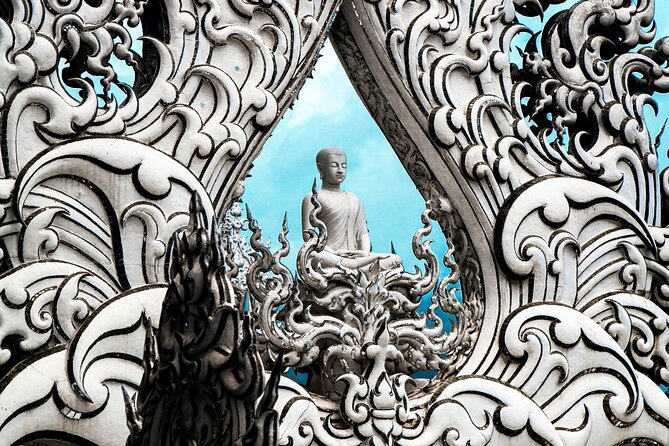
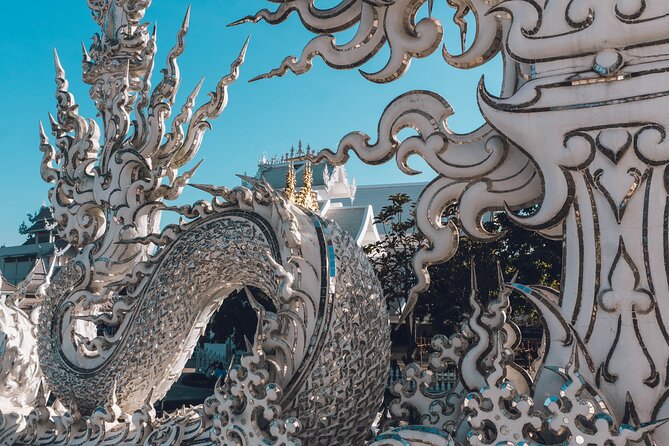
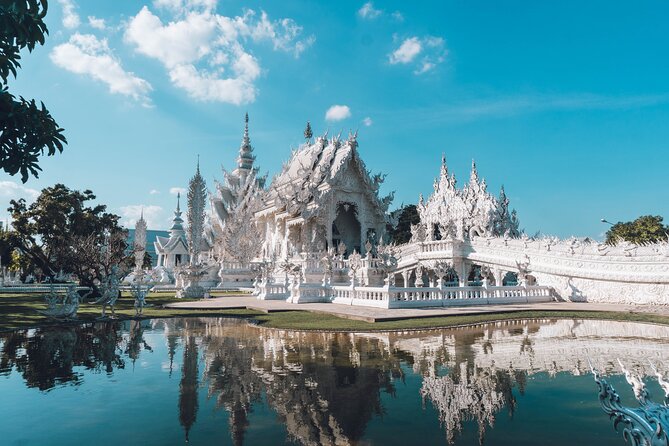
Wat Rong Khun, usually called the White Temple, receives about one hour on this tour. Its white plaster and mirrored glass give the buildings a sharp, almost otherworldly appearance, especially when reflected in the surrounding pond.
The reflection is one of the details worth making time for. Do not rush straight from the vehicle to the main building and back. Use part of your visit to look at the temple from a little distance, where the white surfaces and water work together.
This is the stop most likely to stay in your memory. One five-star account said photographs do not fully convey the effect of seeing it in person. That is a useful warning for your camera habits: take pictures, but give yourself time to look without a screen in front of you.
The temple’s unusual design is also a good reason to listen to your guide. A guide can explain what you are seeing and place the building within Thai Buddhist culture rather than leaving you with only an impressive photograph.
The hour may be enough for a focused visit, but not for every corner at a leisurely pace. A low-rated account said actual temple time was shorter than the stated schedule. Since the day may include an additional village stop, your guide’s timing can matter. If Wat Rong Khun is your priority, ask at the start how long you will have at each temple.
Wat Rong Seur Ten, Chiang Rai’s Blue Temple
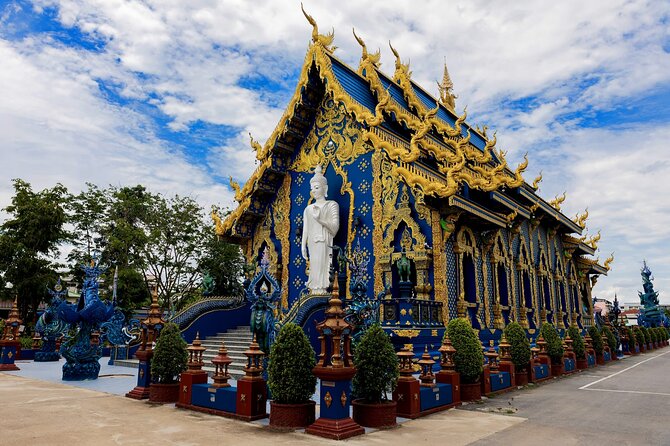
The second temple is Wat Rong Seur Ten, known as the Blue Temple. The name refers to the tiger, and the site was built where an older temple once stood. The place was also associated with stories of roaming tigers, which gives the visit a touch of local mystery.
The blue color changes the mood completely after the White Temple. Instead of pale reflective surfaces, you get strong blue tones and detailed decoration. It is a useful reminder that Thai religious architecture is not limited to one style or color scheme.
The scheduled visit is about one hour. Use it to notice the details rather than treating it as a fast photo stop. Your guide can help explain the religious meaning behind what you see, particularly if you have not visited Buddhist temples before.
Temple etiquette still matters. Dress respectfully and follow any instructions about where you may walk or stand. The supplied information does not specify a detailed dress code, so your safest choice is modest clothing that covers shoulders and knees.
The Blue Temple is also a good point to compare the three stops. The White Temple feels more reflective and sculptural. The Blue Temple puts color and decoration at the center. Wat Huay Pla Kang shifts the focus again toward a huge figure and broad views.
More Hot Spring Day Trips in Chiang Mai:
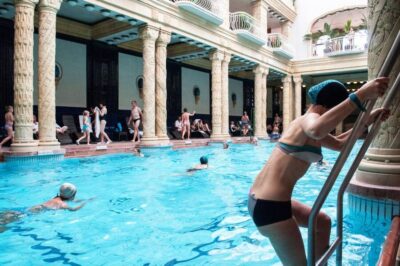
- Budapest: Full-Day Gellért Spa Ticket
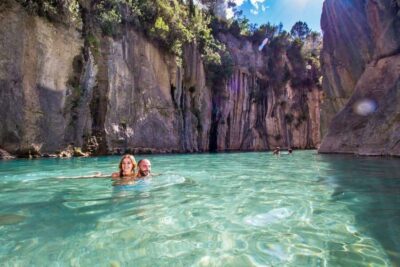
★ 4.2 · 3,340 reviews - From Valencia: Full Day Tour to Montanejos & Thermal Pools
★ 4.7 · 2,452 reviews - From Thessaloniki: Pozar Thermal Baths and Edessa Day Trip
★ 4.7 · 1,243 reviews - Krakow to Zakopane: Funicular, Tasting and Thermal Baths Day Trip
★ 5.0 · 1,189 reviews
Wat Huay Pla Kang and the towering Guan Yin
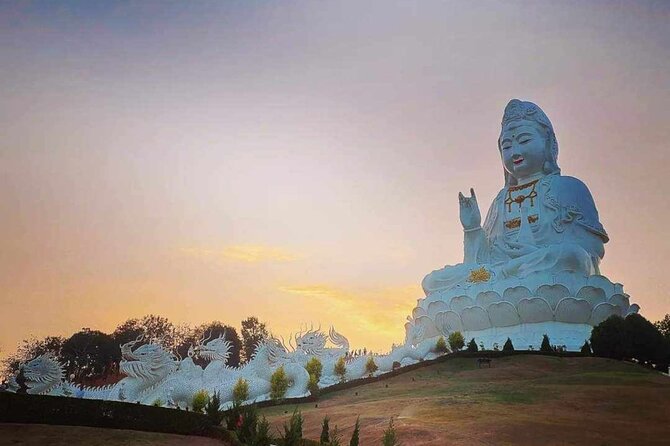
The final major stop is Wat Huay Pla Kang, also known as the Big Buddha. The main sight is a towering statue of Guan Yin, the Goddess of Mercy. The temple also gives you panoramic views of the surrounding countryside.
The name Big Buddha can be a little misleading because the central figure is Guan Yin, not the Buddha. That distinction is exactly the kind of point a good guide can clarify. If Goi leads your group, you can expect explanations about Buddhism and the temples, based on the specific praise given to her guiding.
Plan on about one hour here. The size of the statue makes it easy to appreciate from a distance, but the views give you another reason to look outward. After the detailed surfaces of the first two temples, this stop offers a broader sense of place.
Your experience may depend on how the day is running. If driving delays occur or another stop has been added, the final temple may receive less time than expected. Keep that in mind if you want to spend a long period taking photographs from different angles.
What the 11-hour schedule feels like
The tour begins at 7:00 am and lasts about 11 hours. That makes it a serious day trip, not a casual morning excursion.
The early start is useful. Chiang Rai requires enough road time that leaving later would put pressure on the temple visits. You should be ready for a full day before booking, especially if you are already tired from other excursions in Chiang Mai.
The listed stops account for 15 minutes at the hot spring and roughly an hour at each of the three temples. The remaining hours are needed for road travel, pickup and drop-off, and any other parts of the day. One poor account reported shorter temple visits and an unplanned village stop, so you should allow for some schedule variation.
That does not automatically make the tour poor value. It does mean you should not read every time on the schedule as a guarantee of a full hour on site. Ask your guide early if the route has changed and decide which temple matters most to you.
The small-group van and pickup service
Hotel pickup and drop-off in Chiang Mai make a major difference on a day this long. You do not need to arrange separate transport to a meeting point, and you can return to your accommodation after the final stop.
The group limit is 12 people. That is small enough to feel more manageable than a large coach outing, though the actual group size can be anywhere up to that limit. Pickup times can also vary by location, so keep the 7:00 am start in mind when planning your morning.
One positive account described the van as comfortable and the operation as well organized. That matters because road time forms a large part of this experience. A comfortable vehicle will not shorten the trip, but it can make the day easier.
The activity is listed as suitable for most people and is near public transportation, but the provided information does not give detailed mobility guidance. If you have specific access needs, confirm them before booking rather than assuming that every temple area or vehicle arrangement will suit you.
Is $52.63 good value?
At $52.63 per person, the tour offers a practical way to see three major Chiang Rai temples in one day. Hotel pickup and drop-off, admission to the listed stops, a guide, and transport are included. For you, the main value is convenience: the tour removes the need to organize a long route from Chiang Mai.
The price is strongest if you have limited time in northern Thailand. You can see the White, Blue, and Red Temple combination without paying for a separate hotel night in Chiang Rai.
The value is weaker if you dislike long drives or need generous time at each site. You are paying for access and organization, not a relaxed private itinerary. A private trip might give you more control, but it would likely cost more. This option works best when you want the key sights in one efficient day.
Admission is included at each listed stop, which makes budgeting simpler. The supplied details do not say that meals are included, so do not assume lunch is covered. Keep some money available for food and personal purchases.
The guide can make or break the cultural side
The strongest praise focuses on the guiding. Goi is singled out for explaining the temples and Buddhism in a clear way. Another positive account described the guide as kind and well informed, along with the comfortable van and organized schedule.
That matters because these temples can be easy to reduce to photo backdrops. A guide can explain why the sites matter, what you are looking at, and how Buddhist ideas connect to the buildings and statues.
The experience is not only about facts. Good explanations help you notice the difference between the White Temple’s mirrored surfaces, the Blue Temple’s decoration, and Guan Yin’s role at Wat Huay Pla Kang. If you want this cultural context, pay attention during the drive and at each stop.
Guide assignments can vary, so Goi is not guaranteed unless confirmed for your departure. Still, the praise gives you a useful standard: you should expect cultural explanation, not only directions to the next meeting point.
Who should book this day trip?
I would choose this tour if you are staying in Chiang Mai and want to see Chiang Rai’s headline temples without planning a separate overnight trip. It is also a good fit if you value pickup service, a capped group size, and a guide who can explain Thai religious traditions.
It suits first-time visitors who want an organized route. The three temples offer plenty of visual variety, and the short hot spring stop breaks up the journey.
I would hesitate if you need a slow pace, dislike long road journeys, or want to swim at the hot spring. I would also think twice if your main goal is detailed photography, since actual temple time may shift and can be shorter than the published estimates.
Free cancellation is available if you cancel at least 24 hours before the start time. Changes or cancellations inside that window are not accepted for a refund, and poor weather may lead to a different date or a full refund.
Should you book the Chiang Rai temples tour?
Book it if you want the simplest route to Chiang Rai’s three most distinctive temple stops from Chiang Mai. The White Temple, Blue Temple, and Guan Yin statue give you a strong visual and cultural mix for one day, while pickup and a small group reduce the usual transport hassle.
Skip it if you want unhurried visits or a flexible schedule. The long day and possible timing changes are real drawbacks. For most people with only a short stay in Chiang Mai, though, $52.63 is a fair price for seeing these major sights with transport, admission, and a guide included.
FAQ
What time does the tour start?
The tour starts at 7:00 am.
How long does the tour last?
The experience lasts approximately 11 hours.
Does the tour include hotel pickup and drop-off?
Yes. Hotel pickup and drop-off in Chiang Mai are included.
How many people can join the tour?
The tour has a maximum of 12 participants.
Is admission included at the stops?
Yes. Admission is included at Mae Khachan Hot Spring, Wat Rong Khun, Wat Rong Seur Ten, and Wat Huay Pla Kang.
Can I swim at Mae Khachan Hot Spring?
No. This stop is for observing the steam rising from the mineral-rich water, not for swimming.
Which temples are included?
The tour visits Wat Rong Khun, also called the White Temple, Wat Rong Seur Ten, also called the Blue Temple, and Wat Huay Pla Kang, also known as the Big Buddha.
Is the tour suitable for most people?
The activity information says most people can participate. It does not provide detailed accessibility information for every site or the vehicle.
What happens if bad weather cancels the tour?
You will be offered a different date or a full refund if the experience is canceled because of poor weather.
New places to soak around Chiang Mai
- White Temple, Black House Museum and Hot Spring Tour from Chiang Mai (SHA Plus)★ 3.5 · 3 reviews
- Chiang Rai Tour: Hot Spring,White Temple, Golden Triangle, Yao★ 4.0 · 3 reviews
- Lost in Chiang Mai – Secret Village, Hot Spring & Waterfall – A Cultural Therapy★ 5.0 · 3 reviews
- Extream Zipline @ Kingkong Smile and Dip in Hot Spring★ 5.0 · 9 reviews
- Private Chaing Dao Tour. Village, Cave,Hot springs, Sticky Waterfall.★ 5.0 · 4 reviews
- Chiang Mai Pai Full Day Sai Ngam Hot Spring, Pai Canyon, White Buddha, Santichon★ 4.0 · 3 reviews
- Mae Kampong Village, Hot Springs, Bor Sang Umbrellas Making Tour★ 5.0 · 6 reviews
- Chiang Rai One Day: White Temple, Golden Triangle, Akha Hilltribe★ 4.5 · 32 reviews
Hot Spring Day Trips: more water worth the trip.
From Valencia: Full Day Tour to Montanejos & Thermal Pools
Read our review →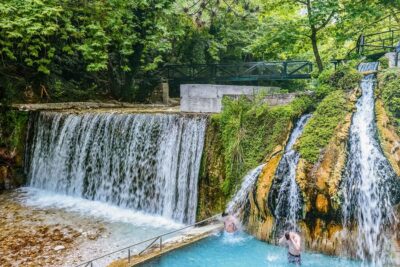
From Thessaloniki: Pozar Thermal Baths and Edessa Day Trip
Read our review →
Krakow to Zakopane: Funicular, Tasting and Thermal Baths Day Trip
Read our review →
Krakow: Zakopane Snowmobiles, Bonfire & Hot Springs Day Tour
Read our review →
From Reykjavik: Golden Circle and Secret Lagoon Day Trip
Read our review →
From Reykjavík: Volcanoes and Blue Lagoon Day Trip
Read our review →
Lake Vouliagmeni Thermal Spa And Temple Of Poseidon Private Full Day Tour
Read our review →Lists this soak appears on