
Review · INDONESIA
Mount Rinjani: 3D/2N Trekking to Summit, Lake and Hot Spring
Mount Rinjani gives you a full mountain story in three days: rainforest first, crater lake and hot spring next, then a pre-dawn push to the summit. You camp on the rim under the stars, wake above Lombok, and look across to Bali, Sumbawa, the 4 Gili Islands, and Segara Anak Lake.
I like the way the route combines three very different settings instead of sending you straight up and back. I also like that the guide and porters carry the tent and cooking gear, while food, drinking water, sleeping bags, mattresses, gloves, and trekking poles are included. The catch is serious: you may walk 8 to 9 hours a day on steep, slippery ground, and the summit section demands both stamina and patience.
Key points to know before booking
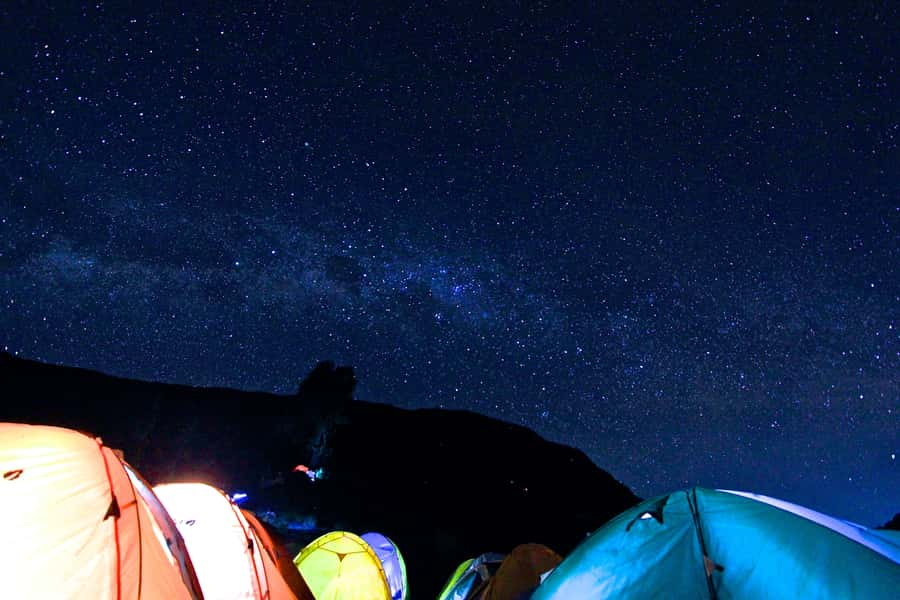
- Three days, two crater camps: You sleep at Senaru rim on the first night and Sembalun crater rim on the second.
- Segara Anak Lake and a hot spring: Day two gives you time by the lake and a soak in a nearby natural hot spring.
- A demanding summit morning: The final climb follows a light breakfast and ends with sunrise views across Lombok, Bali, Sumbawa, and the lake.
- Porters carry shared equipment: Your guide and porters handle the cooking gear and camping equipment, but an extra porter costs more if you want help with your own luggage.
- Water is supplied: The package includes 3 liters of mineral water per person per day, along with meals during the trek.
- The headline price is not the full cost: The $150 price does not include the national park entrance fee, which is listed separately at IDR 200,000 per person per day.
Why this Rinjani route is worth your time
Mount Rinjani is not a gentle nature walk. It is a long, physical route with steep climbs, loose or slippery sections, and cold nights on exposed crater rims. But it also gives you far more variety than a simple summit attempt.
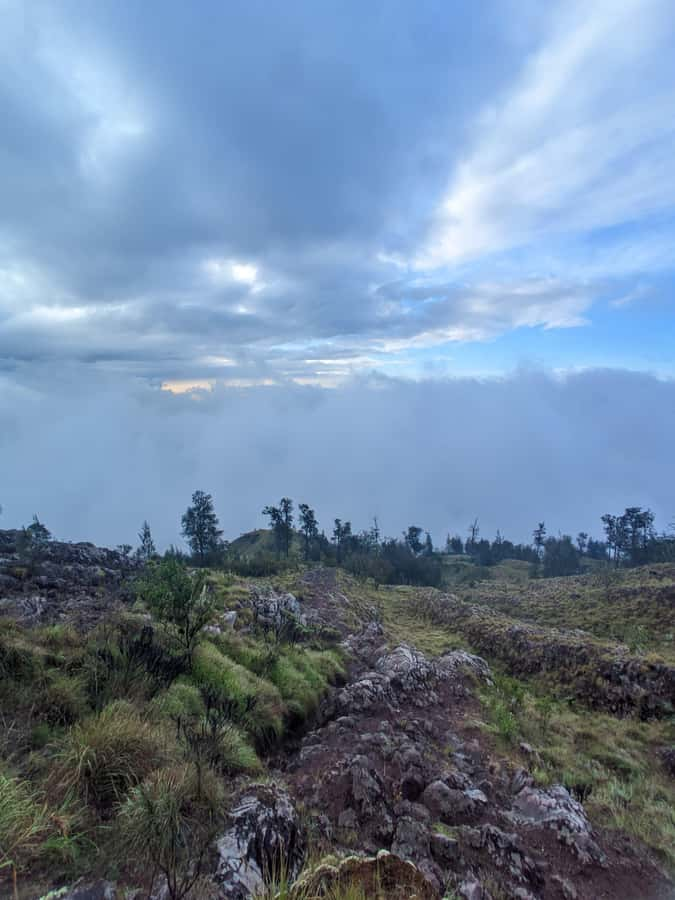
On the first day, you begin in or near Senaru Village after pickup from your hotel in Senaru or Sembalun. The trail enters dense tropical forest, with plantations and large trees along the way. The forest gives you shade early in the trek, which matters because the walking hours can add up quickly.
You might spot black or brown monkeys during breaks. Do not build your expectations around a wildlife encounter, but keep your eyes open when you stop for snacks. Those pauses are useful for more than animals. They give you a chance to drink, adjust your pack, and keep your pace steady before the trail becomes more demanding.
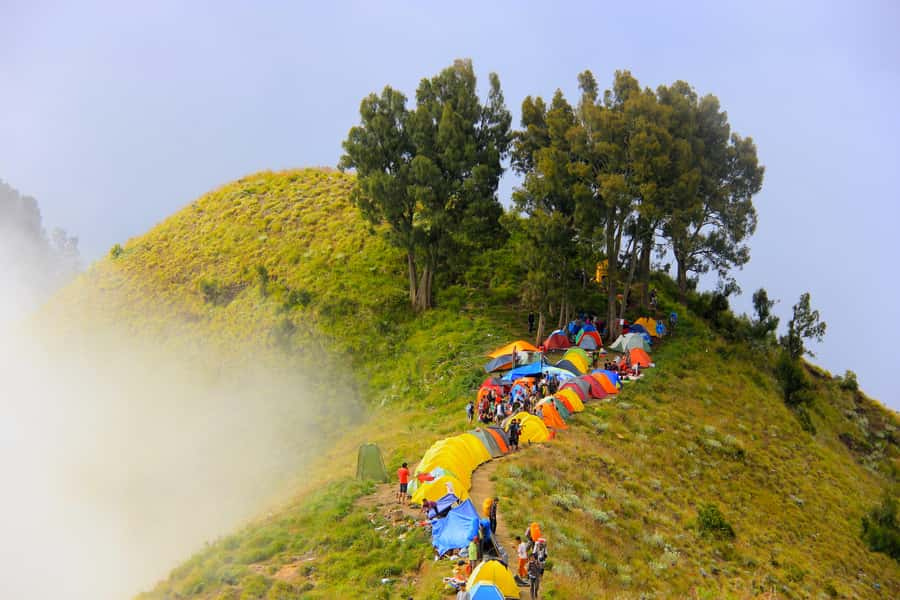
The first night is spent at Senaru crater rim. Here, the reward is not a soft bed or a hot shower. You set up camp, eat, and sleep under the stars. The open crater setting gives you the first major change from the forest, but you should be ready for basic camping conditions.
More Hot Spring Hiking Tours in Indonesia
- Bali: Mount Batur Sunrise Guided Hike and Natural Hot Spring
★ 4.8 · 9,284 reviews - Mount Batur Sunrise Hike and Natural Hot Spring Option
★ 5.0 · 1,927 reviews - Private Tour Mount Batur Sunrise Trekking and Natural Hot Spring
★ 5.0 · 431 reviews
Day one: Senaru Village to the crater rim
The opening day is a good test of whether you have packed sensibly. You need comfortable clothes, gloves, and proper trekking shoes. Long pants are not included, so bring your own. A small daily pack is also not supplied, and it is the practical way to carry water, a camera, snacks, and clothing layers while porters handle the shared camping equipment.
The trek begins with a steady walk through the forest. The route is scenic, but the main point of day one is progress, not quick sightseeing. You will be walking for hours, stopping for breaks and snacks, and gaining height toward the rim.
Your English-speaking guide is there to manage the route and the day’s rhythm. The porters carry cooking equipment and camping gear, which keeps your personal load more manageable. Still, do not confuse included porter support with a porter for every item you own. If you want someone to carry your luggage, you need to arrange and pay for an extra porter.
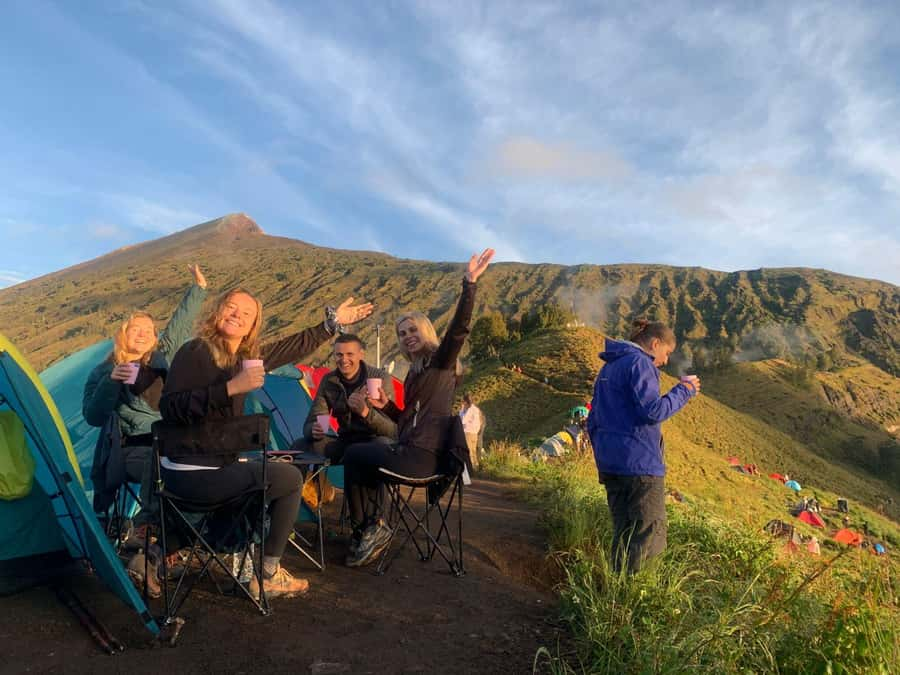
At Senaru rim, the forest falls away and the crater setting takes over. The campsite is basic, with a tent, mattress, sleeping bag, and toilet tent supplied. A night on the rim can be memorable, but it is not a luxury campsite. Bring warm layers and a head lamp or hand torch, since lighting is not included.
Day two: Segara Anak Lake and the hot spring
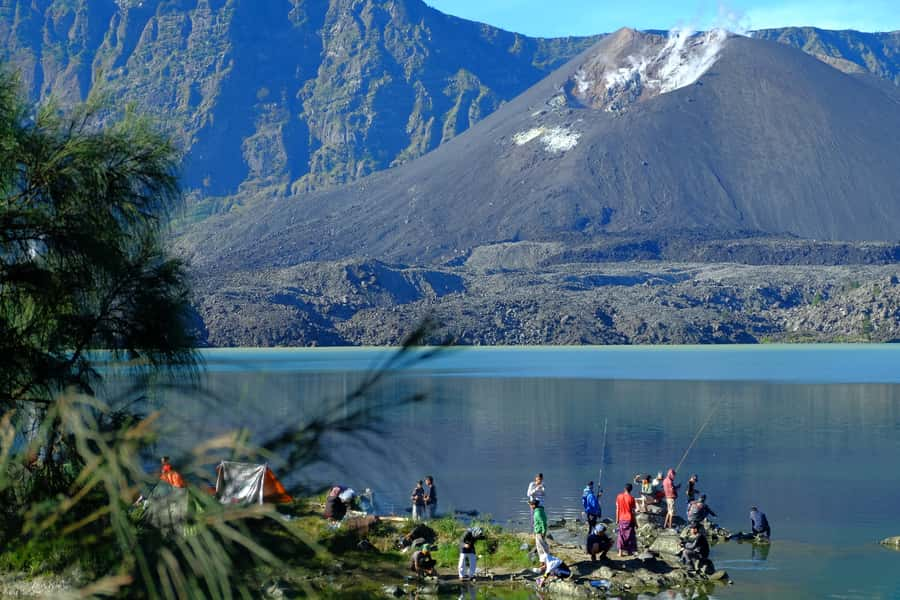
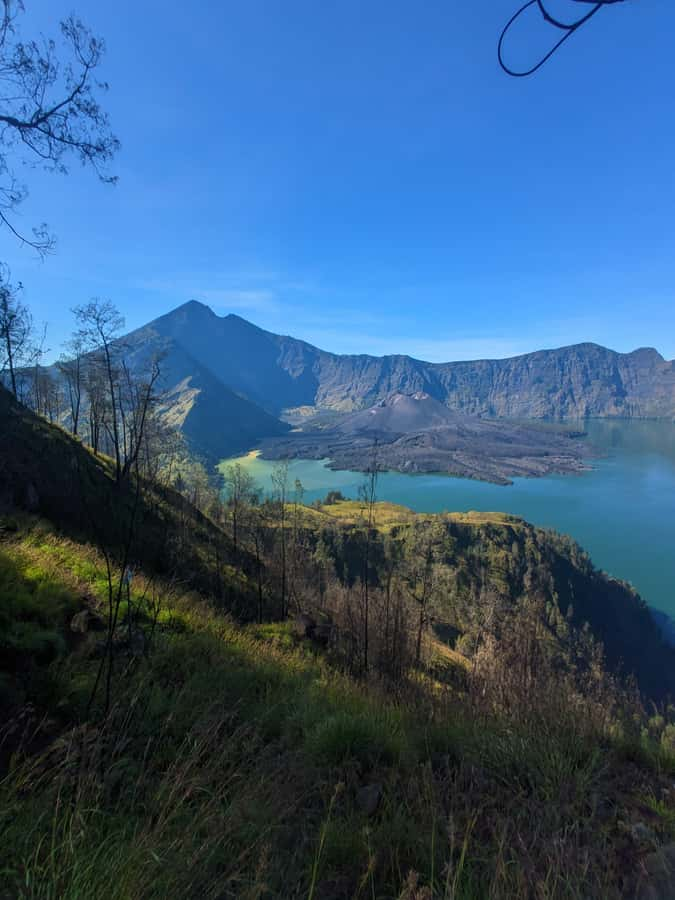
Day two is the route’s most varied section. After a hot breakfast, you descend to Segara Anak Lake, a striking volcanic lake set below the crater rim. The descent gives you a different view of Rinjani, but it also uses your legs before the next climb.
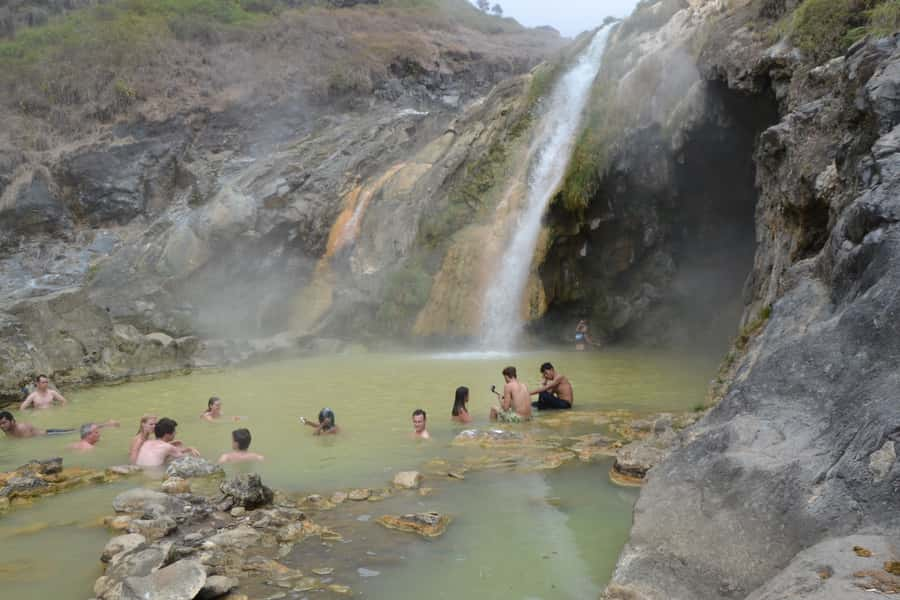
The lake is the right place to slow down. You have lunch beside the water, then visit a nearby natural hot spring. A soak can feel excellent after the first day and the descent, but do not treat it as a full recovery. You still need to climb to Sembalun crater rim afterward.
This part is where the itinerary earns its keep. You are not simply collecting a summit photograph. You see the forest, camp above the crater, walk down to the lake, rest in a hot spring, and then climb again toward a second rim. The route asks a lot from you, but the scenery changes often enough to keep the effort meaningful.
After lunch and the hot spring, you hike upward to Sembalun crater rim. The climb is a key drawback for anyone who imagined the hot spring as the end of the day. It is not. You need enough energy left for the ascent and for the summit push the next morning.
Camp overnight at Sembalun crater rim. This is another basic outdoor night, with the supplied tent, sleeping bag, mattress, toilet tent, and paper. The sunset is one of the day’s main rewards. Sit down, eat, and protect your energy rather than staying awake too long for photographs. The summit departure comes early.
Day three: the summit and sunrise
The final morning begins after a light breakfast. You then start the hardest and most famous section of the trek, the climb to the summit.
The route is described as steep, slippery, and challenging. You need a good level of fitness and the ability to walk long distances. A trekking pole can help with balance, especially on unstable sections, and one is included. Gloves are also supplied, but you may prefer to bring your own pair that fits well.
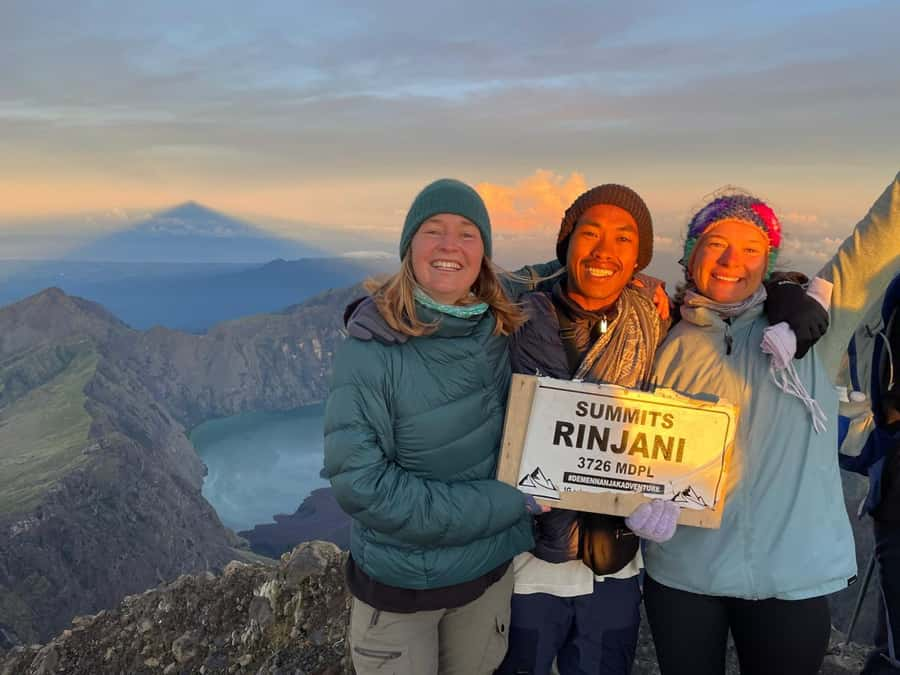
At the summit, the payoff is a broad set of views: Lombok Island, Bali, Mount Tambora in Sumbawa, and Segara Anak Lake. The sunrise is the focus, but the wider view is what makes the climb feel worthwhile. You may also see the 4 Gili Islands from high ground, depending on conditions.
The summit section is not the place to race. The climb follows a light breakfast and comes after two full days of walking, so your legs will already be tired. Keep your expectations practical. Weather and visibility can affect what you see, and no sunrise experience can guarantee clear views.
After the summit, you trek down to Sembalun crater for a hot breakfast and a rest. That meal comes at a useful point because the descent does not instantly make the day easy. You then continue toward Sembalun Village, where the trek ends back at the meeting point for your onward plans.
Same steam, a different pool:
- Bali/Mount Batur: Private Sunrise Jeep Tour & Hot Spring
★ 4.8 · 3,528 reviews - From Ubud: Mount Batur Shared Jeep Sunrise & Hot Spring Tour
★ 4.8 · 1,842 reviews - Mount Batur Sunrise Jeep Tour with Optional Activities
★ 5.0 · 1,555 reviews - Bali: Shared Mount Batur Jeep Sunrise with Hot Springs
★ 4.9 · 1,332 reviews
What the $150 price really covers
At $150 per person, this is a reasonable package for a three-day mountain trek, mainly because the cost includes the support system you need in a remote camping route. You receive an English-speaking guide, professional porters, meals, and drinking water. The team also supplies cooking gear, camping equipment, a tent, toilet tent, paper, sleeping bags, mattresses, gloves, and trekking poles.
Food is included during the trek, and the water allowance is 3 liters of mineral water per person per day. That is a helpful inclusion, since carrying enough water can add a lot of weight. You should still follow the guide’s advice about drinking and keep your own bottle or pack ready for easy access.
The price does not include the national park entrance charge. The supplied information lists this at IDR 200,000 per person per day, so for a three-day trek you should plan for the listed daily fee to apply across the trek. Confirm the current amount before booking, since park fees can change.
You also need to budget for the night before the trek if you are staying in Senaru or Sembalun. Accommodation there is not included. Transfers after the trek are not included either, so make sure you know how you will continue from the meeting point in Sembalun Village.
What to bring, and what not to expect
The essentials are practical rather than fancy. Bring a camera, comfortable clothes, climbing gear, trekking shoes, long pants, a small daily pack, and a head lamp or hand torch. The torch matters because it is not supplied and you will be moving around camp and starting the summit section in darkness or low light.
The listed items also include goggles and a downloaded app. A child safety seat appears in the supplied preparation notes, though it is not a substitute for the mountain requirements. The trek is not suitable for babies under one year, and the minimum participant age is 10.
Alcohol and drugs are not allowed. Alcoholic drinks are also not allowed in the vehicle. Baby strollers and baby carriages are not suitable for this route.
Do not pack as if the porters will carry every personal item. The porters carry cooking gear and camping equipment. Your own daily needs still belong in a small bag, and an extra porter is available for personal luggage at an additional cost.
Fitness, safety, and the real difficulty
The most important booking question is not the view. It is your fitness.
This program requires good health, long-distance walking ability, and comfort with steep, slippery ground. People who suffer from mountain sickness or have a fear of heights are not permitted to join. Those rules are worth taking seriously, not treating as paperwork.
The 8 to 9 hours of walking noted for the trek can include breaks, but it still means long days. Day two is especially demanding because you descend to the lake, enjoy the hot spring, then climb to Sembalun rim. Day three adds the summit before the descent to Sembalun Village.
If you are comfortable with long hikes and basic camping, the structure makes sense. If you rarely walk for several hours, the final summit climb may be too much. This is not the right choice for someone seeking a relaxed sightseeing trip with a short walk and a hotel bed each night.
The route can also be affected by weather. The supplied information includes a warning that trails were due to close from January through the end of March 2018 because of predicted extreme weather. That date is old, so you should check current availability and trail status before making plans.
Guide support and the group experience
The tour is operated by Rinjani Climbing Tour and uses an experienced English-speaking guide with professional porters. No individual guide names are provided, so you should not expect to select a named guide in advance based on the information available.
The guide matters most during the difficult sections. You need help with pacing, route decisions, camp timing, and the summit start. The porters matter in a different way: by carrying cooking and camping gear, they make it possible for you to focus more on walking and less on hauling a full load uphill.
The published rating is 4.8 from 12 reviews, with especially strong praise for the guide and porter support. One review also highlights that the 3-day, 2-night route can involve 8 to 9 hours of hiking per day. I would treat that as a useful warning, not a minor detail.
Cancellation and meeting details
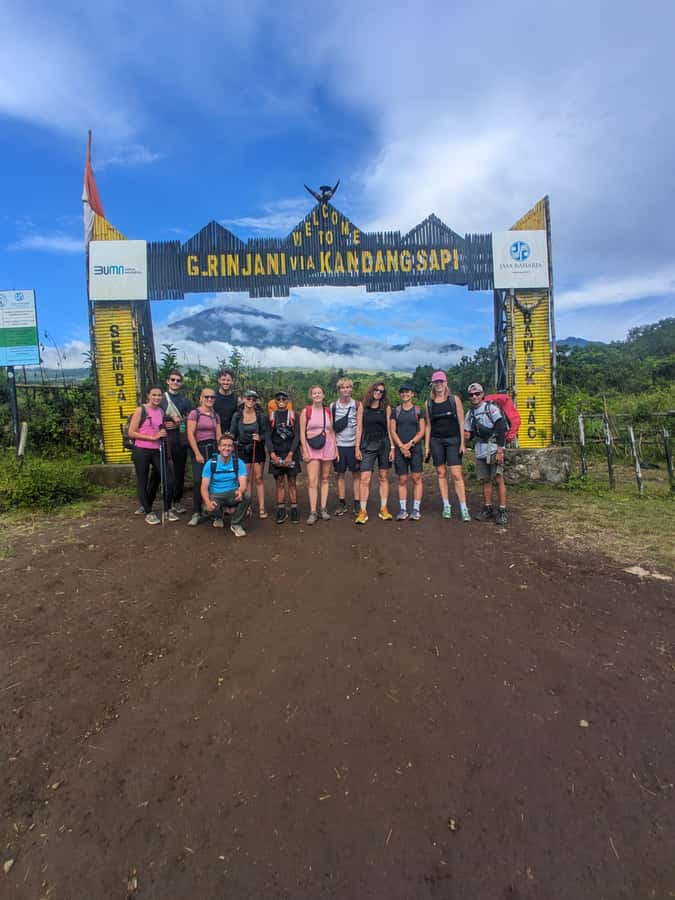
You meet for a briefing before the trek at the designated meeting point. Pickup is available from hotels in Senaru or Sembalun, and the trek ends back at the meeting point in Sembalun Village.
You can cancel up to 24 hours before the activity for a full refund, and the reserve-now, pay-later option keeps you from paying at the time of booking. Those terms are useful when weather and trail access can change, but they do not remove the need to check the current park situation.
Should you book this Rinjani trek?
Book it if you want a serious mountain adventure with a summit sunrise, crater lake, hot spring, rainforest, and two nights of camping in one route. The included guide, porters, meals, water, and equipment make the $150 starting price attractive, even after adding the park fee and other personal costs.
Skip it if you want easy walking, hotel comfort, a short summit route, or a flexible schedule. The 8 to 9-hour days, steep and slippery trail, early summit start, and basic camps are the real price of the views.
For fit hikers who accept those conditions, this is a strong way to experience Rinjani in three days. Pack light, bring a head lamp, arrange your onward transfer, and treat the summit as a bonus earned through the entire route rather than the only reason to go.
FAQ
How long is the Mount Rinjani trek?
The trek lasts 3 days and includes 2 nights of camping. Starting times depend on availability.
Where does the trek start and end?
Pickup is available from hotels in Senaru or Sembalun. The trek ends back at the meeting point after you reach Sembalun Village.
Is an English-speaking guide included?
Yes. The trek includes an experienced English-speaking guide and professional porters.
What equipment is included?
The package includes a tent, toilet tent and paper, sleeping bags, mattresses, gloves, and trekking poles. Cooking and camping equipment are carried by the porters.
Is food and water included?
Yes. Food and drinking water are included. The stated water allowance is 3 liters of mineral water per person per day.
Is the national park entrance fee included?
No. The stated entrance fee is IDR 200,000 per person per day.
Who should not join this trek?
The trek is not suitable for people with mountain sickness or height phobias. You must be in good health and able to walk long distances on a steep, slippery, challenging route. The minimum age is 10, and babies under one year are not suitable for the activity.
New places to soak around Indonesia
- Amazing Mount Batur Sunrise Trekking and Hot Spring★ 5.0 · 15 reviews
- Turtle Tales of Pulau Banyak★ 5.0 · 4 reviews
- 6 Day North Sumatra Jungles Orangutans Overnight trek and Hot Springs★ 5.0 · 2 reviews
- Mount Rinjani 3D2N Private Trek – Summit, Crater Rim & Hot Spring★ 5.0 · 13 reviews
- 3D/2N Rinjani trekking summit,lake and hot springs.★ 5.0 · 85 reviews
- Explore Mount Rinjani To Summit, Lake & Hot Spring (3D 2N)★ 5.0 · 19 reviews
- Sunrise Jeep With Natural Hot Spring Tour Packages★ 5.0 · 3 reviews
- Mount Batur Sunrise Trekking with Natural Hot Springs★ 5.0 · 3 reviews
Hot Spring Hiking Tours: more water worth the trip.
Bali: Mount Batur Sunrise Guided Hike and Natural Hot Spring
Read our review →
Mount Batur Sunrise Hike and Natural Hot Spring Option
Read our review →
Private Tour Mount Batur Sunrise Trekking and Natural Hot Spring
Read our review →
Mount Batur Sunrise Hike, Breakfast & Hot Spring
Read our review →
National Park Hike & Finnish Smoke Sauna Experience with Campfire Lunch
Read our review →
Montanejos Hiking Tour & Thermal Pools from Valencia
Read our review →
Landmannalaugar Hike and Hot Springs from Reykjavik & Hella
Read our review →Lists this soak appears on