
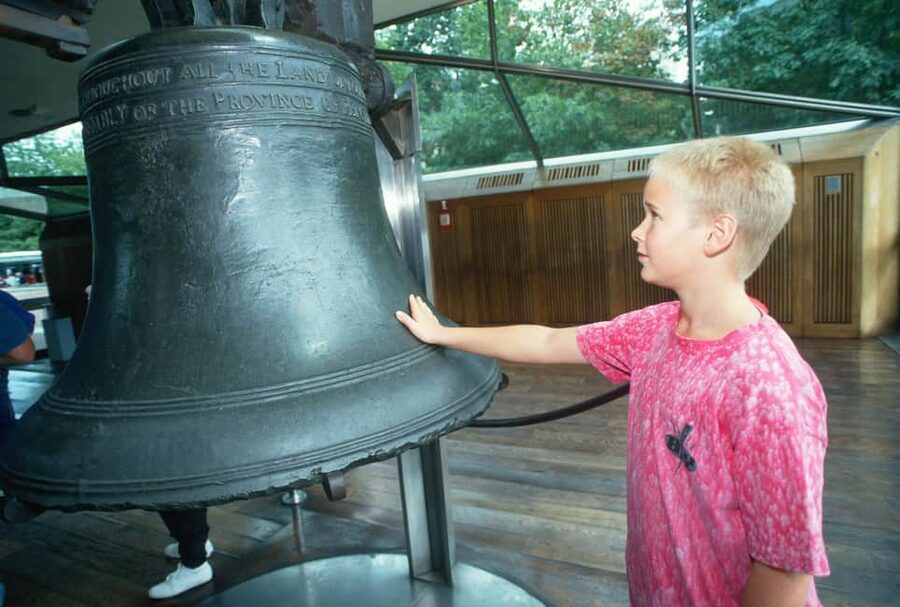
Review · USA
Philadelphia: Walking Tour of Colonial Nonsense
Philadelphia’s colonial center gets more interesting when the grand heroes lose their polished edges. This two-hour walk uses Benjamin Franklin, George Washington, Betsy Ross, and other familiar names to show you the people behind the patriotic stories, including their bad behavior, odd choices, and less flattering moments. The gossip is part of the history, not a distraction from it.
I like the route for two clear reasons. First, it links major sights such as the Liberty Bell and Independence Hall with smaller places like Franklin’s print shop and Elfreth’s Alley. Second, guides such as Fayge bring a personal, thoughtful tone to the walk, answering questions and adding stories about ordinary people around the Revolution. You get context, not just photo stops.
The main limitation is that this is an exterior-focused tour. You see the outside of the Liberty Bell area, Independence Hall, and Betsy Ross’s house, but admission to museums or attractions is not included. If you want interior visits, plan extra time and money before or after the walk.
Key points to know before you book

- The tour covers about 1.5 miles in two hours, so comfortable shoes matter.
- Fayge may lead the walk, bringing detailed stories and an easy, personal style to the colonial streets.
- The Liberty Bell and Independence Hall are photo stops, not included interior visits.
- Franklin Court, Carpenters’ Hall, Elfreth’s Alley, and Society Hill add variety beyond the usual headline sights.
- The tone is witty and candid, with Revolutionary gossip alongside standard historical facts.
- At $39 per person, the value comes from the guide’s storytelling and route, not from included admissions.
Why the colonial stories work better with a little sass

Philadelphia’s Old City is full of polished symbols. The Liberty Bell suggests national unity. Independence Hall recalls the Declaration of Independence and the Constitution. Benjamin Franklin appears as a printer, inventor, diplomat, and civic leader.
Those facts matter, but they can make the past feel too tidy. This walk asks you to look at the founders as actual people. They could be generous, clever, vain, funny, cruel, or simply wrong. That approach gives the major sights more texture.
I like this tone because it helps you remember the city. A list of dates fades quickly. A story about a founder behaving badly, a surprising personal connection, or a common myth that is not true tends to stay with you.
The tour also looks beyond famous men. It includes Betsy Ross, the working world around Franklin, the people connected to colonial streets, and the less polished side of public life. The focus is still on Philadelphia’s best-known figures, but the guide tries to show who else helped shape the city.
More warm water worth the trip in the USA:
- Northern Lights & Chena Hot Springs Tour
★ 4.5 · 1,278 reviews - Small-Group Zipline Tour in Hot Springs
★ 5.0 · 711 reviews - Hoover Dam & Hot Springs Kayak Tour with Lunch & Expert Guide
★ 5.0 · 318 reviews
Starting near Market Street and Franklin’s grave
The walk begins at 522 Arch Street, with the meeting instructions directing you to meet out front on Market Street. Since those details use two nearby street references, I would check the exact meeting point before setting off. That small bit of preparation can save you from starting the tour in a hurry.
The first stop is Benjamin Franklin’s grave, used as a short photo stop. It is a fitting opening because Franklin appears throughout the walk, not as a marble saint but as a complicated public figure with a busy private and professional life.
You should not expect a long cemetery visit here. The stop works more as an introduction to Franklin and to the tour’s main idea: familiar heroes become more interesting when you look past the official portrait.
The guide then leads you toward Philadelphia’s best-known symbols of the founding era. The pace is designed for a two-hour walk, so the emphasis is on explanation and movement rather than long periods at one site.
The Liberty Bell and Independence Hall from the outside
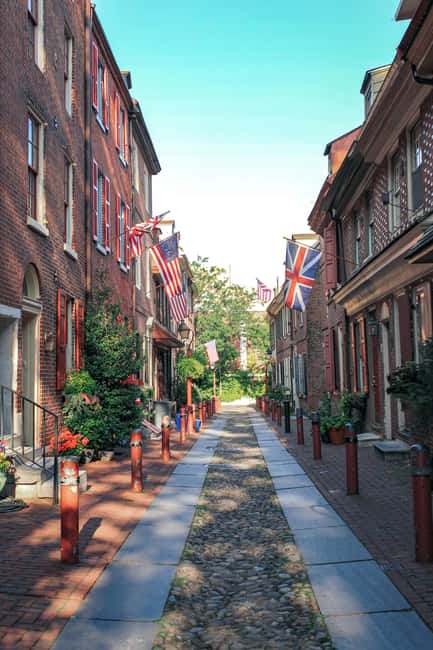
The Liberty Bell and Independence Hall are major photo stops. The guide explains their place in Philadelphia’s story and connects them to the people and events surrounding the Revolution.
This is useful if you are seeing the historic center for the first time. You get a clear introduction to the two sights without spending your entire morning inside one attraction. The guide can also place the popular stories in a wider setting, including the behind-the-scenes human behavior that rarely appears on the most formal plaques.
There is one important practical point: the tour visits the exteriors. It does not include entry to the Liberty Bell Center or Independence Hall, and it does not cover museum admission. If going inside is a priority, you need to arrange that separately.
That limitation can also be an advantage. You can use this walk to get your bearings, then decide which buildings deserve a longer visit. It is a sensible choice if your schedule is tight or if you want a guided overview before exploring on your own.
Washington Square Park and Philadelphia’s darker stories
Washington Square Park is one of William Penn’s five original public squares. Today, it offers lawns, trees, memorials, and a quiet pause from the surrounding streets.
The tour uses the park for stories that are less serene than the setting. That contrast is part of the appeal. A calm public space can carry difficult memories and uncomfortable local history, and the guide brings those details into the conversation without treating the park as a simple photo backdrop.
This is also one of the places where the tour’s title makes sense. You are not getting a solemn recital of famous events. You are getting stories about people, choices, rumors, and behavior, with enough humor to keep the walk moving.
I would expect this stop to suit anyone who likes history with a human angle. If you prefer only formal dates and military facts, some of the gossip may feel less essential. For most people, though, it makes the setting easier to remember.
Same steam, a different pool:
- Chena Hot Springs Day Tour
★ 5.0 · 264 reviews - Lake Yellowstone Half Day Kayak Tours Past Geothermal Features
★ 5.0 · 211 reviews - Glacier Hiking & Geothermal Cave Pools Tour
★ 5.0 · 139 reviews - Fun! Open-Air Banyan Tree Forest & Blowhole Sight-Seeing MauiTour
★ 5.0 · 137 reviews
Carpenters’ Hall and the First National Bank
The route continues through the colonial center to Carpenters’ Hall and the First National Bank. These stops add architectural and civic context to the better-known Liberty Bell area.
Carpenters’ Hall connects the walk to the working trades and the organizations that helped run colonial Philadelphia. It is a useful counterweight to stories focused only on presidents and generals. The city was built and managed by workers, printers, merchants, craftspeople, and public officials, not just the names found in schoolbooks.
The First National Bank adds another piece of Philadelphia’s early financial and political story. Even when you are mostly looking from the outside, these buildings help show how the new nation had to organize money, trade, government, and public life.
The guide’s role matters here. On your own, you might admire the façades and keep moving. With Fayge or another live guide, you get the connections between the buildings and the people who used them. The experience depends less on entering every site and more on making the street itself readable.
Franklin Court and the vanished print shop
Franklin Court is one of the strongest stops for understanding Benjamin Franklin’s working life. The route includes the site of Franklin’s print shop, linking his public reputation to the practical business that helped build it.
Franklin is often presented as an inventor and statesman. The print shop reminds you that he was also a publisher, printer, writer, and businessman. His influence spread through words and networks as much as through inventions.
This stop also fits the tour’s interest in mythmaking. Franklin’s public image is full of memorable stories, but a good guide can help you separate the image from the person. You will hear about what he did, what he did not do, and how later generations shaped the version of Franklin they wanted to remember.
Franklin Court is not treated as a stand-alone museum visit on this tour. The stop is part of the walking route, and the tour does not include attraction entry fees. If you want a more extended look at Franklin’s life, you may wish to return later with extra time.
Elfreth’s Alley and the everyday colonial city
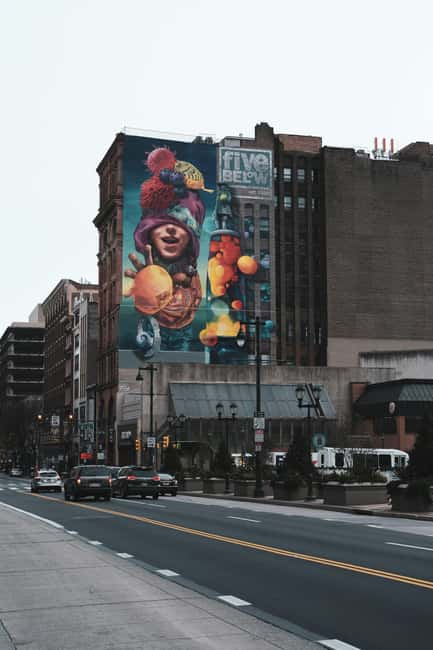
Elfreth’s Alley is the only listed visit on the route rather than simply a photo stop. Its narrow street and historic homes offer a change of scale after the grand public buildings around Independence Hall.
This is where Philadelphia’s colonial past can feel most physical. Instead of standing before a national symbol, you are walking along a residential street connected to everyday urban life. The setting helps you imagine a city made of homes, workshops, neighbors, errands, and close quarters.
The alley is also a good place to think about whose stories usually get preserved. Grand halls tell you about government and public events. A residential street points toward the people who lived, worked, and raised families around those events.
You should still keep expectations reasonable. The experience is a guided visit to the alley, not a full neighborhood museum tour. The value lies in the street itself and in the guide’s interpretation.
Betsy Ross’s house and the final stop
The route finishes at the Betsy Ross House, with the house listed as a photo stop. Betsy Ross is one of the most familiar names connected to the American flag, and her story is also a good example of how national legends develop.
The tour treats her house as part of the larger conversation about Philadelphia’s founders and the stories Americans choose to repeat. You will not simply hear a patriotic version of events. The guide places Ross within the colonial city and the period’s wider social world.
Since entry is not included, you should not assume that the walk provides an interior house tour. The final stop is best viewed as a chance to see the location, take photos, and finish with one of Philadelphia’s most recognizable names.
The published route ends at Betsy Ross House, while the meeting information also says the activity ends back at the meeting point. I would confirm the exact end point when you book, especially if you have a timed reservation afterward.
What the guide adds to the $39 price
The cost is $39 per person. For a two-hour walking tour, that is fair if you want a live guide to connect a large number of historic locations and tell stories you would not easily assemble on your own.
You are not paying for admissions, food, drinks, or transport. The price is mainly for the guide, the route, and the interpretation. If you planned to stroll through Old City alone and read plaques, you could spend less. You would also miss the organized flow and the personal stories.
The strongest value comes from the guide’s delivery. Fayge receives especially strong praise for being personable, answering many questions, and knowing detailed stories about both famous figures and regular people. That matters on a tour built around gossip and interpretation. The facts need a clear voice and a sense of humor.
The group size is not provided, so I would not book this expecting a private walk. The experience is in English, and you should be ready to keep moving for around 1.5 miles.
Free cancellation up to 24 hours before the start gives you some flexibility. You can also reserve now and pay later, which helps if your Philadelphia schedule is still shifting.
Who will get the most from this walk
I would recommend the tour to first-time Philadelphia visitors who want a clear introduction to Old City without committing to several indoor attractions. It also suits repeat visitors who already know the Liberty Bell and want more personality, gossip, and local context.
Families with older children may enjoy the lively stories, though the amount of walking and the mature side of some historical behavior may not suit very young children. History fans should appreciate the attention to myths, flawed founders, and people outside the usual heroic picture.
This is less suited to anyone who wants a quiet architectural walk or a detailed interior tour of Independence Hall. It is also not the best fit if you need a slow, low-walking activity, since the route covers about 1.5 miles in two hours.
Wear comfortable walking shoes and check the weather. Philadelphia’s historic center is best experienced on foot, but streets, weather, and the steady pace can make the walk tiring if you arrive unprepared. Contact the operator about accommodation requests before booking.
Should you book the Colonial Nonsense walk?
Book it if you want Philadelphia’s founding story told with humor, questions, and a willingness to challenge tidy legends. The route covers the essential sights, then adds Franklin Court, Carpenters’ Hall, Society Hill, and Elfreth’s Alley so the city feels broader than a row of famous buildings.
I especially like it for the balance between major landmarks and human stories. At $39, it offers good value when a guide such as Fayge is leading with the personal, detailed style described here.
Skip it if you need included admission to Independence Hall, the Liberty Bell Center, or Betsy Ross’s house. In that case, use this walk as an overview only, and budget separate visits. For an entertaining introduction to Philadelphia’s colonial center, though, this is a smart two-hour choice.
FAQ
How much does the tour cost?
The tour costs $39 per person.
How long does the walking tour last?
The tour lasts two hours.
How far will I walk?
You should be prepared to walk about 1.5 miles.
What language is the tour in?
The live guided tour is in English.
Where does the tour start?
The listed starting location is 522 Arch Street, and the meeting instructions say to meet out front on Market Street. Confirm the exact meeting spot before the tour.
Where does the tour finish?
The route lists the Betsy Ross House as the finish. The meeting information also says the activity ends back at the meeting point, so confirm the end location when booking.
Are the Liberty Bell and Independence Hall interiors included?
No. The tour visits their exteriors and uses them as photo stops. Entry fees to museums and attractions are not included.
Is food or transportation included?
No. Food, drinks, and transportation to and from the starting point are not included.
Can I cancel or pay later?
You can cancel up to 24 hours in advance for a full refund. The tour also offers reserve now and pay later booking.
New places to soak around the USA
- Natural Indoor Hot Spring and Spa Utah Crater Soak & Swim★ 4.5 · 20 reviews
- Philadelphia Walking Tour: A Lot of Colonial Nonsense★ 5.0 · 6 reviews
- Secret Desert Hot Springs: 4-Hour Private Adventure★ 5.0 · 2 reviews
- Spa Service: Hot Stone Body Massage with Private Sauna★ 4.5 · 13 reviews
- Hot Springs Hop Scavenger Hunt★ 4.5 · 10 reviews
- Hot Springs NP Self Guided Driving and Walking Audio Tour★ 4.5 · 14 reviews
- Yellowstone in a Day – Wildlife, Canyons, & Hot Springs★ 5.0 · 20 reviews
- Guided Yellowstone Hot Spring & Geyser Basin Tour★ 5.0 · 4 reviews
USA Hot Springs: more water worth the trip.
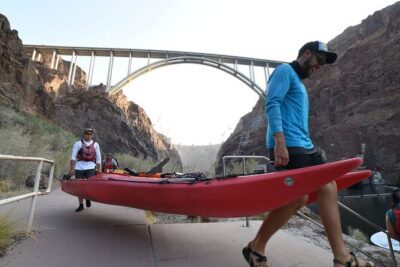
Hoover Dam & Hot Springs Kayak Tour with Lunch & Expert Guide
Read our review →


Fun! Open-Air Banyan Tree Forest & Blowhole Sight-Seeing MauiTour
Read our review →
Spectacular Hot Spring Experience with Northern Lights
Read our review →Lists this soak appears on