
Review · ITALY
National Roman Museum and Diocletian Thermal Baths Walking Tour
Rome’s ancient art is often overshadowed by the Colosseum and Forum. That is exactly why Palazzo Massimo alle Terme is such a good stop. Its galleries hold superb statues, mosaics, frescoes, coins, jewels, and the famous Boxer at Rest, yet the museum is usually far calmer than Rome’s headline sights.
I like the skip-the-line entry, which saves time at a museum entrance near Republic Square, and I like the chance to see Empress Livia’s beautifully decorated rooms rather than only the broken columns and ruins most people associate with ancient Rome. The private format also lets the guide set a sensible pace. The main drawback is the price, $323.21 per person, especially if you are visiting alone or as a couple.
Key points to know before booking
- Palazzo Massimo holds four floors of Roman art, covering the period from the 2nd century BC to the 5th century AD.
- The Boxer at Rest, Discus Thrower, and Sleeping Hermaphrodite are major sculpture highlights.
- The quieter setting helps you study the art, rather than rushing past it in a packed museum.
- The Baths of Diocletian add a huge architectural site, including rooms later incorporated into Michelangelo’s Basilica of Santa Maria degli Angeli.
- Private guiding gives you personal attention, with guides such as Matteo, Mattia, Serena, Damiano, and Giorgio receiving particularly warm praise for their subject knowledge and English.
- The full outing takes about two to three hours, and the Baths of Diocletian are included only if you select that option.
Why Palazzo Massimo makes a smart Rome museum choice
Palazzo Massimo is part of the National Roman Museum, but it does not have the instant name recognition of the Colosseum or Vatican Museums. That works in your favor. The galleries can feel pleasantly uncrowded, giving you time to look closely at floor mosaics, painted walls, bronze and marble sculpture, coins, and small gold objects.
I find this museum especially useful early in a Rome visit. After you have seen how Romans decorated a home, portrayed the human body, and used mythological images, the ruins around the city become easier to understand. A fragment of marble at the Forum is one thing. Seeing the polished sculpture and colorful wall painting that once filled Roman homes gives that fragment a much clearer setting.
The museum’s collection covers roughly seven centuries, from the 2nd century BC through the 5th century AD. That span lets you see changes in style, taste, and Roman power. Greek influence is present, but the collection also shows how Roman artists adapted older ideas for villas, public buildings, tombs, and imperial households.
This is not a quick photo stop. You will get more from it if you enjoy looking at art and listening to the stories behind it. If your ideal Rome day is only outdoor ruins and piazzas, two hours inside a museum may feel slow. For anyone curious about Roman art, the time is well spent.
More Thermal Bath Tours in Italy:
- Chianciano Terme: Theia Thermal Pools Entrance Ticket
★ 4.4 · 185 reviews - Milan: De Montel Thermal Bath Entrance Ticket
★ 4.6 · 89 reviews - Montecatini Terme Thermal Pool Entrance Ticket
★ 3.5 · 84 reviews
Meeting near Republic Square
The tour begins at the Palazzo Massimo ticket office at Largo di Villa Peretti 2, only a short distance from Republic Square. You meet the guide there, collect the skip-the-line ticket, and go inside together.
The exact meeting point matters because Rome has several museums and archaeological sites with similar names. Give yourself enough time to find Largo di Villa Peretti and the entrance. The tour does not include hotel pickup or drop-off, so you need to reach the start on your own.
The location is near public transportation, which makes it practical to combine with other central Rome plans. Because the activity ends at the Baths of Diocletian or back at the meeting point, depending on the selected arrangement, confirm the final routing when you book.
Four floors of Roman art at Palazzo Massimo
The museum visit lasts about one hour in the listed itinerary, though the overall experience can run closer to three hours when the baths are included. Your guide leads you through the main works rather than leaving you to guess which rooms deserve your limited time.
The Boxer at Rest
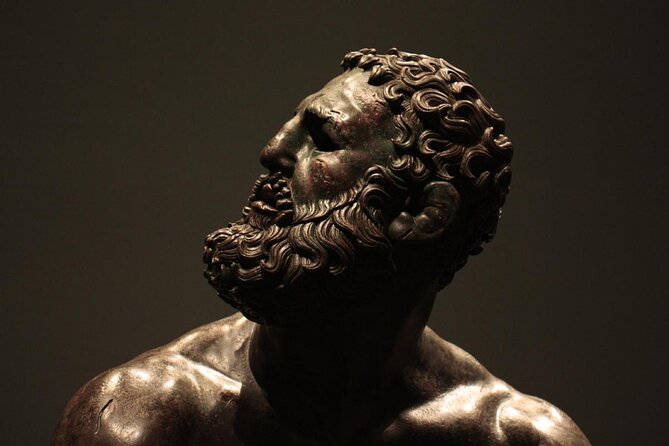
The Boxer at Rest is one of the museum’s great draws. This bronze figure is not an idealized athlete frozen in perfect form. He looks tired, battered, and human, with signs of strain that make the sculpture unusually immediate.
A guide can help you notice the details that are easy to miss when you are looking through a camera screen. The work rewards a slow look at the face, body, and signs of physical wear. It also gives you a useful contrast with more polished athletic figures elsewhere in the museum.
Museum stops on bath days around Italy:
- Hellisheiði Geothermal Exhibition: Entry and Audio Tour
★ 4.6 · 88 reviews - Full Day Ice Museum and Chena Hot Springs Tour
★ 4.4 · 32 reviews - Fire & Ice: Chena Hot Springs, Ice Museum + Aurora Adventure
★ 5.0 · 30 reviews - Sentosa: Trick Eye Museum Entrance Ticket
★ 3.5 · 27 reviews
The Discus Thrower
The Discus Thrower presents a very different vision of the body. Its pose captures controlled movement and balance, while its ideal proportions reflect the Greek artistic models that had a major effect on Roman sculpture.
You will see why a guide is useful here. It is easy to glance at the statue and move on. With context, you can compare the calm perfection of the athlete with the fatigue and realism of the Boxer at Rest.
The Sleeping Hermaphrodite
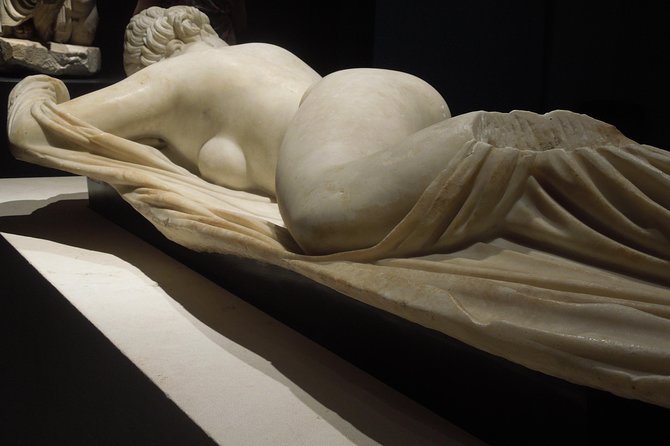
The Sleeping Hermaphrodite is another memorable work, built around a deliberately surprising view of the figure. From one side, the sculpture appears to show a sleeping young woman. From another, the body reveals a different identity.
The subject reflects the ancient interest in myth, transformation, and ambiguity. Your guide can explain the visual trick and the work’s place in Roman collecting without reducing it to a simple novelty.
Livia’s painted rooms
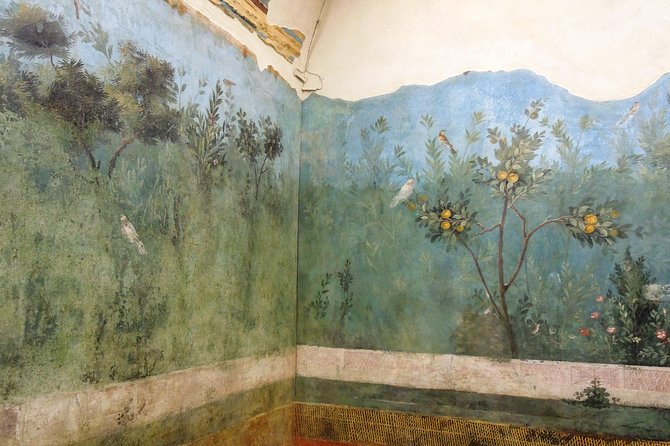
Among the museum’s most valuable displays are the frescoes from the rooms associated with Empress Livia. Their garden scenes bring trees, birds, plants, and open-air illusion into an interior setting.
These paintings are important because they are not just decorative background. They show how elite Romans used art to reshape the feeling of a room. The colors and details also help you imagine how much more vivid Roman homes were than the bare stone ruins suggest today.
Mosaics, coins, jewels, and daily Roman taste
The sculpture collection may get the most attention, but I would not rush through the smaller objects. Mosaics reveal the care that went into floors and the subjects Romans wanted beneath their feet. Coins provide clues about emperors, public images, and economic life. Jewelry and gold work bring the focus down to personal style and status.
The mosaics and frescoes are especially helpful if you plan to visit Pompeii, the Forum, or other Roman sites later. You begin to recognize common subjects, borders, patterns, and techniques. A guide can connect a decorative detail to Roman customs, household life, or mythological stories.
The collection also includes works from both Roman and Greek traditions. That combination makes the museum useful for understanding how Rome borrowed, copied, adapted, and eventually gave new meaning to older artistic ideas.
Adding the Baths of Diocletian
The Baths of Diocletian are available as an upgrade, and I consider them the stronger choice if you have room in your schedule. The museum gives you portable art and decorated interiors. The baths give you scale.
Built in AD 298, the complex was the largest thermal facility in ancient Rome. It included bathing areas, gymnasiums, libraries, and a swimming pool, and it could accommodate as many as 3,000 people at one time.
That number is hard to picture until you enter the immense surviving spaces. The baths were not merely places to wash. They were social centers where Romans exercised, met friends, read, relaxed, and took part in public life. The size tells you something about the organization and wealth of imperial Rome.
The itinerary allows about an hour here. That is enough for a guided introduction, but you should not expect to inspect every part of a complex this large. One earlier tour experience ran short and left too little museum time, so tell your guide if you prefer a slower look at Palazzo Massimo before moving on.
Michelangelo’s church inside an ancient bathhouse
The most surprising part of the Baths of Diocletian is the Basilica of Santa Maria degli Angeli, created in part from the ancient structure by Michelangelo in 1561. The church occupies spaces that once belonged to the bath complex, creating a striking meeting of Roman engineering and Renaissance design.
I like this portion because it makes Rome’s layers easy to read. You are not looking at an ancient ruin in isolation. You are seeing a later generation reuse the old walls for a new purpose.
The basilica also has a quieter, more sacred feeling than the original baths would have had. Your guide can point out how the church fits into the former bathhouse and explain the social role of Roman thermal complexes before you compare it with the later religious use.
The scale can be startling. Large rooms, high walls, surviving floor details, and the church interior help you picture how ambitious the original complex was. This is one of those Rome moments when the past is not in a separate box. It has been altered, reused, and given another life.
What the private format changes
The experience is described as a private tour, with only your group taking part. The tour overview also presents private and small-group choices, so check the option shown at booking. Either way, the key benefit is a guided visit rather than an unguided walk through a large collection.
A private tour is most useful when your party has different interests. You can ask for more time with sculpture, frescoes, coins, or architecture instead of following a fixed public group pace. The guide can also explain stories in greater detail and pause while you take photographs.
The guides named in the tour feedback include Matteo, Mattia, Serena, Damiano, and Giorgio. Their strengths are described in similar terms: clear English, enthusiasm for Roman art, strong command of context, and an ability to make both sculpture and architecture easier to understand.
That does not guarantee which guide you will receive. Still, the pattern is useful. This experience depends heavily on the person leading it. A tired or late guide can make a short tour feel rushed, while a lively guide can make a museum visit work for someone who is less interested in ancient art.
Is $323.21 per person good value?
At $323.21 per person, this is not a budget museum visit. If you want only admission and a brief look around, the cost will feel high.
The price makes more sense for a private experience, especially if your group values expert explanation and has limited time in Rome. You are paying for skip-the-line access, a local guide, private attention, and a focused route through a major collection. The value rises if you would otherwise spend time trying to identify the most important works on your own.
For a couple, the total cost is substantial. For a larger private group, the group discount may improve the per-person value. The tour is also a better purchase for someone who wants connections between the museum, Roman domestic art, ancient bathing culture, and Michelangelo’s reuse of the baths.
I would not choose it for a rushed first afternoon when you are already tired from travel. I would choose it for a morning or afternoon when you can pay attention and ask questions.
Who will enjoy this most?
This tour suits you if you like:
- Ancient Roman and Greek sculpture
- Frescoes and mosaics
- Architectural history
- Stories behind famous works
- Smaller museums with less crowd pressure
- A private guide who can adjust the pace
- Seeing how ancient buildings were reused over time
It is also a smart choice for couples or families who want one organized cultural visit without spending a full day inside a museum. Children must be accompanied by an adult, and most people can participate.
You may enjoy it less if you prefer outdoor ruins, panoramic views, or a fast list of Rome’s biggest sights. The museum contains many statues, and that concentration can feel repetitive if sculpture is not your interest. One visitor rated the experience highly but still found the number of statues less appealing than the mosaics and frescoes.
Timing, pace, and practical advice
Plan on two to three hours for the full experience. The museum and baths each receive about an hour in the stated itinerary, with time for the guide to move between them and explain the setting.
Arrive at the Palazzo Massimo meeting point with a little spare time. The guide meets you at the ticket office, and the tour does not include hotel transportation. Since the start is near Republic Square and public transportation, you can fit it into a day of central Rome sightseeing.
Tell the guide early if you want extra time at the museum’s sculpture highlights or Livia’s frescoes. The full route has a lot to cover, and one tour ran shorter than expected. A clear request can help protect the part you care about most.
English is the offered language. Confirmation arrives when you book, and free cancellation is available until 24 hours before the start time. Changes or cancellations made within 24 hours are not accepted for a refund.
Should you book this Rome museum tour?
Book it if you want a focused look at Roman art without fighting through the crowds at Rome’s biggest sights. The combination of Palazzo Massimo’s exceptional sculpture, colorful frescoes, coins, and mosaics with the huge Baths of Diocletian gives you both fine detail and grand scale.
I would select the Baths upgrade if your schedule allows. I would also choose the private format if you care about the subject, want to ask questions, or are traveling with people who need a flexible pace.
Skip it if $323.21 per person is beyond your budget or if you would rather spend those hours outdoors. For an art-minded visitor, though, this is one of Rome’s most rewarding quieter stops, and the guides named Matteo, Mattia, Serena, Damiano, and Giorgio have helped make the subject lively and accessible.
FAQ
Where does the tour begin?
The tour begins at the Palazzo Massimo alle Terme ticket office at Largo di Villa Peretti 2, Rome, a short distance from Republic Square.
How long does the tour last?
The experience lasts about two to three hours. The listed itinerary allows about one hour at Palazzo Massimo and about one hour at the Baths of Diocletian.
Is skip-the-line entry included?
Yes. The tour includes guaranteed skip-the-line entry to help you bypass the museum’s entrance queues.
Is the tour private?
The activity information describes it as a private tour in which only your group participates. The overview also presents private and small-group choices, so confirm the option selected when booking.
What language is offered?
The tour is offered in English.
Does the tour include the Baths of Diocletian?
The Baths of Diocletian are included when you select the upgrade that adds them to the Palazzo Massimo visit.
Is transportation from my hotel included?
No. Hotel pickup and drop-off are not included. You must make your own way to the meeting point near Republic Square.
New places to soak around Italy
- Private Full-day Cascate del Mulino Hot Springs from Rome★ 5.0 · 31 reviews
- Saturnia Thermal Spring Small Group Day Trip from Rome with Lunch★ 5.0 · 13 reviews
- from Civitavecchia: Saturnia natural hot springs experience★ 4.0 · 9 reviews
- Day with Thermal Pool, SPA Access, Lunch & Massage★ 4.5 · 2 reviews
- Florence: Day Trip to the Saturnia Thermal Baths★ 4.7 · 32 reviews
- Saturnia: Terme di Saturnia Hot Spring Pools Park Day Ticket★ 4.3 · 60 reviews
- Rome to Saturnia ; Thermal Springs Day Trip with Lunch★ 4.3 · 6 reviews
- Relax and wellness: Thermal pools, spa, nature and aperitif included★ 4.7 · 23 reviews
Thermal Bath Tours: more water worth the trip.

Budapest: Széchenyi Spa Day Ticket with Optional Upgrades
Read our review →
Krakow: Zakopane, Thermal Springs, Cable Car, Local Tasting
Read our review →

From Valencia: Full Day Tour to Montanejos & Thermal Pools
Read our review →
From Thessaloniki: Pozar Thermal Baths and Edessa Day Trip
Read our review →
Krakow to Zakopane: Funicular, Tasting and Thermal Baths Day Trip
Read our review →
Budapest: Rudas Turkish Bath or Spa Day Pass & 3-Course Meal
Read our review →Lists this soak appears on