
Review · GUATEMALA
Pacaya Volcano Tour and Hot Springs from Antigua
Pacaya’s big reward is the chance to walk across old lava fields with a smoking, active volcano nearby. I like the early start for clearer volcano views, and I like finishing the uphill work with warm thermal pools and a smoothie.
The hike is moderate but not gentle. Loose ash, pebbles, and lava rock make a walking stick useful, while horses can carry you partway for an extra fee. The main catch is accuracy: you generally hike to a viewpoint and lava-flow area, not Pacaya’s true crater.
Key things to know
- The hike reaches a lava-viewing area, not always the crater: The route and access can change with volcanic conditions.
- The trail is loose and uphill: Plan on about 90 minutes up, with a faster descent.
- A walking stick is worth the small fee: Sticks have been available for about 5 quetzales at the trailhead.
- Horses are available: A horse, sometimes called a taxi locally, may cost around 100 quetzales or more.
- The hot springs are resort-style pools: Expect a thermal circuit at a spa, not a secluded spring in the forest.
- The $65 price has important extras: Pacaya National Park entry is listed separately at $15, and lunch and thermal access depend on the option you choose.
What the $65 Pacaya tour really gives you
At about $65 per person, this is a full day combining a volcano hike, transport from Antigua, a bilingual guide, and optional thermal bathing. The price can be fair if you want one company to handle the long drive and the two major stops.
You should read the inclusions carefully before paying. The Pacaya National Park entrance fee is listed separately at $15 per person. Lunch and hot-springs access are included only if you select the appropriate option, so the final cost can be higher than the headline price.
I see the value mainly in the pairing. Pacaya gives you an active morning with ash, rock, wind, and big views. The thermal pools give your legs a chance to recover. Booking the two together saves you from arranging separate transport after a tiring hike.
The value is weaker if you expect a private guide, a remote volcanic experience, or a polished resort day. The group can be as large as 50 people, and the guide’s level of explanation and organization may vary. For a more personal volcano visit, a private service may be worth the added cost.
More Volcano & Crater Hot Springs in the world:
- Bali: Mount Batur Sunrise Guided Hike and Natural Hot Spring
★ 4.8 · 9,284 reviews - Reykjavik: Golden Circle, Kerid Crater, & Blue Lagoon Tour
★ 4.9 · 5,270 reviews - Bali/Mount Batur: Private Sunrise Jeep Tour & Hot Spring
★ 4.8 · 3,528 reviews
Meeting in Antigua and the long road to Pacaya
The listed meeting point is Gray Line Antigua Guatemala, at 2a Calle Oriente, #4B. The scheduled start is 7:30 a.m., with some operating details suggesting you should arrive around 7:15. I would not cut it close.
The description also refers to hotel transportation, but the listed start and end point is the Gray Line office. Past arrangements have varied, and some pickups have taken place near hotels or rental apartments. Confirm your exact pickup point before the morning of the tour. This is one detail that should be clear, not a guessing game.
The drive to Pacaya takes roughly an hour and a half, depending on traffic and the exact route. The road is winding, so I would sit near the front if you are prone to motion sickness. The vehicle is usually clean and comfortable, but you may spend much of the day sharing it with a sizable group.
Sometimes the return route goes through Guatemala City. That can add a great deal of time, especially in heavy traffic. If you are staying in Antigua and have evening plans, ask before departure if the bus will make that detour.
At Pacaya National Park, prepare for loose ground
On arrival, you meet a local Pacaya guide. The park guide is the person who leads the walking portion, while the transport company may also have a guide on the bus. Names reported for this route include Claudio, Juan Carlos, Lydia, and Rodolfo.
The strongest guide experiences have included clear pacing, helpful answers, local stories, and careful attention to the group. Rodolfo, Claudio, Lydia, and Juan Carlos have each been praised for friendly and informative guiding on different departures. Still, do not assume every guide will give a long talk about volcanic geology. Some guides have been more active on the trail than during the transport or spa portion.
The trail starts uphill and the ground can be rough from the first steps. You walk over dirt, loose sand-like ash, small stones, and sharp volcanic rock. The climb often takes around 90 minutes, with stops along the way. A fit person may find the pace slow, while anyone unused to uphill walking may appreciate the breaks.
Bring water even though vendors may sell drinks and snacks along the route. A small snack is sensible too. Wear shoes with a firm sole and good traction. Ordinary trainers may work for some people, but loose rock becomes harder to manage near the lava fields.
A walking stick is one of the best small purchases here. A stick has been available near the entrance for about 5 quetzales, and it helps on both the steep climb and the slippery descent. The trail can feel much more secure with three points of contact.
Horses are also offered at the base and may follow the walking group uphill. They are not part of the listed tour price. Prices reported for a ride have included about 100 quetzales, though you should confirm the current amount before setting off. If your knees or lungs are uncertain, budget for this option rather than treating it as a last-minute surprise.
What you actually see on Pacaya
The scenery is the reason to accept the hard climb. You get views toward Guatemala’s volcanic country, and the morning often offers the clearest conditions before clouds gather. The changing ground underfoot is also part of the experience, from green trail sections to gray ash and black lava rock.
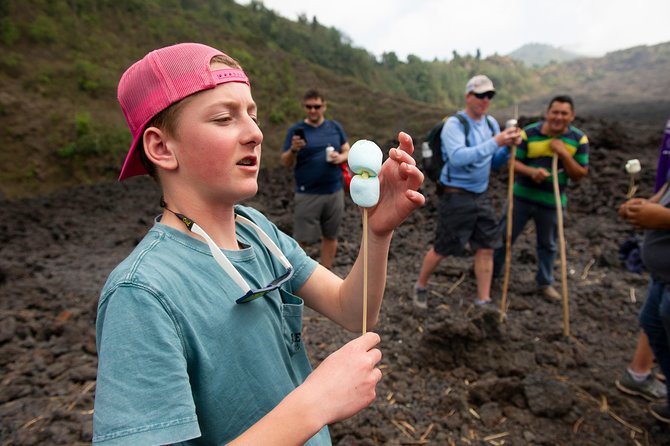
Here is the important wording point: this route does not always take you to Pacaya’s true crater. The usual walk may end at a separate high point with views toward the main cone, then continue through older lava-flow areas. Some departures reach a hot section where you can feel heat in the rocks and roast marshmallows. Other departures may not reach the hottest area, depending on crowding, volcanic activity, or safety rules.
That means you should not book this trip solely on the promise of peering into the crater. If seeing the crater is essential, ask Gray Line exactly which route is operating on your date. The volcanic area can change, and access is not fixed.
The best departures sound wonderfully unusual: walking over jagged lava, feeling heat rise through cracks, and cooking marshmallows from the warmth below. The less successful departures have offered only the forested trail and a viewpoint. The difference may come from conditions on the day, not simply from the guide.
The descent is usually quicker, but it is not effortless. Loose rock can roll under your shoes, and your knees may feel every step. Keep your walking stick and move slowly rather than trying to match the fastest person in the group.
More places to soak around the world:
- Budapest: Széchenyi Spa Day Ticket with Optional Upgrades
★ 4.3 · 23,911 reviews - Krakow–Zakopane: Cable Car, Chocholow Baths, Cheese & Vodka
★ 5.0 · 10,720 reviews - Reykjavik: Sky Lagoon Entrance Pass With 7-Step Spa Ritual
★ 4.8 · 6,166 reviews - From Reykjavik: Golden Circle, Kerid, & Secret Lagoon Tour
★ 4.8 · 6,009 reviews
Lunch and Kawilal’s thermal circuit
After the volcano, the bus drives to the thermal stop. The operating information calls it Kawilal Spa Guatemala, while detailed experiences have also identified the venue as Santa Teresita Hotel y Spa Termal. Confirm the exact facility and included package when you book, especially if the spa is a major reason for choosing the tour.
The thermal stop is not a wild spring beside a river. It is a developed spa or water-park-style facility with several pools at different temperatures. That may disappoint you if you imagined a quiet natural pool in the hills. I would describe it as a comfortable recovery stop, not a remote nature experience.
The thermal circuit can include moving between hot and cooler pools in a set sequence. Some packages have included a fruit smoothie, and you may have time to shower away the dust before soaking. Two hours at the spa has been a common amount of free time on some departures, though the exact schedule depends on traffic and the day’s pace.
Children under 13 are not allowed to take the thermal circuit. That rule matters for families, since the volcano hike itself may be suitable for older children who can manage the climb, but the spa portion has a separate age limit.
Lunch is available when selected. Past menus have included pizza, a club sandwich, a hamburger, or barbecue chicken. That is convenient after a strenuous morning, though you should expect straightforward resort food rather than a special Guatemalan meal. A vegetarian option is available if requested at booking.
The spa handoff can be the weakest part of the day. On some departures, the guide has explained the lunch and pool arrangements clearly. On others, people have been dropped near the restaurant with little information about towels, lockers, the pool sequence, the included drink, or departure time.
I would ask three questions as soon as you arrive: What does my wristband include? Where do I get towels and change? What time does the bus leave? Keep your group name and departure time in mind. The spa is easier to enjoy once you know the basics.
Guides, group size, and communication
The bilingual service is offered in English and Spanish. French, German, and Italian guides may be possible through private arrangements, with extra cost and subject to availability.
The local guides are the main strength of the walking portion when they stay with the group and explain the area. Some have been praised for keeping everyone together, adjusting the pace, and sharing stories about the town and volcano. Others have offered limited explanation and left people to work out the spa arrangements alone.
A group of up to 50 is allowed, which is a large number for a narrow volcanic trail. You may find the pace carefully controlled, with frequent stops to keep the group together. That helps less experienced hikers, but it can frustrate strong walkers.
The tour is not ideal if you need constant personal attention. It works better if you are comfortable asking questions, checking the departure time, and taking responsibility for small details. A phone with translation tools can help if communication becomes difficult.
Weather and volcanic activity also matter. The tour requires good weather, and increased volcanic activity can lead to cancellation. Make sure your booking contact information is correct and keep an eye on messages, since timely notice has not always been consistent.
Free cancellation is available up to 24 hours before the start time. If the operator cancels because of weather, you should be offered another date or a full refund. A late cancellation by you is not refundable under the stated policy.
How hard is the hike?
I would rate the hike as moderate, with the loose surface making it harder than the distance suggests. You climb steadily for about an hour and a half, then descend over ground that can slide under your shoes.
If you regularly walk uphill or exercise, you may find it manageable. If you rarely hike, you can still enjoy it, but take the breaks seriously and consider the horse option. The horse is not a failure. It can let you enjoy the views when the physical climb is beyond your comfort level.
Bring a light jacket or sweater for the cool morning and wind. Layers work well because you can warm up quickly on the ascent, then feel chilly again when you stop. Water, sturdy shoes, sun protection, and a small amount of cash are the practical essentials.
Who should book this Pacaya day trip?
I would recommend it to you if you want an active day from Antigua and like the idea of combining a volcano with a warm-water recovery stop. It suits people with moderate fitness who are happy in a shared group and do not need every detail arranged for them.
It is also a good choice for families with older children, couples, and solo visitors who want transport and a local guide. Solo participants may find the group structure useful, though a large departure will not feel private.
I would hesitate if you are looking for a true crater climb, a remote hot spring, or a carefully narrated trip from start to finish. I would also think twice if you have limited mobility, dislike loose volcanic ground, or have firm evening plans in Antigua. The possible Guatemala City detour can turn a nine-hour plan into a much longer day.
Should you book this Pacaya and hot-springs tour?
Book it if you value convenience and variety. The volcano is the main event, and the views, lava rock, possible heat, and marshmallow stop can make the climb memorable. The thermal pools are a pleasant bonus, especially after the descent.
Before paying, confirm four things: your pickup point, the $15 park fee, whether lunch and thermal access are included, and whether the route reaches a lava-flow area or only a viewpoint. If you set realistic expectations, this can be a strong full-day outing from Antigua for the price.
FAQ
Where does the tour start?
The listed meeting point is Gray Line Antigua Guatemala, at 2a Calle Oriente, #4B, Antigua Guatemala. The scheduled start time is 7:30 a.m.
Does the tour include hotel pickup?
The tour information says round-trip hotel transportation is included, but the listed start and end point is the Gray Line Antigua office. Confirm your exact pickup arrangement before the tour.
How long does the activity last?
The experience lasts approximately nine hours.
Is the Pacaya National Park entrance fee included?
No. The listed entrance fee is $15 per person and is separate from the tour price.
Is lunch included?
Lunch is included only when you select the option that includes it. Food and drinks are otherwise not included unless specified.
Are the hot springs included?
Entrance to the hot springs is included only when you select the relevant option.
How difficult is the Pacaya hike?
The hike requires a moderate level of physical fitness. The route includes a sustained uphill climb over loose dirt, pebbles, and volcanic rock.
Can I ride a horse instead of hiking?
Horses are available along the route for an additional fee. The price is not included in the tour.
Can children use the thermal circuit?
Children under 13 are not allowed to take the thermal circuit.
What happens if weather or volcanic activity cancels the tour?
If poor weather causes cancellation, you should be offered a different date or a full refund. Increased volcanic activity can also affect the planned route or lead to cancellation.
New places to soak around the world
- Private Traditional Lakeside Sauna with Midnight Sun★ 5.0 · 6 reviews
- Lakeside Sauna Trip with Ice Fishing and Ice Swimming★ 4.5 · 3 reviews
- Whaka Geothermal Trails Self-Guided Tour★ 3.5 · 44 reviews
- Finnish Traditional Sauna Escape : Fire, Ice and BBQ★ 5.0 · 31 reviews
- Private Tour Waiotapu Geothermal Shore Excursion up to 8 passengers★ 5.0 · 6 reviews
- Lake Rotoiti Guided Hot Pools Kayak Trip★ 5.0 · 23 reviews
- Polynesian Spa Rotorua: Family Hot Pools and Freshwater Pool★ 3.5 · 14 reviews
- Wai Ariki Hot Springs and Spa Restorative Journey (2hrs)★ 4.5 · 73 reviews
Volcano & Crater Hot Springs: more water worth the trip.
Bali: Mount Batur Sunrise Guided Hike and Natural Hot Spring
Read our review →
Reykjavik: Golden Circle, Kerid Crater, & Blue Lagoon Tour
Read our review →
Bali/Mount Batur: Private Sunrise Jeep Tour & Hot Spring
Read our review →
Mount Batur Sunrise Hike and Natural Hot Spring Option
Read our review →
From Ubud: Mount Batur Shared Jeep Sunrise & Hot Spring Tour
Read our review →
Golden Circle, Kerid Crater & Geothermal Lagoon -Small Group Tour
Read our review →
Bali: Shared Mount Batur Jeep Sunrise with Hot Springs
Read our review →
From Reykjavík: Volcanoes and Blue Lagoon Day Trip
Read our review →Lists this soak appears on