
Review · TUNISIA
Private Tour to Kairouan, El Jem & Monastir from Tunis_hammamet
Kairouan’s Great Mosque and El Jem’s enormous Roman amphitheater give this day trip its punch. You move from Islamic Tunisia to Roman Africa and finish at a medieval fortress on the coast. I like the private format, which lets you adjust the pace, and the fact that entrance fees are included. The tradeoff is a long day with plenty of driving between widely spaced sights.
Guides such as Yaya, Bilal, Ahmed, Bilel, and Chaouki have been praised for clear explanations, good timing, and friendly help. Drivers are just as important here, since the route covers a large stretch of central Tunisia. Keep lunch money aside, and be clear about shopping stops, especially if you are interested in carpets.
Five useful things to know before booking
- Three major sites in one day: Kairouan, El Jem, and Monastir cover religious, Roman, and medieval history.
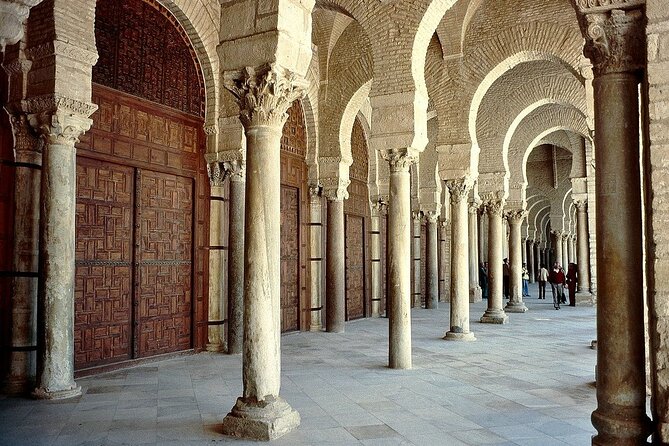
- The Great Mosque is the morning highlight: Allow time to appreciate its courtyard, minaret, cedar doors, and marble columns.
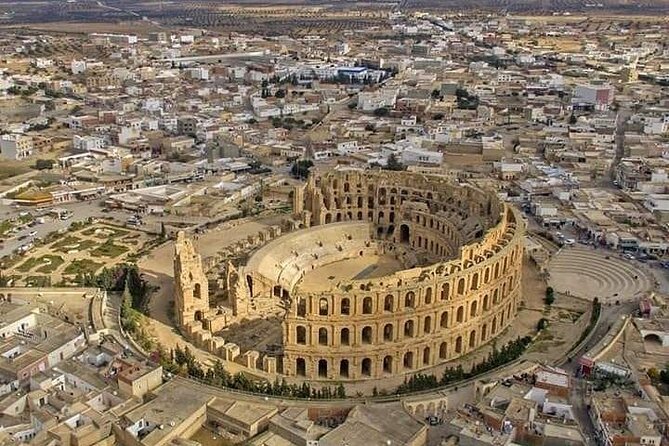
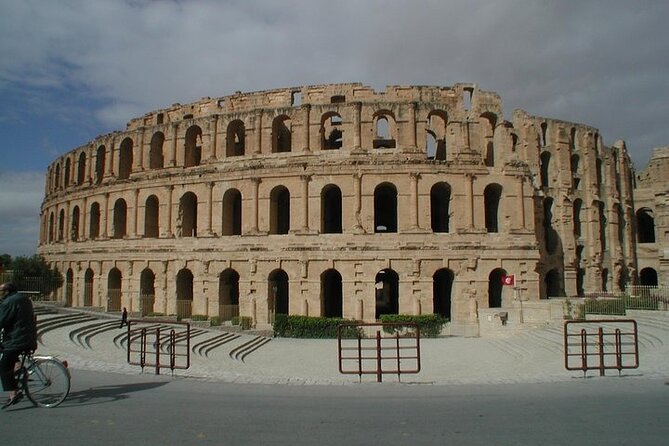
- El Jem is worth the long drive: Its amphitheater once held about 30,000 spectators and is the most dramatic stop.
- The private vehicle saves planning time: Hotel pickup and an air-conditioned car make the route easier than arranging separate transport.
- Lunch is not included: You will need to pay for your own meal during the day.
- Expect eight to ten hours: This is an efficient tour, not a slow-paced visit with long breaks at each place.
Why this route works so well in one day
This excursion links three very different parts of Tunisia. Kairouan gives you the country’s major Islamic center, El Jem shows the scale and wealth of Roman North Africa, and Monastir adds a coastal fortress with views over the city and sea.
I like the order because it begins with Kairouan’s religious monuments, moves to the Roman ruins at El Jem, and finishes at the Ribat of Monastir. Each stop has a distinct character, so the day does not feel like a string of similar archaeological sites.
The route is also practical if you are staying in Tunis or Hammamet and want to see more of central Tunisia without changing hotels. You will spend real time in the car, though. The destinations form a broad triangle, and the advertised eight to ten hours includes transport, sightseeing, and breaks.
A private tour matters on a route like this. You are not tied to the pace of a large coach group, and the guide can often explain details in the language that suits you best. Several guides associated with this experience, including Yaya, Ahmed, Bilal, and Chaouki, have been praised for speaking multiple languages and adapting the day to individual interests.
More Private Hot Spring Experiences in the world:
- Istanbul: Private Turkish Bath, Massage, and Spa in Old City
★ 4.6 · 3,225 reviews - Istanbul: Private Turkish Bath, Sauna, and Massage
★ 4.8 · 1,306 reviews - Private Tour in Ephesus and Traditional Turkish Bath from Port
★ 5.0 · 675 reviews
Kairouan’s Great Mosque and its powerful courtyard
The Great Mosque of Kairouan is the most important religious stop. Founded in 670, it is among the oldest Islamic buildings in the Maghreb and helped shape mosque design across North Africa.
From the outside, the building has a fortress-like appearance. Its massive walls and sturdy minaret look more defensive than delicate, which reflects the early character of the city and its religious institutions.
Inside, the courtyard is the main visual treat. Broad arcades frame the open space, and a sundial sits within the courtyard. The scale is easy to appreciate here, especially when you look across the repeated arches and heavy stonework.
The prayer hall contains many marble columns and richly carved cedar doors. Your guide can help you understand how pieces from different periods and places became part of the building’s long architectural story. The visit is scheduled for about 40 minutes, which is enough for an explanation and a close look, though you may wish for more time if you enjoy architectural detail.
Dress and behavior should be respectful at this religious monument. The tour includes admission, so you do not need to arrange a separate ticket.
A short walk through Kairouan’s old medina
After the mosque, you get free time in Kairouan’s medina. The scheduled visit is about 30 minutes, so think of this as a focused taste of the old quarter rather than a long, unhurried shopping walk.
The medina is known for its preserved lanes, souks, craft work, and traditional sweets. Look for makroud, a pastry made with semolina and dates. It is one of Kairouan’s best-known local specialties and a simple way to connect the historic setting with everyday Tunisian life.
Carpet making is another major local craft. This is where you should use good judgment. Shopping can be enjoyable if you want a textile, but you should never feel pressured to buy. One serious complaint about the experience involved a carpet stop and a disputed claim about authenticity. The operator responded that the guide involved was an independent guide rather than a company employee.
That does not mean you should avoid all craft shops. It does mean you should ask direct questions about origin, materials, certification, price, and return arrangements before paying. If you are not shopping, say so clearly and enjoy the medina without turning the visit into a sales appointment.
The Aghlabid basins and Kairouan’s water system
The Aghlabid basins sit outside Kairouan’s walls and take about 20 minutes to visit. They are less immediately dramatic than the mosque, but they explain how a major inland city survived and grew.
Built in the ninth century, the basins formed part of an advanced water system. Their size gives you a sense of the engineering effort required to support Kairouan during the early Islamic period.
This is a quick stop, best treated as a visual and historical pause before continuing to El Jem. You will not spend hours here, but the basins add useful context. Religious centers need water, residents need water, and prosperous cities need systems that can manage both supply and storage.
Same steam, a different pool:
- Budapest: Széchenyi Spa Day Ticket with Optional Upgrades
★ 4.3 · 23,911 reviews - Krakow–Zakopane: Cable Car, Chocholow Baths, Cheese & Vodka
★ 5.0 · 10,720 reviews - Bali: Mount Batur Sunrise Guided Hike and Natural Hot Spring
★ 4.8 · 9,284 reviews - Reykjavik: Sky Lagoon Entrance Pass With 7-Step Spa Ritual
★ 4.8 · 6,166 reviews
Entering El Jem’s 30,000-seat amphitheater
El Jem is the tour’s most spectacular stop. The amphitheater was built in the third century AD in the ancient city of Thysdrus, one of the most prosperous places in Roman Africa.
The structure could hold about 30,000 spectators. That number becomes more meaningful when you stand inside and look up at the tiers. The scale is startling, particularly in a town far smaller than Rome.
You can explore the arena and the underground areas beneath it. These lower passages help explain how animals, performers, and workers were moved through the building before appearing before the crowd. The amphitheater is often compared with the Colosseum in Rome and the arena at Capua, and its size makes that comparison understandable.
About 40 minutes is scheduled here. The stop is long enough to walk through the main areas and hear the historical explanation, though anyone interested in Roman engineering may want every available minute. Good guides make a major difference at El Jem because the bare stone walls do not explain themselves.
If you want strong photographs, look for views that show the arena floor, the surrounding arches, and the upper seating together. The monument is impressive from outside, but the interior gives you a better sense of how the building functioned.
Monastir’s Ribat and the view from its tower
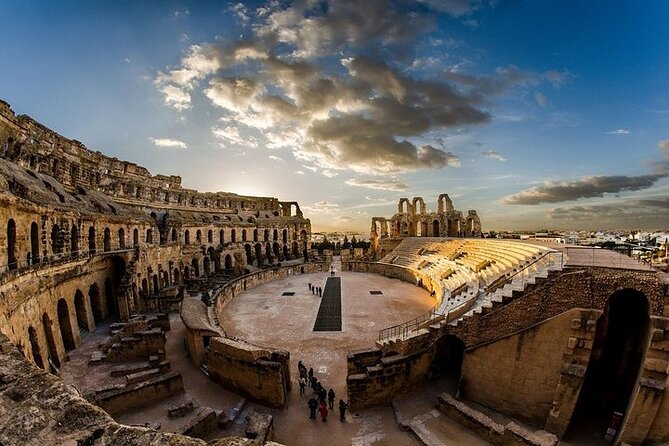
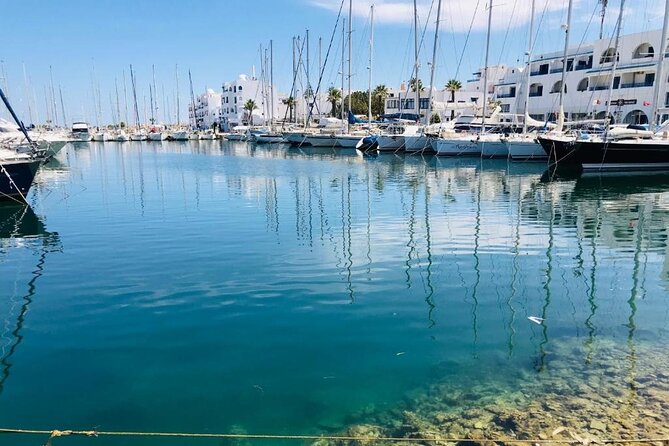
The final major stop is Monastir’s Ribat, a fortified Islamic building founded in 796. It was part military post, part religious center, and part lookout station along the coast.
The building began as a quadrilateral fortress and developed through later medieval changes. Inside, you will see courtyards, small cells once used by warrior monks, and two prayer rooms. One prayer room now contains religious and medieval craft objects.
The most physical part of the visit is the climb. About one hundred spiral steps lead to the watchtower. From the top, you get a broad view over Monastir and the sea, along with a clear sense of why this location mattered for defense.
The tower was part of a communication network. Light signals could be exchanged at night with other ribats along the coast. That detail brings the fortress to life better than a simple description of walls and rooms.
The Ribat is scheduled for about 40 minutes. Wear comfortable shoes and consider your own pace on the stairs. Most people can take part in the tour, but the spiral climb may not suit everyone.
How the private format affects the day
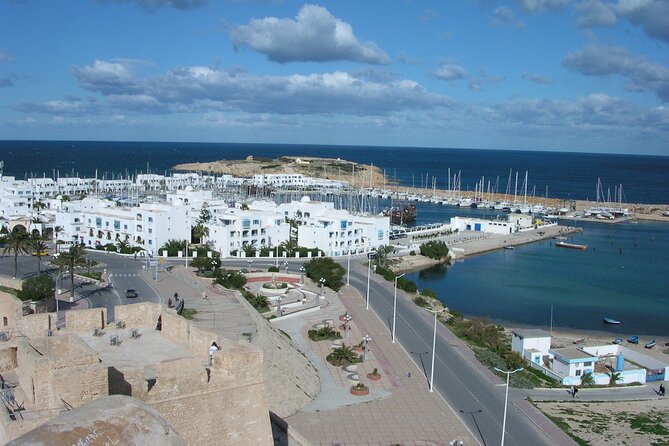
The tour is designed for your group alone, rather than a mixed coach party. That gives you more control over questions, walking speed, photo stops, and the balance between explanation and free time.
The air-conditioned vehicle is a real benefit. Central Tunisia can be hot, and you will appreciate a cool ride after walking through stone courtyards, exposed ruins, and the Ribat tower.
Pickup is offered from your hotel, and the experience is available from the Tunis and Hammamet area. Exact pickup arrangements should be confirmed when booking, since the route and drive time depend on where you are staying.
A private guide and driver also divide the work in a useful way. The guide can focus on the sites while the driver handles the long stretches between them. Several accounts specifically praised punctual pickup, careful driving, and a smooth schedule. One complaint involved a flat tire and concern about vehicle maintenance, so it is reasonable to pay attention to the condition of the vehicle when you set off.
The day is not built for a slow lunch or long independent wandering. It is better for someone who wants to cover three major destinations efficiently and accepts that the road is part of the experience.
Price, lunch, and overall value
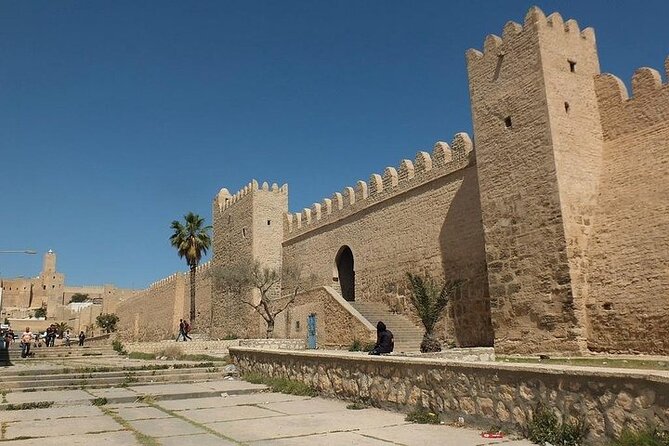
At about $98.48 per person, the cost is strongest when shared by a small private group. You are paying for transport, a certified professional guide, hotel pickup, and admission to all five listed stops.
The included tickets matter. The Great Mosque of Kairouan, the medina visit, El Jem amphitheater, Monastir’s Ribat, and the Aghlabid basins are all covered. You do not need to keep stopping to calculate entrance fees.
Lunch is not included. That keeps the price more flexible, but you should budget for a meal and drinks. The guide may suggest a place, and the private format gives you more say in how much time you spend eating.
The value depends on your alternative. If you tried to arrange transport between Kairouan, El Jem, and Monastir on your own, you would need to manage several connections, entrance tickets, and timing. This tour removes that work. If you prefer to linger at one monument for hours, the compact schedule may feel rushed.
The experience is booked, on average, about 22 days ahead. That suggests planning early, especially if your Tunisia trip has fixed hotel dates.
Who should book this Tunisia day trip?
I would choose this tour if you want major historical sights without moving between hotels. It suits couples, families, and small groups who value a private vehicle and direct explanations.
It is particularly good for first-time visitors who want a broad introduction to Tunisia. In one day, you see Islamic architecture, local craft traditions, Roman spectacle, medieval military design, and the coast.
You should think twice if you dislike long drives, want a leisurely lunch, or prefer spending an entire day in one town. The schedule is full, and each stop has a set amount of time.
The guide can make or break the experience, so ask for clear confirmation of the guide’s language and whether shopping stops are planned. Names associated with strong guiding experiences include Yaya, Bilel, Ahmed, Bilal, Chaouki, Beligh, and Kimos, though the assigned guide can vary.
Free cancellation is available up to 24 hours before the start time. Changes or cancellations inside that window are not refunded, and poor weather can lead to a new date or a full refund.
Should you book it?
Book this excursion if you want an efficient, private route through three of Tunisia’s most important historic places. El Jem alone is a powerful reason to go, while Kairouan and Monastir give the day greater range.
The main caution is pace. You will spend hours in the vehicle and only a limited time at each monument. Bring water, wear comfortable shoes, plan for lunch, and keep shopping decisions firmly in your own hands. For a well-organized overview of central Tunisia, this is a strong choice. For slow exploration, choose separate day trips instead.
FAQ
How long does the tour last?
The experience lasts approximately 8 to 10 hours, including transport and visits to Kairouan, El Jem, and Monastir.
Where does the tour start?
Pickup is offered from hotels in the Tunis and Hammamet area.
Is this a private tour?
Yes. Only your group participates in the private activity.
Are entrance fees included?
Yes. Admission to the Great Mosque of Kairouan, Kairouan’s medina, El Jem amphitheater, Monastir’s Ribat, and the Aghlabid basins is included.
Is lunch included?
No. Lunch is not included in the price.
Can most people take part?
Most people can participate, and service animals are allowed. The Ribat includes about one hundred spiral steps to the watchtower.
What happens if the weather is poor?
If the tour is canceled because of poor weather, you will be offered another date or a full refund. You can also cancel for a full refund up to 24 hours before the start time.
New places to soak around the world
- Private Traditional Lakeside Sauna with Midnight Sun★ 5.0 · 6 reviews
- Lakeside Sauna Trip with Ice Fishing and Ice Swimming★ 4.5 · 3 reviews
- Whaka Geothermal Trails Self-Guided Tour★ 3.5 · 44 reviews
- Finnish Traditional Sauna Escape : Fire, Ice and BBQ★ 5.0 · 31 reviews
- Private Tour Waiotapu Geothermal Shore Excursion up to 8 passengers★ 5.0 · 6 reviews
- Polynesian Spa Rotorua: Family Hot Pools and Freshwater Pool★ 3.5 · 14 reviews
- Wai Ariki Hot Springs and Spa Restorative Journey (2hrs)★ 4.5 · 73 reviews
- Lake Rotoiti Guided Hot Pools Kayak Trip★ 5.0 · 23 reviews
Private Hot Spring Experiences: more water worth the trip.
Istanbul: Private Turkish Bath, Massage, and Spa in Old City
Read our review →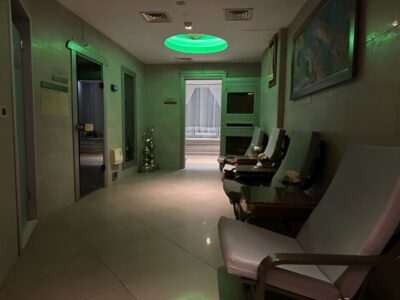
Istanbul: Private Turkish Bath, Sauna, and Massage
Read our review →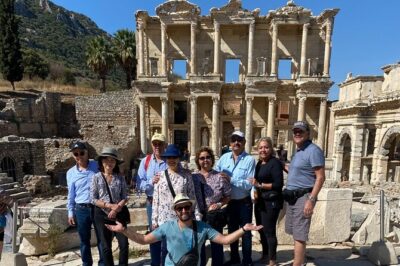
Private Tour in Ephesus and Traditional Turkish Bath from Port
Read our review →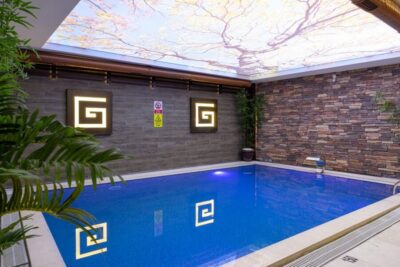
Istanbul: Private Turkish Bath, Massage, and Pool in Taksim
Read our review →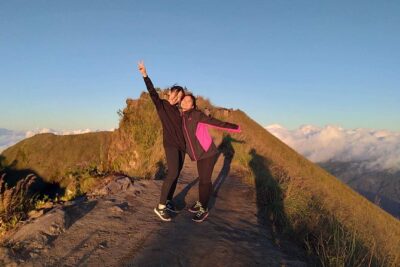
Private Tour Mount Batur Sunrise Trekking and Natural Hot Spring
Read our review →
Private Turkish Bath Tradition, Massages, Swimming Pool & Sauna
Read our review →
Istanbul: Private Turkish Bath, Spa, and Massage in Sisli
Read our review →
Istanbul: Hammam and Spa Private Turkish Bath Experience
Read our review →Lists this soak appears on