
Review · NEW ZEALAND
Self-Guided Geothermal Tour in Orakei Korako
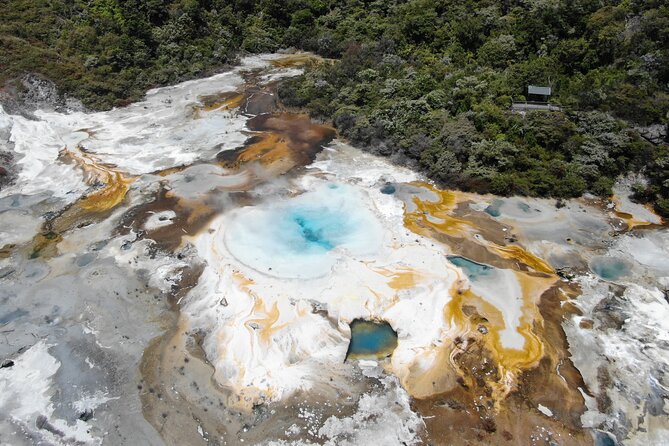
The rare Ruatapu Cave is the star here, but it shares the stage with up to 23 natural geysers, steaming vents, boiling pools and silica terraces that change as the earth works beneath them. A short ferry crossing adds a pleasant sense of separation before you reach the geothermal park.
I like the freedom of walking at your own pace, and I like the setting: the boat ride and native bush path make this feel less packaged than some larger thermal attractions. The main caution is physical. There are plenty of steps, and the route can feel tiring in warm weather or rain.
Key points to know before you go
- Ruatapu Cave is a rare sight: One of only two known geothermal caves in the world, with a striking thermal mirror pool.
- The ferry is included: A short return boat ride across the lake is available on demand and forms part of the visit.
- The route covers 2.5 kilometres: Allow roughly two hours for the ferry, walk, photographs and stops.
- This is genuinely self-guided: You choose your pace and order of stops, with signs helping explain the geothermal features.
- Expect stairs and uneven effort: The boardwalk is well made, but several sections climb and descend steeply.
- It is quieter than many major thermal parks: The remote setting gives the visit a more open, natural feel.
A ferry ride into Orakei Korako’s hot ground
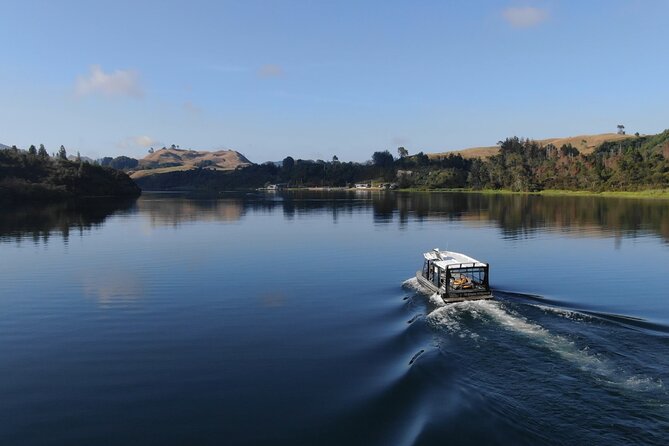
Orakei Korako Geothermal Park begins at 494 Orākei Kōrako Road, a short distance from Taupo and on the route between Rotorua and Lake Taupo. You start at the visitor centre, then take a small ferry across the lake. The ride is brief, but it gives the outing a clear beginning: one minute you are at the road and car park, and soon you are approaching a shore lined with steam.
The return ferry is included in the admission price and runs on demand. That matters because you are not tied to a fixed boat departure in the same way you might be on a guided excursion. You can focus on the walk, then return to the landing point when you are ready.
The crossing also gives you a useful view of the setting. Orakei Korako is not simply a collection of pools beside a visitor centre. The geothermal features spread through a bush-covered area beside the lake, and the boat helps preserve that sense of distance from the road.
Self-guided soaks around New Zealand:
- Whaka Geothermal Trails Self-Guided Tour
★ 3.5 · 44 reviews - Hellisheiði Geothermal Exhibition: Entry and Audio Tour
★ 4.6 · 88 reviews - Hot Springs NP Self Guided Driving and Walking Audio Tour
★ 4.5 · 14 reviews
Following the 2.5-kilometre boardwalk
Once across the water, you follow a marked boardwalk for about 2.5 kilometres, or roughly 1.5 miles. The route is easy to understand without a guide, and the signs explain the main sights as you go.
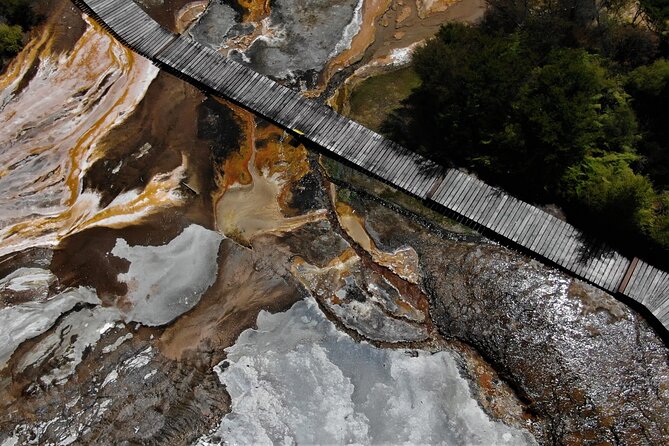
The path brings you close to the action while keeping you on a defined route. You will see hot water bubbling below, steam rising from vents and mineral deposits coating the ground in pale and unusual colours. The area is active and constantly changing, so no two visits need look exactly the same.
You should still treat the walk as a proper outing rather than a quick stroll. Several sections include steps, and the route climbs to different levels for views across the thermal area. The boardwalk itself is well laid out, but going downhill can be hard on the knees, especially if you hurry.
Most people should allow around two hours. The listed geothermal stop is about 90 minutes, but you may spend longer if you take photographs, pause at the viewpoints or walk slowly. The quiet setting makes it easy to set your own rhythm.
The silica terraces, mud pools and geysers
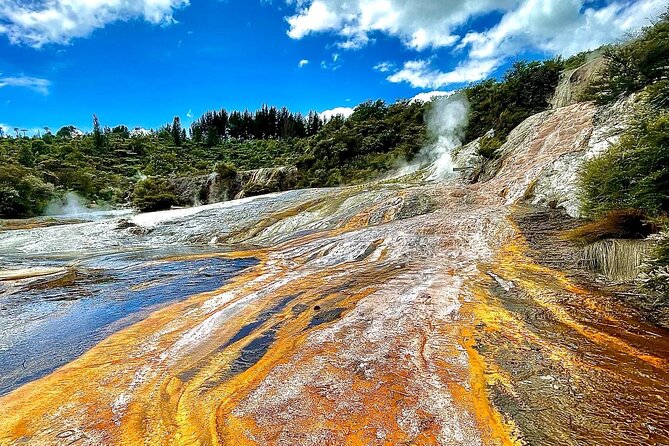
The silica terraces are among the most eye-catching parts of the visit. Mineral-rich water has shaped the surfaces into layered forms, with pale terraces marked by strong natural colour. Their appearance depends on light and weather. On a clear day, the colours can look sharp; in fog or rain, steam and mist create a darker, more mysterious mood.
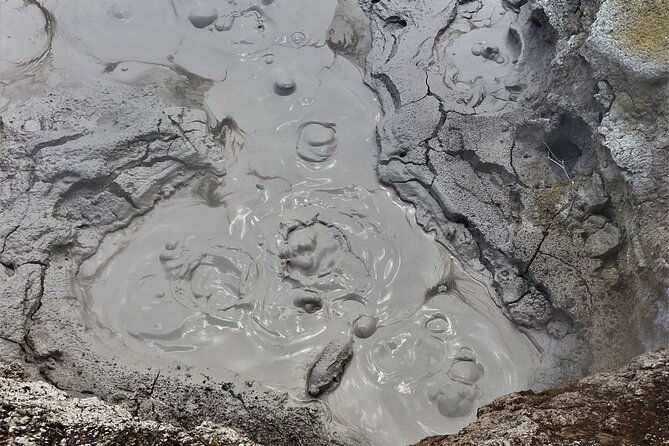
The mud pools offer a different kind of spectacle. Instead of the clean rush of a spring, you see thick mud bubbling and bursting at the surface. It is slow, messy and oddly compelling. The boardwalk lets you look close without stepping into an unsafe area.
Steam vents add sound and movement throughout the route. You may hear hissing from the ground and see vapour rising through the bush. The geothermal activity is not arranged like a timed show, which is part of the appeal. Geysers play naturally, and their eruptions are unpredictable. You might see one during your visit, but you should not book this experience expecting a scheduled geyser performance.
Orakei Korako has up to 23 active natural geysers, described as the largest number of active geysers among New Zealand’s geothermal parks. That does not mean all of them will erupt while you are there. It does mean the area has a high level of natural activity, with boiling springs, vents and changing mineral formations spread along the route.
Ruatapu Cave and its thermal mirror pool
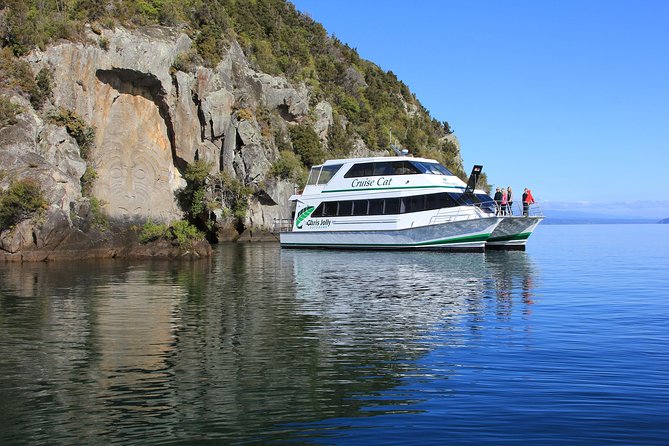
Make sure you do not walk past Ruatapu Cave. It is one of the unusual features that separates this visit from a standard hot-pool stop.
The cave is geothermal rather than a conventional rock cave. Inside, the thermal mirror pool creates a still, reflective surface that contrasts with the bubbling mud and hissing vents outside. The setting can feel mysterious, particularly when steam softens the view.
This is a good place to slow down. The cave is not simply another photo stop. It shows how varied geothermal activity can be in one compact area: open boiling pools, mineral terraces, geysers, steam vents and a quiet underground thermal pool.
Guided soaking days around New Zealand:
- Rotorua: Hell’s Gate Outdoor Mud Spa & Guided Walk
★ 4.7 · 1,140 reviews - Lake Rotoiti Guided Hot Pools Kayak Trip
★ 5.0 · 23 reviews - Lake Rotoiti & Hot Pools Guided Kayak
★ 5.0 · 3 reviews - Bali: Mount Batur Sunrise Guided Hike and Natural Hot Spring
★ 4.8 · 9,284 reviews
Why the self-guided format works
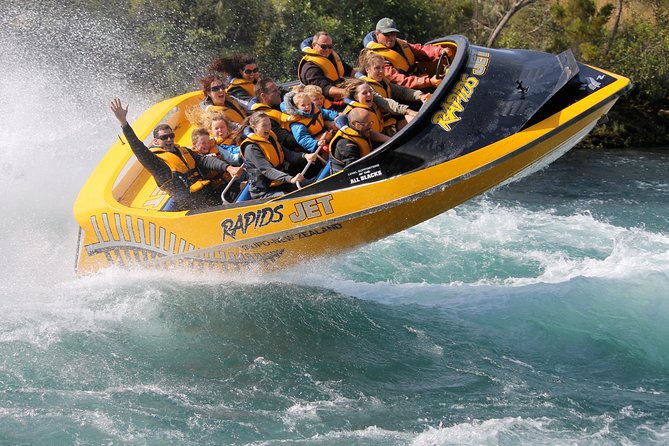
You are not assigned a guide, group or fixed commentary. Instead, you walk independently and use the signs along the boardwalk to understand what you are seeing.
I like this arrangement for a site with so many small details. You can stop to watch a mud pool without holding up a group, take your time at the cave or move on when a viewpoint is crowded. You also avoid the pressure of keeping up with a guide.
The trade-off is that you must pay attention. A guide would add explanation, context and a human voice. Here, you need to read the signs and make your own connections. If you enjoy setting your own pace, the freedom is a real benefit. If you prefer a detailed spoken explanation, this may feel quiet.
The route is clearly marked, so you do not need special navigation skills. Children must be accompanied by an adult, and the walk suits people with a moderate level of fitness. Pushchairs and buggies are not suitable for the route, but young children can be carried in backpacks.
Steps, heat and weather: practical concerns
The park operates in all weather, and conditions can change the experience. Rain can make the boardwalk and steps feel more demanding, while fog may soften the terrace colours. On the other hand, mist can make the steaming pools and cave feel especially atmospheric.
The geothermal area may feel warmer than the visitor centre. Wear layers that you can remove, but also bring protection from rain and wind. Good walking shoes are more useful than stylish footwear, particularly on the steps.
Bring water. The route can take two to two and a half hours, and there are no toilets on the exploration section of the site. The visitor centre has a small café, but food and drinks are not included in the admission price, so do not rely on buying refreshments once you are across the lake.
The route is not suitable for everyone. A person with a moderate fitness level should manage it, but the stairs may be hard for anyone with limited mobility or knee trouble. The walk is not a flat, pushchair-friendly path. That said, the well-built boardwalk and clear route make it manageable for many families, including children who are comfortable with a longer walk.
Price and what you get for $35.37
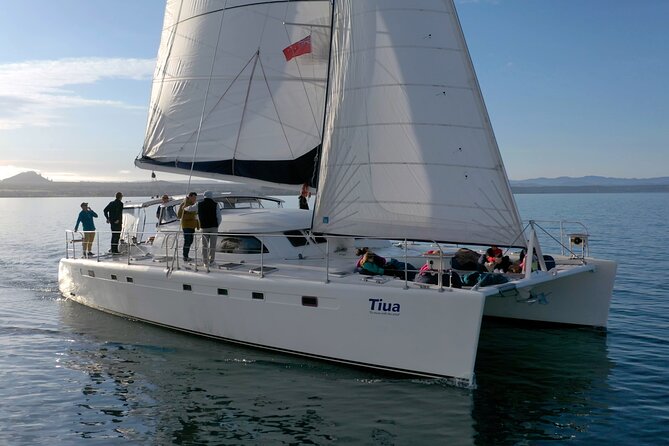
At $35.37 per person, the price includes admission, GST, the self-guided visit and return ferry rides on demand. Food, drinks and souvenir photos cost extra.
The value is strongest if you want several different geothermal sights in one visit. You are not paying only to look at one pool. The price covers access to a 2.5-kilometre route with terraces, mud pools, hot springs, geysers, steam vents, native bush and the Ruatapu Cave.
The ferry also adds more than simple transport. It creates a scenic arrival and return, and it helps the park feel separate from the roadside attractions closer to Rotorua. For a flexible half-day stop between Rotorua and Taupo, the combination of boat ride and walking route makes the admission reasonable.
You should compare it with your own interests. If you want a guided cultural presentation, a meal, or a scheduled geyser show, this is not that kind of outing. If you want time, space and close views of active geothermal features, the cost is easier to justify.
The best time to allow for the visit

The listed opening hours are 8:00 a.m. to 3:30 p.m., Monday through Sunday, for the stated operating period. Arrive with enough time to complete the walk before closing rather than treating it as a quick final stop.
A morning visit may give you cooler walking conditions, while later in the day can work if you want to fit it between other Taupo-area stops. The supplied information does not promise a particular geyser schedule, so timing your visit around a predicted eruption is not possible.
Plan on 90 minutes at the geothermal park itself, and about two hours overall once you include the ferry, stops and photographs. Give yourself more time if you walk slowly, have children with you or want to read all the signs.
How it compares with busier thermal parks
Orakei Korako suits you if you want geothermal features in a more open and less crowded setting. The boat crossing, bush walk and changing ground give it a more natural feel than a compact attraction built around viewing platforms.
It also provides a close-up experience without asking you to leave the marked route. You can stand near boiling mud, steam vents and mineral terraces while remaining on the boardwalk.
The quieter mood is not the same as a full guided interpretation. You get flexibility, but less personal explanation. You also need to accept that natural geysers do not perform on demand. I would choose this park for space, scenery and variety, not for a guaranteed eruption.
Who will enjoy Orakei Korako most
This is a strong choice for couples, independent sightseers, families with older children and anyone who prefers to explore without a group. It is also a good stop for people driving between Rotorua and Taupo who want a substantial activity rather than a brief roadside look.
The experience suits you best if you enjoy walking, photography and natural sights that are not perfectly predictable. The cave, ferry and terraces give the visit enough variety to hold your attention for two hours.
Think carefully if you have limited mobility, dislike stairs or need a flat route. Also reconsider if you want a guide to explain every feature or if a scheduled geyser show is essential. The park is accessible in spirit, but the physical route still demands effort.
Should you book this self-guided geothermal visit?
I would book Orakei Korako if you want an independent walk through a highly active geothermal area, especially if you have already seen larger, busier thermal parks and want something quieter. The included ferry, rare cave and 2.5-kilometre boardwalk give the $35.37 price solid value.
Book it with sensible expectations. Wear layers, carry water, allow two hours, and prepare for steps. You may see a geyser, but the most reliable sights are the steaming vents, bubbling mud, silica terraces, hot springs and Ruatapu Cave. If that mix sounds more appealing than a guided show, this is one of the stronger geothermal stops near Taupo.
FAQ
Where is Orakei Korako Geothermal Park?
The meeting point is Orakei Korako Geothermal Park and Cave, 494 Orākei Kōrako Road, Taupo 3083, New Zealand.
How long does the experience take?
Allow about two hours overall. The geothermal park walk itself is listed at approximately 1 hour and 30 minutes, while the full route covers about 2.5 kilometres.
Is the tour guided?
No. This is completely self-guided, with a marked boardwalk and information along the route.
Is the ferry included?
Yes. Return ferry rides are included and operate on demand.
What will I see?
You can see mud pools, hot springs, geysers, steam vents, silica terraces, native bush and Ruatapu Cave with its thermal mirror pool.
How many geysers are in the park?
The area has up to 23 active natural geysers. Their activity is unpredictable, so an eruption is not guaranteed during your visit.
How difficult is the walk?
A moderate level of fitness is recommended. The boardwalk is well laid out, but there are many steps, including steep sections that may be tiring.
Can children visit?
Yes, but children must be accompanied by an adult. The route is not suitable for pushchairs or buggies, and young children may need to be carried in a backpack.
Are food and drinks included?
No. Food and drinks are not included. A small café is available onsite, and you should carry water for the walk.
What happens if the weather is bad?
The activity operates in all weather conditions, so you should dress appropriately for rain, cold, heat and changing conditions.
What are the opening hours?
The stated opening hours are 8:00 a.m. to 3:30 p.m., Monday through Sunday, during the listed operating period.
Can I cancel for a refund?
Yes. You can cancel at least 24 hours before the experience start time for a full refund. Cancellations or changes made less than 24 hours before the start time are not accepted for a refund.
New places to soak around New Zealand
- Whaka Geothermal Trails Self-Guided Tour★ 3.5 · 44 reviews
- Private Tour Waiotapu Geothermal Shore Excursion up to 8 passengers★ 5.0 · 6 reviews
- Lake Rotoiti Guided Hot Pools Kayak Trip★ 5.0 · 23 reviews
- Polynesian Spa Rotorua: Family Hot Pools and Freshwater Pool★ 3.5 · 14 reviews
- Wai Ariki Hot Springs and Spa Restorative Journey (2hrs)★ 4.5 · 73 reviews
- Lake Rotoiti Evening Kayak Tour including Hot Springs, Glowworm Caves and BBQ Dinner★ 5.0 · 60 reviews
- Floating Sauna & Lake Plunge Experience – Queenstown★ 5.0 · 2 reviews
- Private 2 Day Tour: Hobbiton, Waitomo, Rotorua Geothermal & Hamilton Gardens★ 4.0 · 5 reviews
New Zealand Hot Springs: more water worth the trip.
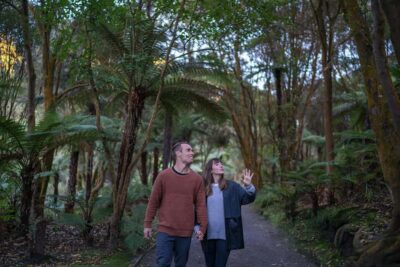
Rotorua: Hell’s Gate Outdoor Mud Spa & Guided Walk
Read our review →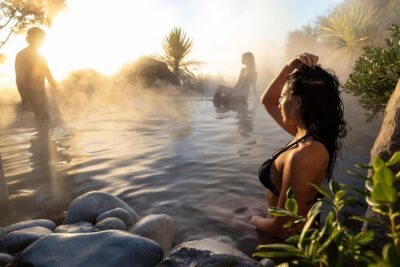
Polynesian Spa Rotorua: Deluxe Lake Spa Hot Spring Bathing
Read our review →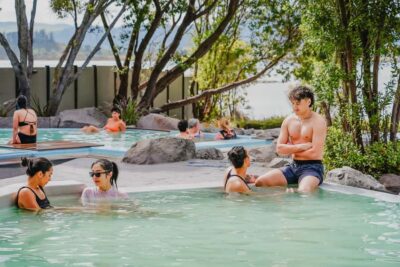
Geothermal Mineral Baths Experience: Pavilion Pools for 12+
Read our review →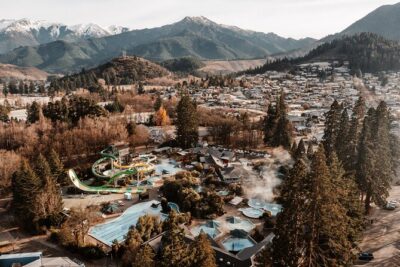
Ōpuke Thermal Pools: Adults-Only Entry with Swim Up Bar
Read our review →
Polynesian Spa Rotorua: Pavilion (12+ yrs) Hot Pool Bathing
Read our review →Lists this soak appears on