
Review · CHIANG MAI
Chiang Mai: Chiang Rai Temples, Karen Tribe and Hot Springs
Chiang Rai’s White Temple is the star of this day trip, but the real appeal is the variety packed around it: steaming hot springs, a Karen village, a deep-blue temple, and the enormous Guan Yin statue at Hauy Pla Kang. You get a quick look at several sides of northern Thailand without arranging separate transport.
I like the way this trip mixes famous sights with smaller cultural stops. I also like the guides’ practical touch, from taking photos and explaining temple customs to helping with lunch, snacks, and timing. The drawback is clear: this is an 11-hour road trip, with roughly five hours in the vehicle, and some roads can be bumpy.
Key points to know before you book
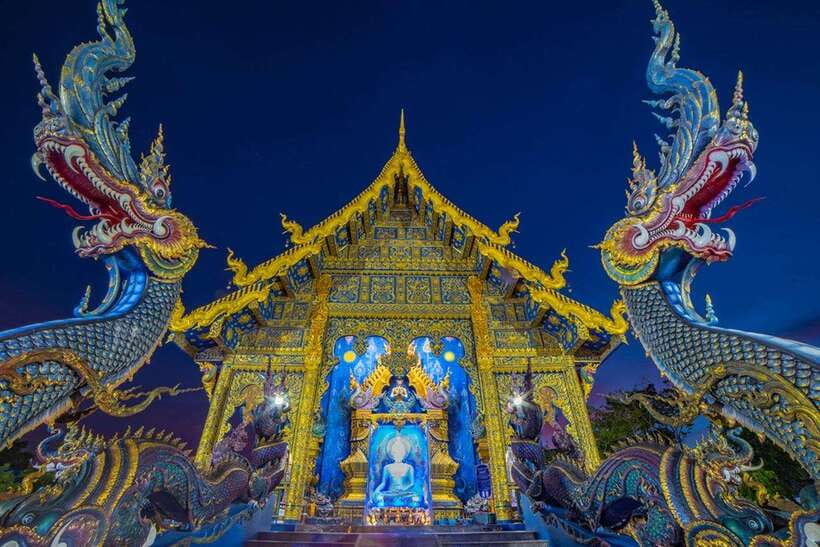
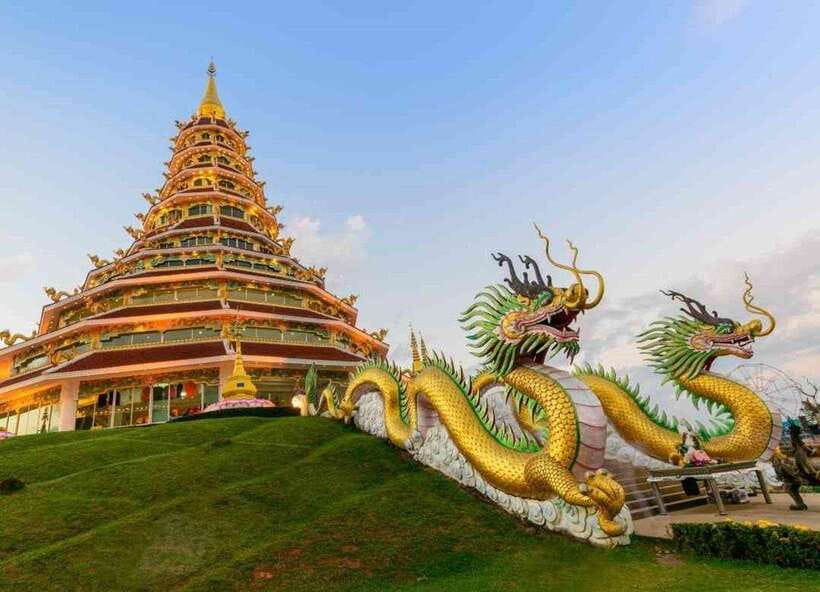
- Three very different temples: Wat Rong Khun is white and surreal, Wat Rong Suea Ten is blue and richly decorated, and Hauy Pla Kang centers on a giant Guan Yin figure and nine-tiered pagoda.
- Mae Kachan is a short rest stop: You can soak your feet, take photos, buy a drink, or browse small shops, but swimming is not allowed.
- The Karen village costs extra: The long-neck village entrance fee is 300 Thai baht, not included in the tour price.
- Guiding is mainly in English: Bring your own earphones if you want the QR audio guide, available in 41 languages.
- The long drive is the trade-off: The temples are far from Chiang Mai, so this works best if you value seeing a lot in one day more than a relaxed pace.
- Small cash helps: Food and drinks are available at stops, and small bills make purchases easier.
Why the Chiang Rai day trip is worth the long road
At $35 per person, this is an unusually inexpensive way to reach Chiang Rai from Chiang Mai. The price covers round-trip transport, an air-conditioned vehicle, a guide, required insurance, and entrance fees for the White Temple, Blue Temple, and Hauy Pla Kang Temple.
You still pay for lunch and the 300 baht long-neck village entrance fee. Even with those extras, the cost is reasonable for a full day that covers a long distance and several major sights. You are paying in time as much as money, though. If you dislike long bus rides, a two-day Chiang Rai visit will suit you better.
The tour usually meets at Burger King Thapae beside Hotel M Chiangmai, 15 minutes before departure. Pickup options vary, so check your selected option carefully. Chiang Mai traffic can be slow, and the bus does not wait for late arrivals. Leave your hotel early enough to reach the meeting point without a last-minute dash.
The exact vehicle and group size can vary. Some departures use a spacious coach with USB ports, while others may feel more crowded. You can leave belongings on the bus during stops, but large bags and luggage are not allowed, so pack lightly.
More places to soak around Chiang Mai:
- Chiangmai to Chiangrai: 3 Temples, Hot Springs& Lalitta Cafe
★ 4.5 · 659 reviews - Red, Blue, White Temples & Hot Spring Trip from Chiang Mai
★ 4.4 · 143 reviews - Chiang Mai: Chiang Rai Famous Temples & Hot Springs Day Trip
★ 4.0 · 129 reviews
Mae Kachan Hot Springs starts the day gently
After about 90 minutes on the road, the first stop is Mae Kachan Hot Springs. It is a useful break after the early departure, with warm mineral water, small shops, coffee, Thai tea, and snacks nearby.
You can dip your feet into the hot water, take photographs, or simply walk around and stretch your legs. Do not expect a swimming stop. Swimming is not allowed here, and the visit is best understood as a short rest rather than a full spa session.
This stop also gives you a chance to buy a drink or a small snack before the more substantial sightseeing begins. Some visitors particularly enjoy starting the day with a foot soak. Others may find the stop fairly commercial, with jewelry shops and refreshments clustered around the spring.
Bring comfortable shoes, sunscreen, a hat, and water. The ground may be hot, and the northern Thai sun can feel strong even during a short visit.
The Karen long-neck village raises important questions
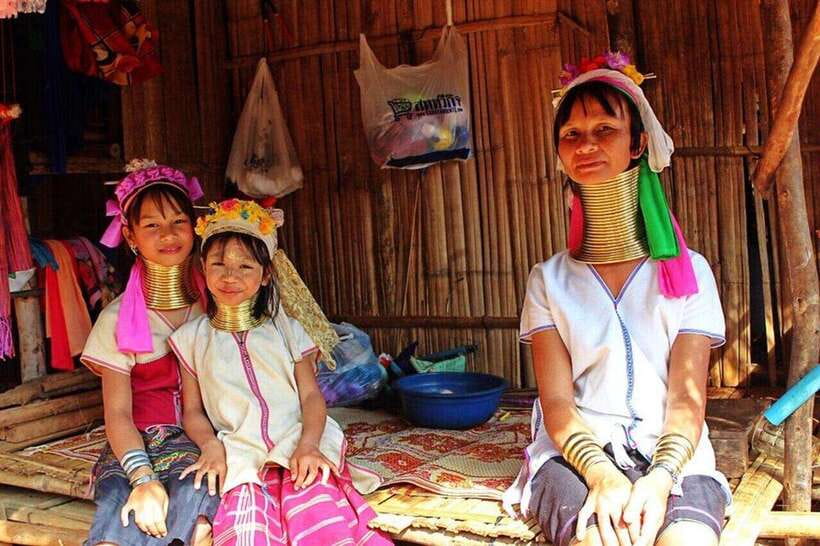
A 15-minute ride brings you to the Mae Kachan hill tribe and long-neck village. Here you can see handmade crafts, woven goods, and the brass neck rings traditionally worn by some Karen women. The visit offers a look at a community whose customs and public presentation are very different from those at the temples.
The entrance fee is 300 baht and is not included in the tour price. If you enter, you will have time to walk around, look at the crafts, and buy directly from local stalls. Several guides help explain the tradition and the community’s background, which makes the stop more meaningful than a quick photo break.
Still, this is the part of the day to approach thoughtfully. The neck rings can be uncomfortable for some visitors to see, especially when young women continue the practice for cultural and economic reasons. You should decide in advance how you feel about paying an entrance fee and taking photographs in a setting built partly for tourism.
I suggest treating the stop as a chance to listen and buy useful handmade items, not as a spectacle. Ask your guide about photography and respect the women’s space. Scarves and woven crafts are practical souvenirs, and purchasing directly can support the village economy.
Wat Rong Khun makes the biggest visual impression
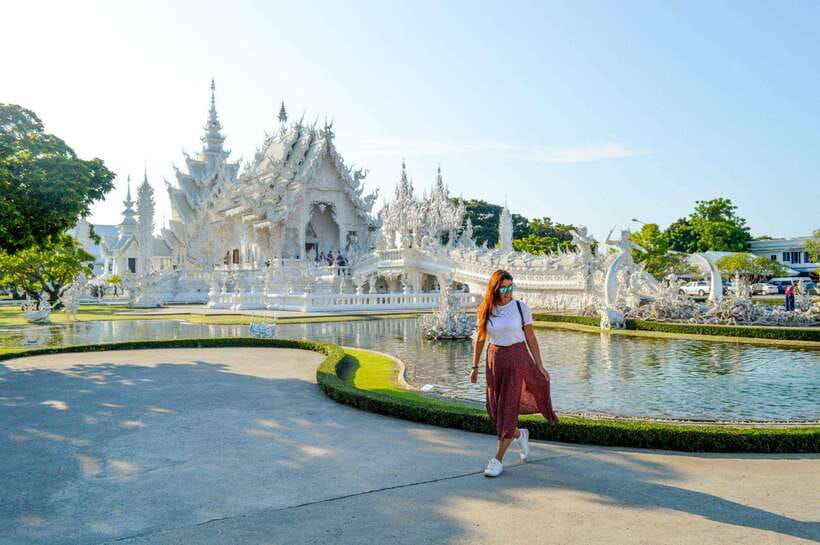
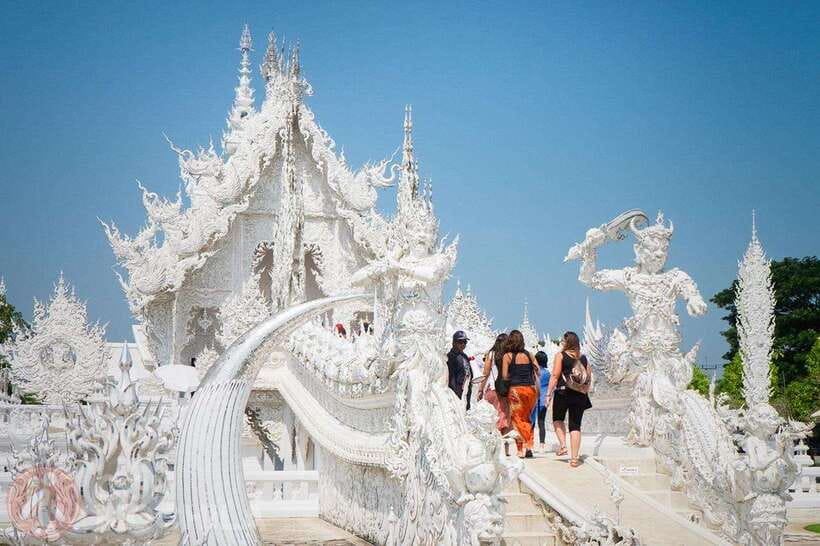
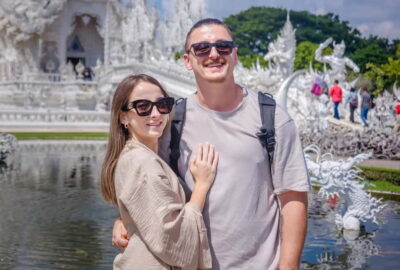
The drive from the village to Wat Rong Khun takes about two hours and 15 minutes. This is the famous White Temple, created by Thai artist Chalermchai Kositpipat. It looks nothing like an old, weathered temple complex.
The white exterior represents purity. Tiny glass details catch the sun and suggest Buddhist wisdom. The walls and sculptures combine familiar religious images with unexpected modern references, giving the site a strange, dreamlike feel.
Your guide can help explain the symbols, but you also need time to look closely for yourself. The bright white design photographs well in strong sunlight, while the fine detail rewards a slower walk. Dress modestly, cover your shoulders and knees, and follow temple rules when entering sacred areas.
This is generally the longest temple visit and often the highlight of the day. You will also have time to eat lunch nearby, but lunch is not included. The guide can point you toward restaurants, including places with Thai vegetarian food. Expect a practical meal stop rather than a carefully planned food tour.
Because Wat Rong Khun is so visually unusual, it can attract crowds. Keep track of the meeting time and do not wander too far from the group. The schedule needs to stay firm, since two more temples and the long return trip remain.
Same steam, a different pool:
- Full-Day Chiang Rai Temples Tour from Chiang Mai with Hot Spring
★ 4.5 · 48 reviews - Chiang Rai One Day: White Temple, Golden Triangle, Akha Hilltribe
★ 4.5 · 32 reviews - Chiang Mai: Mae Kampong Village, Hot Springs & Bor Sang Tour
★ 5.0 · 30 reviews - Chiang Rai White Blue Red Temples with Hot Spring from Chaing Mai
★ 4.5 · 13 reviews
Wat Rong Suea Ten brings inky blue and gold
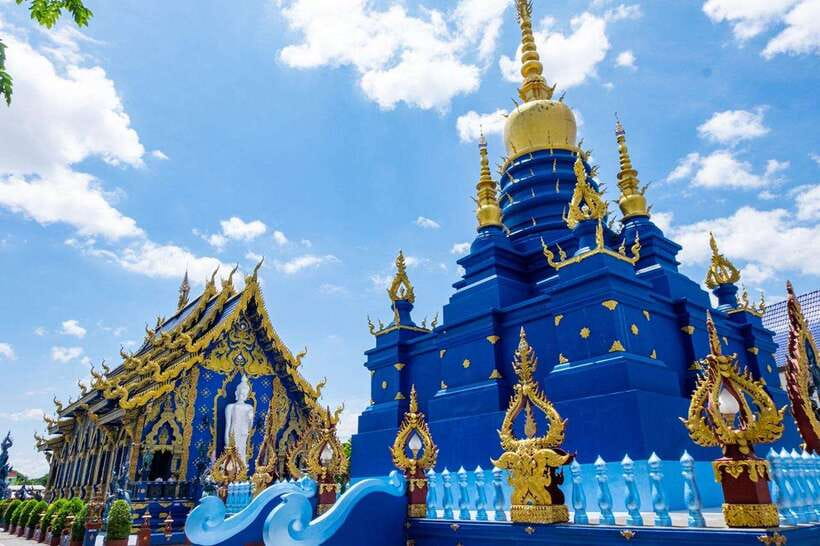
After lunch, about 30 minutes on the road brings you to Wat Rong Suea Ten, known as the Blue Temple. Its dark blue walls and gold details create a completely different mood from the bright White Temple.
Large dragon figures guard the entrance. Inside, a pale Buddha image provides a calm center against the rich blue background. The design blends traditional Buddhist forms with newer artistic choices, much like the White Temple, but the feeling here is more enclosed and peaceful.
I find this stop especially good for people who enjoy color and detail. Look at the ceiling, the painted walls, the gilded trim, and the guardian figures rather than rushing straight to the Buddha. You will have time to take photos and listen to the guide’s explanation.
The stop is not only about architecture. It shows how contemporary Thai artists continue to work with Buddhist themes instead of treating temple design as something frozen in the past. You might also find coconut or blue ice cream near the temple, a small local treat several guides recommend.
Hauy Pla Kang combines scale, views, and quiet corners
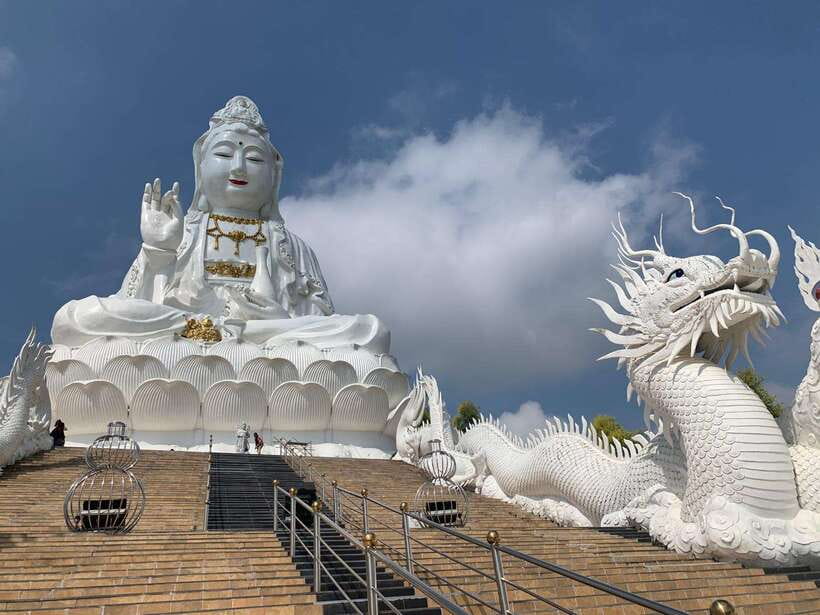
A short 15-minute drive leads to Hauy Pla Kang Temple, the final major stop. The complex is known for its huge Guan Yin statue, representing the Goddess of Mercy, and its nine-tiered pagoda.
The grounds spread out across a hill, and the pagoda contains carved figures and decorative details on several levels. Climbing upward gives you broad views over the surrounding area. There are stairs, so this stop can be tiring after a full day in the heat.
The large Guan Yin figure is the main visual marker, but do not overlook the pagoda itself. Its stacked levels create a slower, more intimate visit than the giant statue suggests. You may have time to pause for meditation, inspect the carvings, or buy a simple snack before leaving.
Mobility matters here. The tour is not suitable for people with mobility impairments, and some people need extra time on the stairs. An electric vehicle has helped some visitors reach parts of the site, but you should not assume that every access need can be handled. Ask the guide early if stairs are a concern.
Some visitors feel the final stop is rushed, especially if they want to eat, climb the pagoda, and see the statue. Keep an eye on the clock and decide what matters most to you before the bus departure.
Guides make the long return trip easier

The guide may be the difference between this feeling like an organized cultural day and a tiring series of drop-offs. Guides named Benz, Kwan, Ruby, Ann, Dee, Alex, Mon, and Kawee have been praised for clear explanations, humor, photo help, and careful attention to the group.
Benz is known for sharing background on architecture, Buddhism, tribes, and Thai history while keeping the mood light. Kwan has helped visitors with restaurant choices, temple timing, local snacks, and transport arrangements. Ruby is often described as energetic and good at keeping people engaged during the long drive.
The official guide speaks English only, despite the broader language options shown for the activity. A QR audio guide is available in 41 languages, including Spanish, French, German, Chinese, Japanese, Korean, Thai, Vietnamese, Arabic, Hindi, and Portuguese. Bring your own earphones. They are not supplied.
Some explanations happen on the bus, which is useful for setting the context but not ideal when you are tired or the road is noisy. If you miss something, ask the guide at the next stop. The best guides also help with photos, timing, food suggestions, and small problems such as illness or forgotten money.
The return drive takes about three hours. Expect a restroom or snack break along the way, but do not count on a quick arrival. Drop-off points include Hotel M Chiang Mai, Burger King Thapae, and another location depending on the selected option.
What to bring for a smoother day
You should pack as lightly as possible. Large bags and luggage are not permitted, and a small day bag is easier to carry through temple grounds.
Bring:
- Passport or identification
- Comfortable walking shoes
- Sunglasses and a sun hat
- Sunscreen
- Comfortable, modest clothing
- Insect repellent
- Your own earphones
- Small Thai banknotes
- A phone charger or USB cable if your vehicle has charging ports
Temple clothing matters. Keep shoulders and knees covered, and wear shoes that are easy to remove if required. A light scarf or overshirt can be useful in hot weather.
Lunch is not included, but food is available at several stops. You may find coffee, Thai tea, roti, ice cream, noodles, snacks, and simple meals. Small bills are helpful because some stalls may not be able to change 500 or 1,000 baht notes.
Do not schedule a flight on the same day. Traffic, roadworks, a slow group, or a vehicle problem can extend the return time. The tour includes mandatory insurance and allows free cancellation up to 24 hours ahead, but lateness at the meeting point is treated strictly.
Who should book this Chiang Rai trip
I would book this tour if you have only one day available from Chiang Mai and want to see the White Temple, Blue Temple, and Hauy Pla Kang without arranging a private driver. It suits first-time visitors who want an efficient introduction to Chiang Rai, especially if temple architecture and local customs interest you.
It also works well for people who enjoy guided travel. A good guide adds context, keeps the timetable moving, takes photos, and makes the long road easier. The $35 starting price is strong value for the distance and number of included sights.
I would hesitate if you want long meals, quiet temple visits, or plenty of free time. The day is full, the road is long, and Hauy Pla Kang may feel rushed. The Karen village also deserves a thoughtful decision rather than an automatic visit.
Book it for access and variety, not relaxation. If you can accept an early start, a bumpy stretch of road, and a late return, this is one of the simplest ways to see Chiang Rai’s best-known modern temples in a single day.
FAQ
How long does the Chiang Rai day trip take?
The activity lasts about 11 hours, or 810 minutes. The return drive to Chiang Mai takes about three hours after the final temple.
What is the meeting point?
The stated meeting point is Burger King Thapae at Hotel M Chiangmai. Arrive 15 minutes before departure, and allow extra time for Chiang Mai traffic.
Is hotel pickup available?
Pickup is optional for some selected options. If you choose pickup, wait in your hotel lobby 10 minutes before the scheduled time.
Is lunch included?
No. Lunch is not included, but there is time to eat in Chiang Rai and food is available at some stops.
Is the long-neck village entrance fee included?
No. The entrance fee is 300 Thai baht per person.
Can I swim at Mae Kachan Hot Springs?
No. Swimming is not allowed. You can dip your feet, take photos, rest, and buy drinks or snacks.
What languages are available?
The official guide speaks English. A QR audio guide is available in 41 languages, but you must bring your own earphones.
Are temple entrance fees included?
Yes. Entrance fees for the White Temple, Blue Temple, and Hauy Pla Kang Temple are included.
Is this tour suitable for someone with limited mobility?
No. The activity is not recommended for people with mobility impairments, and Hauy Pla Kang includes stairs.
Can I cancel the booking?
You can cancel up to 24 hours in advance for a full refund. The tour does not wait for late arrivals, and missed departures due to lateness are not refunded or rescheduled.
New places to soak around Chiang Mai
- White Temple, Black House Museum and Hot Spring Tour from Chiang Mai (SHA Plus)★ 3.5 · 3 reviews
- Chiang Rai Tour: Hot Spring,White Temple, Golden Triangle, Yao★ 4.0 · 3 reviews
- Lost in Chiang Mai – Secret Village, Hot Spring & Waterfall – A Cultural Therapy★ 5.0 · 3 reviews
- Extream Zipline @ Kingkong Smile and Dip in Hot Spring★ 5.0 · 9 reviews
- Private Chaing Dao Tour. Village, Cave,Hot springs, Sticky Waterfall.★ 5.0 · 4 reviews
- Chiang Mai Pai Full Day Sai Ngam Hot Spring, Pai Canyon, White Buddha, Santichon★ 4.0 · 3 reviews
- Mae Kampong Village, Hot Springs, Bor Sang Umbrellas Making Tour★ 5.0 · 6 reviews
- Chiang Rai One Day: White Temple, Golden Triangle, Akha Hilltribe★ 4.5 · 32 reviews
Chiang Mai Hot Springs: more water worth the trip.
Red, Blue, White Temples & Hot Spring Trip from Chiang Mai
Read our review →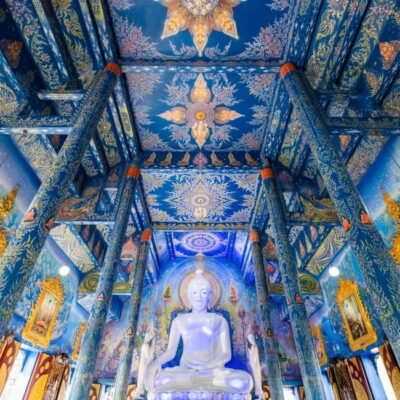
Chiang Mai: Chiang Rai Famous Temples & Hot Springs Day Trip
Read our review →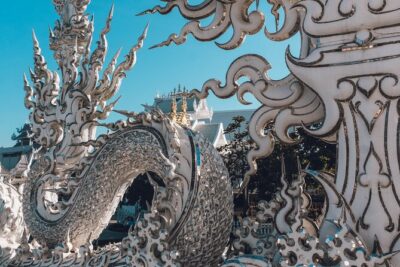
Full-Day Chiang Rai Temples Tour from Chiang Mai with Hot Spring
Read our review →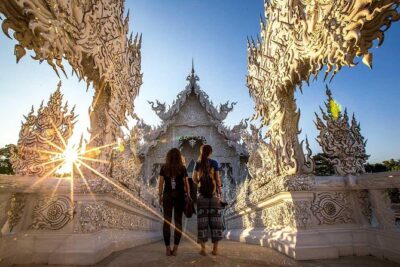
Chiang Rai One Day: White Temple, Golden Triangle, Akha Hilltribe
Read our review →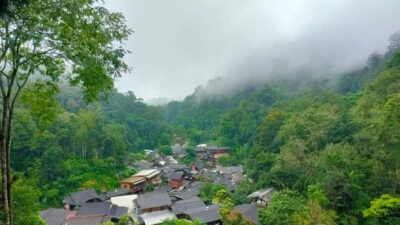
Chiang Mai: Mae Kampong Village, Hot Springs & Bor Sang Tour
Read our review →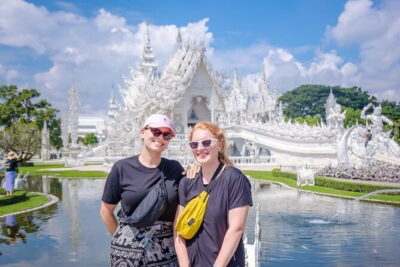
Chiang Rai White Blue Red Temples with Hot Spring from Chaing Mai
Read our review →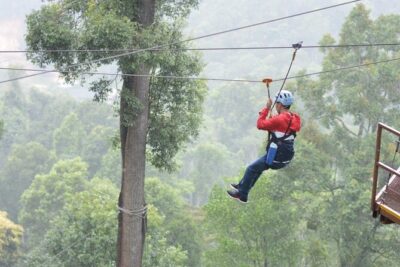
Extream Zipline @ Kingkong Smile and Dip in Hot Spring
Read our review →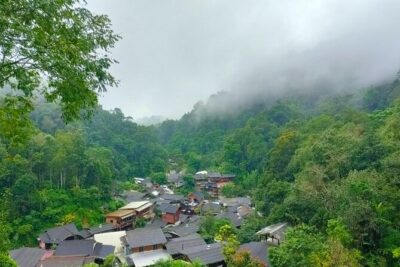
Mae Kampong Village, Hot Springs, Bor Sang Umbrellas Making Tour
Read our review →Lists this soak appears on