
Review · TUNISIA
Cap-Bon Self-Guided Excursion from Hammamet
The best thing about this Cap Bon excursion is its variety. In one long day, you move from Hammamet’s old fort to Nabeul pottery, a Punic city, a famous coastal fortress, ancient quarry caves, and Korbous hot springs. It is a useful introduction to northeastern Tunisia without changing hotels or planning several separate outings.
I like the private vehicle, which lets your group of up to three set a comfortable pace, and I like the mix of major sights and smaller local places. The main catch is important: a professional guide is not included, so you may get transport and time at the sites without much explanation unless you arrange guiding separately.
Key points to know before booking
- Six very different stops: You visit Hammamet, Nabeul, Kelibia, Kerkouane, El Haouaria, and Korbous in one day.
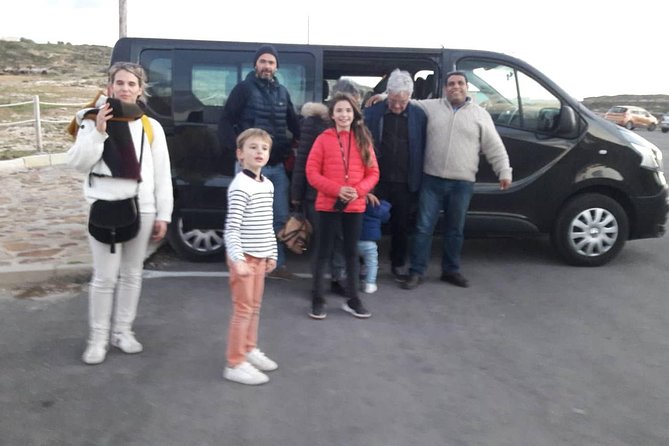
- Private transport for up to three: The $257.80 group price is strongest when shared by three people.
- Self-guided by default: Entrance fees, meals, and a professional guide are not included.
- The hottest stop may be Korbous: The natural springs can reach 59°C, so treat the water with care.
- Expect a long day: The advertised duration is about 10 to 14 hours, with an 8:30 am start.
- The strongest history stops are Kerkouane and Kelibia: One gives you a Punic archaeological site, the other a striking old fortress.
Why this Cap Bon day trip works
Cap Bon is a good region for a full-day outing because it gives you several sides of Tunisia at once. You see resort-town Hammamet, the craft center of Nabeul, fishing-port Kelibia, the Punic remains of Kerkouane, the cave-cut coast near El Haouaria, and the spa town of Korbous.
That range is the real appeal. If you spend your whole stay around Hammamet, the trip takes you beyond the hotel strip and into places with stronger local character. You also avoid the work of arranging transport between six stops, which matters on a peninsula where sights are spread out.
The trip begins at 8:30 am and can last from 10 to 14 hours. That is a serious day, not a quick outing with a couple of photo stops. I would plan it only if you are comfortable spending much of the day in the vehicle and moving between sites in warm weather.
The air-conditioned vehicle and bottled water are useful basics. Private transportation means your group does not have to follow the pace of a large coach. It also gives you more room to pause at a market, spend longer at the fort, or keep moving if the heat becomes tiring.
Self-guided soaks around Hammamet:
Hammamet: jasmine, orange trees, and the old medina
The first section brings together several parts of Hammamet in a short visit. You begin at the cultural center housed in the former villa of Romanian billionaire George Sebastien. The building hosts the International Festival of Hammamet each summer, giving the stop a link to the city’s modern arts scene.
You then visit the Punic archaeological site of Pupput. This adds an older layer to the morning before you finish at Hammamet’s medina and fort. The fort dates from 893 to 914, so it is not simply a scenic wall around a tourist quarter. It reflects the long defensive role of the old town.
The listed time here is one hour. That is enough for an introduction, but not for a slow visit to every corner. Since admission is not included, you should expect to pay entrance costs separately where required.
I like this opening because it gives you context before the day moves farther into Cap Bon. The limitation is that one hour goes quickly when you are combining a cultural center, an archaeological site, and the medina. If you want a detailed visit to Hammamet itself, this excursion will feel brisk.
Nabeul: pottery, painted plates, and market time
Nabeul is the second stop and receives about two hours, making it one of the more useful pauses of the day. The city is associated with pottery and ceramics, and its medina has souks selling pottery, painted plates, and faience.
You first visit Neapolis, the ancient site linked to the Roman-era name of Nabeul, then finish in the medina and markets. This pairing works well. The archaeological remains give you an ancient starting point, while the souks show how ceramics remain part of the city’s working identity.
This is the stop where you can browse rather than simply look. If you want a practical souvenir, pottery is more meaningful here than a generic airport purchase. Still, personal expenses are not included, so anything you buy is extra.
Two hours should allow time for a sensible look around, but keep an eye on the clock. The remaining stops are farther along the peninsula, and lingering too long in the market could make the later part of the day feel rushed.
Kelibia: a fortress above the coast
Kelibia is known for its fishing port, dry Muscat wine, and fortress. The fort is the main reason to pay attention here. It is the kind of stop that gives the day a clear visual high point, with old stone defenses and a coastal setting.
The visit is scheduled for one hour, and admission is not included. You should not expect a guided architectural tour as part of the basic booking. Instead, you get time to see the fort and take in its position above the water.
The port and local wine references also show that Kelibia is more than an isolated monument. It is a working coastal city with food and fishing traditions. If you are interested in Tunisian wine, note that the excursion identifies the local Muscat and Kelibia wine, but wine tasting is not listed as part of the tour.
This is one of the stops where a guide would make a real difference. A good explanation could help you understand the fort’s purpose and the town’s place on the Cap Bon coast. Without one, you will need to read signs or prepare in advance.
Guided soaking days around Hammamet:
- Kairouan & El Djem Guided Day Trip with Lunch from Hammamet
★ 4.0 · 18 reviews - Private Guided Excursion Tunis, Carthage and Sidi Bou Said from Hammamet
★ 5.0 · 8 reviews - Kairouan, El Djem and Monastir Guided Excursion from Hammamet
★ 5.0 · 5 reviews - Guided Excursion Cap-Bon from Hammamet
★ 5.0 · 2 reviews
Kerkouane: the day’s strongest ancient site
Kerkouane is likely to be the most important stop for anyone drawn to ancient Tunisia. The site contains a Punic city and necropolis and is listed as a UNESCO World Heritage site.
You get about two hours here, which is generous compared with the one-hour stops. That time matters because archaeological sites can seem confusing when you rush through them. At Kerkouane, you have room to look at the remains, consider the layout, and picture the city as something more than scattered stones.
The site also gives the excursion a different focus from Hammamet and Nabeul. Those places connect ancient remains with living towns and commercial streets. Kerkouane is about the preserved archaeological setting itself.
Admission is separate, and no professional guide is included. If ancient sites are your main interest, I would prepare before departure or arrange a guide. One of the biggest risks of a self-guided visit is missing the meaning of features that are not obvious at first glance.
El Haouaria and Ghar el Kebir
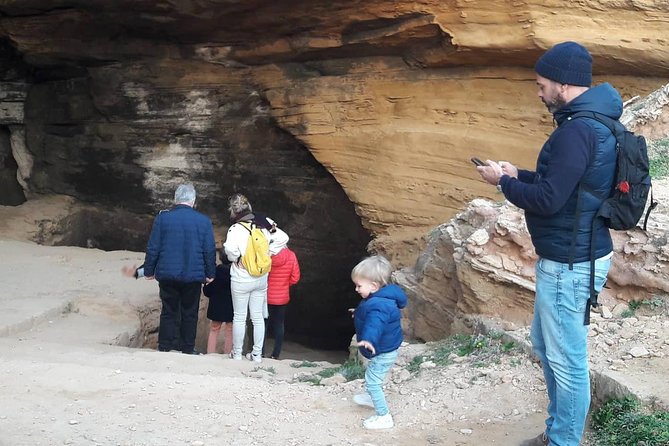
Near El Haouaria, known as the village of hawks, you visit Ghar el Kebir, a set of artificial caves. They were cut by prisoners or slaves under Carthaginian and later Roman authority.
This is a memorable change of scene. After forts and open archaeological ruins, you enter a place shaped directly into the rock. The stop lasts about one hour, which should give you time to see the caves without turning the visit into a major hike, though the exact walking conditions are not specified.
The site’s background also deserves a sober explanation. These caves were created through forced labor, not simply by craftsmen working on a local building project. That human cost is part of what makes the place worth seeing, and it should not be brushed aside as a curious footnote.
El Haouaria is also connected with hawks, but the program specifically lists the caves rather than a bird display or demonstration. Book this stop for the cave site itself, not for a guaranteed wildlife encounter.
Korbous: a very hot final stop
The excursion ends at Korbous, a spa town known since antiquity for natural hot springs. The final visit lasts about one hour.
This can be a pleasant way to finish a demanding day, but do not underestimate the heat. One account describes water reaching 59°C, which is far too hot for casual bathing. The springs are associated locally with relief for various illnesses, but the experience does not include a medical consultation, and you should use sensible caution around very hot water.
Weather matters here. A reported visit took place in temperatures reaching 47°C, with strong sun. Those figures are not a forecast for your date, but they show why you should carry water, use sun protection, and avoid assuming that the final stop will be physically easy.
Korbous is valuable because it is not another ruin or market. It gives you a look at a long-standing spa tradition and a natural feature of the region. It may also be the stop where fatigue catches up with you, especially after a 10 to 14-hour day.
The guide question matters more than the vehicle
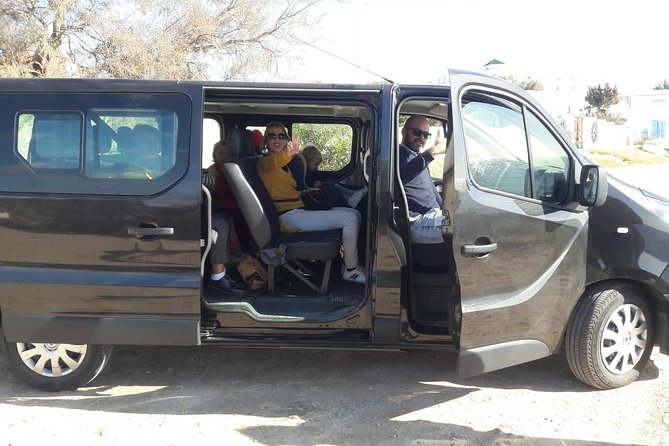
This is sold as a self-guided excursion, and the inclusions list makes the arrangement clear: air-conditioned transport, private transportation, bottled water, and fuel surcharge are included. Meals, personal expenses, entrance fees, museums, exhibitions, and a professional guide are not.
That distinction should shape your booking decision. A quiet driver may be perfectly suitable if you have already researched the sites and mainly want dependable transport. It is less suitable if you expect a running explanation of Punic history, Roman remains, fortress design, and local customs.
There is some flexibility in practice. One booking arranged a guide after the group realized it had selected the trip without one, with the extra amount paid directly in person. I would not treat that as guaranteed inclusion. If you want a guide, ask before the day begins and confirm the additional price and language.
The company connected with the excursion is Taximami, and the transport service has been praised for giving groups freedom over how long they spend at each place. That flexibility is valuable on a private outing, but it works best when you agree clearly on timing with the driver.
Is $257.80 good value?
The price is $257.80 per group of up to three people. Split three ways, that is about $85.93 per person. For two people, it is about $128.90 each. For one person, the full group price makes the outing much less attractive.
The value comes from the amount of ground covered and the private vehicle. You are not paying only for one monument. You are arranging transport across a large part of Cap Bon, with six planned stops and a long operating day.
The value is weaker if you expected a full guided tour. Since entrance fees, meals, purchases, and guiding are extra, your final cost can rise. You also need to put a price on the time spent in the vehicle. This is a good use of a day if you want breadth, but not if you prefer to spend a whole morning in one museum or archaeological site.
For three people with similar interests, I think the price is reasonable. For a solo visitor, I would compare it carefully with a shorter private outing or a shared tour.
Who should book it?
I would choose this excursion if you want a broad look at Cap Bon and do not mind a packed schedule. It suits a small private group that values control over the day and wants more than Hammamet’s resort area.
It is particularly useful for people interested in ancient Tunisia, local crafts, forts, and unusual natural sites. Families or friends can share the group price, but everyone should be ready for a long day and warm conditions.
I would hesitate if you need a guide included, dislike long vehicle journeys, or want a slow visit at each site. The self-guided format rewards preparation. Read about Kerkouane, Kelibia, Pupput, and the Punic caves before departure, and the day will make much more sense.
Free cancellation is available if you cancel at least 24 hours before the 8:30 am start. Changes or cancellations inside that window are not refundable, so keep the cutoff in mind.
Should you book this Cap Bon excursion?
Book it if your priority is variety, private transport, and seeing several important corners of the peninsula in one day. The best parts are the two-hour visits to Nabeul and Kerkouane, the fortress at Kelibia, and the unusual caves near El Haouaria.
Think twice if you want a fully narrated experience. The absence of a guide is the key limitation, not a minor footnote. For three people who can share the cost and prepare ahead, this is a practical way to see far more of Cap Bon than you could manage easily on your own.
FAQ
How long does the Cap Bon excursion last?
The excursion lasts approximately 10 to 14 hours. It begins at 8:30 am.
How many people can join the private tour?
The price covers a private group of up to three people. Only your group participates.
Is hotel pickup available?
Pickup is offered, but the supplied information does not specify the exact pickup locations.
Is a professional guide included?
No. The experience is self-guided by default, and a professional guide is not included in the price.
What is included in the price?
The price includes an air-conditioned vehicle, private transportation, bottled water, and a fuel surcharge.
Are entrance fees and meals included?
No. Meals, personal expenses, entrance fees to museums or exhibitions, and other admission costs are separate.
Can I cancel for a full refund?
Yes. You can receive a full refund if you cancel at least 24 hours before the experience start time. Cancellations or changes made less than 24 hours before the start are not refunded.
New places to soak around Hammamet
- Kairouan, El Djem, Monastir Self-Guided Excursion from Hammamet★ 4.5 · 5 reviews
- Tunis, Sidi Bousaid and Carthage day trip from Hammamet★ 4.5 · 44 reviews
- Kairouan, El Djem and Monastir Guided Excursion from Hammamet★ 5.0 · 5 reviews
- Tour to the Medina of Hammamet and the Spice Market of Nabeul★ 4.0 · 45 reviews
- Private Guided Excursion Tunis, Carthage and Sidi Bou Said from Hammamet★ 5.0 · 8 reviews
- Paddle with us in Golf Hammamet★ 5.0 · 21 reviews
- Private Day Trip to Testour, Dougga and Bulla Regia from Hammamet★ 5.0 · 21 reviews
- From Hammamet: Sahara Desert Overnight Camping★ 4.5 · 2 reviews