
Review · TUNISIA
Kairouan, El Djem and Monastir Guided Excursion from Hammamet
El Djem’s enormous Roman amphitheater is the day’s knockout sight, but this excursion gives you much more than one famous ruin. You move from Islamic Kairouan to Roman El Djem, then to modern Monastir, with a private vehicle and guide keeping the long day organized.
I like the mix of places and the private format. You get three very different sides of Tunisia, and the itinerary can be adjusted for your group. I also like the strong guiding element, with Mtir and Taib specifically praised for clear explanations, language skills, and open conversation. The drawback is the pace: ten hours is a long day, and entrance fees, lunch, and personal expenses are extra.
Key points to know before booking
- Three eras in one day: See Kairouan’s Arab-Muslim monuments, El Djem’s Roman remains, and Monastir’s modern Tunisian landmarks.
- A private trip for up to two people: The vehicle and guide are reserved for your group, rather than shared with strangers.
- The El Djem amphitheater is the centerpiece: Allow two hours for the coliseum, followed by the Roman mosaics in the archaeological museum.
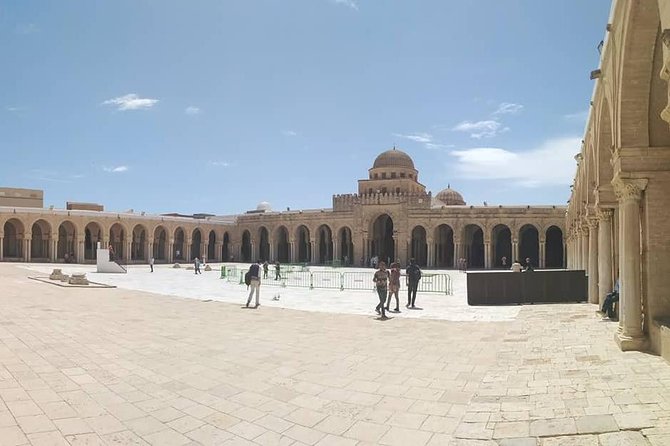
- Kairouan is more than a quick photo stop: You visit the Aghlabite Basins, Sidi Sahbi Mosque, the medina, and the Mosque with Three Gates.
- Guiding is a major part of the value: Mtir and Taib are named among the guides, with French and Spanish language ability noted.
- Budget beyond the tour price: The $292.47 price covers up to two people, but lunch and museum or monument admission are not included.
Why this Hammamet day trip works
This is a serious sightseeing day, not a short outing with one headline attraction. From Hammamet, you travel inland to Kairouan, continue to El Djem, and finish on the coast at Monastir. The route links three chapters of Tunisian history without asking you to arrange separate taxis, trains, or local guides.
I like that the day has a clear theme without becoming repetitive. Kairouan gives you religious architecture and old-city streets. El Djem supplies the grand Roman spectacle. Monastir changes the mood again with the Bourguiba mausoleum, ribat, and marina.
The private setup matters here. You can ask questions, spend more time at a site that interests you, or keep moving if your attention is fading after several hours on the road. The tour is designed for up to two people, so the $292.47 group price works best for a couple or two friends sharing the cost.
Still, you should be realistic about the schedule. The listed visits add up to about six and a half hours, before driving between cities and stopping for food. The full experience lasts about ten hours. That makes it efficient, but not leisurely.
Guided soaking days around Hammamet:
- Kairouan & El Djem Guided Day Trip with Lunch from Hammamet
★ 4.0 · 18 reviews - Private Guided Excursion Tunis, Carthage and Sidi Bou Said from Hammamet
★ 5.0 · 8 reviews - Kairouan, El Djem, Monastir Self-Guided Excursion from Hammamet
★ 4.5 · 5 reviews
Starting with Kairouan’s Aghlabite Basins
The first stop is the Aghlabite Basins, outside Kairouan’s medina walls. These large ninth-century water works show how carefully the city had to manage its water supply during the early Islamic period.
The visit lasts about 30 minutes and has no admission charge. It is a short opening stop, but it helps you understand Kairouan as more than a collection of old buildings. The city needed major public works to support religious, political, and commercial life, and these basins are a practical reminder of that effort.
Do not expect a long guided walk here. Thirty minutes is enough for an explanation and a look around, then the tour moves on. If you prefer architecture, engineering, and city planning to shopping, you will likely find this a useful start.
Sidi Sahbi Mosque and Kairouan’s devotional side
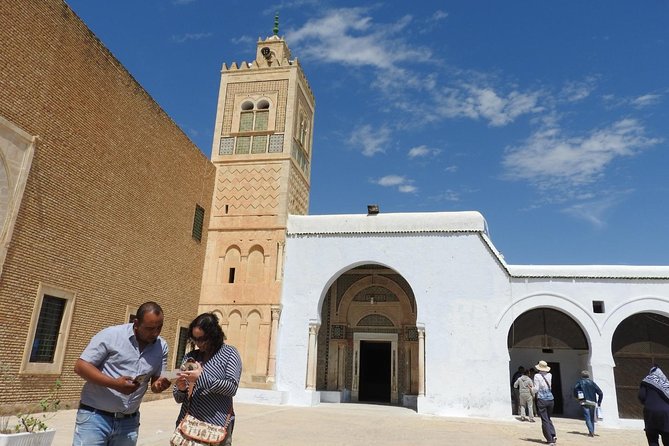
Next comes Sidi Sahbi Mosque, also called the Mosque of the Barber. It is located outside the medina walls and is linked to the mausoleum of Sidi Sahbi.
The planned visit lasts one hour. That gives your guide time to explain the religious importance of the site and the figure associated with it, rather than rushing through for a photograph. Kairouan is regarded as Tunisia’s fourth holy city and its spiritual capital, so this stop gives the day its clearest religious focus.
The supplied details list admission as free, though you should still follow local rules about dress, photography, and access. The value here comes from context. Without a guide, a mausoleum and mosque complex can blur into a series of courtyards and decorative details. With an informed explanation, you can better understand why the place matters.
Walking Kairouan’s medina and three-gated mosque
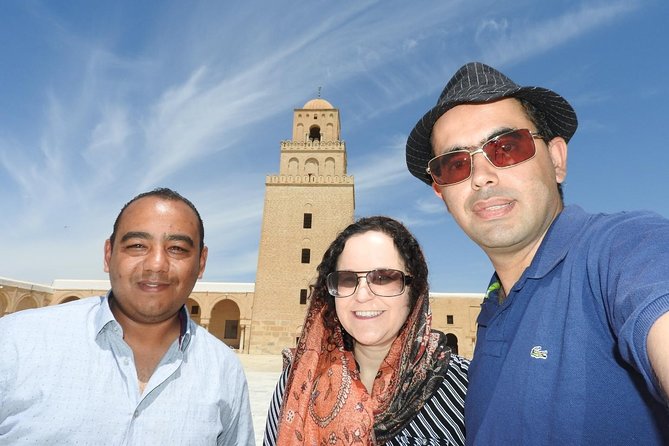
The Kairouan medina is the most atmospheric part of the morning. You see narrow streets, local markets, and the Mosque with Three Gates, then spend about an hour inside the old city.
The medina has been on the UNESCO World Heritage List since 1988. That designation reflects its layout, buildings, and religious importance, but you do not need a formal lecture to enjoy it. The pleasure is in moving through the tight lanes and seeing how the old city still works as a place of passage, trade, and worship.
This is a good section for questions. Ask your guide about the buildings, the markets, or the role of Kairouan in Tunisia’s religious life. The private format gives you room to stop and look instead of being pulled along by a large group.
The limitation is time. One hour is enough for a taste, not a full exploration of every lane. If your main goal is shopping or extended wandering, you may want to tell the guide early that the medina is a priority.
Same steam, a different pool:
- Quad ride on the hills of Hammamet
★ 4.0 · 104 reviews - 2-Day Tunisian Sahara Tour with Food & Stay from Hammamet
★ 4.5 · 80 reviews - Tour to the Medina of Hammamet and the Spice Market of Nabeul
★ 4.0 · 45 reviews - Tunis, Sidi Bousaid and Carthage day trip from Hammamet
★ 4.5 · 44 reviews
Entering El Djem’s Roman amphitheater
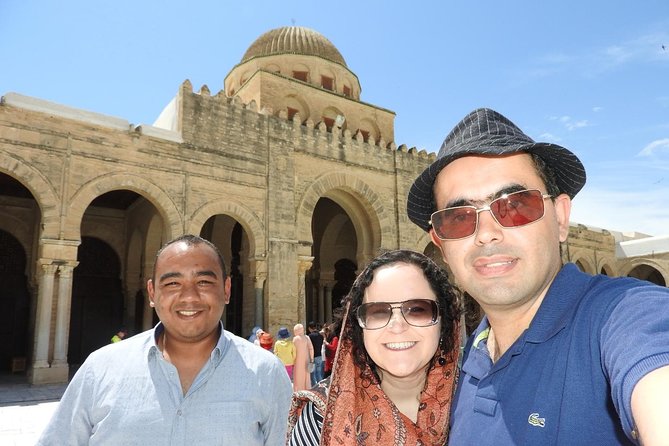
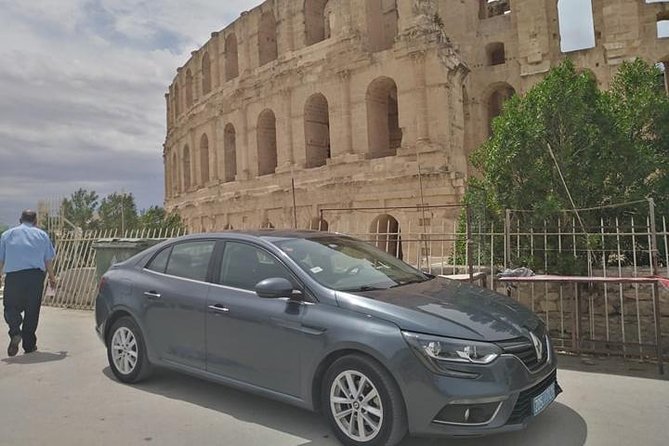
El Djem is the visual high point of the excursion. The amphitheater was built in the third century AD in the Roman city of Thysdrus, one of the prosperous cities of Roman Africa.
The scale is hard to grasp until you are inside. It could hold about 30,000 spectators and is described as the third-largest Roman amphitheater after those at Rome and Capua. The two-hour visit gives you time to walk through the seating areas and lower sections, look across the oval structure, and understand how much stone and labor went into it.
This is not just a smaller copy of Rome’s Colosseum. Its setting in a Tunisian town makes the contrast especially striking. You see a monumental Roman arena far from Italy, in a region that once produced wealth for the Roman world.
The amphitheater is a World Heritage site, and admission is not included in the tour price. That extra cost is worth allowing for, because this is the site most likely to justify the long drive from Hammamet. Wear sensible footwear if you want to explore the interior fully, though no specific dress or shoe requirement is provided.
Two hours is generous compared with the shorter Kairouan stops. That is a good choice. El Djem rewards slow looking, and a rushed 30-minute visit would leave you with little more than a few photographs.
Roman mosaics at the El Djem museum
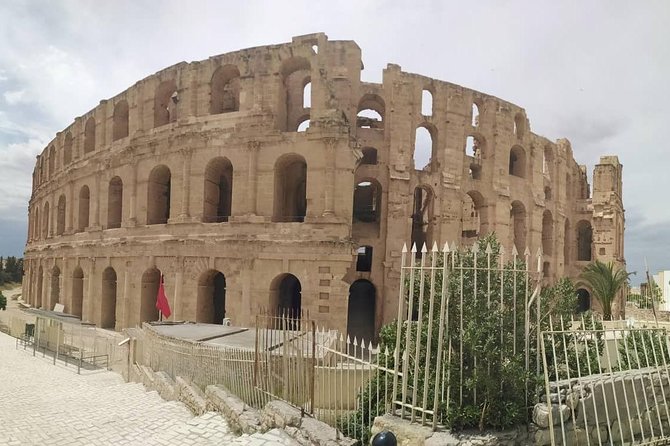
The archaeological museum of El Djem follows the amphitheater and adds detail to the big monument. It occupies a reconstructed Roman villa and contains mosaics, statues, terracotta figures, perfume vials, and other glass objects.
The collection covers material from the eleventh century to the fifth century according to the supplied tour information. The central point for you is the mosaics. They show the decorative skill and daily taste of Roman North Africa in a way that a huge arena cannot.
The museum visit lasts one hour, and admission is extra. I consider this a useful pairing with the amphitheater. The arena shows public spectacle and civic power. The villa and objects show domestic decoration, craft, and private life.
Some people will find the museum less immediately exciting than the coliseum. That is fair. If you have limited patience for cases and small objects after a long morning, ask your guide to focus on the most important pieces. Since the tour is private, you have more control than you would on a fixed group visit.
Monastir, Bourguiba, the ribat, and the marina
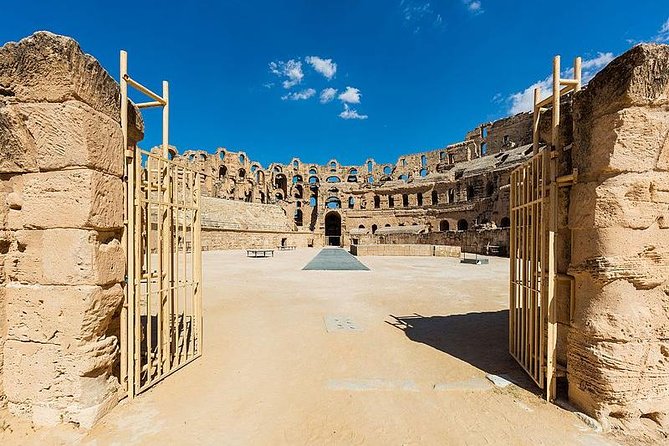
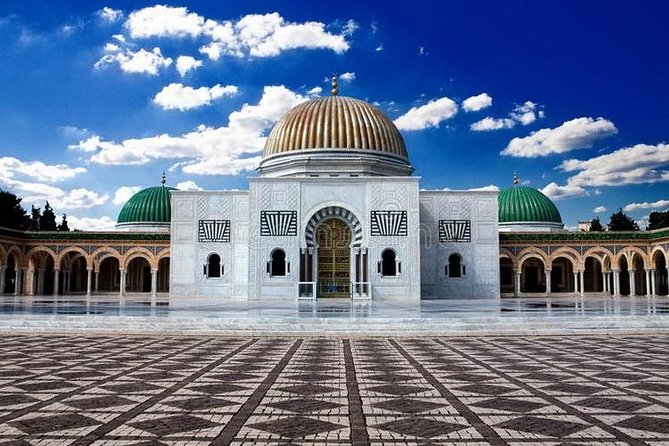
The final section shifts from antiquity to modern Tunisia. In Monastir, you pass the birthplace of Habib Bourguiba, the first president of the Tunisian Republic, and visit his mausoleum.
The mausoleum gives the city a strong connection to twentieth-century Tunisia. After Kairouan and El Djem, this is a useful change of subject. You are no longer looking only at religious foundations or Roman engineering. You are also looking at the country’s modern national story.
You then have free time to visit the ribat and marina. The details supplied for the tour do not give a separate fixed duration for each, only about one hour for the Monastir portion, so expect to choose how you use that time.
The ribat is the obvious priority if fortified religious architecture interests you. The marina offers a different atmosphere and a chance to slow down at the end of a packed day. You should tell your guide what matters most, because one hour will not allow a long visit to every Monastir sight.
What the private vehicle adds to the day
The tour includes private transportation in an air-conditioned vehicle, bottled water, all listed taxes and fees, and a professional guide. Pickup is offered, and confirmation arrives at booking.
Those details matter on a ten-hour route. You are not piecing together public transport between Hammamet, Kairouan, El Djem, and Monastir. You also have a cool place to return to between stops, which is useful during a full day of sightseeing.
The guide is central to the experience. Mtir is named as a French-speaking guide with strong cultural knowledge and an open approach to discussion. Taib is also named in the service response. Another account specifically refers to an experienced Spanish-speaking guide. Since the exact guide and language should be confirmed for your booking, mention your preferred language when reserving.
The driver-guide combination also helps with timing. The tour has several stops and a fixed return to Hammamet, so punctuality matters. A Spanish-language guide and French-language support are useful advantages if those are the languages you need, but the provided information does not promise a particular guide for every departure.
Is $292.47 good value for two?
The price is $292.47 per group of up to two people, not per person. For a couple, that works out to about $146.24 each before extra admission costs, lunch, and personal spending.
That is not a budget day trip. Its value comes from the private vehicle, the guide, hotel pickup option, and the amount of ground covered. You see three destinations that would be awkward to combine independently in one day, especially if you want explanations at each site.
The price looks stronger when two people share it. A solo visitor pays the full group rate, so the value is less attractive unless private transport and a personal guide are especially important to you.
Remember that entrances to El Djem’s amphitheater, the archaeological museum, and Monastir attractions are not included. Lunch is also separate. I would budget for those extras before booking so the low headline price does not surprise you later.
Who will enjoy this excursion most?
I would choose this tour if you want maximum coverage from Hammamet and prefer one organized day over several shorter outings. It suits couples, friends, and families who want a private vehicle and the freedom to ask questions.
It is especially good for you if:
- You want Roman history and Islamic architecture in the same day.
- You care about having a guide rather than just transportation.
- You value a private itinerary for up to two people.
- You are comfortable with a long ten-hour schedule.
- You want to see El Djem without arranging separate transport.
- You speak French or Spanish and want to request suitable language support.
I would hesitate if you dislike long drives, prefer unhurried museum visits, or want a full beach and marina day. Monastir comes late, and the available time there is short compared with the number of sights on offer.
Most travelers can participate, and service animals are allowed. The provided information does not give detailed mobility guidance for every monument, so you should ask the operator about any specific access needs before booking.
Booking, cancellation, and practical planning
Free cancellation is available if you cancel at least 24 hours before the start time. Changes or cancellations inside that 24-hour window are not refunded, and the cut-off uses local time.
This trip is often booked about 28 days ahead, so reserving early makes sense if you need a particular date, language, or guide. Pickup is offered, but confirm the exact pickup details when you book.
Bring water, even though bottled water is included, and keep room in your budget for lunch, entry tickets, and personal purchases. A phone ticket is accepted, which makes the booking simple once confirmed.
Should you book this Kairouan, El Djem, and Monastir tour?
Book it if you want a private, information-heavy day that connects Tunisia’s Islamic, Roman, and modern eras. The El Djem amphitheater is the main reason to go, but Kairouan gives the trip spiritual depth and Monastir provides a modern coastal finish.
The best value comes when two people share the $292.47 group price and make good use of the guide. Request your preferred language, ask how much time you can spend in the medina or at the ribat, and plan for extra admission and lunch costs.
Skip it if you want a slow day or dislike being on the road for much of the day. For everyone else, this is an efficient way to see three important Tunisian destinations without managing the transport yourself.
FAQ
How long does the excursion last?
The excursion lasts approximately 10 hours.
Where does the tour begin?
The tour is based in Hammamet, and pickup is offered.
How many people can join the private tour?
The price covers a private group of up to two people.
Is transportation included?
Yes. Private transportation in an air-conditioned vehicle is included.
Is a guide included?
Yes. A professional guide is included. Guides named in the supplied information include Mtir and Taib.
Is lunch included?
No. Lunch is not included in the tour price.
Are entrance fees included?
No. Entrance fees to museums and exhibitions are not included. The El Djem amphitheater, archaeological museum, and Monastir attractions list admission as extra.
What places do you visit in Kairouan?
You visit the Aghlabite Basins, Sidi Sahbi Mosque, the medina, and the Mosque with Three Gates.
What is included at El Djem?
You visit the Roman amphitheater and the archaeological museum. The amphitheater visit is planned for two hours, and the museum visit for one hour.
What is the cancellation policy?
You can cancel for a full refund up to 24 hours before the experience starts. Cancellations within 24 hours are not refunded.
New places to soak around Hammamet
- Kairouan, El Djem, Monastir Self-Guided Excursion from Hammamet★ 4.5 · 5 reviews
- Tunis, Sidi Bousaid and Carthage day trip from Hammamet★ 4.5 · 44 reviews
- Tour to the Medina of Hammamet and the Spice Market of Nabeul★ 4.0 · 45 reviews
- Private Guided Excursion Tunis, Carthage and Sidi Bou Said from Hammamet★ 5.0 · 8 reviews
- Private Day Trip to Testour, Dougga and Bulla Regia from Hammamet★ 5.0 · 21 reviews
- From Hammamet: Sahara Desert Overnight Camping★ 4.5 · 2 reviews
- Paddle with us in Golf Hammamet★ 5.0 · 21 reviews
- From Hammamet or Tunis: Carthage, Bardo, Sidi Bou said and Medina★ 4.5 · 30 reviews