
Review · NEPAL
From Pokhara: 5-Day Annapurna Basecamp Trek with Hot Springs
Annapurna Base Camp is the star here, but the hot springs at Jhinu Danda give this five-day trip a welcome ending. You walk from subtropical forest and terraced hills into cold, high mountain country, then return downhill for a warm soak before driving back to Pokhara. That is a lot of Nepal in a short time.
I like the direct route to 4,130-meter Annapurna Base Camp, and I like having a private group with an English-speaking guide who can adjust the pace. Guides named Anil, Santosh, Uttam, Bishnu, and Sun Bahadur have all led this trek, with repeated praise for patience, encouragement, and safety. The main drawback is the pace: five days means long walking days, limited time to adjust to altitude, and a demanding ascent from Deurali to base camp.
Key points to know before booking
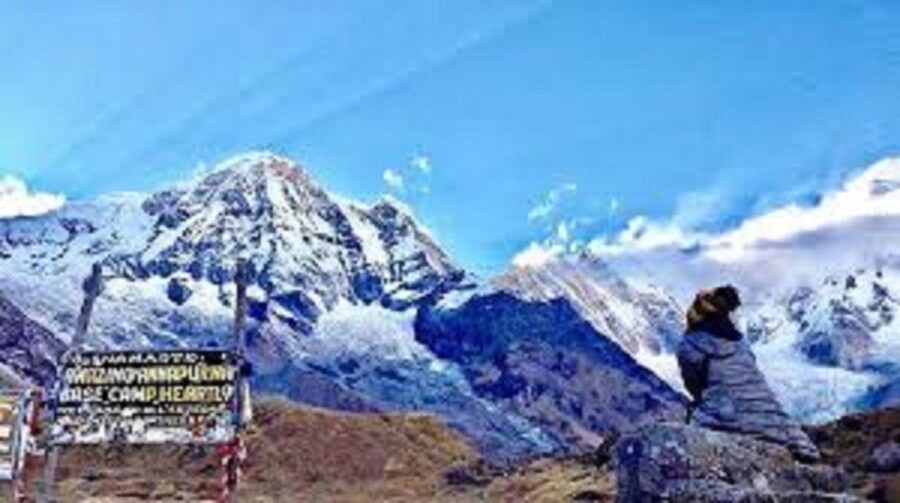
- The summit goal is Annapurna Base Camp at 4,130 meters, reached after passing Machhapuchhre Base Camp.
- Jhinu Danda adds a natural hot spring stop, a pleasant reward after the steep return walk.
- The route includes Chomrong, Sinuwa, Deurali, Himalaya, and Bamboo, with overnight stays in basic tea houses or lodges.
- Private transport and a private group make the trip more flexible than a large shared departure.
- The five-day schedule is compact, with walking days of roughly four to seven hours.
- A porter costs an extra $20 per day, and travel insurance is required.
Reaching the Annapurna trail from Pokhara
The trip begins with pickup from Pokhara, Pokhara Lakeside, Sarangkot, the airport, or several nearby resorts. Your guide and vehicle are due to arrive five minutes early, holding a sign with your name and booking details. That small bit of organization matters when you are leaving before the day gets busy.
The drive toward the trailhead takes about three hours by jeep or SUV, followed by another listed three-hour bus or coach segment in the transport plan. The exact vehicle arrangement should be confirmed before departure, since the supplied schedule describes both private road transport and a bus or coach transfer.
The road leads toward Jhinu Danda or the nearby starting area. Nepal’s mountain roads are part of the experience, but they can also be tiring before your boots hit the trail. Keep water and a snack within reach rather than burying them in your duffel.
The trek is not a wilderness walk in the strict sense. You pass through villages, tea houses, terraced fields, and forest, with local life woven into the route. Gurung and Magar communities are especially important to the character of this part of Nepal, while the higher route brings a stronger Tibetan cultural influence.
More Hot Spring Hiking Tours in Nepal:
- Pokhara: 5 Day Annapurna Base Camp Trek & Natural Hot Spring
★ 4.9 · 44 reviews - Pokhara: 7-Day Annapurna Base Camp Trek & Natural Hot Spring
★ 5.0 · 11 reviews - Pkr/Kathmandu: 5-Day Annapurna Base Camp & Hot spring Trek
★ 5.0 · 6 reviews
Day one: Jhinu Danda to Sinuwa or Chomrong
The first walking day takes around four to five hours, depending on the exact endpoint and pace. The route includes steep sections, and the schedule can begin with a demanding descent before the trail settles into its rhythm.
Jhinu Danda is more than a trail marker. It is also the location of the natural hot springs used near the end of the trip. On day one, you may see the area mainly as the gateway to the hills, but it becomes more meaningful when you return tired from base camp.
Chomrong is one of the key villages on the approach to Annapurna Base Camp. Sinuwa, at about 2,340 meters, is another common overnight point. The supplied plan names both as possible stops, so ask which village is confirmed for your departure. That affects the next day’s walking time.
You should expect steps, uneven ground, and changes in elevation from the beginning. This is not a gentle first stroll around Pokhara. Still, the route gives you an early look at terraced hills, forested ridges, and the village life that makes the Annapurna approach feel personal rather than purely scenic.
Day two: Sinuwa and Chomrong toward Deurali
Day two is one of the longer sections, listed at around six to seven hours. You walk through dense stands of rhododendron, oak, and bamboo, with repeated climbs and descents. The forest provides shade, but it also hides the big mountain views for portions of the day.
That is not a flaw. The forest is part of what makes the route change so dramatically as you gain height. You begin among plants and settlements that feel almost subtropical, then gradually move into cooler terrain. The contrast is one of the pleasures of the trek.
The route passes through or near Himalayan and Deurali, with Deurali listed as the overnight stop in the main schedule. At about 2,900 meters, Deurali marks a clear shift toward high-altitude trekking. Nights become colder, and you will appreciate having warm layers ready before you arrive.
Tea-house accommodation is basic. You should expect a simple lodge rather than a hotel, with the essentials needed for sleep and meals. The price includes lodging, though meal coverage depends on the option selected when booking. Confirm whether breakfast, lunch, and dinner are included in your chosen package.
This is also a good day to watch your pace. A guide such as Anil or Santosh can help you slow down before fatigue becomes a problem. The strongest part of the guide service, based on the named guide feedback supplied for this experience, is not theatrical commentary. It is practical care: checking your condition, encouraging you without rushing you, and making sure you arrive at the tea house safely.
Day three: Deurali to Annapurna Base Camp
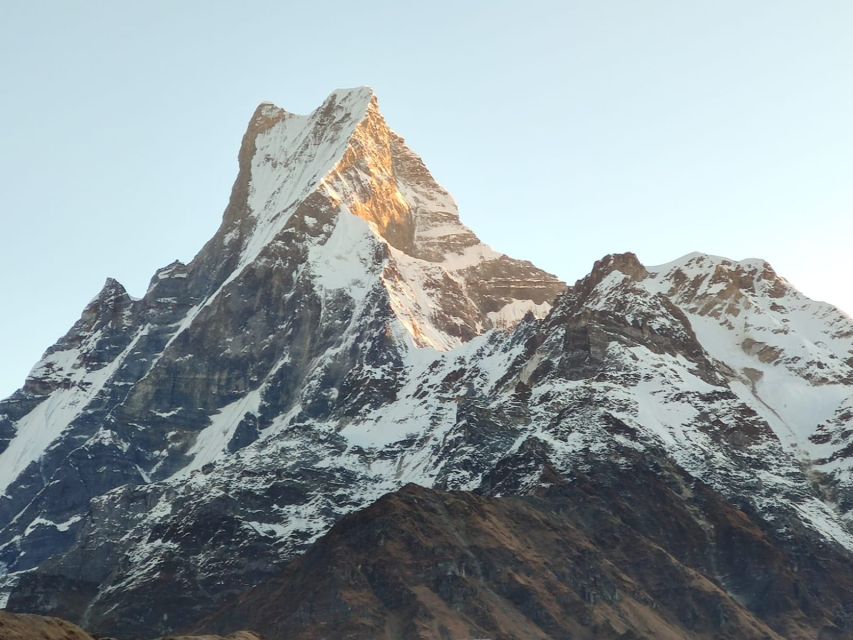
Day three is the central test and the main prize. From Deurali, you continue toward Machhapuchhre Base Camp, then onward to Annapurna Base Camp at 4,130 meters. The walking time is listed at about four to six hours, but the altitude and steep sections can make this feel like the hardest day.
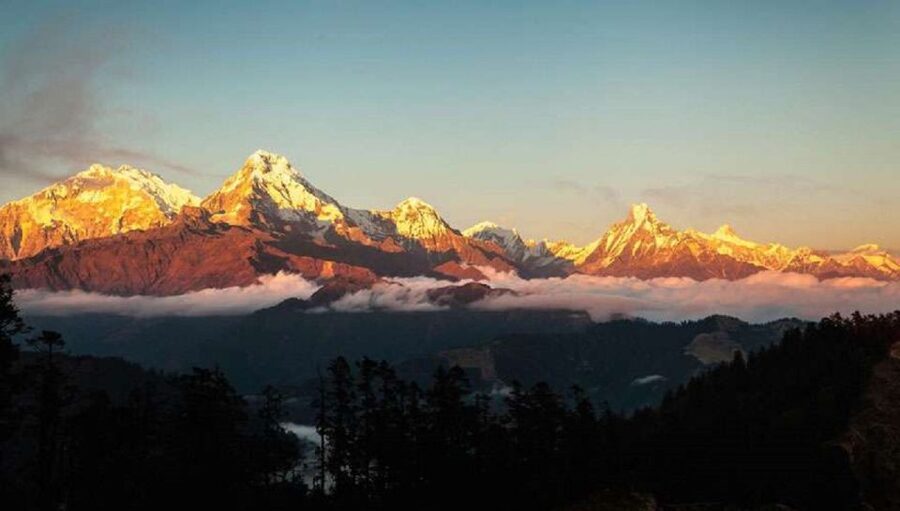
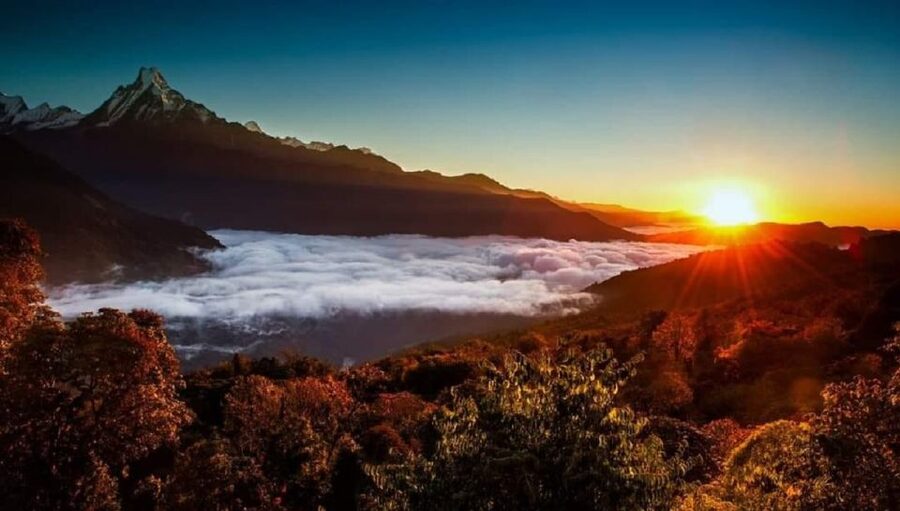
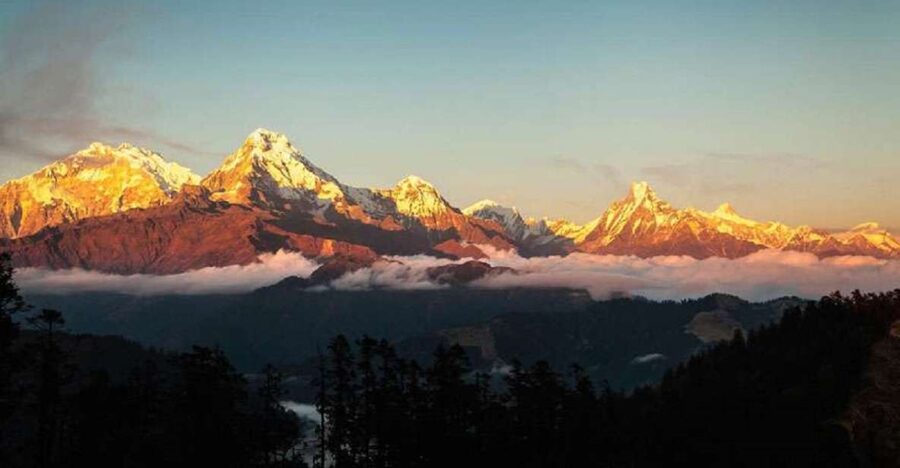
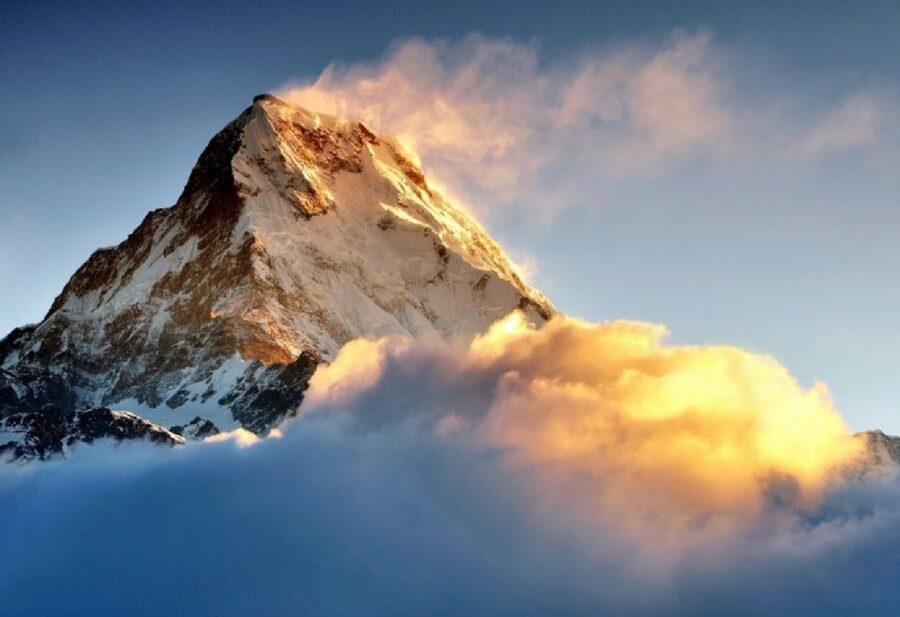
Machhapuchhre, known as Fishtail, is one of the most recognizable peaks in the region. Hiunchuli, Annapurna South, and the Annapurna massif add to the mountain wall around the route. The closer you get to base camp, the more the surroundings open into a high, dramatic bowl of rock, snow, and ice.
The word base camp can sound like a final summit, but it is not the top of Annapurna I. It is the base camp area used for expeditions and a major destination for trekkers. You are there for the views, the sense of arrival, and the rare experience of standing deep among some of Nepal’s most famous peaks.
At 4,130 meters, cold is a serious concern. The supplied information warns that temperatures vary sharply and that higher areas can be very cold. Pack gloves, a warm hat, dry layers, and rain protection even if Pokhara is warm when you leave.
Altitude is the other concern. The five-day schedule reaches base camp quickly, with only limited time to adjust. You need reasonable fitness and should tell your guide promptly if you feel unwell. A good guide can adjust breaks and pace, but no guide can remove the physical strain of gaining height quickly.
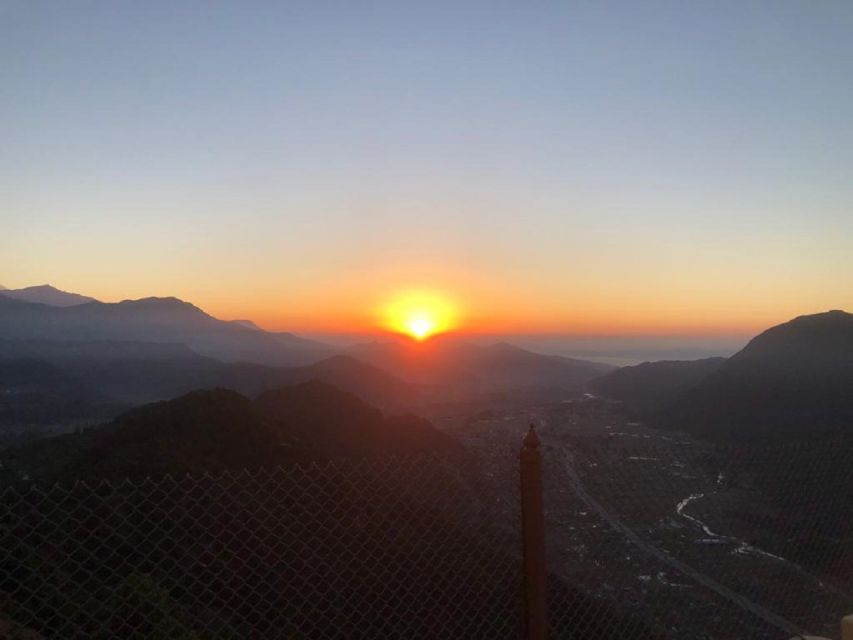
The overnight stay at base camp gives you a chance to see the area in changing light, including sunset or sunrise when conditions allow. Do not count on perfect weather. Mountain views can be hidden by clouds, and the route may be adjusted if weather creates a safety issue. One group had its schedule changed suddenly because of weather, and the company and guides adjusted the plan. Flexibility matters here.
Five-day hot spring trips around Nepal:
- Pokhara: 5-Day Trek to Annapurna Base Camp and Hot Springs
★ 5.0 · 4 reviews - 5-Day Annapurna Base Camp Trek with Natural Hot Springs
★ 5.0 · 3 reviews - Pokhara: 5-Day Annapurna Base Camp Trek with Hot Spring
★ 5.0 · 3 reviews
Day four: Annapurna Base Camp back to Bamboo
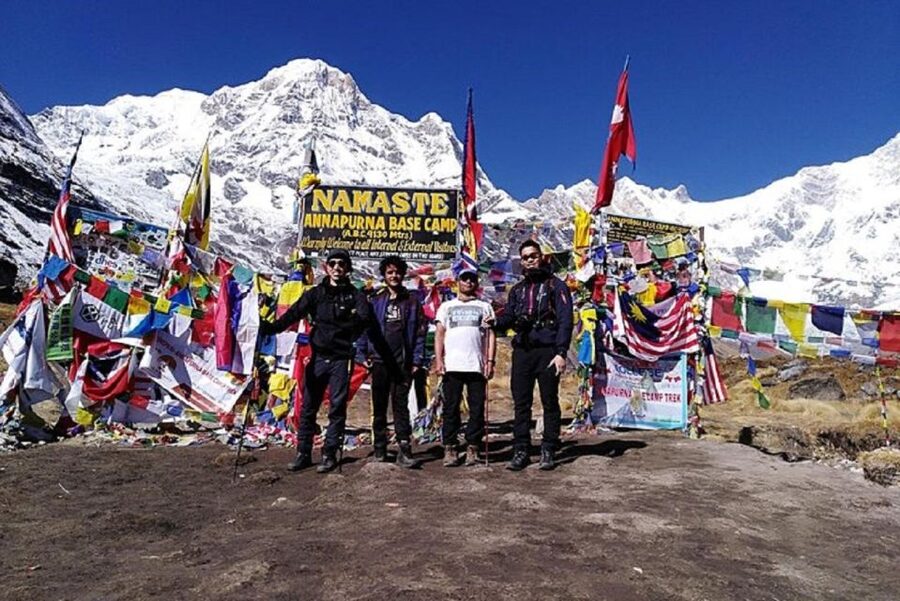
The return to Bamboo takes about six to seven hours and follows much of the same route. On paper, it is mostly downhill. In practice, downhill walking can punish tired knees, especially on uneven stone steps.
This day gives you another look at the scenery from a different direction. You may notice forest details and village views that were easy to miss while climbing toward base camp. It is also a day when the guide’s judgment matters. A patient guide can keep the group moving without turning the descent into a race.
Bamboo, around 2,340 meters, is a sensible stopping point because it brings you lower and gives you a warmer, greener setting after the cold of base camp. You will likely be ready for a simple meal, dry clothes, and an early night.
The route is an out-and-back rather than a loop, so you do not see an entirely new trail on the return. That is a fair trade for reaching Annapurna Base Camp in only five days. If your priority is constant novelty, a longer or different route may suit you better. If your priority is the base camp itself, the compact plan works well.
Day five: Bamboo, Jhinu Danda, and the hot springs
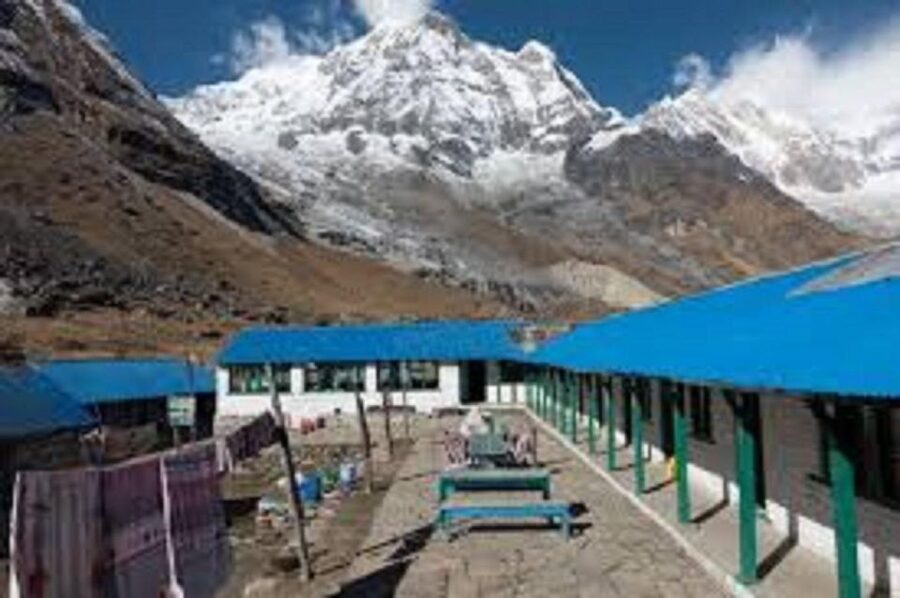
The final walking day takes about five to seven hours, depending on the route and conditions. You descend from Bamboo to Jhinu Danda, with more steps and uneven sections before reaching the hot spring area.
This is where the schedule earns its name. The hot springs provide a chance to relax after several days of climbing and descending. The entry fee is included, so you do not need to budget separately for admission. Bring suitable clothing and keep your expectations practical: this is a natural hot spring stop after a mountain trek, not a full spa day.
After Jhinu Danda, you drive back to Pokhara, with the return journey listed at roughly two to three hours. Drop-off is available in Pokhara, Lakeside, Sarangkot, the airport, and several named hotels and resorts. If you have a flight, allow plenty of extra time beyond the listed drive estimate.
Guides, group style, and the human side of the trek
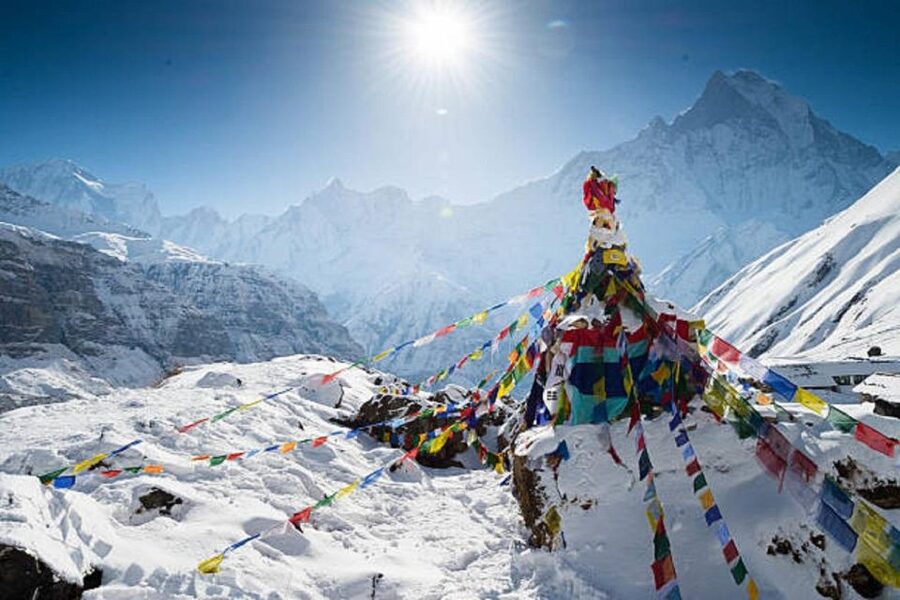
This is a private-group trek, which is one of its better features. You are not tied to the pace of a large busload of strangers, and the guide can focus on your group’s condition. The available guide languages are English, Hindi, and Nepali.
The most praised part of the guiding is calm encouragement. Anil is described as kind, funny, patient, and especially helpful for first-time trekkers. Santosh is noted for watching well-being closely and using a take-your-time approach. Uttam is praised for mountain experience and for handling food, lodging, and daily comfort. Bishnu is described as friendly and understanding, with a strong ability to keep a nervous trekker moving.
You cannot necessarily request a particular guide, so treat these names as examples rather than a promise. Still, they give you a useful idea of the service style to expect: personal attention, local information, and practical support rather than a rushed march.
The guide’s role includes food, accommodation, insurance, salary, transport, and equipment for the guide. The package also includes a first aid kit. Emergency rescue services are available if needed, but rescue costs are not listed as included. That is why travel insurance with trekking and emergency evacuation coverage is essential.
What $155 includes, and where the value changes
At $155 per person, the price is strong for a five-day private trek if your selected option includes the meals you need. It covers hotel or airport pickup, transport to and from the trail, the ACAP permit, basic tea-house lodging, an English-speaking government-registered guide, luggage storage in Pokhara, hot spring entry, and a first aid kit.
The value is especially clear if you are traveling with a small private group and want the practical pieces arranged in advance. You do not need to organize the conservation permit, find a guide at the trailhead, or solve Pokhara luggage storage on your own.
Read the meal option carefully. Meals are included depending on the option selected, while snacks and drinks are personal expenses. You should also bring cash for those purchases and for any other personal costs along the route.
A porter is not included. If you want one, the listed price is $20 per day. That can make a major difference on a fast five-day schedule, especially if you are carrying warm clothing, rain gear, and trekking equipment. You can ask whether a porter can be arranged before departure.
What to pack for cold, wet, and steep conditions
You need comfortable shoes and proper hiking shoes, plus trekking pants and clothing that can be layered. The temperature difference between Pokhara and Annapurna Base Camp can be substantial.
Pack rain gear even during a favorable season. A hat, warm layers, a change of clothes, and dry socks are practical basics. Take a camera, but protect it from rain and cold.
You also need cash, your passport or an accepted copy, and a copy of your passport submitted at least one day before the trek. The operator needs that information to arrange the required Government of Nepal permits.
A trekking pole can be provided if required, and a duffel bag or trekking bag may also be available. Confirm what is supplied before you pack so you do not carry duplicate equipment.
Who should book this five-day trek
I would recommend this trip to you if you have reasonable fitness, want Annapurna Base Camp as the main goal, and prefer a private guided experience from Pokhara. It suits a first long trek if you are prepared for long days and accept that the schedule will feel busy.
It is also a good fit if you want more than mountain views. The route includes Gurung, Magar, and Tibetan cultural influence, traditional villages, terraced fields, forest, and tea-house life. Your guide can add context that you would miss walking alone.
I would hesitate if you dislike basic accommodation, have no experience with sustained uphill walking, or want a slow acclimatization schedule. Five days is efficient, but it is not leisurely. Anyone with health concerns should seek appropriate medical advice before booking.
Free cancellation up to 24 hours before departure and reserve-now, pay-later booking add flexibility. Still, the key decision is physical, not financial: can you handle the elevation gain, cold, and repeated long walking days?
Should you book it?
Book this trek if you want the highest-value short route from Pokhara to Annapurna Base Camp, with transport, permits, a guide, tea-house stays, and a hot spring stop arranged in one package. The private format and strong guide support make the compact schedule more manageable.
Before paying, confirm your meal plan, exact first-night and second-night stopping points, transport arrangement, porter needs, and travel insurance coverage. If you are fit and ready for a demanding five days, this is a practical way to reach one of Nepal’s great mountain viewpoints without committing to a much longer trek.
FAQ
How long is the Annapurna Base Camp trek?
The activity lasts five days, including transport from Pokhara, the trek to Annapurna Base Camp, the return walk, and the drive back to Pokhara.
How high is Annapurna Base Camp?
Annapurna Base Camp is at 4,130 meters, or about 13,550 feet.
Is transportation from Pokhara included?
Yes. Pickup and drop-off are included from listed locations in Pokhara, Lakeside, Sarangkot, Pokhara International Airport, and several named hotels and resorts.
What kind of accommodation is provided?
You stay in basic tea houses or lodges during the trek.
Are meals included?
Meals are included depending on the option selected when booking. Snacks and beverages are not included.
Is a guide included?
Yes. The activity includes an English-speaking, government-registered trekking guide. Guides can also speak Hindi and Nepali.
Is a porter included?
No. A porter is available if needed for $20 per day.
Do I need travel insurance?
Yes. Travel insurance is mandatory. Emergency rescue services are available if required, but emergency rescue costs are not listed as included.
New places to soak around Nepal
- 7 Days Annapurna Base Camp Trek from Pokhara with Hot Spring★ 5.0 · 2 reviews
- Lower Mustang Jomsom Muktinath Hot Spring Tour in 4 WD Jeep★ 4.5 · 2 reviews
- Unlimited Sauna Steam and Jacuzzi★ 5.0 · 2 reviews
- POON HILL HOT SPRING – 10 Days Trek★ 5.0 · 3 reviews
- 5-Day Annapurna Base Camp Trek with Natural Hot Springs★ 5.0 · 3 reviews
- Pokhara: Amazing 7-Day ABC Trek with Natural Hot Spring★ 5.0 · 5 reviews
- Pokhara: 5-Day Trek to Annapurna Base Camp and Hot Springs★ 5.0 · 4 reviews
- Pokhara: 7-Day Annapurna Base Camp Trek & Hot Spring★ 4.0 · 3 reviews
Hot Spring Hiking Tours: more water worth the trip.
Bali: Mount Batur Sunrise Guided Hike and Natural Hot Spring
Read our review →
Mount Batur Sunrise Hike and Natural Hot Spring Option
Read our review →
Private Tour Mount Batur Sunrise Trekking and Natural Hot Spring
Read our review →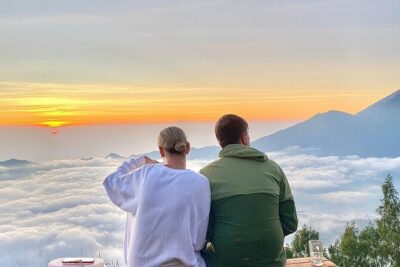
Mount Batur Sunrise Hike, Breakfast & Hot Spring
Read our review →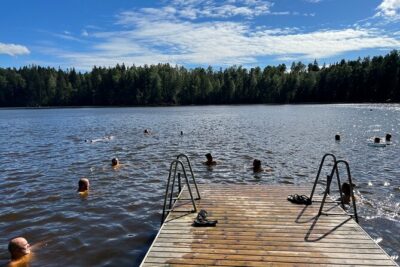
National Park Hike & Finnish Smoke Sauna Experience with Campfire Lunch
Read our review →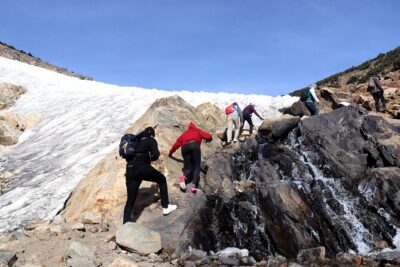
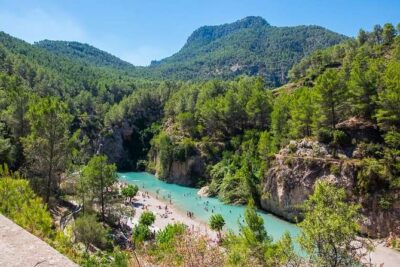
Montanejos Hiking Tour & Thermal Pools from Valencia
Read our review →
Landmannalaugar Hike and Hot Springs from Reykjavik & Hella
Read our review →Lists this soak appears on