
Review · NEPAL
Pokhara: 7-Day Annapurna Base Camp Trek & Natural Hot Spring
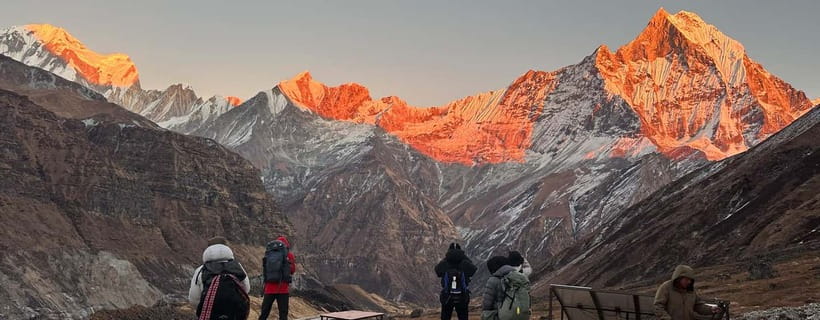
Annapurna Base Camp is one of Nepal’s best short treks because it gives you a real high-mountain finish without requiring two or three weeks away. In seven days, you climb from Pokhara’s warm hills to the 4,130-meter Annapurna Sanctuary, then drop to a natural hot spring at Jhinu Danda.
I like the mix of scenery and village life. You walk through Gurung settlements, terraced fields, bamboo, and rhododendron forest before entering a huge glacier valley ringed by snowy peaks. I also like the practical package: permits, guide costs, basic lodging, meals on selected options, transport, and luggage storage in Pokhara are handled for you.
The main caution is the pace. This is not a gentle sightseeing holiday. Several days require five to seven hours of walking, with steep stone steps and a major altitude gain. The road sections near the start and finish can also be dusty, and a porter costs an additional $20 per day if you do not want to carry your own pack.
Why This Seven-Day Trek Works
- 4,130-meter Annapurna Base Camp: Reach the famous sanctuary in a compact seven-day schedule.
- Natural hot spring finale: Soak at Jhinu Danda after the hardest high-altitude walking.
- Gurung villages and teahouses: Stay close to local mountain life rather than sleeping in large hotels.
- Private guided format: Your guide can watch your pace, health, and comfort more closely than on a large group departure.
- Strong guide support: Guides named Chandra, Bishnu Giri, Anil, Jeet Bahadur, Sun, and Laxman have been associated with warm care, mountain knowledge, and steady encouragement.
- Good value at $181: The price covers many major trek costs, though meals depend on the option selected and a porter is extra.
What You Are Signing Up For
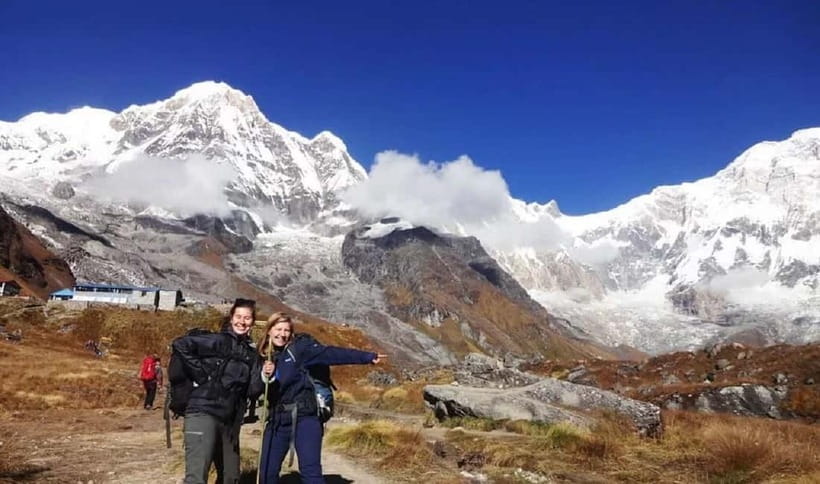
This is a point-to-point mountain walk, not a series of scenic roadside stops. Your days generally run five to seven hours, and the trail changes often: stone stairways, forest paths, river crossings, village tracks, and high alpine ground all appear during the week.
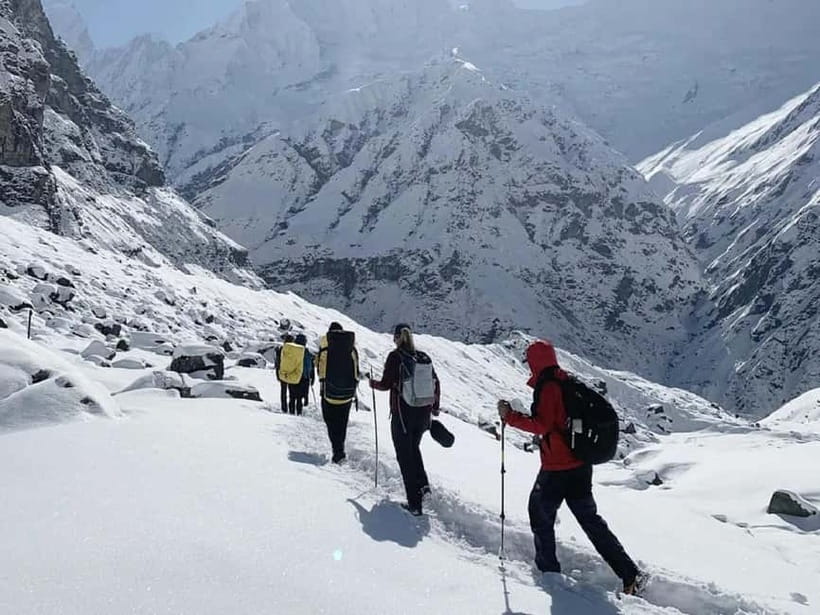
The altitude is the serious part. You begin around Pokhara and finish at 4,130 meters, with the biggest jump coming on the way from Himalaya to Machhapuchhre Base Camp and then Annapurna Base Camp. You need reasonable fitness and good health, and you should take your guide’s advice seriously if you feel unwell.
The private group format is useful here. A good guide can adjust the walking rhythm, stop when needed, and help you settle into the guesthouses. Guides have been praised for checking health, helping with food, explaining mountains and local culture, and encouraging people through the hardest sections.
Several guides connected with this trek have been named by past clients, including Chandra, Bishnu Giri, Anil, Jeet Bahadur, Sun, and Laxman. You cannot assume a particular guide unless the company confirms it, but English, Hindi, and Nepali support are available.
More Natural Hot Spring Tours in Nepal:
- Pokhara: 5 Day Annapurna Base Camp Trek & Natural Hot Spring
★ 4.9 · 44 reviews - Pokhara: Amazing 7-Day ABC Trek with Natural Hot Spring
★ 5.0 · 5 reviews - 5-Day Annapurna Base Camp Trek with Natural Hot Springs
★ 5.0 · 3 reviews
Day 1: Pokhara to Ghandruk at 1,940 Meters
The first day begins with roughly a one-hour drive from Pokhara toward Nayapool, followed by five to six hours of walking to Ghandruk. Pickup can be arranged from a Lakeside hotel or Pokhara International Airport, which saves you from sorting out transport before a demanding day.
Ghandruk is a fine first overnight stop. This well-known mountain village gives you an early taste of Gurung culture, stone paths, terraced fields, and forested hills. The route follows the Modi Khola area through villages and woodland, so the day feels varied rather than like a long climb on one surface.
The weak point is the road approach and some walking near road sections. Dust can be an issue, especially in dry conditions. One sensible improvement would be using a car or jeep for more of the road-heavy portions, particularly if you prefer trail walking to roadside walking.
Your accommodation is a simple teahouse or lodge. Think basic mountain comfort, not resort service. The appeal is being close to the trail and local communities, while the tradeoff is that facilities become more modest as you go higher.
Day 2: Stone Steps to Chomrong at 2,170 Meters
From Ghandruk, you walk five to six hours toward Chomrong. This is a classic Annapurna day, with forest trails, stone steps, and broad views toward Annapurna and Machhapuchhre.
Chomrong is an important village on the route and a useful place to settle into the rhythm of the trek. You will feel the climbing in your legs here, especially on the repeated stair sections. The day is not extremely high, but the steady ups and downs make it more tiring than the altitude figure suggests.
I recommend using trekking poles from the start, not only on the steepest ground. A pole helps with the steps, protects your knees on descents, and gives you balance when the trail is wet or uneven. Trekking sticks are included when needed, according to the package details.
This is also a good day to ask your guide about the mountains in view. Guides such as Chandra and Bishnu Giri have been praised for explaining the peaks and sharing stories about Nepali culture, which adds meaning to what might otherwise be just a hard walk.
Day 3: Forest Walking from Chomrong to Himalaya
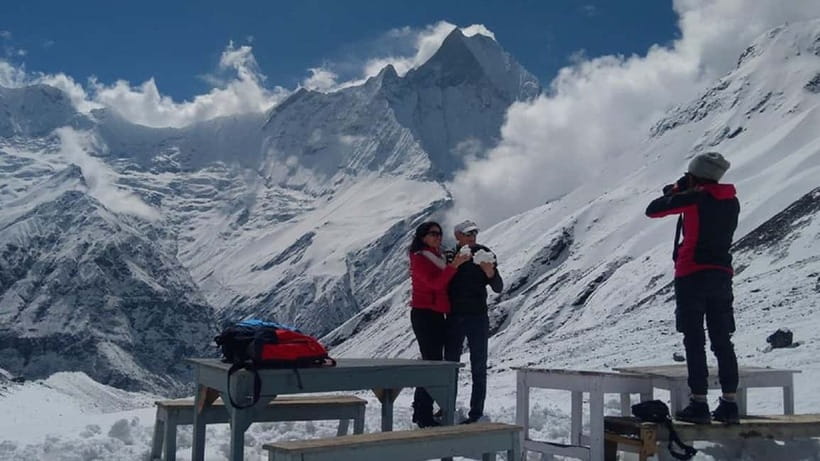
The six to seven-hour route from Chomrong to Himalaya begins with a descent toward the river before climbing again through bamboo and rhododendron forest. That pattern matters: you lose height and then regain it, so do not judge the day only by the overnight elevation of 2,920 meters.
The forest is one of the most pleasant parts of the trek. Bamboo creates a cooler, enclosed trail, while rhododendron trees bring color in season. Waterfalls and rushing rivers add sound to the walk, and the trail feels more remote as the villages thin out.
Himalaya is a practical overnight stop rather than a destination where you need lots of free time. The value is in breaking the climb into manageable stages. You can eat, rest, charge devices if facilities allow, and prepare for the much higher camp ahead.
Keep snacks and water easy to reach. Personal snacks and drinks are not included, and you may want extra food on the longer days. Cash is important because personal purchases are your responsibility and card service cannot be assumed along the route.
More Hot Spring Hiking Tours in Nepal:
- From Pokhara: 5-Day Annapurna Basecamp Trek with Hot Springs
★ 4.9 · 26 reviews - Pkr/Kathmandu: 5-Day Annapurna Base Camp & Hot spring Trek
★ 5.0 · 6 reviews - Pokhara: 5-Day Trek to Annapurna Base Camp and Hot Springs
★ 5.0 · 4 reviews - POON HILL HOT SPRING – 10 Days Trek
★ 5.0 · 3 reviews
Day 4: Machhapuchhre Base Camp to Annapurna Base Camp
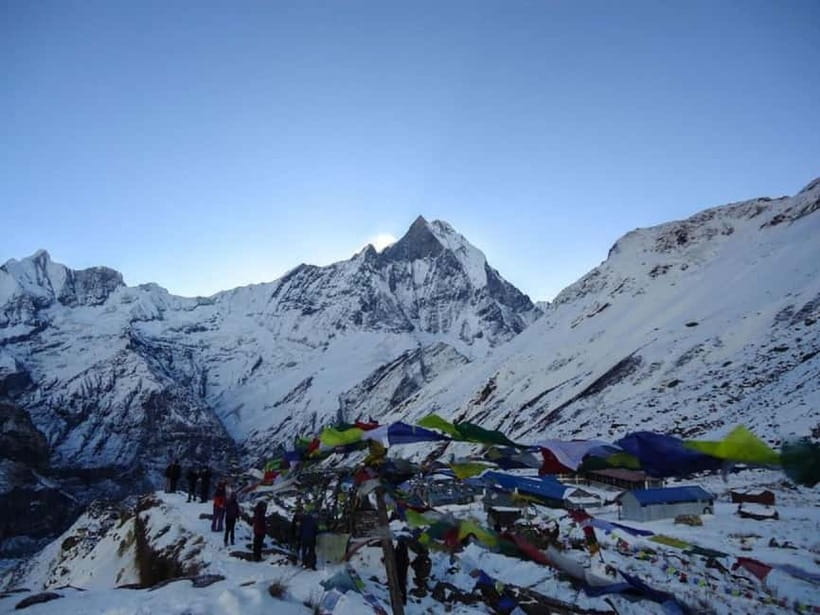
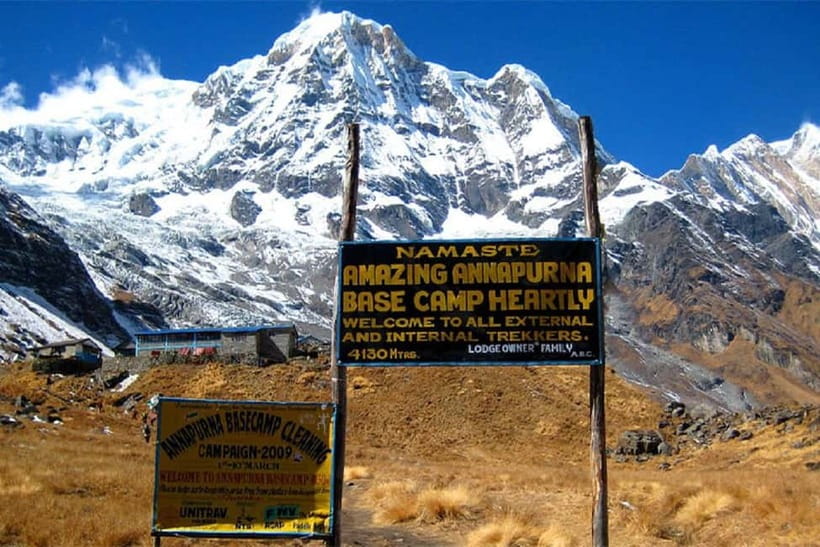
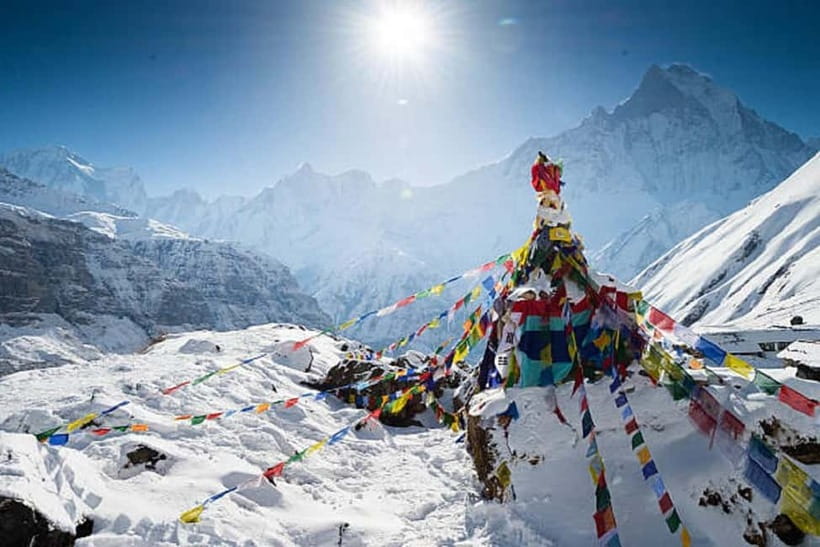
This is the main event. From Himalaya, expect six to seven hours of walking through the alpine zone to Machhapuchhre Base Camp and then Annapurna Base Camp at 4,130 meters.
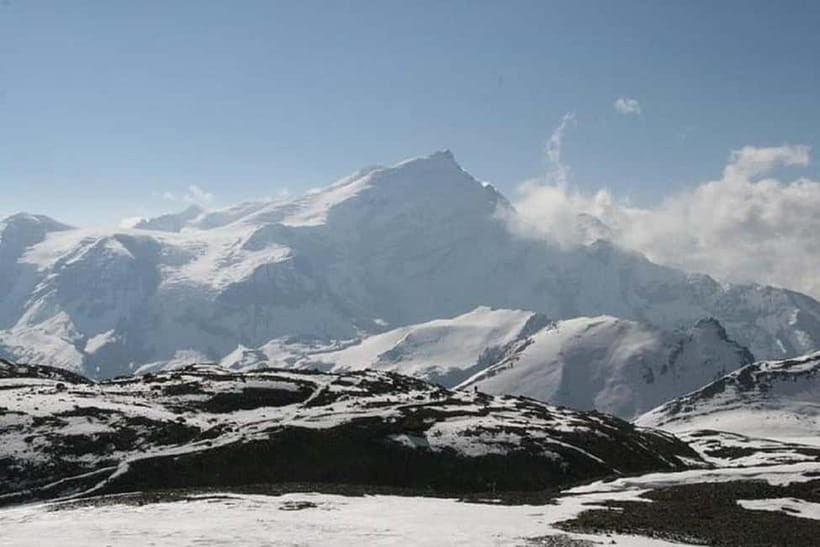
The forest gives way to a broad glacier valley, and the sense of space changes quickly. You are walking inside the Annapurna Sanctuary, surrounded by major peaks rather than looking at them from a distant viewpoint. Annapurna I and Machhapuchhre are the names most people hope to see, but the real pleasure is the full ring of high mountains around you.
Machhapuchhre Base Camp is not the final overnight point on this schedule. You continue to Annapurna Base Camp, where you sleep in a simple teahouse. This makes for a long day, but it also means you wake inside the sanctuary instead of making a short visit and retreating to lower ground.
At 4,130 meters, cold, wind, tired legs, and thin air can all affect you. Move slowly, drink regularly, and tell your guide about headaches, dizziness, unusual fatigue, or breathing problems. The guide’s attention to health and safety is one of the most valuable parts of a private trek.
If weather is clear, sunrise and sunset around base camp can be the emotional high point of the week. You do not need extra entertainment here. The peaks, shifting light, and silence do the work.
Day 5: The Long Descent to Bamboo
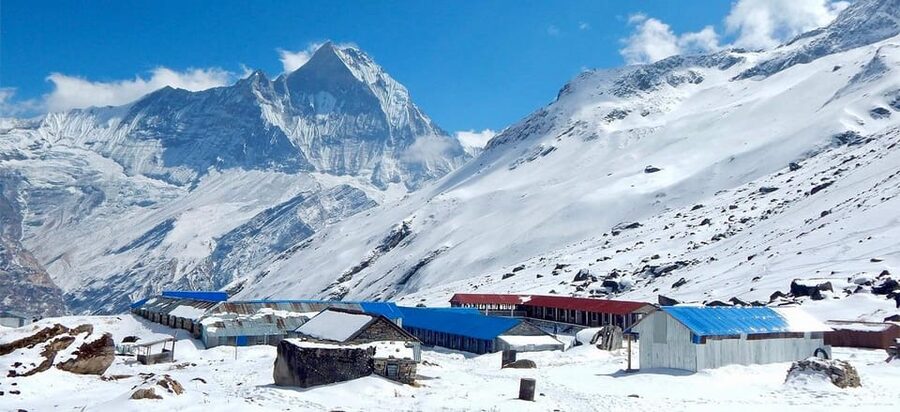
After the base camp morning, you descend six to seven hours to Bamboo at 2,335 meters. This is a relief for your breathing, but it is not an easy day. Descending on tired legs can be hard on knees and feet, particularly after the high point.
The reward is the changing view. You see the Annapurna range from new angles as you retrace sections of the valley, and waterfalls, forest, and cliffs return as you lose altitude. The backward views can be just as memorable as the approach to base camp.
Use your layers carefully. The difference between base camp and Bamboo can be substantial, so keep warm clothing accessible in the morning and lighter clothes ready later. A rain jacket is useful even when the forecast looks favorable, since mountain conditions can change.
Bamboo is another simple overnight stop with a clear purpose: rest before the final descent. Your guide will also be able to judge whether your pace has been sensible and whether you need more recovery time.
Day 6: Bamboo to Jhinu Danda and the Hot Spring
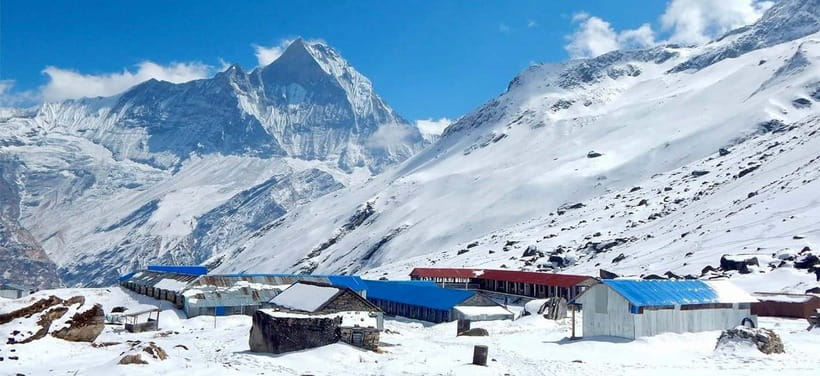
The route from Bamboo to Jhinu Danda takes about five to six hours. You descend toward the river, with forest and village scenery returning as the air gets warmer.
Jhinu Danda is the clever finishing point for this trek. Instead of ending the walk at a road and immediately getting into a vehicle, you have time to settle into a lower village and visit the natural hot springs. Bring a towel and a change of clothes, both listed among the recommended items.
The hot spring is not a luxury spa. It is a natural place to soak after several days of steep walking, and that is exactly why it works. Your legs may be tired, and warm water can make the evening feel like a proper reward.
Do not treat the soak as a substitute for recovery. You still need food, water, and sleep. The spring visit is an optional comfort within a strenuous trek, not proof that the day is easy.
Day 7: Nayapool and the Return to Pokhara
The final day includes four to five hours of walking to Nayapool, followed by about an hour of driving back to Pokhara. You will likely feel a mix of relief and reluctance as the trail gives way to transport.
The last walking section can include road-adjacent stretches, and dust is the main complaint to plan for. If you are tired of walking on roads, ask the operator in advance how the final transport is handled and whether a vehicle can cover any suitable section.
Drop-off is available at several Pokhara locations, including Lakeside hotels, Hotel Temple Tree, Hotel Barahi, Middle Path Spa and Beauty Salon, Sarangkot, and Pokhara International Airport. Confirm your preferred point before setting your onward schedule, especially if you have a flight.
What the $181 Price Really Covers
At $181 per person, this is a strong value if you want a guided trek with major administration taken care of. The package includes trekking permits, required paperwork and TIMS fees, tea house accommodation, a government-certified English-speaking guide, guide expenses, taxes, a first aid kit, and luggage storage in Pokhara.
Meals are included depending on the option you choose, so check that detail before paying. You still need money for snacks, drinks, and personal expenses. A porter is not included and costs $20 per day if you want someone else to carry your main bag.
Transport between your hotel or airport, the starting point, and the return route is included. That is useful in Pokhara, where organizing separate transfers can take time and add small costs.
The price does not include travel insurance or emergency rescue. Insurance is mandatory, and it should cover trekking at the planned altitude. Rescue services are available if needed, but you should treat them as an emergency provision rather than part of the standard package.
Packing for Seven Days Above the Tree Line
You do not need expedition equipment, but you do need sensible layers and reliable footwear. Bring comfortable hiking shoes or waterproof shoes, warm clothing, gloves, a jacket, rain gear, hiking trousers, sunglasses, a sun hat, sunscreen, and a sleeping bag.
A sleeping bag is listed as available when needed, but confirm the arrangement before departure. Bring a towel, change of clothes, flashlight, power bank, camera, and enough cash for personal purchases.
Submit a passport copy at least one day before the trek so the permits can be arranged. Carry your passport or an accepted copy during the trip, and keep your documents dry.
I would pack light and use the luggage storage in Pokhara for items you do not need on the trail. If you are carrying everything yourself, keep the load modest. If not, budget the extra $20 per day for a porter.
Who Should Book This Trek?
You should consider it if you want a serious but compact Himalayan walk, enjoy changing scenery, and like having a guide handle permits, transport, and route details. It suits people who want more than a viewpoint visit but cannot spare a longer Nepal trek.
It is also a good choice if you value local contact. The route passes through Gurung villages and uses simple teahouses, giving you a closer look at mountain life than a hotel-based tour would.
Think twice if you dislike steep steps, basic lodging, long walking days, or altitude. Seven days is efficient, but it leaves less spare time than a slower schedule. Your health and fitness need to be good enough for repeated five to seven-hour days.
The private format makes the challenge more manageable. Guides have helped with food, walking pace, health checks, and encouragement, with Chandra, Bishnu Giri, Anil, Jeet Bahadur, Sun, and Laxman among the names associated with this experience. Ask for a particular guide only if the operator confirms availability.
Should You Book It?
Book this trek if you want Annapurna Base Camp, not just a short mountain walk, and you accept that the reward requires effort. The strongest reasons are the complete sanctuary experience, the village and forest route, the guide support, and the hot spring finish.
I would choose it for the value and the private attention, while planning carefully around the altitude and road sections. Pack for changing weather, carry insurance, confirm what your meal option includes, and decide early whether you need a porter.
If your fitness is uncertain, a longer schedule may be kinder. If you are ready for a demanding week and want one of Nepal’s most memorable high-mountain destinations, this seven-day route gives you a lot of scenery and substance for the price.
FAQ
How long is the Annapurna Base Camp trek?
The experience lasts seven days, including transportation from Pokhara, the trek to Annapurna Base Camp, the return walk to Nayapool, and the drive back to Pokhara.
How high is Annapurna Base Camp?
Annapurna Base Camp is at 4,130 meters, or approximately 13,550 feet.
How many hours do you walk each day?
Walking days range from about four to seven hours. The longest sections are generally five to seven hours, depending on the day and route conditions.
Is accommodation included?
Yes. Accommodation is provided in simple teahouses or lodges along the trekking route.
Are meals included?
Meals are included depending on the option selected when booking. Snacks, drinks, and other personal expenses are not included.
Is a guide provided?
Yes. The trek includes a professional, government-certified guide. English, Hindi, and Nepali are available.
Is a porter included?
No. A porter can be arranged if needed for $20 per day.
Is transportation from Pokhara included?
Yes. Round-trip transportation between your hotel or Pokhara International Airport, the trek starting point, and the return route is included. Pickup is available from Lakeside hotels and Pokhara International Airport.
What should I bring for the hot spring visit?
Bring a towel and a change of clothes. The recommended packing list also includes comfortable shoes, warm layers, rain gear, sunscreen, cash, and a power bank.
Week-long hot spring trips around Nepal
- Pokhara: 7-Day Annapurna Base Camp Via PoonHill & Hot Spring
★ 5.0 · 6 reviews - Pokhara: 7-Day Annapurna Base Camp Trek & Hot Spring
★ 4.0 · 3 reviews - 7 Days Annapurna Base Camp Trek from Pokhara with Hot Spring
★ 5.0 · 2 reviews - 7 Day Iceland with Reykjavik Northern Light | Blue Lagoon | Golden Circle ……
★ 5.0 · 5 reviews
New places to soak around Nepal
- 7 Days Annapurna Base Camp Trek from Pokhara with Hot Spring★ 5.0 · 2 reviews
- Lower Mustang Jomsom Muktinath Hot Spring Tour in 4 WD Jeep★ 4.5 · 2 reviews
- Unlimited Sauna Steam and Jacuzzi★ 5.0 · 2 reviews
- POON HILL HOT SPRING – 10 Days Trek★ 5.0 · 3 reviews
- 5-Day Annapurna Base Camp Trek with Natural Hot Springs★ 5.0 · 3 reviews
- Pokhara: Amazing 7-Day ABC Trek with Natural Hot Spring★ 5.0 · 5 reviews
- Pokhara: 5-Day Trek to Annapurna Base Camp and Hot Springs★ 5.0 · 4 reviews
- Pokhara: 7-Day Annapurna Base Camp Trek & Hot Spring★ 4.0 · 3 reviews
Hot Spring Hiking Tours: more water worth the trip.
Bali: Mount Batur Sunrise Guided Hike and Natural Hot Spring
Read our review →
Mount Batur Sunrise Hike and Natural Hot Spring Option
Read our review →
Private Tour Mount Batur Sunrise Trekking and Natural Hot Spring
Read our review →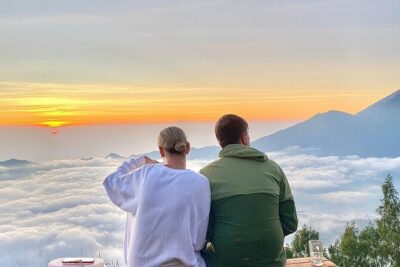
Mount Batur Sunrise Hike, Breakfast & Hot Spring
Read our review →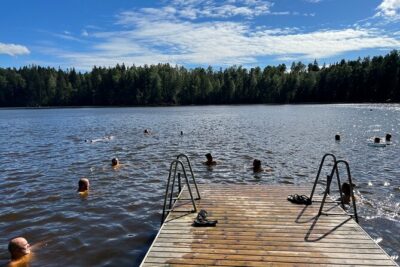
National Park Hike & Finnish Smoke Sauna Experience with Campfire Lunch
Read our review →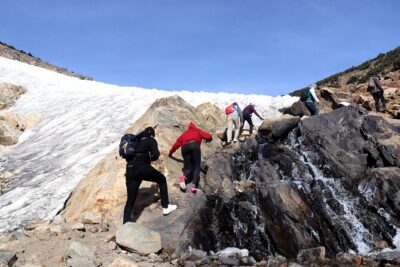
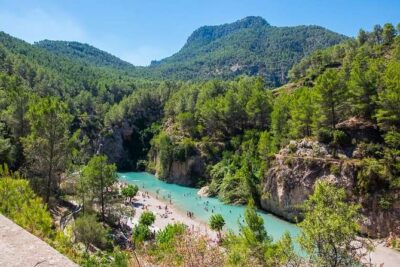
Montanejos Hiking Tour & Thermal Pools from Valencia
Read our review →
Landmannalaugar Hike and Hot Springs from Reykjavik & Hella
Read our review →Lists this soak appears on