
Review · NEPAL
Pokhara: 7-Day Annapurna Base Camp Via PoonHill & Hot Spring
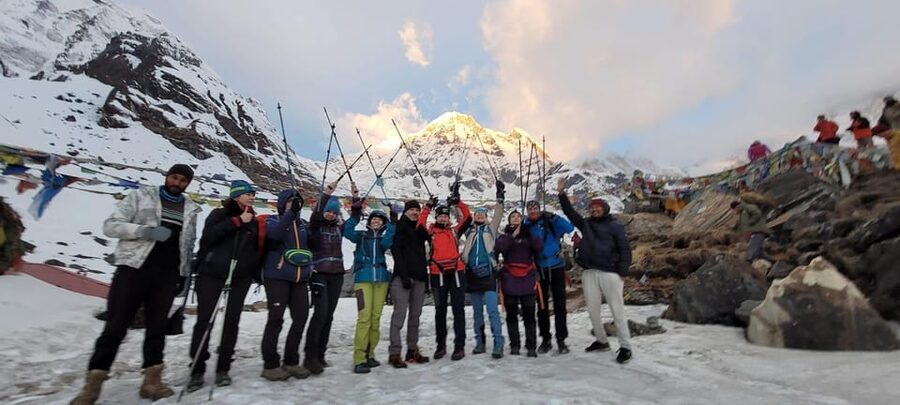
Annapurna Base Camp is the main event, but the route earns its keep before you reach it. You rise for sunrise at Poon Hill, 3,210 meters, then continue through Ghorepani, rhododendron and bamboo forests, river valleys, and mountain villages before reaching the great bowl of peaks at 4,130 meters.
I like the smart combination of Poon Hill and Annapurna Base Camp in one seven-day route, and I like the finish at Jhinu Dada Hot Spring, where you can ease tired legs before returning to Pokhara. The tradeoff is a demanding schedule: long walking days, a high overnight stop, and a fast descent leave little spare time.
Key points to know before you book
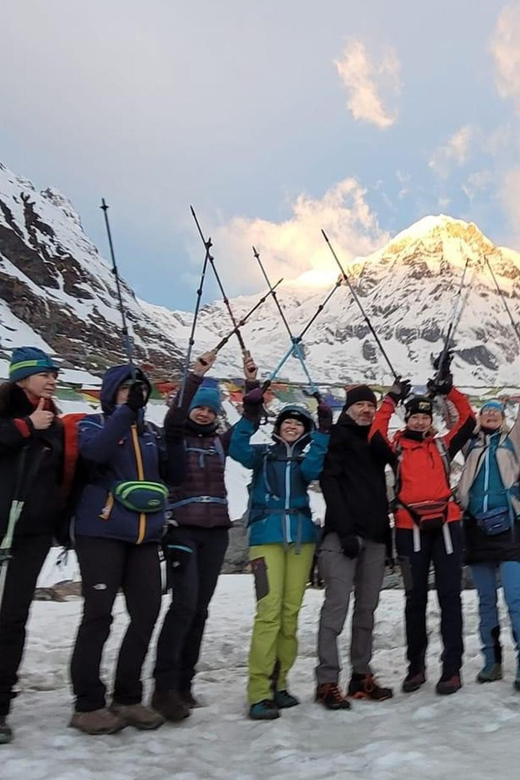
- Sunrise at 3,210 meters: The early climb to Poon Hill gives you the first major mountain view of the trek.
- Annapurna Base Camp at 4,130 meters: The high point is a dramatic mountain amphitheater reached after a steady climb from Deurali.
- Seven days from Pokhara: The route covers a lot in a short time, which suits hikers with limited trekking time.
- Private group with multilingual guiding: You can request an English, Hindi, or Nepali speaking guide.
- Hot spring finish: Jhinu Dada offers about two hours to relax before the road trip back to Lakeside Pokhara.
- Porter service costs extra: The guide, permits, meals, accommodation, and transport are included, but a porter is an additional purchase.
Why this route works so well in seven days
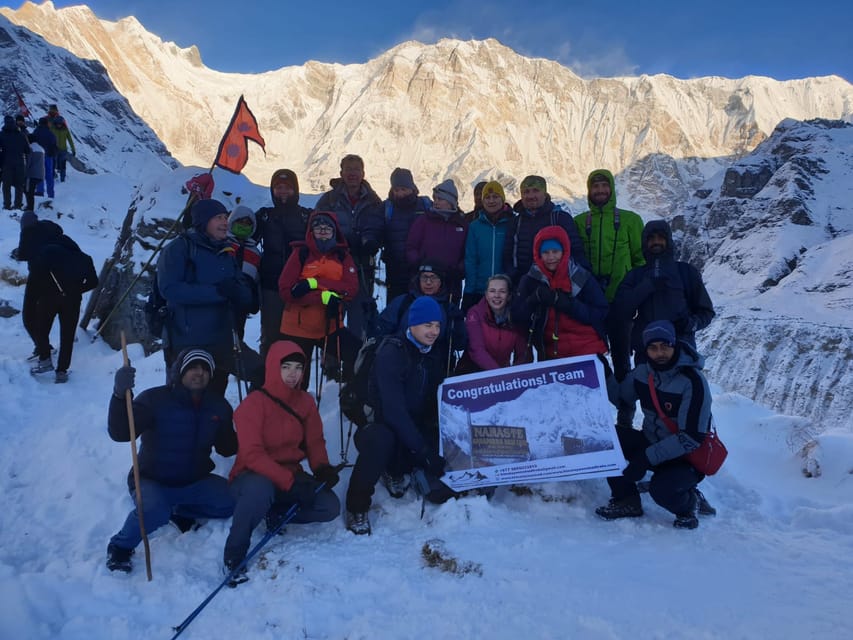
This trek links two of the best-known sights in the Annapurna region. Poon Hill gives you an early payoff, while Annapurna Base Camp provides the bigger physical and visual goal.
You will not spend the whole week repeating the same kind of trail. The route shifts from a jeep ride and stone steps near Ulleri to forest paths, river crossings, high mountain terrain, and a soothing hot spring. That variety matters on a short trip.
The schedule is also efficient. You start in Pokhara and return there on the seventh day, with transportation arranged at the beginning and end. The route does not include an extra rest day, so you should arrive ready to walk several hours each day.
The price is $267 per person. For the full package, that covers an authorized guide, accommodation during the trek, trekking permits, required paperwork, government taxes, meals, and four-wheel-drive transportation as set out in the plan. The guide’s meals, room, salary, equipment, insurance, and transport are also covered.
That is a useful package for a short Himalayan trek. You still need to budget for drinks, bottled or boiled water, hot showers, phone use, laundry, battery charging, personal purchases, insurance, a porter, and any extra hotel night in Pokhara. Read the package details carefully, since all meals are specified for the Full Package option.
Week-long hot spring trips around Nepal:
- Pokhara: 7-Day Annapurna Base Camp Trek & Natural Hot Spring
★ 5.0 · 11 reviews - Pokhara: Amazing 7-Day ABC Trek with Natural Hot Spring
★ 5.0 · 5 reviews - Pokhara: 7-Day Annapurna Base Camp Trek & Hot Spring
★ 4.0 · 3 reviews
Day 1: Pokhara to Ulleri and Ghorepani
Your first day starts with a scenic drive from Pokhara to Nayapul, followed by a longer four-wheel-drive journey toward Ulleri. The total drive is listed at about three hours.
This road section saves your legs for the high country, but it is not the polished start of a sightseeing tour. You travel through small villages and along streams before reaching the walking portion near Ulleri. From there, you trek for about four hours to Ghorepani.
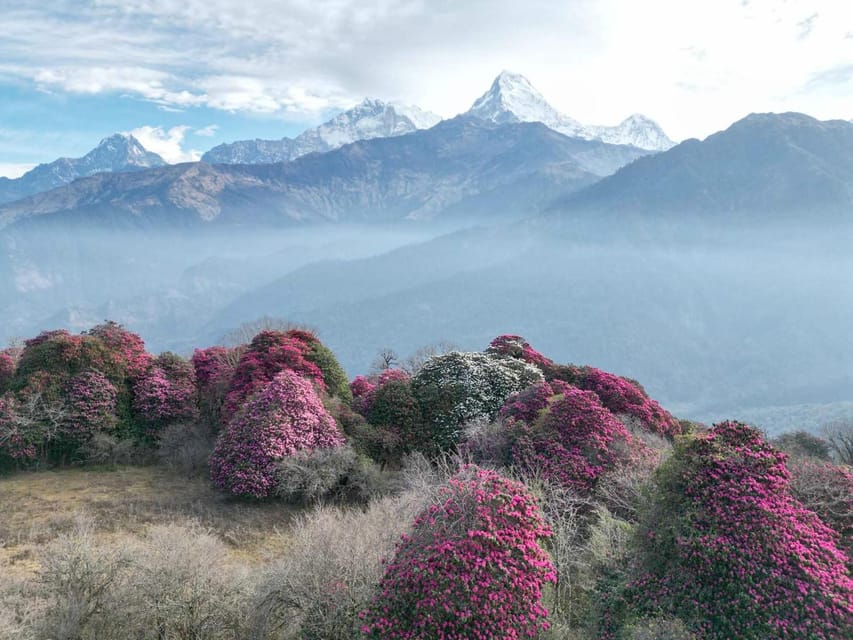
The route passes through rhododendron forest, a plant closely tied to Nepal’s mountain country. The forest gives this opening day a softer feel than the exposed high trail later in the week, though the climb still asks for steady effort.
Ghorepani sits at 2,840 meters and is your first overnight stop. It is also the base for the early morning climb to Poon Hill. Keep your warm clothes and headlamp close at hand, since the next morning begins before breakfast.
You can expect a tea house stay in Ghorepani. The accommodation is included, but the information provided does not specify room type or bathroom arrangements, so ask the operator if those details matter to you.
Day 2: Poon Hill sunrise, Tadapani, and Chuile
Day two begins with the trek to Poon Hill at 3,210 meters. The purpose is clear: reach the viewpoint for sunrise and mountain views before returning for breakfast at Ghorepani.
This is one of the most memorable parts of the route because the effort comes early and the reward arrives quickly. The climb also gives you a direct introduction to the altitude you will face later, though Annapurna Base Camp is still 920 meters higher.
After breakfast, you descend and continue toward Tadapani and Chuile. The full walking time is about six hours. Forest paths shape much of this day, and you continue through villages before staying overnight in a hotel.
The descent after Poon Hill may feel easier than climbing, but it still puts work into your knees. Trekking poles can be useful, and you should not treat the morning viewpoint as a quick photo stop. The combination of an early start and a full walking day makes this one of the more tiring sections.
Day 3: Chuile to Sinuwa beside the rivers
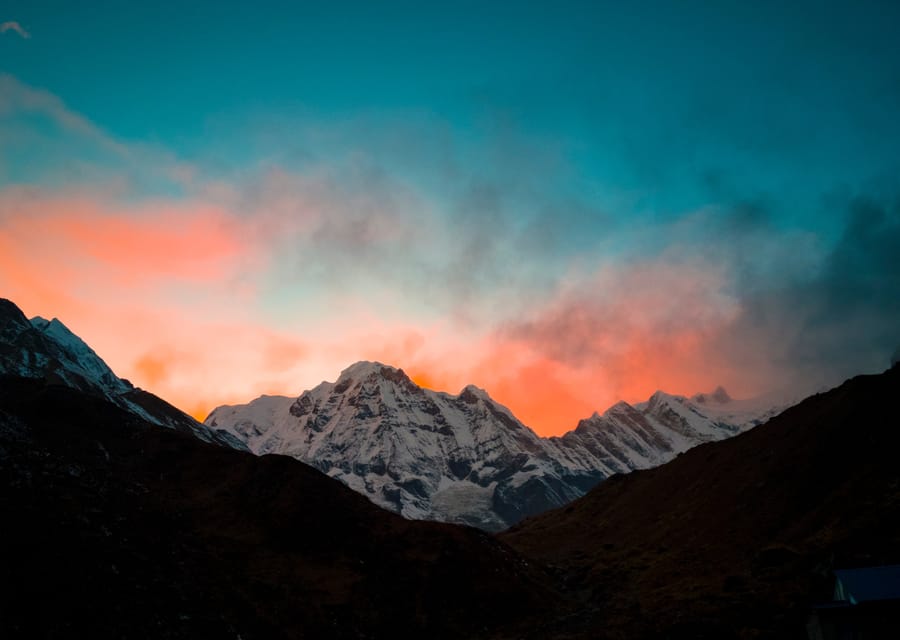
The third day moves you toward the Annapurna Base Camp trail proper. You walk for about five hours from Chuile to Sinuwa, crossing the meeting point of the Kumrung and Modi Rivers.
This is a good transition day. The route leaves the Poon Hill section behind and begins to feel more focused on the river valley leading toward the base camp. Walking beside the water gives the day a steady rhythm, with the sound of the river helping break up the climb and descent.
Sinuwa is at 2,170 meters, lower than Ghorepani and well below Poon Hill. That lower overnight elevation gives you a change of pace before the trail rises again toward Deurali and the base camp.
The day is shorter than some of the others, but the full route still includes varied ground. Your guide can help set a pace that fits your group, which is especially useful if some people are stronger uphill walkers than others.
More places to soak around Nepal:
- Pokhara: 5 Day Annapurna Base Camp Trek & Natural Hot Spring
★ 4.9 · 44 reviews - 6 Hours Spa Package in Kathmandu (Massage, Sauna, Steam, Jacuzzi)
★ 5.0 · 43 reviews - From Pokhara: 5-Day Annapurna Basecamp Trek with Hot Springs
★ 4.9 · 26 reviews - Pkr/Kathmandu: 5-Day Annapurna Base Camp & Hot spring Trek
★ 5.0 · 6 reviews
Day 4: Sinuwa to Deurali through bamboo and rhododendron
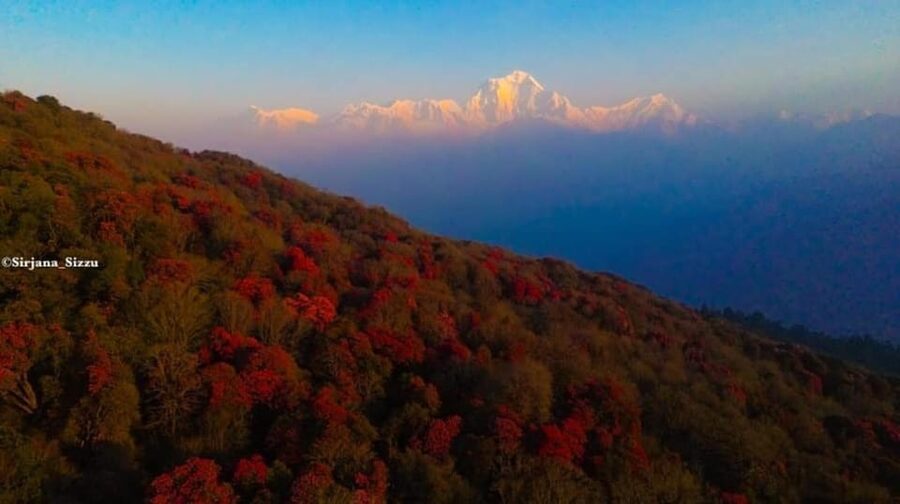
The walk from Sinuwa to Deurali takes about six hours and brings a noticeable change in altitude. Deurali sits at 3,200 meters, so this is the day when you begin to feel that the trek is no longer a low mountain walk.
The trail passes through bamboo and rhododendron forest before reaching Dovan and continuing to Deurali. You also get views toward Annapurna and Machhapuchhre, the mountain often called Fishtail because of its distinctive shape.
The forest is valuable here for more than scenery. It breaks the climb into smaller sections and offers a different setting from the open mountain views you will see near base camp. You should still keep your pace controlled. The goal is not to rush into Deurali tired, since the next morning takes you higher still.
At this point, the schedule becomes more demanding. You have already completed several walking days, and the altitude has risen from 2,400 meters at Chuile to 3,200 meters at Deurali. Follow the guide’s pace and speak up if the climb feels too hard.
Day 5: Deurali to Annapurna Base Camp at 4,130 meters
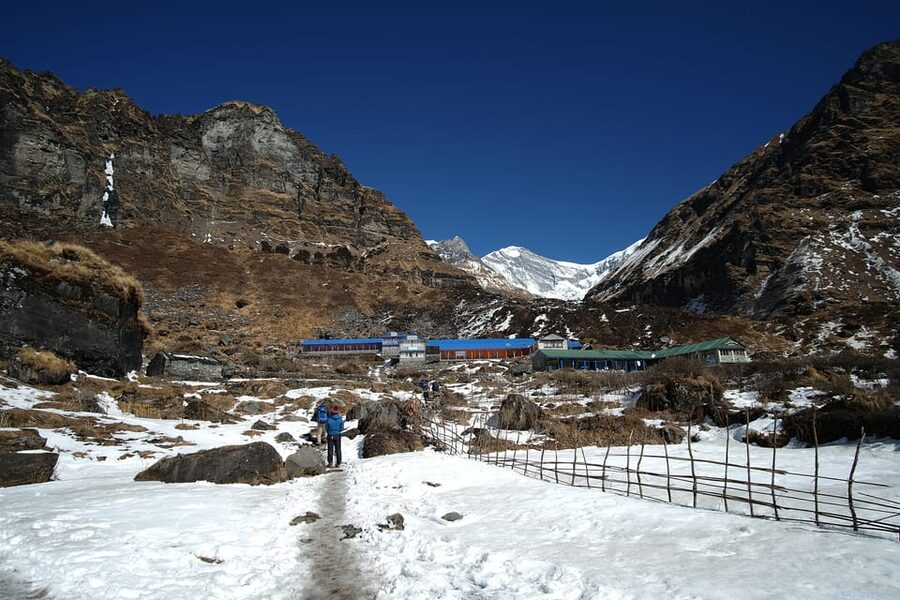
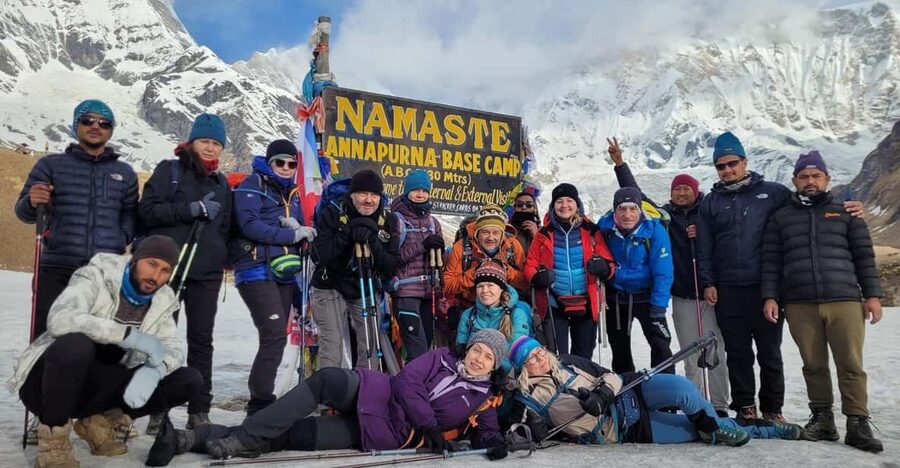
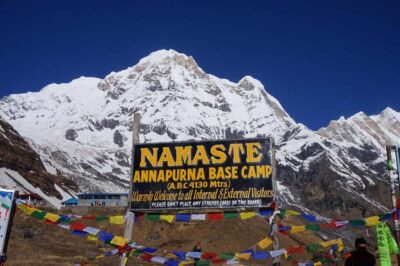
This is the main goal of the trek. From Deurali, you walk for about six hours to Annapurna Base Camp, reaching 4,130 meters.
The route leads into a huge natural bowl of mountains. At the base camp, you are surrounded by snow-covered peaks and dramatic glacier country. The setting is not simply a viewpoint with one famous mountain in front of you. It is an enclosed high mountain scene, with peaks rising around the route.
The final ascent can feel slow. You have climbed for several days, and the altitude is high. The schedule gives you time to reach the base camp, but not a separate acclimatization day, so you should view this trek as a serious physical challenge rather than a casual mountain holiday.
Take time to appreciate the arrival. The base camp is the reason the route has pushed through forests, villages, and river valleys. You will have a sense of achievement, but you should also keep the evening simple and follow your guide’s advice.
Day 6: The long descent to Bamboo
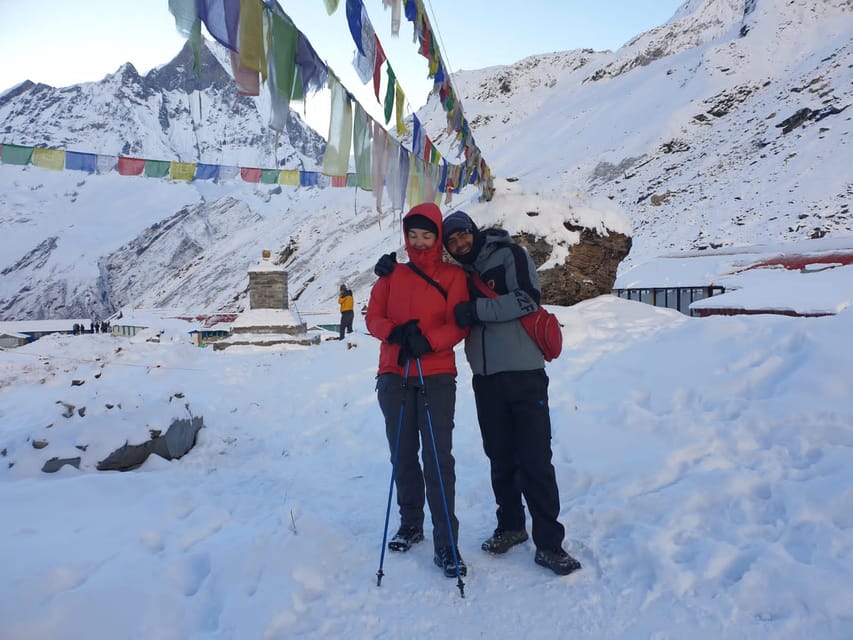
After the base camp experience, you retrace the route to Bamboo, at 2,300 meters. The walking time is about six hours.
The lower altitude changes the feel of the day, but the descent brings its own strain. Long downhill sections can be tough on knees and ankles, especially after the climb to 4,130 meters. Good shoes matter, and this is another reason not to carry more than you need.
You will see parts of the route again from a different direction. The forest and river valley may feel more familiar now, and the descent gives you a chance to notice details missed during the uphill push.
Bamboo is a practical overnight stop before the final walk toward Jhinu Dada. Do not expect the trek to end immediately after base camp. There is still a full descent and a road journey ahead.
Day 7: Bamboo to Jhinu Dada Hot Spring and Pokhara
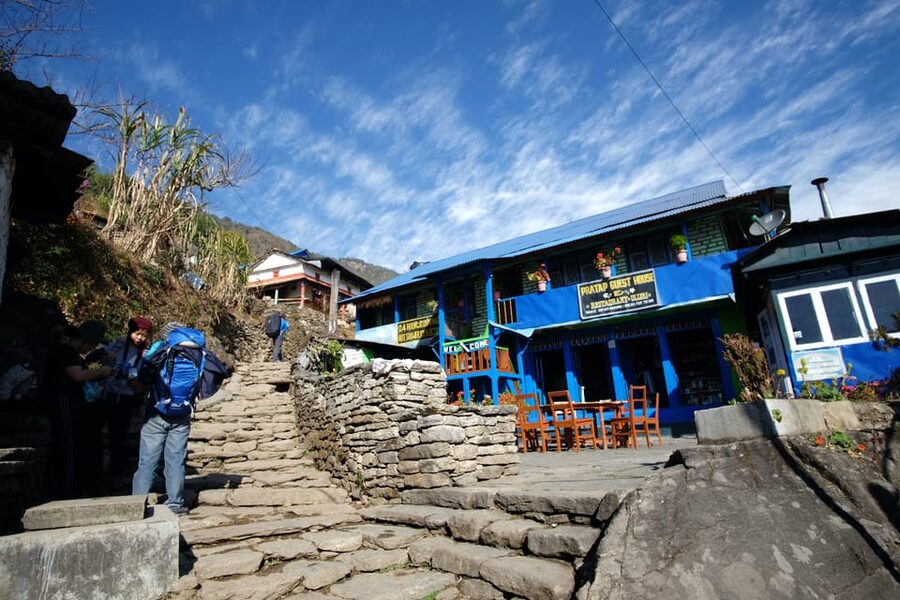
The last walking day takes about five hours from Bamboo toward Jhinu Dada. Jhinu Dada sits at 1,600 meters and is known here for its natural hot spring.
You have about two hours to soak in the hot water and relax tired muscles. This is a smart ending for a demanding trek. It gives you a physical break before the final transport and adds something beyond mountain views to the week.
You then walk for about 30 minutes to Samrung and board a jeep to Lakeside Pokhara. The drive takes about two and a half hours. The final day therefore combines a substantial walk, a hot spring visit, and a road journey, so it is not just a gentle wind-down.
Returning to Pokhara the same day is convenient, especially if your schedule is tight. It also means you should not plan an important onward connection without allowing room for delays. Any extra night in Pokhara caused by an early arrival, late departure, or early return outside the scheduled plan is not included.
Guides, private groups, and the human side of the trek
The activity uses a private group, with English, Hindi, and Nepali available. That matters because a private trek allows the guide to focus on your group’s pace and needs rather than managing a large mixed party.
Several guide and porter names appear in the booking history. Mahesh is praised for adjusting the route to the group’s abilities and expectations. Prakash is described as well informed about the route and attentive to the experience. Porters Bishal, Avinesh, and Sujal are also singled out for their help and company.
You should not assume that one named guide will be assigned to every departure. Ask who will lead your trip before you go if that is important to you. The supplied information does confirm that the guiding languages are English, Hindi, and Nepali.
The current rating is five out of five from six reviews. The strongest pattern is clear: communication before departure, guide care during the trek, route advice, and helpful support from the porter team. That is the part of this trip with the most consistent praise.
A porter is not included in the base price, but one is available for purchase. If you want to walk with a lighter daypack, arrange this in advance and confirm the cost.
What the $267 price really covers
At $267 per person, this is a strong-value package if you choose the Full Package option and use the included services. Permits, paperwork, required information system fees, guide expenses, accommodation, meals, and planned jeep transport can add up quickly on a seven-day trek.
The price does not cover everything. You need travel and rescue insurance, international flights, a Nepalese visa, drinks, personal expenses, extra water, showers, laundry, phone calls, battery charging, and a porter if wanted.
Entrance fees during sightseeing are also excluded, although the route description does not list a separate sightseeing program. The important point is to keep a small cash reserve for daily extras.
The activity allows cancellation up to 24 hours before the start for a full refund, and you can reserve now and pay later. Availability and starting times should still be checked for your chosen date.
What to pack for this seven-day route
The required list includes a passport or ID card, comfortable shoes, sunglasses, sunscreen, a jacket, comfortable clothing, a sleeping bag, and trekking gear.
Good footwear is especially important because the route includes forest paths, steep sections, long descents, and several six-hour walking days. A jacket is useful because the trek reaches 4,130 meters, while sunglasses and sunscreen matter on exposed sections and at higher elevation.
A sleeping bag is specifically requested, even though accommodation is included. Do not assume the provided lodging replaces your personal sleeping gear.
You should also plan for the extras not covered by the price. Bottled or boiled water, showers, charging, laundry, and drinks cost extra. Keep your essentials accessible during the jeep rides and walking sections.
Who should book this Annapurna trek?
I would choose this route if you have limited time and want two major Annapurna experiences in one trip: sunrise from Poon Hill and the higher goal of Annapurna Base Camp.
It suits hikers who can manage five to six hours of walking on several consecutive days and who are comfortable with a high point of 4,130 meters. The seven-day schedule is efficient, but it is not leisurely.
The route is less suitable if you want several rest days, short walking stages, or a flexible itinerary. It is also listed as not suitable for pregnant women. If altitude, long descents, or early starts concern you, ask the operator for a clear discussion of the route before booking.
FAQ
How long is the Annapurna Base Camp via Poon Hill trek?
The trek lasts seven days, beginning and ending in Pokhara.
What is the highest point on the route?
Annapurna Base Camp is the highest point at 4,130 meters. Poon Hill reaches 3,210 meters.
Is transportation from Pokhara included?
Yes. Hotel pickup and drop-off are included, along with four-wheel-drive jeep transportation according to the itinerary. The final jeep ride from Samrung to Pokhara takes about two and a half hours.
Are meals included?
Breakfast, lunch, and dinner during the trek are included with the Full Package option.
Is a porter included?
No. A porter is available for an additional cost.
What languages can the guide speak?
Guiding is available in English, Hindi, and Nepali.
Can I cancel the booking?
You can cancel up to 24 hours in advance for a full refund. You can also reserve now and pay later.
Should you book this trek?
Book it if you want a fast, well-supported route that packs Poon Hill, Ghorepani, Annapurna Base Camp, and Jhinu Dada Hot Spring into one week. The strongest reasons are the varied route, the private group format, and the practical inclusion of permits, meals, accommodation, guide costs, and planned transport.
Think twice if you want a slow schedule or dislike long walking days. Before paying, confirm whether you are booking the Full Package, ask about the assigned guide, arrange a porter if needed, and make sure your insurance covers trekking and rescue. For a fit hiker with limited time, this is a substantial introduction to the Annapurna region at a reasonable price.
New places to soak around Nepal
- 7 Days Annapurna Base Camp Trek from Pokhara with Hot Spring★ 5.0 · 2 reviews
- Lower Mustang Jomsom Muktinath Hot Spring Tour in 4 WD Jeep★ 4.5 · 2 reviews
- Unlimited Sauna Steam and Jacuzzi★ 5.0 · 2 reviews
- POON HILL HOT SPRING – 10 Days Trek★ 5.0 · 3 reviews
- 5-Day Annapurna Base Camp Trek with Natural Hot Springs★ 5.0 · 3 reviews
- Pokhara: Amazing 7-Day ABC Trek with Natural Hot Spring★ 5.0 · 5 reviews
- Pokhara: 5-Day Trek to Annapurna Base Camp and Hot Springs★ 5.0 · 4 reviews
- Pokhara: 7-Day Annapurna Base Camp Trek & Hot Spring★ 4.0 · 3 reviews
Nepal Hot Springs: more water worth the trip.
Pokhara: 5 Day Annapurna Base Camp Trek & Natural Hot Spring
Read our review →
6 Hours Spa Package in Kathmandu (Massage, Sauna, Steam, Jacuzzi)
Read our review →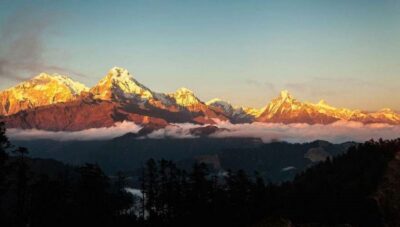
From Pokhara: 5-Day Annapurna Basecamp Trek with Hot Springs
Read our review →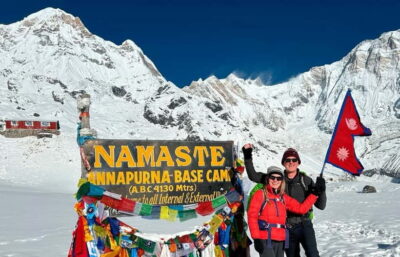
Pkr/Kathmandu: 5-Day Annapurna Base Camp & Hot spring Trek
Read our review →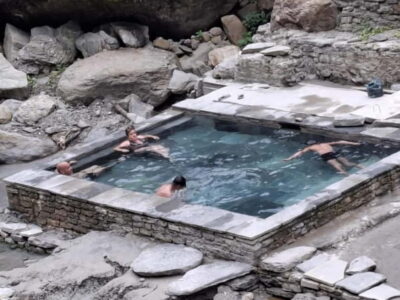
Pokhara: Amazing 7-Day ABC Trek with Natural Hot Spring
Read our review →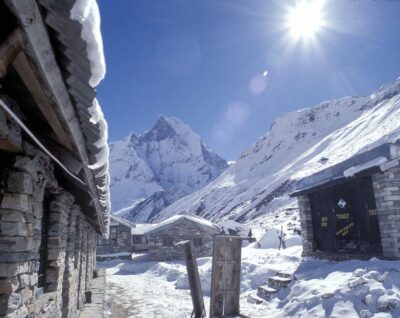
Pokhara: 5-Day Trek to Annapurna Base Camp and Hot Springs
Read our review →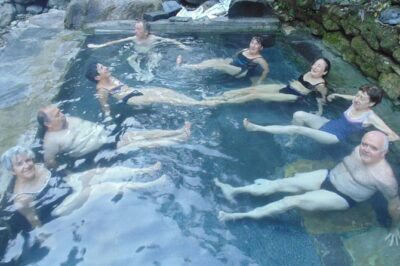
Lower Mustang Jomsom Muktinath Hot Spring Tour in 4 WD Jeep
Read our review →Lists this soak appears on