
Review · JAPAN
Kyoto: Hike and Hot Springs in Kurama
Mount Kurama gives you a rare Kyoto escape in just half a day: a mountain train, cool cedar forest, sacred shrines, and a temple high above the valley. I especially like the old forest trail and the chance to hear local stories from guides such as Philippe, Chris, Kevin, or Salome. I also like that the outing ends in Kurama, where you can choose lunch, village wandering, or a hot spring bath.
The catch is the climb. The steps are manageable for a reasonably fit hiker, but heat, uneven ground, and the steady ascent can make this tougher than the word moderate suggests. The onsen costs extra, and transportation back to Kyoto is not included.
Key points to know
- Scenic Eizan railway ride: Begin with a pleasant train journey from Kyoto into the northern mountains.
- Sacred mountain route: Climb through cedar forest to Kurama Temple and its famous power spot.
- Cultural detail: Guides explain shrine customs, deities, legends, Reiki connections, and local life.
- Real physical effort: The summit takes about 30 to 40 minutes, but the steps require decent fitness.
- Flexible finish: End in Kurama with choices for food, a village stroll, the train, or a hot spring.
- Best seasonal reward: Cooler months make the walk easier, while summer brings heat but a very welcome bath afterward.
Why this mountain escape works so well
Kyoto can feel crowded around its famous temples. Kurama feels different. You leave the city by train and soon trade buildings for steep wooded hills, clean mountain air, and a small village tied to old religious traditions.
I like the contrast. This is not just a temple visit with a quick photo stop. You have to walk for it, and the path gives the day a clear rhythm: ride, climb, pause, pray, descend, then rest.
The tour costs $80 per person. That price covers the guide, temple admission, and transportation connected with the tour. You still pay for lunch, the hot spring, and your return trip to the meeting point. For a private or small-group outing with an English or French-speaking guide, the price is fair, especially if you want cultural explanation rather than simply following a trail.
The value depends on what you want. If you only need a mountain walk, you could arrange the train and hike yourself for less. If you want someone to explain the shrines, temple traditions, legends, and local customs, the guide adds real value. The best guides, including Philippe and Chris, are praised for making the route feel personal and for taking people to less familiar spots.
More Hot Spring Hiking Tours in Japan
- Full Day Hiking Tour at Mt.Takao including Hot Spring
★ 5.0 · 52 reviews - Traverse Outer Rim of Hakone Caldera and Enjoy Onsen Hiking Tour
★ 5.0 · 30 reviews - Samurai Guide Sho’s Mt. Takao Hike, Temple & Onsen from Shinjuku
★ 5.0 · 9 reviews
Starting at Demachiyanagi Station
Meet at Demachiyanagi Station, exit 7, in front of the Eizan Railway in Kyoto. This starting point matters because the train ride is part of the experience, not just a transfer.
The Eizan line carries you north toward the mountains and the villages of Kurama and Kibune. The ride helps you shift gears before the hike begins. Instead of starting with a city bus and a busy road, you watch Kyoto give way to wooded slopes and a quieter rural setting.
Your guide handles the transportation included in the tour and sets the pace once you reach the trail area. Since the activity lasts about four hours, arrive ready to walk rather than expecting a long, leisurely morning with lots of spare time.
The tour is available as a private or small-group experience. That is useful here. A small group makes it easier to stop at a shrine, ask questions, adjust the pace, or spend a little longer at a place that interests you.
Kibune Shrine and the start of the sacred route
The experience includes a visit to Kibune Shrine, where you can make a prayer for good relationships. This gives the outing a gentle cultural focus before the harder part of the walk.
Kibune is closely tied to the river valley and the mountain setting. The shrine visit is not just a quick landmark check. Your guide can explain the meaning behind the site, the customs connected with prayer, and the relationship between the surrounding nature and Japanese religious practice.
The supplied route description places the hike through the sacred mountain area before the climb to Kurama Temple. Exact ordering may vary with the guide and conditions, but you should expect a combination of shrine visits, forest walking, and uphill steps.
This is one reason the tour works better with a guide than with a map alone. A map can show you the route. It cannot explain why a place matters, what local legends surround it, or how the religious sites fit into the wider story of northern Kyoto.
Climbing through cedar forest to Kurama Temple
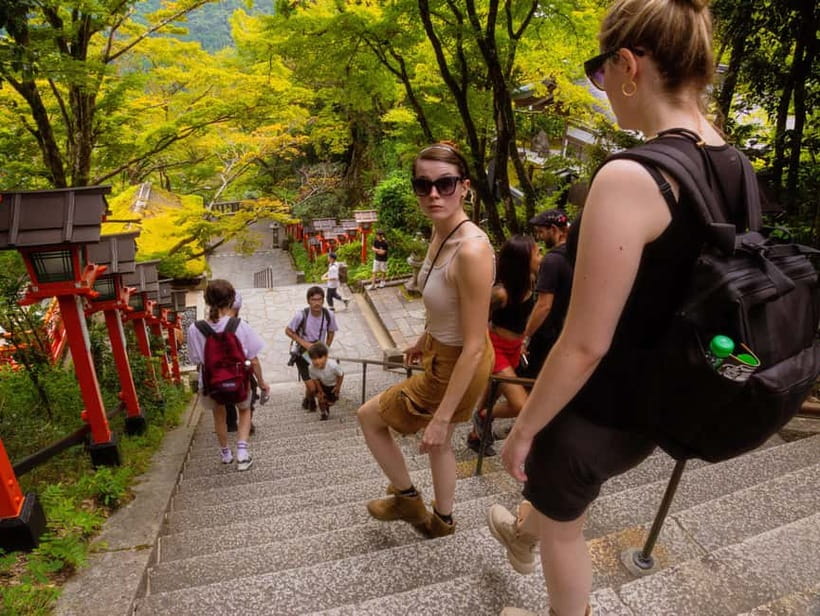
The main climb takes about 30 to 40 minutes to reach the top. That sounds short, but do not treat it as a flat stroll. You will climb steps and deal with uneven sections, and the heat can make the effort feel much greater in summer.
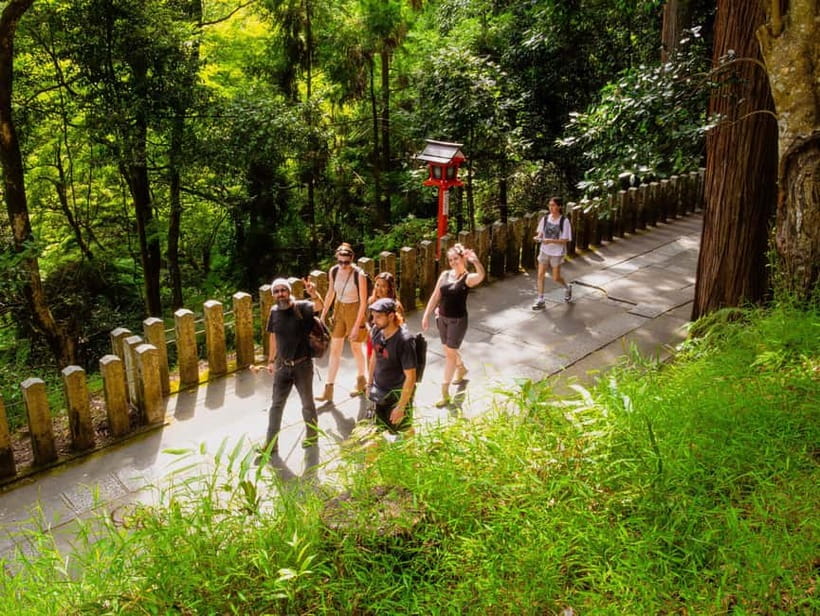
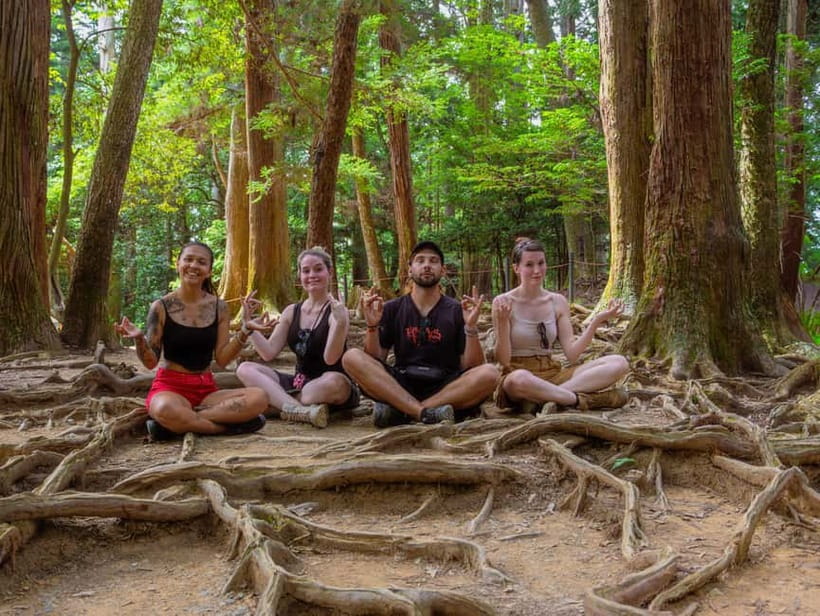
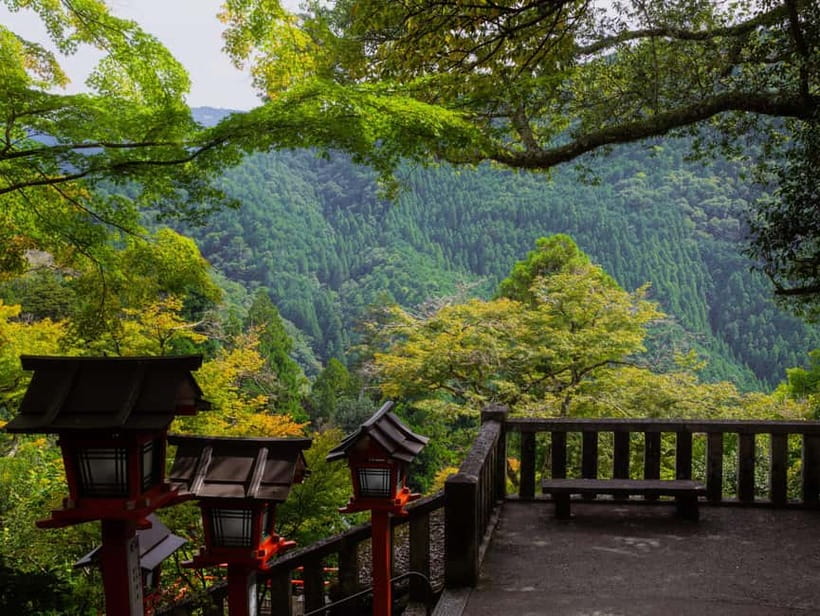
The trail passes through an old forest of towering cedars. This is the heart of the experience for me. The air feels cooler and cleaner than in central Kyoto, and the steady walk gives you time to notice the scale of the trees, the changing light, and the quiet around the path.
Your guide will make stops along the way. Those pauses are important, not only for catching your breath but also for seeing small features that you might otherwise miss. Philippe is especially noted for sharing local legends and taking people to less familiar sacred places. Other guides, including Kevin, Chris, and Salome, have also been praised for clear historical and cultural explanations.
The area has a strong connection with Reiki. One visitor with a Reiki background found the visit especially meaningful because Mount Kurama is associated with the origins of Reiki. If that subject interests you, tell your guide early so the conversation can include that side of the mountain.
You may also see wildlife. Deer have appeared along the route, and one guide even made a special effort to track down a monkey. Do not book this expecting a wildlife tour, but keep your eyes open.
Same steam, a different pool:
- From Osaka: Himeji Castle, Arima Onsen & Mt. Rokko Day Tour
★ 4.6 · 339 reviews - Osaka: Nara and Uji Day Trip with Deer Park and Hot Spring
★ 4.4 · 302 reviews - Kyoto: Traditional Concert at Townhouse or Bathhouse
★ 4.9 · 224 reviews - From Tokyo: Private Tour to Fuji/Hakone – Onsen, Art, Nature
★ 5.0 · 116 reviews
Kurama Temple and the mountaintop views
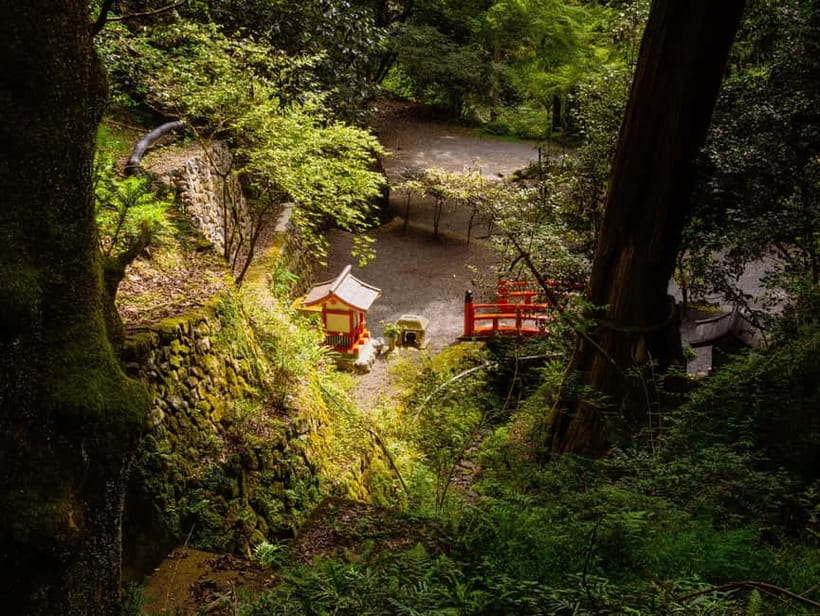
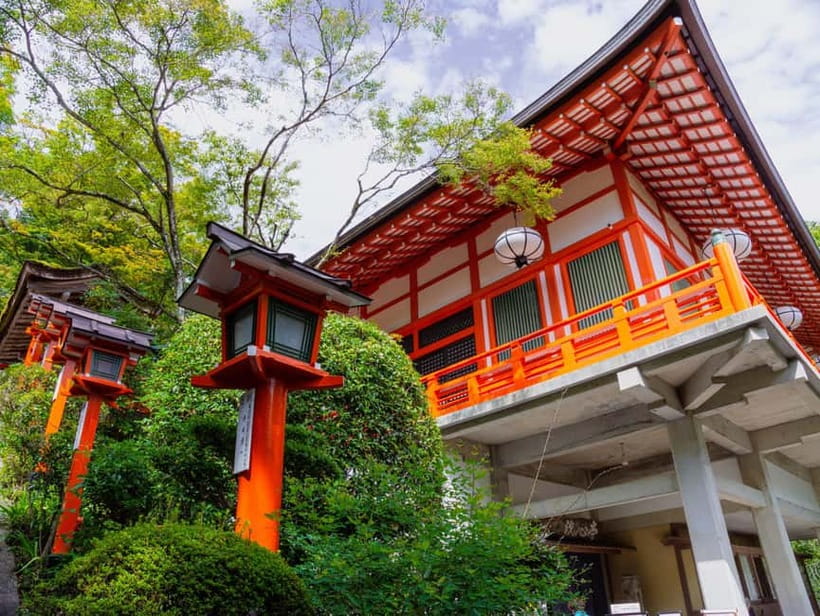
At the top, you visit Kurama Temple and have time to offer prayers. The temple is described as a local power spot, a place where nature, spiritual practice, and mountain tradition come together.
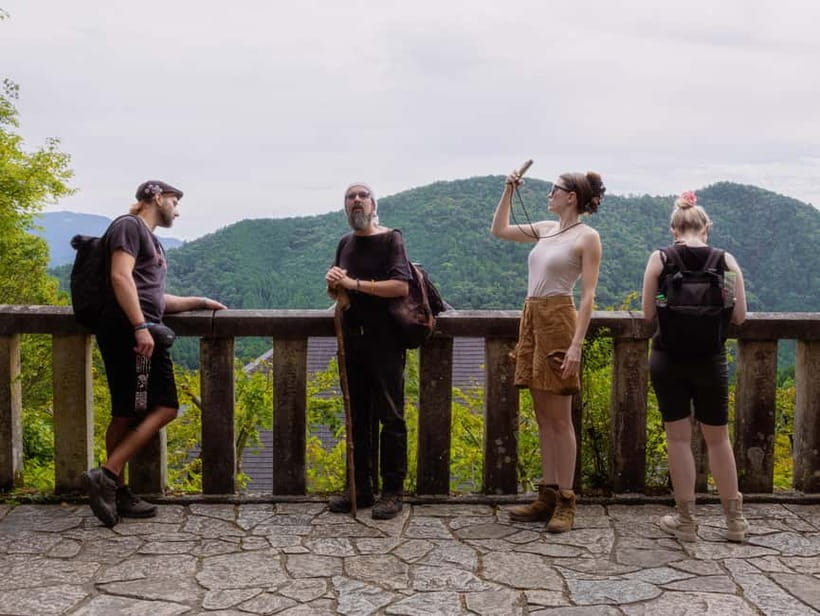
The summit gives you views down into the valley. After the climb, this is a good place to slow down. You can take in the air, listen to the guide, and let your legs recover before the descent.
Conditions at the temple can change. Maintenance work has previously left parts of the temple covered in scaffolding, so the main view or building may not always look exactly as expected. Even then, entry to the temple and the surrounding mountain sites remains part of the appeal.
Some private groups have been able to see less familiar areas, including a crypt and a maze beneath the temple. Do not assume those spaces are guaranteed for every departure, but a private booking gives you a better chance to ask about special access or less common stops.
The guide quality matters most here. A good guide turns the temple from a beautiful building into a place with context. Philippe is often praised for his humor, patience, and grasp of the area. Chris is described as a strong guide for finding unusual spots. The experience is at its best when you enjoy asking questions rather than simply taking pictures.
Descending into the village of Kurama
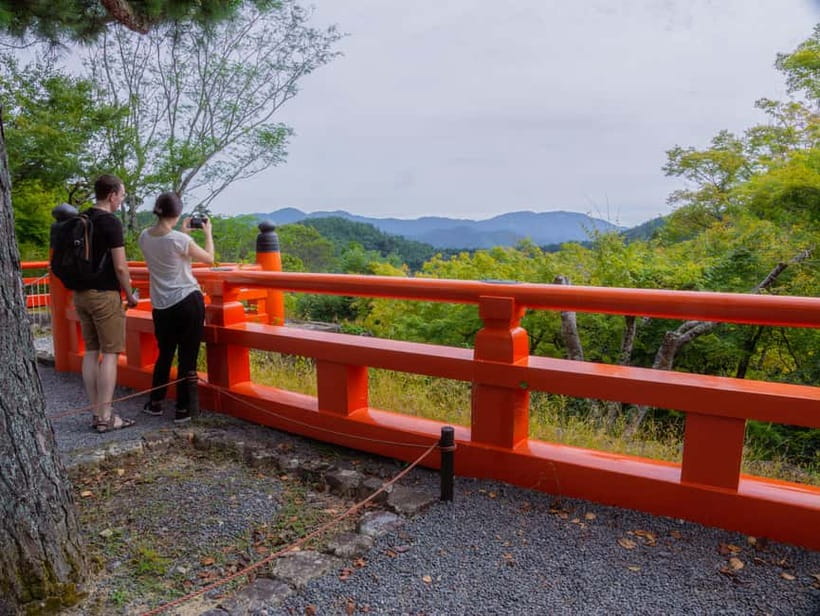
After the temple, the route heads down toward Kurama village. The descent is easier on your lungs but can still work your knees, especially after the uphill section. Wear shoes with a firm sole and take care on the steps.
Kurama gives you a pleasant change of pace. The village is small and surrounded by the mountains, with places to stop for food and rest. The tour does not include lunch, so you should budget for it if you want a proper meal.
The tour finishes with guidance rather than one fixed final activity. You can eat in the village, stroll around, take the train back toward Kyoto, or continue to the hot spring. This flexibility is helpful, but it also means you need to pay attention to the end-of-tour instructions.
Transportation back to the original meeting point is not included. The guide can explain your options, but you pay for the return journey yourself. Ask about the train before splitting from the group so you know where you are going next.
Why the Kurama hot spring is worth adding
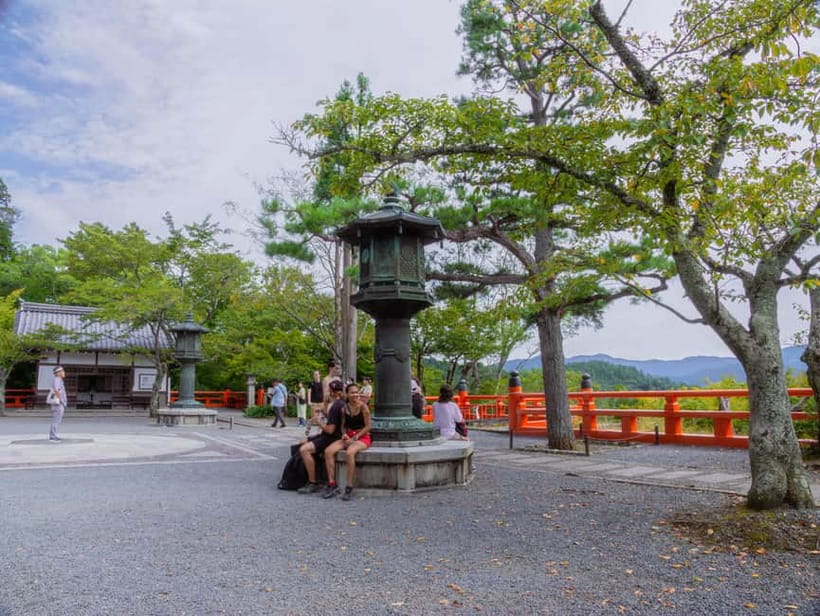
The optional hot spring is the natural finale. After a mountain climb, a warm bath can make the difference between feeling worn out and feeling restored.
The Kurama Hot Spring is known for its outdoor bath views. The fee is not included, but the tour can offer a discounted bath ticket. The hot spring is not part of the four-hour guided portion, so allow extra time if you plan to use it.
Bring what you need for the bath and check the practical details with your guide. The supplied information confirms the bath option and discounted ticket, but it does not specify every facility rule or what is provided on site.
I would add the bath if your schedule allows. Several people who took this route found it especially rewarding after the climb, and the mountain setting makes it feel more connected to the day than an ordinary city spa. If you are short on time or do not want to pay another fee, you can simply eat, walk around Kurama, and return by train.
Fitness, clothing, and the best time to go
The tour is not suitable for children under 11, wheelchair users, people with mobility impairments, or people without hiking experience. You need a decent level of fitness, comfortable shoes, and water.
Wear long pants if you want to reduce the chance of bug bites. A light summer day can make the ascent much harder, so carry enough water and avoid treating the short distance as an easy walk.
Summer brings lush forest and a refreshing bath at the end, but the heat can be demanding. One August outing was described as hard work partly because of the temperature. Spring, autumn, and winter may feel more comfortable for walking, though conditions can vary.
Winter has its own rewards. Light snow has appeared on sunny days, and deer have been spotted on the way up. Snow and wet ground can make steps slippery, so you should still choose footwear for the conditions.
The route is best for people who want active sightseeing. You do not need to be an athlete, but you should be comfortable with a sustained uphill walk and a stair-heavy descent.
Guide style and group choice
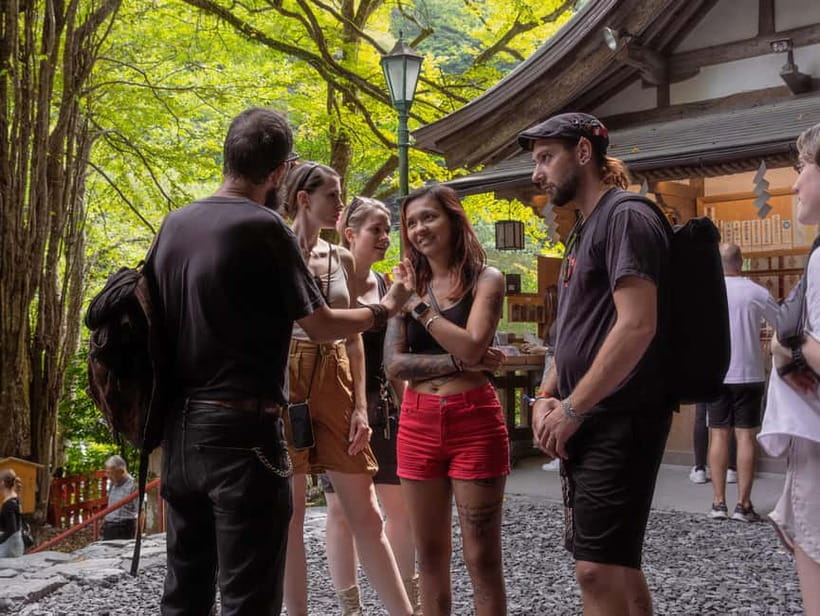
The strongest part of this experience is often the guide. Philippe is frequently praised for his patience, humor, local insight, and knowledge of the mountain’s temples and deities. Chris is noted for finding unusual places, while Kevin is valued for historical and cultural background. Salome has also been described as making the outing memorable.
Guide quality can vary, as it can on any tour. One experience was affected by a guide smoking while walking and drinking beer before the tour ended. That is not the normal standard suggested by the other feedback, but it is a fair reminder that a guide shapes the day.
A private tour gives you the best chance to tailor the pace and spend more time at places that matter to you. A small group can cost less while still giving you room to ask questions. If you want a quiet, reflective walk, mention that when booking.
Should you book the Mount Kurama hike?
Book this tour if you want nature, spirituality, and local explanation in one half-day outing. It is a strong choice for a repeat Kyoto visitor who has already seen the central temples and wants a mountain setting without arranging every detail alone.
I would also recommend it if the hot spring appeals to you. The bath is extra, but it completes the day in a satisfying way. The combination of cedar forest, Kurama Temple, Kibune Shrine, and a mountain bath feels far removed from central Kyoto.
Think twice if you dislike stairs, struggle with heat, or want a very gentle walk. The climb is short in time but real in effort. Also remember that lunch, the bath, and the return trip are not included in the $80 price.
For fit hikers who want more than a standard sightseeing loop, this is one of the better ways to spend four hours outside Kyoto. Choose a small group or private departure if you care about pace and personal attention, wear long pants, carry water, and leave room in your schedule for the onsen.
FAQ
Where does the tour meet?
Meet at Demachiyanagi Station, exit 7, in front of the Eizan Railway in Kyoto.
How long does the experience last?
The guided experience lasts about four hours.
What languages are available?
The tour is offered with a live guide in English or French.
Is transportation included?
Transportation connected with the tour is included. Transportation back to the original meeting point is not included.
Is lunch included?
No. Lunch is not included, though you can eat in Kurama village after the hike.
Is the hot spring included?
No. The hot spring fee is separate, though a discounted bath ticket may be available through the tour.
How difficult is the hike?
The hike is described as moderate, with steps to the top taking about 30 to 40 minutes. You need a decent level of fitness and some hiking experience.
Can children join?
Children under 11 are not permitted on this activity.
Can I cancel the booking?
You can cancel up to 24 hours in advance for a full refund. You can also reserve now and pay later.
New places to soak around Japan
- Private Car Day Trip to the Kobe Mountains, Gardens and Hot Springs from Osaka★ 4.5 · 16 reviews
- Solaniwa Onsen: Osaka Bay Tower★ 5.0 · 4 reviews
- Kobe Night View Mt Rokko Kitano Ijinkan Arima Onsen Day Trip★ 5.0 · 5 reviews
- Osaka: Nara, Todaiji, Uji Matcha, and Hot Spring Tour★ 4.0 · 7 reviews
- Deluxe Private Tour: Hita, AOT Statues and Onsen from Fukuoka★ 5.0 · 4 reviews
- Hot Spring Capital of Yufuin Rickshaw Tour★ 5.0 · 32 reviews
- Osaka River Rapids Hike and Natural Hot Spring tour★ 5.0 · 2 reviews
- Personalized Private Guided Tour from Myoko Kogen★ 5.0 · 2 reviews
Hot Spring Hiking Tours: more water worth the trip.
Bali: Mount Batur Sunrise Guided Hike and Natural Hot Spring
Read our review →
Mount Batur Sunrise Hike and Natural Hot Spring Option
Read our review →
Private Tour Mount Batur Sunrise Trekking and Natural Hot Spring
Read our review →
Mount Batur Sunrise Hike, Breakfast & Hot Spring
Read our review →
National Park Hike & Finnish Smoke Sauna Experience with Campfire Lunch
Read our review →
Montanejos Hiking Tour & Thermal Pools from Valencia
Read our review →
Landmannalaugar Hike and Hot Springs from Reykjavik & Hella
Read our review →Lists this soak appears on