

Review · OSAKA
Osaka: Nara, Todaiji, Uji Matcha, and Hot Spring Tour
The best part of this day is the mix of Japan’s sacred deer, giant Buddha, matcha culture, and hot-spring bathing. In one long outing from Osaka, you move between Nara’s historic sights and Uji’s quieter tea-town atmosphere instead of spending the whole day in one place.
I like the simple logistics: round-trip transport from central Osaka and a group capped at 15 people. I also like the variety, especially the chance to visit Tōdai-ji, Kasuga-taisha, and Uji before soaking at Genji-no-Yu. The main drawback is time. With eight to nine hours on the road and several short stops, you may need to choose between lingering and seeing every included sight.
At a glance: what this Osaka day trip offers
- Sacred deer in Nara Park: Spend about 80 minutes among Nara’s famous free-roaming deer.
- The Great Buddha at Tōdai-ji: Visit one of Japan’s most important temple complexes, with admission paid separately.
- Kasuga-taisha’s lantern-lined setting: Allow about 40 minutes at this old Shinto shrine.
- Uji matcha and Byodo-in: The Uji portion is designed around tea culture and major local sights, though entry fees are extra.
- A proper onsen finish: Genji-no-Yu provides about 80 minutes for indoor and outdoor hot-spring bathing.
- Small-group transport from Osaka: An air-conditioned vehicle carries no more than 15 people, with a multilingual guide and driver.
From Nipponbashi to Nara Park
Your day begins at 8:30 a.m. at Nipponbashi Parking, 1-chōme-3 Nipponbashi in central Osaka. That meeting point is near public transportation, which makes it useful if you are staying around Namba or central Osaka.
The tour uses an air-conditioned vehicle, and the driving time is part of the total eight-to-nine-hour schedule. That matters here. Nara and Uji are separate destinations, so this is not a quick city walk with a few nearby stops. You are buying a full day of transport as well as sightseeing.
Nara Park gives you the easiest introduction to Nara. Deer roam freely through the public park, and they are regarded as sacred and protected as a national treasure. The atmosphere is unusual: a city park becomes a meeting place between visitors, temple grounds, old trees, and animals that have long been tied to local religious tradition.
You have about 1 hour and 20 minutes here. That is enough time to see the deer and walk through part of the park, but it is not an open-ended visit. Wear shoes you can walk in comfortably. The full day involves temple approaches, park paths, and several hours of moving around.
One practical point deserves attention: food and drinks are not included. If you hope to feed the deer, do not count on food being supplied as part of the tour. Local vendors may also run out, so bring your own small snack for yourself and treat the deer-feeding option as uncertain rather than guaranteed.
More places to soak around Japan:
- From Osaka: Himeji Castle, Arima Onsen & Mt. Rokko Day Tour
★ 4.6 · 339 reviews - Osaka: Nara and Uji Day Trip with Deer Park and Hot Spring
★ 4.4 · 302 reviews - Kyoto: Traditional Concert at Townhouse or Bathhouse
★ 4.9 · 224 reviews
Tōdai-ji and the Great Buddha
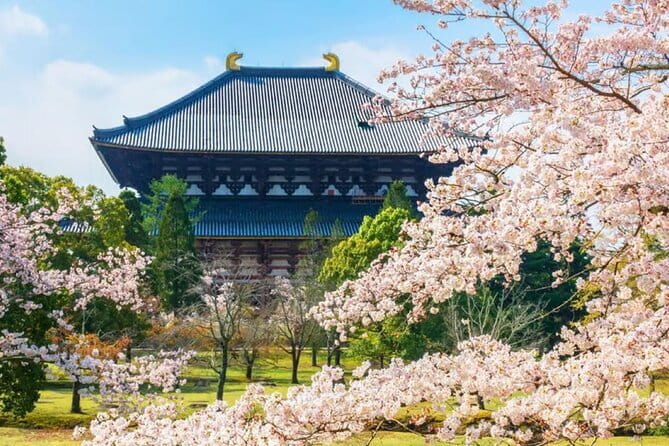
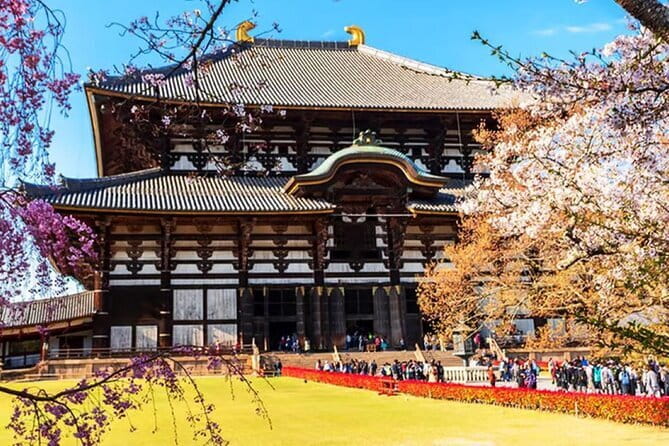
Tōdai-ji is the day’s biggest historical sight. The temple is home to the Great Buddha, a bronze Vairocana Buddha that rises about 15 meters. The scale is the point. Even a short visit gives you a sense of why this temple is one of Nara’s defining places.
The scheduled time is about 40 minutes. That can work if your aim is to enter the main temple, see the Great Buddha, and keep moving. It will feel tight if you want a slow look at the building, examine details, take photographs, and explore more of the grounds.
Admission to Tōdai-ji is not included. The tour information also lists entry to Kasuga-taisha, Byodo-in, and the Tale of Genji Museum as extra costs, with some admissions and hot-spring costs estimated at around $10. Bring enough Japanese yen or a payment method accepted at the sites, and keep a little room in your budget beyond the $81 tour price.
There is a real tradeoff here. The low tour price makes the day attractive, but it does not cover every ticket. If you want to enter every paid site, the final cost will be higher than the headline amount.
Kasuga-taisha in a short visit
Kasuga-taisha adds a different side of Nara. Tōdai-ji is a major Buddhist temple, while Kasuga-taisha is a Shinto shrine founded in the eighth century and linked to the Fujiwara clan. The shrine is known for its many stone and bronze lanterns.
The scheduled visit lasts about 40 minutes. That is enough for a focused look at the shrine area, but you should not expect a long, unhurried exploration. The stop works best if you appreciate contrasts: Buddhist Nara at Tōdai-ji, then Shinto Nara at Kasuga-taisha.
Because this is a shared tour, the guide must keep the group moving. Stay aware of the meeting time and do not wander too far from the agreed point. The schedule is especially important on a day when late departures could shorten the Uji section or the hot spring.
Uji matcha, Byodo-in, and the Tale of Genji
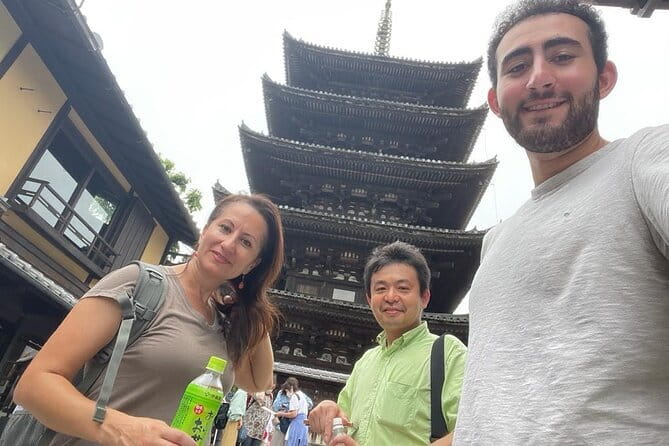
Uji gives the tour a softer change of pace. The city is known for high-quality Uji matcha, and the plan includes time for green tea at a traditional tea house. This is not just a drink stop. Matcha is one of the clearest ways to connect with Uji’s local identity, and a cup gives you a short pause between Nara’s large monuments and the final bath.
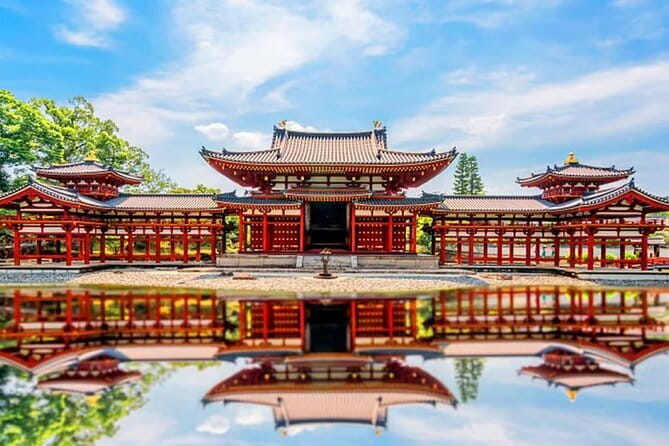
The Uji portion is listed at about 2 hours and 20 minutes. It is also where the schedule is least clear about how time is divided. The tour description refers to matcha and Byodo-in Temple, while the stop details group Uji activities together. Byodo-in, a UNESCO World Heritage Site, is famous for its Phoenix Hall, one of the most recognizable buildings in Japan.
Admission to Byodo-in is extra. The Tale of Genji Museum is also listed among the optional paid entries, so you should not assume every Uji attraction is covered. If seeing Phoenix Hall is your priority, confirm with the guide how much time is available and which tickets you need to buy.
This is one of the tour’s most appealing ideas, but also one of its pressure points. Uji deserves more than a rushed glance, especially if matcha and Byodo-in are both important to you. On a well-managed day, the combination gives you tea, architecture, and a new setting. On a delayed day, you may have to make quick choices.
Same steam, a different pool:
- From Tokyo: Private Tour to Fuji/Hakone – Onsen, Art, Nature
★ 5.0 · 116 reviews - Mt. Fuji, Hakone Private Tour from Tokyo – Onsen, Arts and Nature
★ 5.0 · 79 reviews - Tokyo: Mount Fuji 5th Station & Onsen Day Trip
★ 4.3 · 75 reviews - From Fukuoka: Mount Aso, Kurokawa Onsen, and Shrine Tour
★ 4.6 · 72 reviews
Genji-no-Yu: ending the day in hot water
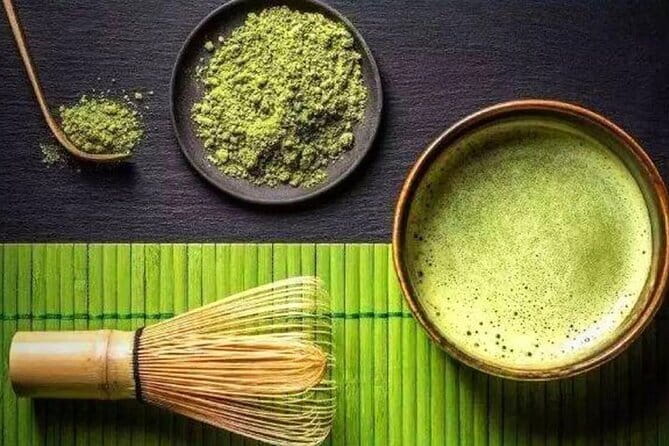
The final major stop is Uji Natural Hot Spring Genji-no-Yu, named after The Tale of Genji. You have about 1 hour and 20 minutes here, with indoor and outdoor baths in a calm setting.
This is a smart way to finish a day of walking. Instead of ending with another crowded attraction, you get time to sit, soak, and let your feet recover. The bath is a cultural experience as well as a rest stop, though you should be comfortable following normal hot-spring customs.
Visible tattoos are not allowed, according to the tour conditions. If you have a tattoo, check this rule before booking rather than discovering it at the entrance. The listed information also says the hot spring can involve an extra cost, despite the stop details marking admission as included, so confirm what the guide covers on the day and keep about $10 available for additional entry expenses.
The hot spring time is long enough to feel useful, but not so long that it turns the outing into a full spa day. You will still return to the Osaka meeting point after the bath, and the drive back is included.
Is $81 good value for this route?

At $81 per person, the tour offers strong basic value if you want to combine Nara and Uji without arranging separate trains, buses, and return connections. You receive round-trip transportation from Osaka, an air-conditioned vehicle, and a multilingual guide-driver.
The price also reflects some limits. Food and drinks are not included. Tōdai-ji, Kasuga-taisha, Byodo-in, the Tale of Genji Museum, and possibly the hot spring require extra payment. The day also includes transport time, so you are not getting eight or nine hours of sightseeing.
I would judge the value by your priorities. If you want a broad first look at Nara and Uji, then a hot bath, the price is reasonable. If you want long visits at temples, a relaxed tea experience, and plenty of free time, paying for separate day trips may suit you better.
The group size helps. With a maximum of 15 people, the tour is smaller than a large coach outing, though it is still a shared schedule. The experience needs at least four bookings to run. If that minimum is not reached, you are offered the choice to cancel or change the route.
Who will enjoy this tour most?
I would recommend this outing to someone staying in Osaka who wants several major sights in one day and does not want to handle every transfer alone. It also suits families who want deer, a giant Buddha, tea, and a bath in one package. The deer and Tōdai-ji provide easy highlights, while Uji and Genji-no-Yu add variety.
It is less suitable if you dislike early starts, long transport periods, or fixed group schedules. The day is also a poor match for anyone who wants to study one temple in detail. The 40-minute Tōdai-ji and Kasuga-taisha visits are structured introductions, not slow architectural tours.
Good footwear is essential. One full day of park paths, temple grounds, and movement between stops can be tiring, especially in cold weather. Bring layers, water, and money for admissions and personal purchases.
Practical details before you book
Confirmation is provided when you book. The tour starts at 8:30 a.m. and ends back at the same Nipponbashi meeting point.
Most people can participate, but unaccompanied minors are not allowed. Since the day includes an onsen, the visible-tattoo restriction is important. The vehicle is air-conditioned, and the group limit is 15 people.
Free cancellation is available if you cancel at least 24 hours before the local start time. Cancellations or changes made less than 24 hours before departure are not accepted for a refund.
Should you book this Nara and Uji day trip?
Book it if you want breadth, convenience, and a relaxing finish. Nara Park, Tōdai-ji, Kasuga-taisha, Uji matcha, Byodo-in, and Genji-no-Yu make an appealing mix, and $81 is a fair starting price for transport between Osaka, Nara, and Uji.
Skip it if your main goal is deep temple time or a slow Uji visit. The schedule is full, several admissions cost extra, and a late start or slow stop could squeeze the sights you care about most. Before paying, decide which two moments matter most to you, such as the Great Buddha and the hot spring, then treat the remaining stops as welcome additions rather than guarantees of long, leisurely visits.
FAQ
Where does the tour start?
The tour starts at 8:30 a.m. at Nipponbashi Parking, 1-chōme-3 Nipponbashi, Chuo Ward, Osaka, 542-0073, Japan.
Where does the tour end?
The tour ends back at the same meeting point in Nipponbashi.
How long does the tour last?
The total duration is approximately eight to nine hours, including transportation time.
Is transportation included?
Yes. Round-trip transportation from Osaka in an air-conditioned vehicle is included.
Is a guide included?
Yes. A multilingual guide and driver are included.
How large is the group?
The maximum group size is 15 people.
Are meals and drinks included?
No. Food and drinks are not included in the tour price.
Are temple and shrine admissions included?
No. Entry to Tōdai-ji, Kasuga-taisha, Byodo-in, and the Tale of Genji Museum is listed as an additional expense.
Is the hot spring included?
The hot spring stop is included in the schedule, but the tour information also lists hot spring costs among possible extra expenses. Confirm the exact coverage with the provider before departure.
Can I cancel for a refund?
Yes. You can receive a full refund if you cancel at least 24 hours before the experience start time. Changes or cancellations made less than 24 hours before departure are not accepted for a refund.
New places to soak around Japan
- Private Car Day Trip to the Kobe Mountains, Gardens and Hot Springs from Osaka★ 4.5 · 16 reviews
- Solaniwa Onsen: Osaka Bay Tower★ 5.0 · 4 reviews
- Kobe Night View Mt Rokko Kitano Ijinkan Arima Onsen Day Trip★ 5.0 · 5 reviews
- Deluxe Private Tour: Hita, AOT Statues and Onsen from Fukuoka★ 5.0 · 4 reviews
- Hot Spring Capital of Yufuin Rickshaw Tour★ 5.0 · 32 reviews
- Osaka River Rapids Hike and Natural Hot Spring tour★ 5.0 · 2 reviews
- Personalized Private Guided Tour from Myoko Kogen★ 5.0 · 2 reviews
- Forest Bathing in Temple and Enjoy onsen with healing power★ 5.0 · 17 reviews
Japan Hot Springs: more water worth the trip.
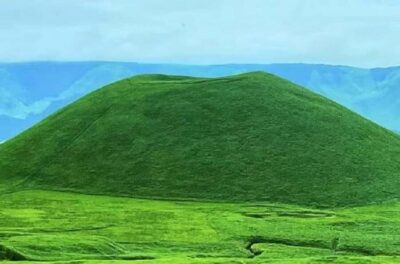
From Fukuoka: Mount Aso, Kurokawa Onsen, and Shrine Tour
Read our review →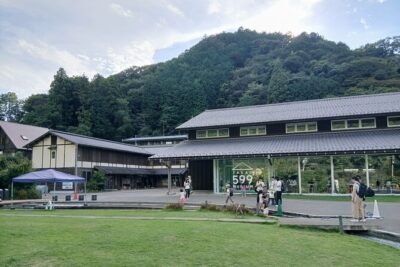
Tokyo: Mt Takao Tour with Ramen and Tattoo-Okay Hot Spring
Read our review →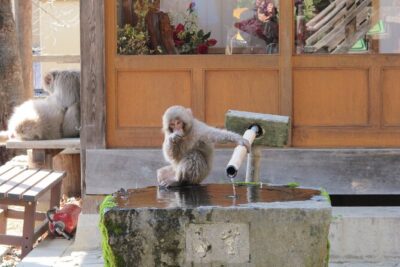
Snow Monkey & Shibu Onsen Afternoon Tour (Depart: Iiyama & Nozwa)
Read our review →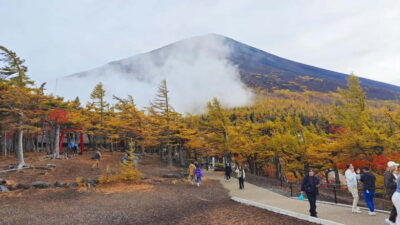
[Seasonal Limited] Mt. Fuji 5th Station &Hot Spring Day Tour
Read our review →
Full Day Hiking Tour at Mt.Takao including Hot Spring
Read our review →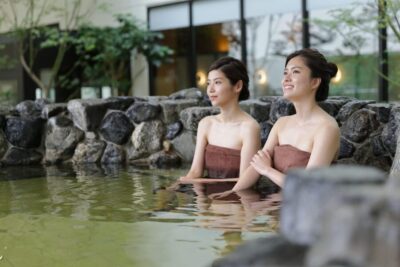
Lists this soak appears on