Review · JAPAN
Tokyo: Mount Fuji 5th Station & Onsen Day Trip
Mt. Fuji supplies the headline here, but the best part may be the contrast: a high mountain viewpoint, a quiet village of spring-fed ponds, and a hot bath with Fuji in view. You get all three without hiking, driving, or working out Tokyo’s complicated regional bus system.
I especially like the no-hike access to the 5th Station and the stop at Oshino Hakkai, where clear ponds and thatched roofs offer a more traditional side of the Fuji area. The catch is that the tour depends heavily on traffic, weather, and your guide. Some guides, including Lin Tian Anna, have been praised for keeping the day clear and well organized, while other departures have felt more like transportation with brief instructions than a guided tour.
Key points to know before booking
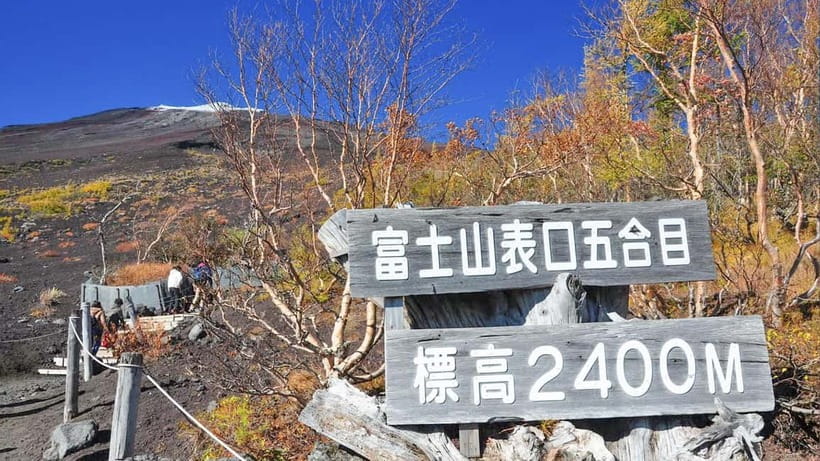
- Mount Fuji’s 5th Station reaches 2,300 meters by bus, making the view accessible without a mountain trek.
- The 5th Station visit runs from May 10 to November 30; outside that period, the tour uses Shinkurayama Asama Park instead.
- Oshino Hakkai offers eight spring-fed ponds, local snacks, souvenir shops, and a traditional village setting.
- Konohananoyu Onsen allows about two hours, but nude bathing is required and tattoos must be covered.
- Weekday plans may offer a choice between the onsen and Gotemba Premium Outlets, while weekend and holiday hot-spring arrangements are not available.
- The $50 price covers the guide and round-trip bus, but meals, the onsen fee, and personal costs are extra.
A full Fuji day without a mountain hike
This is a long day, but it solves a real problem. Mt. Fuji is close enough to Tokyo for a day trip, yet the popular sights are spread out and public transport can be awkward. A bus tour gives you a direct route from central Tokyo, with pickup at SMBC Bank Shinjuku Nishiguchi or Tokyo Station’s Marunouchi North Exit.
The schedule allows roughly two hours each way on the bus. That is a lot of sitting, and weekend traffic can make the return later than planned. Still, you avoid transfers and get a practical string of stops for about $50 before optional costs.
I would choose this outing if you want a broad taste of the Fuji area in one day. I would not choose it if you need a slow, deeply explained visit at every stop. The timetable gives you about one hour at the main sightseeing locations, so this is a sampler rather than a relaxed regional stay.
More Hot Spring Day Trips in Japan
- From Osaka: Himeji Castle, Arima Onsen & Mt. Rokko Day Tour
★ 4.6 · 339 reviews - Osaka: Nara and Uji Day Trip with Deer Park and Hot Spring
★ 4.4 · 302 reviews - Private Nagano 1-Day Tour:Snow Monkeys,Zenko-ji,Obuse,Sake,Onsen
★ 5.0 · 71 reviews
Reaching Mt. Fuji’s 5th Station by bus
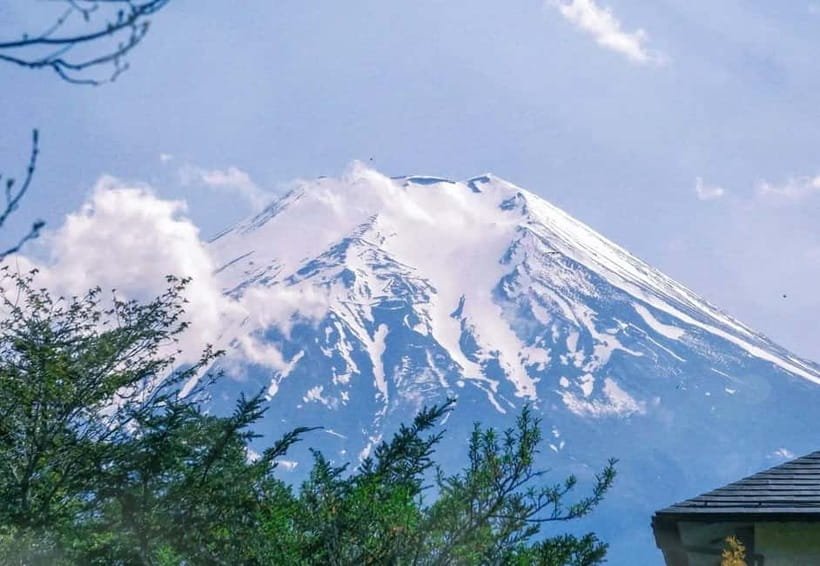
From May 10 through November 30, the first major stop is Mt. Fuji’s 5th Station, at about 2,300 meters. This is not the summit, but it is high enough to feel distinctly alpine and to give you a close look at Japan’s most famous peak when the weather cooperates.
The bus takes you where hikers often begin their climb. You can step out, take photographs, look across the surrounding area, and browse shops without committing to a strenuous walk. The stop lasts about an hour, so bring your camera and know what you want to see before you leave the bus.
The shopping here has a local angle. You may find souvenirs made from volcanic stone, along with other Fuji-themed goods. The stone items are more interesting than generic airport purchases because they connect directly to the mountain’s volcanic origin.
Pack a light jacket. Even if Tokyo feels warm, the 5th Station can be cool and windy. Sunglasses are useful, and comfortable shoes still matter because you will walk between the bus, viewpoints, and shops.
Clouds are the great spoiler. A clear day can produce the most memorable view of the trip, while poor weather may leave you with a gray outlook and a cold photo stop. The tour cannot control that, so I would treat the mountain view as a welcome possibility rather than a guarantee.
The seasonal alternative at Shinkurayama Asama Park
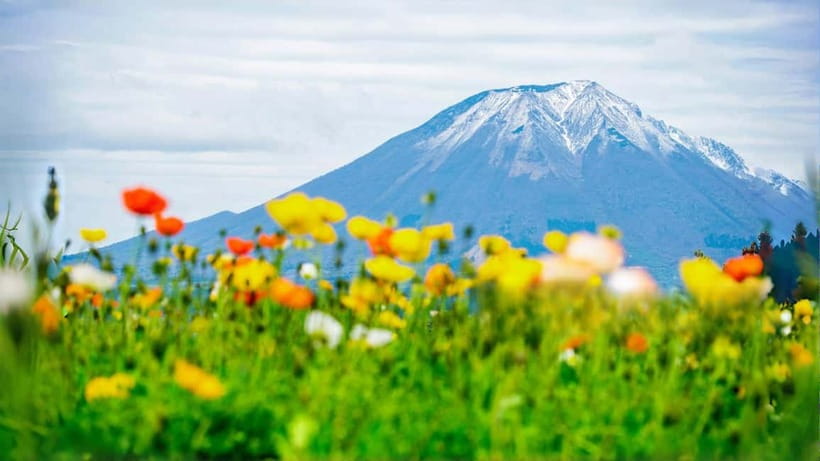
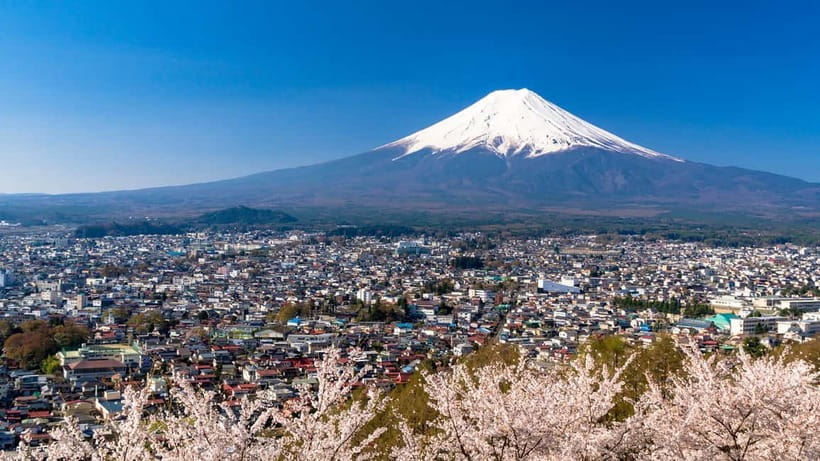
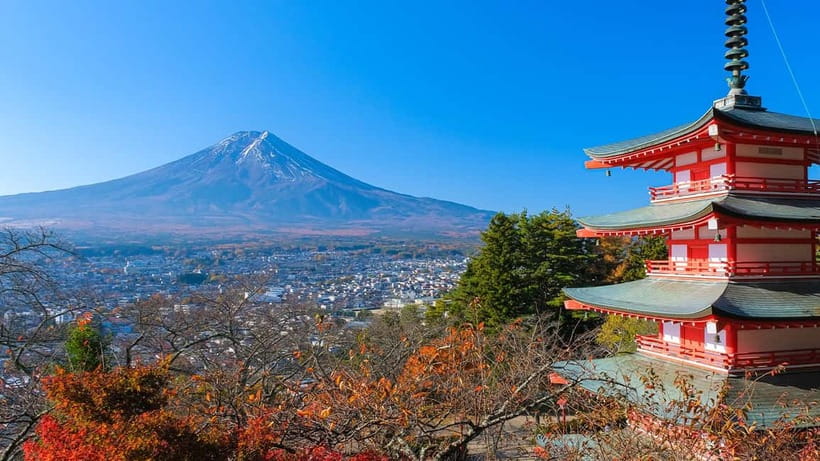
Outside the 5th Station operating period, the itinerary changes to Shinkurayama Asama Park. This is the famous postcard viewpoint with a crimson pagoda and Mt. Fuji behind it.
The view combines three instantly recognizable Japanese images: the pagoda, the mountain, and traditional architecture. It is a strong choice for photographs, especially if you want the classic composition seen on posters and social media.
The tradeoff is simple. The 5th Station places you high on the mountain and close to Fuji’s upper slopes. Shinkurayama Asama Park gives you a more distant, carefully framed view. Check the operating season when you book so you know which version of the day you are buying.
Oshino Hakkai and its eight clear ponds
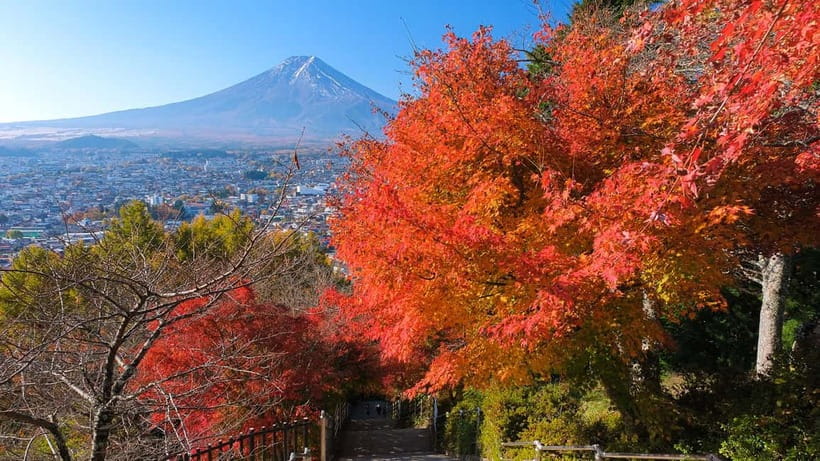
After the mountain stop, the bus continues to Oshino Hakkai. This small village is known for eight crystal-clear ponds fed by snowmelt from Mt. Fuji. The water is the star here, but the setting matters just as much.
Thatched-roof buildings, small shops, footpaths, and mountain views give you a traditional village scene rather than another large observation deck. You have about an hour, enough for photographs, a short walk, local snacks, and some browsing.
Look for mochi made with Fuji spring water. It is the sort of small regional food stop that gives the day more character than a standard roadside rest area. You can also use this break for lunch, though meals are not included, so carry cash and expect to pay separately.
The village can feel crowded, especially on weekends and Japanese holidays. Your time may go quickly if you stop at every shop, so I would first walk toward the ponds, then return to food and souvenirs. The tour bus will give you a fixed return time, and missing it is not a minor inconvenience.
More Japanese Onsen Tours in Japan:
- From Tokyo: Private Tour to Fuji/Hakone – Onsen, Art, Nature
★ 5.0 · 116 reviews - Mt. Fuji, Hakone Private Tour from Tokyo – Onsen, Arts and Nature
★ 5.0 · 79 reviews - From Fukuoka: Mount Aso, Kurokawa Onsen, and Shrine Tour
★ 4.6 · 72 reviews - Snow Monkey & Shibu Onsen Afternoon Tour (Depart: Iiyama & Nozwa)
★ 5.0 · 54 reviews
Two hours at Konohananoyu Onsen
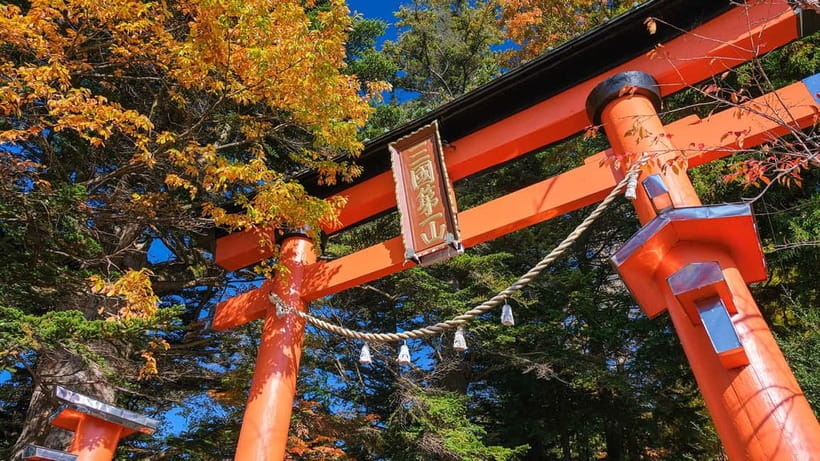
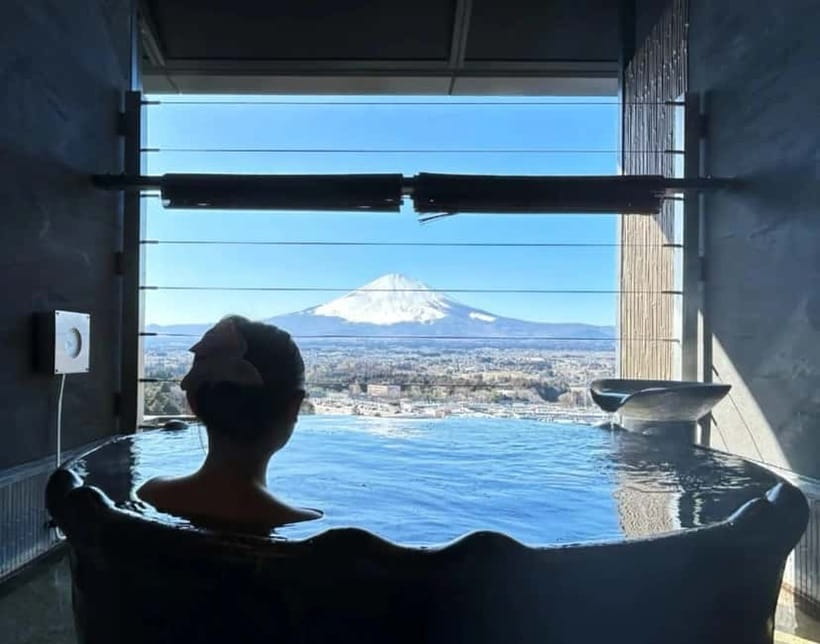
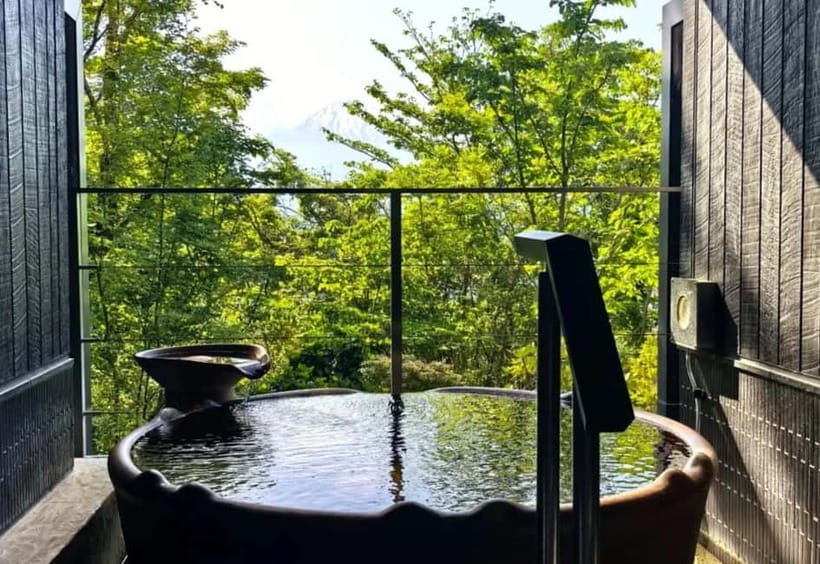
The onsen is the day’s main chance to slow down. Konohananoyu provides open-air baths with views toward Mt. Fuji, giving you a warm place to rest after the cooler mountain stop and village walk.
You have about two hours here, which is enough time to change, bathe, rest, and possibly eat in the relaxation area. A traditional Japanese meal is available at your own cost. Matcha has also been served here on some departures, adding a pleasant finishing touch, but it should not be treated as a guaranteed inclusion.
Japanese onsen etiquette is important. Bathing is nude, with separate areas for men and women. You wash before entering the pools, and you do not wear a swimsuit. Tattoos must be covered, or entry can be refused. If you have a tattoo, contact the operator before booking rather than hoping it will be accepted on the day.
The onsen fee is not included in the $50 price. That lowers the apparent bargain slightly, but the combination of transport and a long hot-spring visit can still be good value if you already want this kind of experience.
You may need to manage the bathing routine on your own. A previous departure had a guide who brought the group to the facility but did not explain the process clearly. If you have never used a Japanese onsen, read the posted instructions, ask the facility staff, and allow time to understand the changing-room layout.
Gotemba Premium Outlets as the weekday alternative
On Monday through Friday, you may be offered a choice between the hot spring and Gotemba Premium Outlets. The outlet center sits at the foot of Mt. Fuji and combines brand shopping, food, and mountain views.
This option makes sense if shopping is more appealing than bathing, or if you have a tattoo and cannot use the onsen. It also gives you a practical way to spend the afternoon in a place with food and indoor shops.
The choice is not presented the same way every day. Hot-spring arrangements are not available on weekends and Japanese national holidays, and the provided information says you may need to inquire in person. Confirm the plan before you pay, especially if the onsen is the main reason you are booking.
What the guide and bus experience can be like
The tour offers English and Chinese service, but this does not always mean a single-language guided experience. The guide may be serving an international group in several languages, and commentary may be limited while the vehicle is moving.
That distinction matters. Strong guide support can make the day much easier. Lin Tian Anna has been praised for clear explanations, useful souvenir advice, good timing, and keeping the group organized. On other departures, the guide provided little background and mainly announced where to meet and when to return.
If the group is small, the operator may use an English-speaking driver-guide. The driver-guide provides commentary when stopped, but not while driving. In a larger group, you may be on a crowded or smaller bus, with less room and less personal attention.
I would think of this as a sightseeing transfer with guided stops, not a private cultural tour. Keep the meeting point details close at hand, arrive early, and save the guide’s contact information if it is provided. One poorly handled late arrival led to confusion at a second meeting point, so punctuality is especially important.
Timing, crowds, and the return to Tokyo
The basic travel pattern is about two hours from Tokyo to the Fuji area, roughly 30 minutes between the main stops, and about two hours back. That adds up to a full day before traffic delays.
Weekends and holidays bring larger crowds and slower roads. The order of the stops or the length of each visit may change to keep the day moving. I would not schedule a same-day flight, Shinkansen departure, dinner reservation, or other fixed evening plan after this tour.
The return drop-off is at Tokyo Station’s Marunouchi North Exit or SMBC Bank Shinjuku Nishiguchi. These are useful central locations, but the final arrival time can shift. Keep water, cash, and a small snack for the bus, though food and drinks are not allowed inside the vehicle itself.
Is $50 a fair price?
At $50 per person, the tour is priced attractively for a full day with round-trip transport and a professional guide. The bus alone removes the cost and hassle of arranging several regional connections, and the route includes three very different Fuji-area experiences.
The value is strongest if you want convenience. You receive mountain access, a village visit, and transport to a hot spring without renting a car. The price is less complete than it first appears because meals, the onsen admission, souvenirs, insurance, and other personal expenses are extra.
You are also paying for access to a busy group schedule. A short stop at Oshino Hakkai and a crowded bus may feel limiting if you prefer to set your own pace. For a first Fuji-area visit, though, the mix is sensible and the cost remains reasonable.
Free cancellation up to 24 hours before departure and reserve-now, pay-later booking add flexibility. Children aged 0 to 3 may join only after checking with customer service for safety reasons. The outing is not suitable for pregnant people, wheelchair users, people with mobility impairments, or people over 70.
What to bring for a smoother day
Bring comfortable shoes, water for the stops, sunglasses, a camera, comfortable clothing, and cash. Add a light jacket even in warmer months because the 5th Station sits high above Tokyo.
Keep your belongings compact. Special luggage requests must be made ahead of time and may involve a fee. Smoking is not allowed, and food or drinks cannot be consumed in the vehicle.
If you plan to use the onsen, bring a calm attitude about the rules. Nude bathing is required, and tattoos must be covered. If that does not suit you, the weekday outlet option may be the better choice.
Should you book this Fuji day trip?
Book it if you want easy Fuji access without hiking, a good mix of scenic and cultural stops, and the chance to finish in a hot spring. It is particularly useful for a first visit from Tokyo, when you want to see several highlights without planning regional transport.
Book with caution if you need constant historical commentary, a spacious coach, or a firm arrival time in Tokyo. The most highly praised departures have had helpful guides such as Lin Tian Anna, but guide quality can vary, and traffic can reshape the schedule.
Before booking, confirm three things: the seasonal Fuji stop, the weekday or weekend onsen arrangement, and the separate admission cost. If those details fit your plans, this is a practical, good-value day out with one strong promise: plenty of Fuji country in a single day, with no mountain climb required.
FAQ
How long does the tour last?
It is a one-day tour. The listed schedule includes about two hours by bus from Tokyo, sightseeing stops, and about two hours for the return journey.
Where does the tour start?
You can meet the group at SMBC Bank Shinjuku Nishiguchi or Tokyo Station’s Marunouchi North Exit, depending on the option booked.
Where does the tour finish?
Drop-off is at Tokyo Station’s Marunouchi North Exit or SMBC Bank Shinjuku Nishiguchi.
Is Mt. Fuji’s 5th Station visited all year?
No. The 5th Station visit operates from May 10 through November 30. Outside that period, the tour visits Shinkurayama Asama Park instead.
Is hiking required?
No. You reach the 5th Station by bus and have time for photographs, sightseeing, walking, and shopping without a mountain hike.
Is the onsen included in the price?
No. The onsen fee is separate. Meals and personal expenses are also not included.
What are the onsen rules?
Japanese-style nude bathing is required, with separate male and female areas. Tattoos must be covered, or entry may be refused.
Are meals included?
No. You can buy food at Oshino Hakkai or eat in the Konohananoyu rest area at your own expense.
More Volcano & Crater Hot Springs in Japan
- Fukuoka: Mt. Aso Volcano & Kurokawa Onsen Scenic Day Tour
★ 3.8 · 37 reviews - Traverse Outer Rim of Hakone Caldera and Enjoy Onsen Hiking Tour
★ 5.0 · 30 reviews - Hakone: Traverse the Hakone Caldera and Enjoy Onsen
★ 4.6 · 8 reviews - Mount Fuji – Hakone & Onsen Full Day Private Tour
★ 3.8 · 6 reviews
New places to soak around Japan
- Private Car Day Trip to the Kobe Mountains, Gardens and Hot Springs from Osaka★ 4.5 · 16 reviews
- Solaniwa Onsen: Osaka Bay Tower★ 5.0 · 4 reviews
- Kobe Night View Mt Rokko Kitano Ijinkan Arima Onsen Day Trip★ 5.0 · 5 reviews
- Osaka: Nara, Todaiji, Uji Matcha, and Hot Spring Tour★ 4.0 · 7 reviews
- Deluxe Private Tour: Hita, AOT Statues and Onsen from Fukuoka★ 5.0 · 4 reviews
- Hot Spring Capital of Yufuin Rickshaw Tour★ 5.0 · 32 reviews
- Osaka River Rapids Hike and Natural Hot Spring tour★ 5.0 · 2 reviews
- Personalized Private Guided Tour from Myoko Kogen★ 5.0 · 2 reviews
Japanese Onsen Tours: more water worth the trip.
Bangkok: All-Day Pass to Yunomori Sathorn Onsen Bath and Spa
Read our review →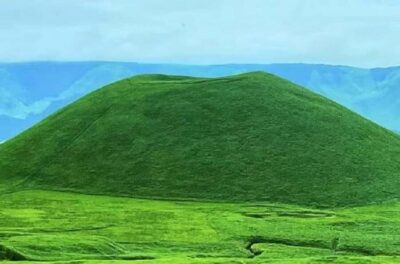
From Fukuoka: Mount Aso, Kurokawa Onsen, and Shrine Tour
Read our review →
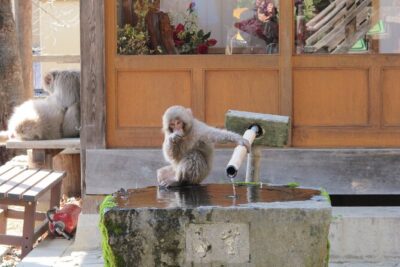
Snow Monkey & Shibu Onsen Afternoon Tour (Depart: Iiyama & Nozwa)
Read our review →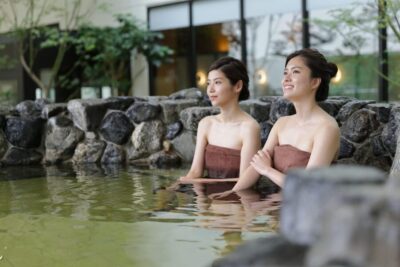
Bangkok: Yunomori Sukhumvit Onsen Hot Springs Spa Pass
Read our review →