
Review · JAPAN
Osaka: Nara and Uji Day Trip with Deer Park and Hot Spring
Nara’s deer are the hook, but the best part of this day is the range: wildlife, temples, matcha, and an onsen all fit into one outing from Osaka. You’ll feed deer in Nara Park, see the huge Great Buddha at Todai-ji, walk through Kasuga Taisha, then switch gears in Uji with green tea sweets and a hot bath.
I like the easy transport and the thoughtful finish at Genji no Yu, where tired feet get a proper Japanese-style soak. I also like the mix of guided explanation and free time, with guides such as Etta, Jessica, Liao, and Watson praised for keeping groups organized and sharing useful food and sightseeing tips.
The tradeoff is time. This is a 10-hour shared tour, and Nara and Uji both deserve more than a quick visit. Admission fees are extra, the bus ride is long, and tattoos may prevent you from entering the hot spring.
Key points to know before booking
- Deer feeding comes with a warning: The deer know what crackers look like and may crowd around you, so feed them carefully and keep moving once the crackers are gone.
- Todai-ji is the main cultural stop: The temple houses Nara’s Great Buddha, but admission is not included.
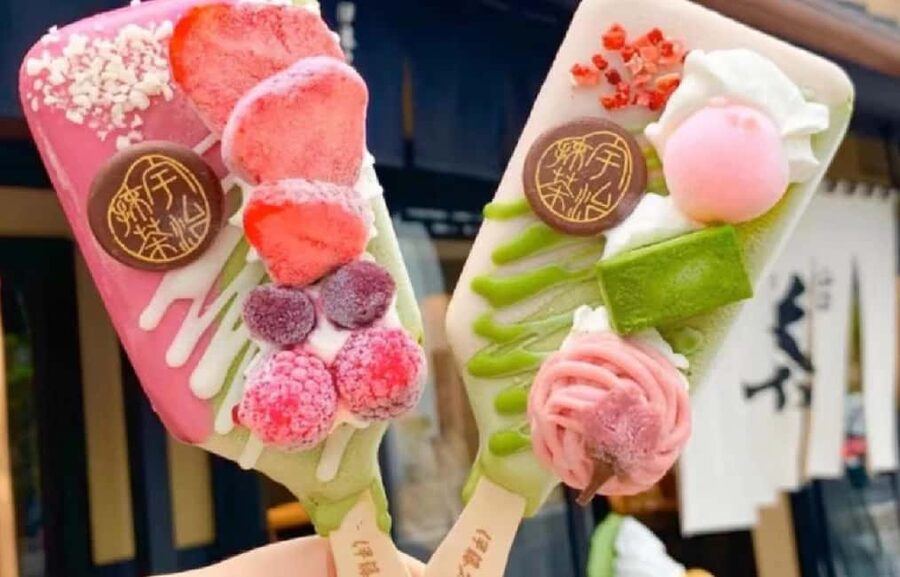
- Uji brings the matcha: You’ll have time for matcha ice cream, cakes, soba, and souvenirs along the streets near Byodo-in.
- The hot spring is a real bathing experience: Genji no Yu has three indoor baths and one outdoor bath, but bathing suits and other clothing are not allowed.
- The bus saves planning time: Round-trip transport avoids arranging separate rail connections, though compact seats and traffic can make the ride less comfortable.
- The schedule favors variety over depth: You see the major sights, but you will need to move promptly between stops.
Why this Nara and Uji combination works
Nara and Uji are close enough to pair, yet they feel different. Nara gives you broad park paths, ancient religious sites, and deer wandering through the trees. Uji is smaller in feel, with tea shops, river scenery, temple architecture, and connections to The Tale of Genji.
That contrast gives the day a pleasant rhythm. You begin outdoors with animals and historic buildings, spend the middle of the day around Uji’s food and cultural sights, and finish with a hot bath. I like that the tour does not ask you to spend the entire day looking at temples.
The price is $57 per person, before entrance fees, food, and the onsen charge. That is a reasonable price if you value the bus, guide, driver service, and the chance to combine two destinations without working out the transport yourself. It is less compelling if you want long, unhurried visits or prefer to choose every stop independently.
The group may include people from several countries, and explanations can be given in English, Japanese, and Traditional Chinese. If fewer than 13 people join, the guide may also drive, which means the commentary may be more basic.
More Hot Spring Day Trips in Japan
- From Osaka: Himeji Castle, Arima Onsen & Mt. Rokko Day Tour
★ 4.6 · 339 reviews - Tokyo: Mount Fuji 5th Station & Onsen Day Trip
★ 4.3 · 75 reviews - Private Nagano 1-Day Tour:Snow Monkeys,Zenko-ji,Obuse,Sake,Onsen
★ 5.0 · 71 reviews
Meeting in Namba and settling into the bus
The departure point is Harimaya Bld at 1-chōme-3-11 Nipponbashi, in the Namba and Shinsaibashi area. Departure is scheduled for 8:40 a.m. Look for the guide holding a yellow flag, and arrive at least 15 minutes early.
This detail matters. The instructions state that late arrivals and no-shows are not refunded, so do not treat the meeting time as a loose suggestion. The first drive takes about 70 minutes, depending on traffic.
The vehicle is air-conditioned, and parking fees, taxes, the driver, and guide service are included. Japanese tour vehicles can have compact seating, so you should expect a practical rather than roomy ride. Wear shoes you can walk in comfortably. Parking areas may be some distance from the sights, and the day includes plenty of walking.
Nara Park and the deer crackers
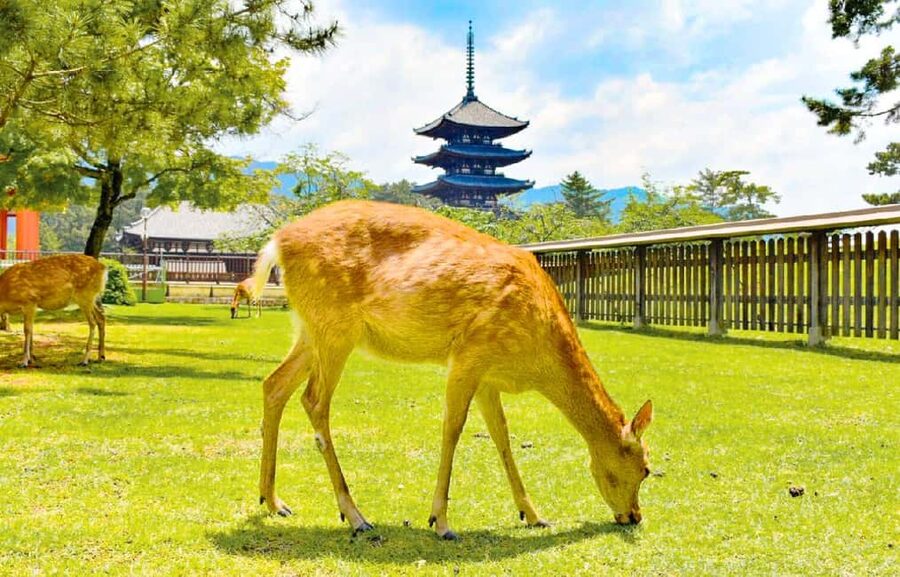
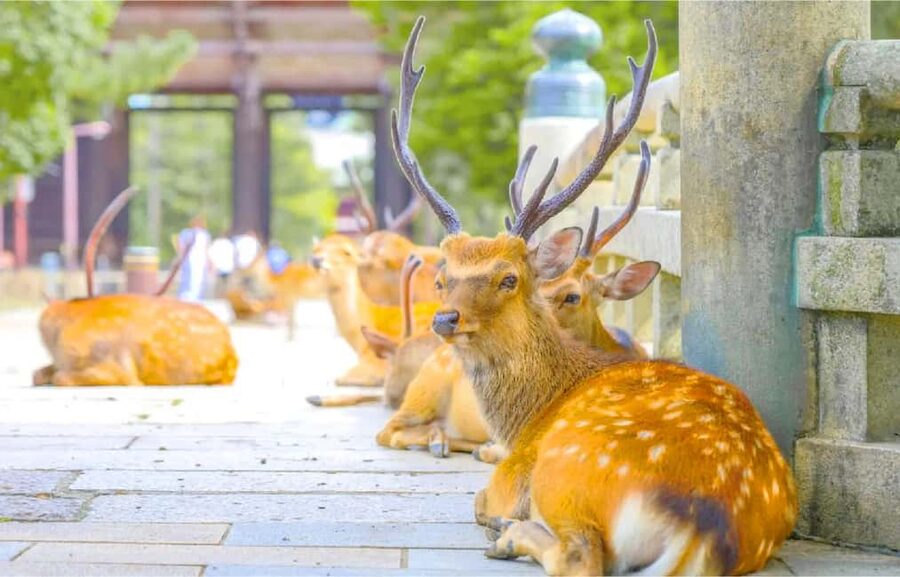
Nara Park is where the day becomes playful. The park sits below Wakakusa Mountain, and deer roam through the maple forest and around the major sights. You receive a complimentary pack of deer crackers, called shika senbei, before feeding them.
The deer are accustomed to people and may approach as soon as they see the crackers. That makes for a memorable encounter, but it also means you should hold the crackers securely and feed one at a time. Groups of excited deer can surround you quickly. Once your crackers are gone, show your empty hands and step away rather than teasing the animals with food you no longer have.
The planned Nara Park visit is about two hours, which gives you time to feed the deer and reach the main temple and shrine areas. It is enough for a first look, but not enough to wander every path. If you stop constantly for photos, you will need to keep an eye on the guide’s meeting instructions.
The park is more than a deer photo stop. It connects several major sights, and the setting makes the walk enjoyable even when the paths are busy. In autumn, the maple forest adds color. In other seasons, the open park and mountain setting still give Nara a welcome break from Osaka’s city streets.
Todai-ji and the Great Buddha
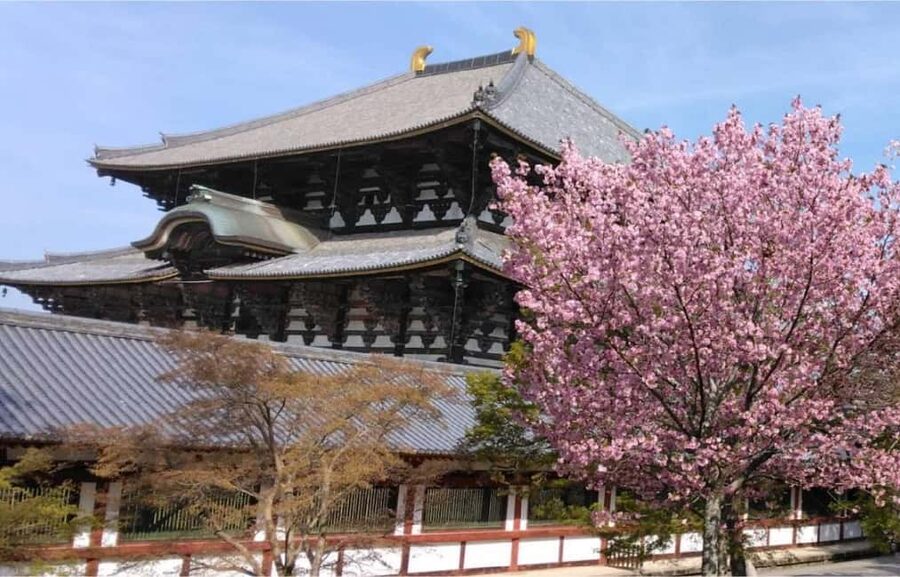
Todai-ji is the big architectural moment in Nara. The temple is home to the Great Buddha of Nara, an enormous bronze image housed inside one of Japan’s best-known temple buildings.
The visit helps explain why Nara matters beyond its deer. The temple’s scale is difficult to grasp from photographs, and the interior gives you a strong sense of the place’s religious importance. Your guide can provide context, but the amount of explanation will depend on the group size and language rotation.
Todai-ji admission is not included, so budget separately for the entrance ticket. The same applies to Byodo-in and the onsen later in the day. Bring some yen or a payment method accepted at the entrances, but the exact payment arrangements are not specified here.
You should also keep the pace in mind. The temple visit follows the deer park, and the group still has Kasuga Taisha ahead. This is not a slow temple study tour. I would focus on the Great Buddha, the main hall, and the guide’s key points rather than trying to see every corner.
Same steam, a different pool:
- Kyoto: Traditional Concert at Townhouse or Bathhouse
★ 4.9 · 224 reviews - From Tokyo: Private Tour to Fuji/Hakone – Onsen, Art, Nature
★ 5.0 · 116 reviews - Mt. Fuji, Hakone Private Tour from Tokyo – Onsen, Arts and Nature
★ 5.0 · 79 reviews - From Fukuoka: Mount Aso, Kurokawa Onsen, and Shrine Tour
★ 4.6 · 72 reviews
Kasuga Taisha and its lanterns
Kasuga Taisha offers a different religious atmosphere. Todai-ji is a massive Buddhist temple, while Kasuga Taisha is a Shinto shrine known for its thousands of bronze and stone lanterns.
The lanterns are the visual feature to watch for. They line the approaches and create a distinctive connection between the forest and the shrine buildings. This stop adds variety to the morning and gives you a clearer sense of Japan’s two major religious traditions.
Again, the walk can be longer than it looks on a map. Comfortable shoes matter, especially because you will already have spent time on foot at Nara Park. The tour information warns that parking may be far from the scenic areas, so allow for a walk before you reach the main sights.
If you want detailed time at both Todai-ji and Kasuga Taisha, this outing may feel rushed. If your goal is to see the major landmarks and decide which one deserves a longer return visit, the schedule works well.
Uji’s matcha streets and literary connection

After Nara, the tour moves to Uji, with about 80 minutes of driving listed for the return journey later in the day and time in Uji of around 90 minutes. Uji is strongly associated with matcha, and the streets near Byodo-in are lined with green tea shops selling ice cream, cakes, drinks, and even matcha-colored soba noodles.
This is the point where I would plan your spending. Food is not included, so you can choose a small sweet, a bowl of noodles, or matcha products to take home. Vegetarian soba and matcha ice cream are specifically suggested as good choices, and the guide may point you toward places that fit the group’s timing.
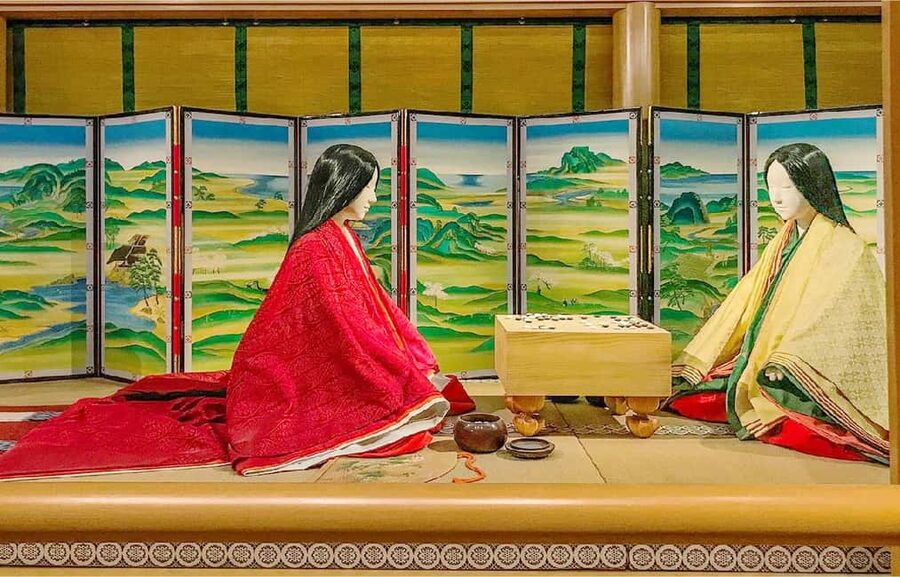
Uji also connects to The Tale of Genji, one of Japan’s classic novels. The final ten chapters are set in the Uji area, which gives the town a literary layer beyond its tea shops and temple views.
You will have free time here, but it is limited. Avoid sitting down for a long meal if you still want to browse the matcha street, reach the temple area, and return to the bus on time. A guide may send locations and suggestions through WhatsApp or another messaging channel, which can make this open time easier to manage.
Byodo-in or the Tale of Genji Museum
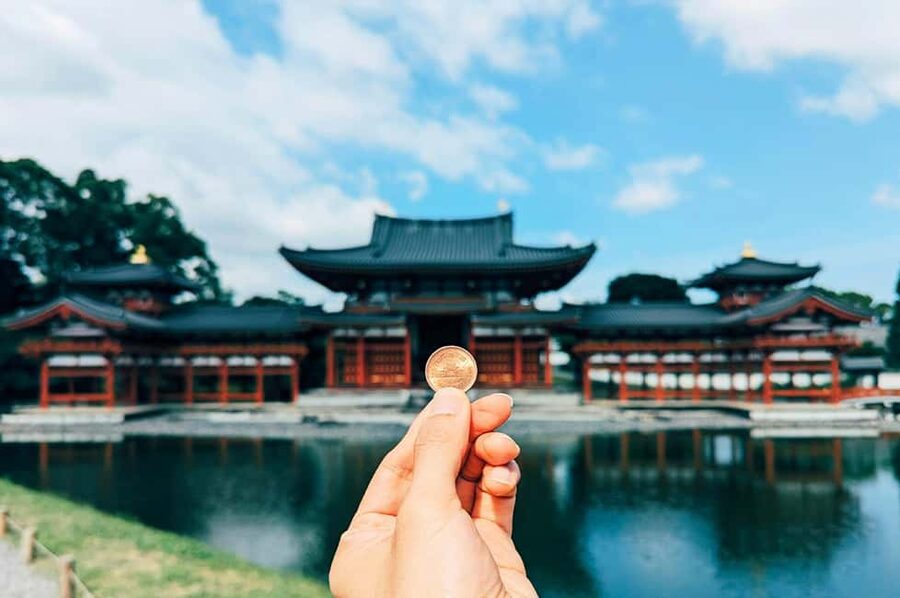
The Uji portion includes the chance to see Byodo-in Temple and, depending on the schedule, the Tale of Genji Museum. The activity description presents these as alternatives, while the listed route names both, so you should confirm with your guide which option is available on your departure.
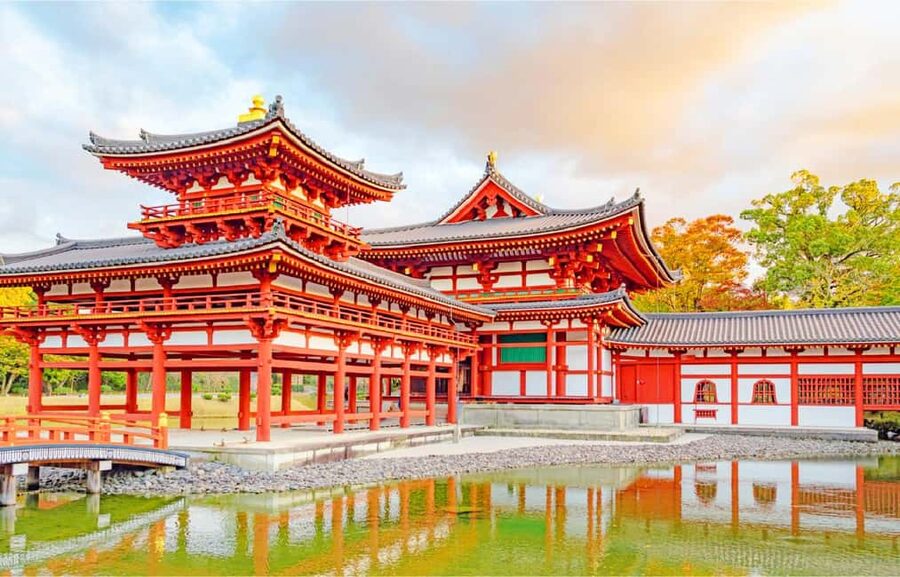
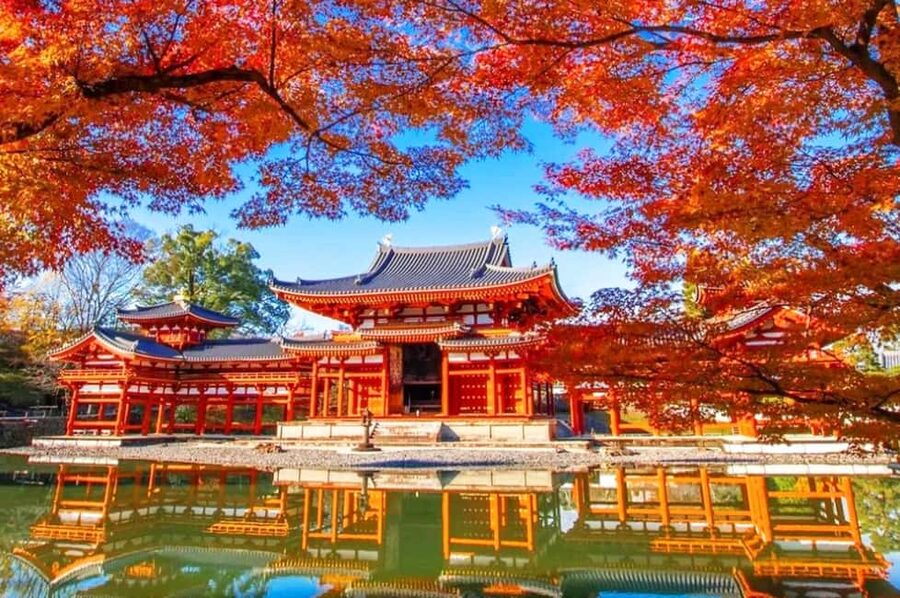
Byodo-in is famous for its Heian-period pond garden design and its appearance on the Japanese 10-yen coin. The setting is especially rewarding if you enjoy temple architecture, water, and formal gardens. Admission is extra, and you need to leave enough time to return to the group.
The Tale of Genji Museum takes a different approach. Multimedia displays and high-definition visuals introduce the story and its Uji setting. It is a useful choice if you like literature, Japanese culture, or indoor exhibits more than another temple visit.
You probably will not have time to explore both options at length, especially if you want matcha food as well. I would choose Byodo-in for architecture and the classic Uji view, or the museum if you already plan to visit several temples elsewhere in Japan.
Genji no Yu, a quiet finish to a long day
The final major stop is Genji no Yu, described as Uji’s only natural hot spring. The water comes from 1,111 meters underground, and the facility has three indoor baths and one outdoor bath.
This is a smart way to end a walking-heavy day. A hot spring can feel far more welcome after Nara’s park paths and Uji’s streets than it would at the beginning of the tour. The traditional design is intended to create a calm setting, and about one hour is allotted for the visit.
You need to understand Japanese bathing rules before deciding to join. Clothing is not allowed in the bathing area, including swimsuits. Tattoos may also prevent entry, and one person specifically had to skip the hot spring because of tattoos. If this applies to you, ask the operator or guide before booking rather than assuming a cover will be accepted.
Admission to the onsen is not included. The tour information does not provide the exact entrance price, so plan for an additional charge. You may also prefer to use the hour simply to rest if you do not want to bathe, but the schedule may not offer a separate sightseeing alternative.
Guides, languages, and the shared-group pace
Guide quality can shape this trip because the schedule is tight. Etta is repeatedly praised for her energy, clear English, humor, organization, and helpful messages with stop locations and food suggestions. Jessica, Liao, Watson, Lucia, Kris Wang, Nick Lee, and others are also named as friendly and helpful guides on different departures.
You cannot assume a particular guide will lead your date. What you can expect is a guide working across English, Japanese, and Traditional Chinese, with explanations shared among a multilingual group. That can mean shorter explanations in each language and a need to listen carefully for meeting times.
A strong guide is especially useful at Nara Park, where the deer can distract everyone, and in Uji, where the best use of 90 minutes depends on knowing where to go. Guides are also valuable for keeping the group together when the parking area is far from the sights.
The tour is shared, not private. That keeps the price down, but it also means you should be ready for different walking speeds, languages, and food preferences. Keep your own watch and return promptly to the stated meeting points.
Is $57 good value?
At $57, you are paying mainly for convenience. The cost covers round-trip transport from central Osaka, an air-conditioned vehicle, a guide, driver service, parking fees, and taxes. You do not have to plan separate train journeys to Nara and Uji or work out how to reach the hot spring afterward.
The extras can add up. You pay separately for Todai-ji, Byodo-in if you choose it, Genji no Yu, lunch, drinks, matcha treats, and souvenirs. The day is a better value for someone who wants a broad introduction than for someone trying to keep every expense low.
I would compare the price with the cost of arranging transport for a group, especially if you are not comfortable navigating Japanese stations. The bus also lets you rest between destinations. The downside is less control over departure times and less time at each place.
Who should book this day trip?
I would recommend it for a first visit to Osaka if you want to see Nara’s deer and add Uji without changing hotels. It suits couples, families with older children, and anyone who likes a guided framework with some independent time.
It is also a good fit if you want to try an onsen but would rather have transport arranged. The guide can explain the basic rules, though you still need to be comfortable with communal nude bathing and check the tattoo policy.
I would hesitate if you dislike buses, have difficulty walking for several hours, or want long visits inside Todai-ji and Byodo-in. I would also choose a Nara-only or Uji-only visit if your main goal is slow photography, extensive temple study, or a relaxed meal.
Cancellation is free up to 24 hours before departure, and you can reserve now and pay later. The schedule can change because of traffic or weather, so do not plan a tight train connection or another fixed activity immediately afterward.
Final recommendation
Book this tour if you want a wide first taste of Nara and Uji and value simple transport more than a leisurely pace. The deer, Great Buddha, lantern-lined shrine, matcha street, and hot spring make a memorable sequence, and the bath is an especially good finish.
Skip it if you already know Nara or Uji well, need more time at each temple, or cannot use the onsen because of tattoo rules and do not care about the other stops. For most first-time visitors with one open day from Osaka, $57 is fair value, provided you budget for admissions and food and arrive ready to keep moving.
FAQ
Where does the tour depart from?
The meeting point is Harimaya Bld at 1-chōme-3-11 Nipponbashi, Chuo Ward, Osaka, in the Namba and Shinsaibashi area.
What time should I arrive?
Departure is scheduled for 8:40 a.m. You should arrive at least 15 minutes early. The guide will be holding a yellow flag.
How long is the tour?
The full experience lasts about 10 hours, including bus travel between Osaka, Nara, Uji, and the return point.
Which languages are offered?
The live guide service is offered in English, Japanese, and Traditional Chinese. The group may include people from several countries.
Are meals and entrance fees included?
No. Meals, drinks, and admission to Todai-ji, Byodo-in, and the Uji onsen are not included.
Can I wear a swimsuit in the hot spring?
No. The bathing rules state that clothing is not allowed when using the hot spring, so swimsuits cannot be worn in the bathing area.
Can people with tattoos enter Genji no Yu?
You may not be allowed to enter if you have a tattoo. Check the policy before booking or ask the guide on the day.
Is the tour refundable if I cancel?
You can cancel up to 24 hours in advance for a full refund. Late arrivals and no-shows are not refunded.
New places to soak around Japan
- Private Car Day Trip to the Kobe Mountains, Gardens and Hot Springs from Osaka★ 4.5 · 16 reviews
- Solaniwa Onsen: Osaka Bay Tower★ 5.0 · 4 reviews
- Kobe Night View Mt Rokko Kitano Ijinkan Arima Onsen Day Trip★ 5.0 · 5 reviews
- Osaka: Nara, Todaiji, Uji Matcha, and Hot Spring Tour★ 4.0 · 7 reviews
- Deluxe Private Tour: Hita, AOT Statues and Onsen from Fukuoka★ 5.0 · 4 reviews
- Hot Spring Capital of Yufuin Rickshaw Tour★ 5.0 · 32 reviews
- Osaka River Rapids Hike and Natural Hot Spring tour★ 5.0 · 2 reviews
- Personalized Private Guided Tour from Myoko Kogen★ 5.0 · 2 reviews
Hot Spring Day Trips: more water worth the trip.
From Valencia: Full Day Tour to Montanejos & Thermal Pools
Read our review →
From Thessaloniki: Pozar Thermal Baths and Edessa Day Trip
Read our review →
Krakow to Zakopane: Funicular, Tasting and Thermal Baths Day Trip
Read our review →
Krakow: Zakopane Snowmobiles, Bonfire & Hot Springs Day Tour
Read our review →
From Reykjavik: Golden Circle and Secret Lagoon Day Trip
Read our review →
From Reykjavík: Volcanoes and Blue Lagoon Day Trip
Read our review →
Lake Vouliagmeni Thermal Spa And Temple Of Poseidon Private Full Day Tour
Read our review →Lists this soak appears on