
Review · NEPAL
Pokhara: Amazing 7-Day ABC Trek with Natural Hot Spring
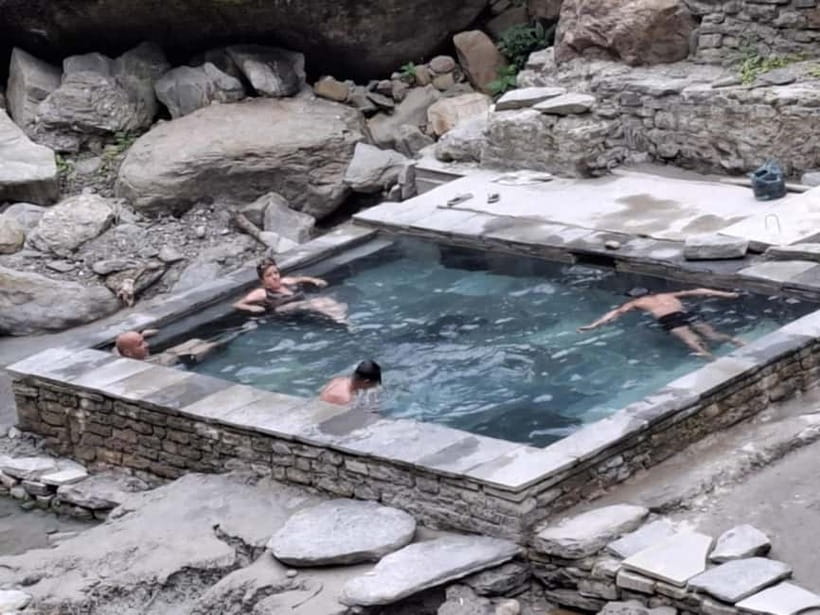
The best part of this seven-day Annapurna Base Camp trek is the way it builds toward a clear goal: after forests, bridges, waterfalls, and mountain villages, you reach the great bowl of peaks at 4,130 meters. Then comes a very welcome reward, a soak in Jhinu Dada’s natural hot spring.
I like the mix of varied scenery and manageable daily stages, and I like that the guides adjust the pace instead of treating the schedule as a race. The main consideration is altitude. Day 4 reaches 4,130 meters, and the return route is still demanding, so you need to be comfortable with several hours of hiking on steep and uneven trails.
Key points at a glance
- Annapurna Base Camp at 4,130 meters: The trek finishes in a dramatic mountain amphitheater surrounded by high peaks and glaciers.
- A proper hot spring stop: Jhinu Dada gives you time to relax in natural hot water after the long descent.
- Private group format: You can travel with your own party and have the pace adapted to your needs.
- Scenery that keeps changing: Expect paddy fields, river views, suspension bridges, bamboo, rhododendron, waterfalls, and snowy peaks.
- Useful package coverage: Permits, paperwork, guide costs, accommodation, and meals are included with the full package.
- Strong guide support: Guides including Jeet, Prakash, Ghanshyam Silwal, and Niraj have been praised for patience, safety, local knowledge, and practical help.
Why this Pokhara ABC trek works
This is a compact version of one of Nepal’s classic mountain walks. You start near Pokhara at roughly 800 meters and reach Annapurna Base Camp in four hiking days. That makes the trip appealing if you want a serious Himalayan goal but have only a week.
I like the route because it does not rely on one view alone. The first day gives you rural Nepal and mountain roads. The middle section moves through thick forest and along the Modi River. Higher up, the trees thin out and the peaks take over. The hot spring then changes the mood from effort to recovery.
The format also suits people who want help with the practical side of trekking. A guide handles the permits, accommodation arrangements, transport details, and route support. You still need to carry your personal items, but you are not left to solve every problem on the trail.
The pace is described as adjustable, and that matters. One guide, Ghanshyam Silwal, is noted for matching the daily pace to the walkers in his group and helping when one person felt unwell. Guides Jeet, Prakash, and Niraj are also associated with particularly strong support, from route knowledge to advice on clothing and safety.
More Natural Hot Spring Tours in Nepal:
- Pokhara: 5 Day Annapurna Base Camp Trek & Natural Hot Spring
★ 4.9 · 44 reviews - Pokhara: 7-Day Annapurna Base Camp Trek & Natural Hot Spring
★ 5.0 · 11 reviews - 5-Day Annapurna Base Camp Trek with Natural Hot Springs
★ 5.0 · 3 reviews
Day 1: Pokhara to Chhomrong by road and trail
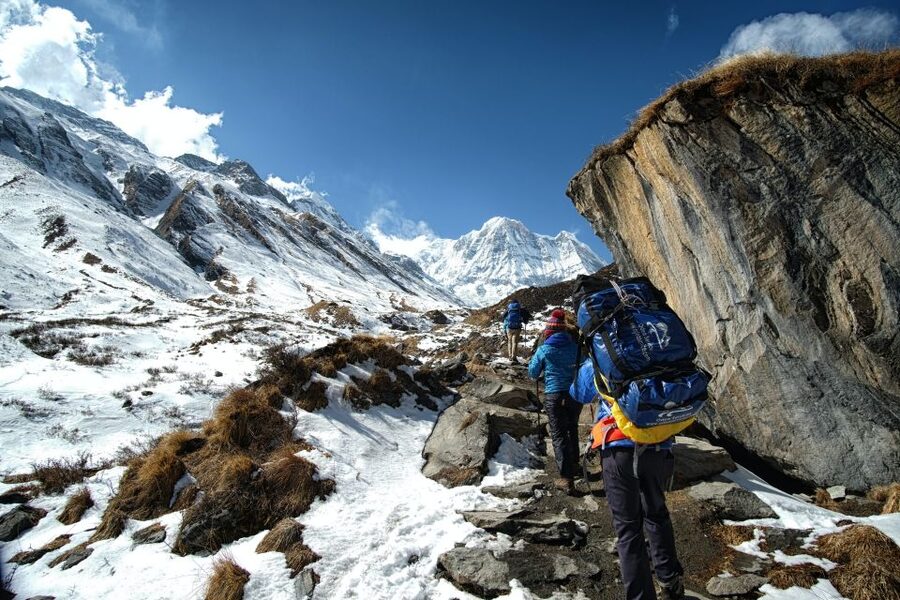
Your morning begins with pickup from Lakeside Pokhara, Pokhara Airport, or another location in the Pokhara Valley. The drive follows a scenic route with views of the Seti River, mountains, and green paddy fields before continuing toward Matqui, about half an hour beyond Ghandruk.
The road section lasts about four hours. From Matqui, you hike for around three hours to Chhomrong at 2,200 meters. This split is useful because it lets you reach the trail without spending the whole first day on foot, though the jeep ride may feel long after an early start.
Chhomrong is an important village on the approach to Annapurna Base Camp. You get your first real taste of the mountain settlement pattern here, with local homes, basic trekking accommodation, and views that make it clear the trail is heading higher.
This first day is not a gentle city walk. The altitude gain is noticeable, and the final hike can feel harder than the distance suggests. I would use the day to settle into a steady pace, drink regularly, and avoid spending all your energy trying to keep up with the guide.
Day 2: Chhomrong to Dovan through forest and river country
The walk from Chhomrong to Dovan takes about five to six hours. Much of the route passes through forest, with suspension bridges and views toward the Modi River adding variety to the day.
This is where the trek begins to feel like a real Himalayan trail rather than a road journey followed by a short hike. You cross bridges, walk beneath trees, and gain height while Annapurna and Machhapuchhre appear through openings in the forest.
The path is not simply scenic. The repeated ups and downs can make the day more tiring than the mileage suggests. Take the refreshment stops seriously, and keep your camera handy because the views change as the route bends through the valley.
Dovan sits at about 2,400 meters. It is a useful overnight point because you are gaining altitude in stages rather than rushing directly to Base Camp. Accommodation along the route is described as basic but adequate for the location, and meal choices are available at the trekking stops.
Day 3: Dovan to Deurali, with waterfalls and higher forest
Day 3 covers about six hours from Dovan to Deurali at 3,200 meters. The trail passes through bamboo and rhododendron forest, with waterfalls and mountain scenery appearing along the way.
I like this part of the route for its sense of progression. The forest still gives shade and shelter, but the air feels more alpine as you climb. Waterfalls break up the walking, and the scenery becomes more open and dramatic near Deurali.
This is also the point where altitude deserves more attention. You are sleeping above 3,000 meters, and the next day takes you substantially higher. Walk slowly, tell your guide if you feel unwell, and do not treat a planned schedule as more important than your condition.
The guide support is especially useful here. Prakash, for example, is described as patient and encouraging, while the guides connected with this trek are expected to handle accommodation and meal arrangements when those services are part of the full package. That lets you focus on walking rather than finding a bed at the end of the day.
More Hot Spring Hiking Tours in Nepal:
- From Pokhara: 5-Day Annapurna Basecamp Trek with Hot Springs
★ 4.9 · 26 reviews - Pkr/Kathmandu: 5-Day Annapurna Base Camp & Hot spring Trek
★ 5.0 · 6 reviews - Pokhara: 5-Day Trek to Annapurna Base Camp and Hot Springs
★ 5.0 · 4 reviews - POON HILL HOT SPRING – 10 Days Trek
★ 5.0 · 3 reviews
Day 4: The climb to Annapurna Base Camp
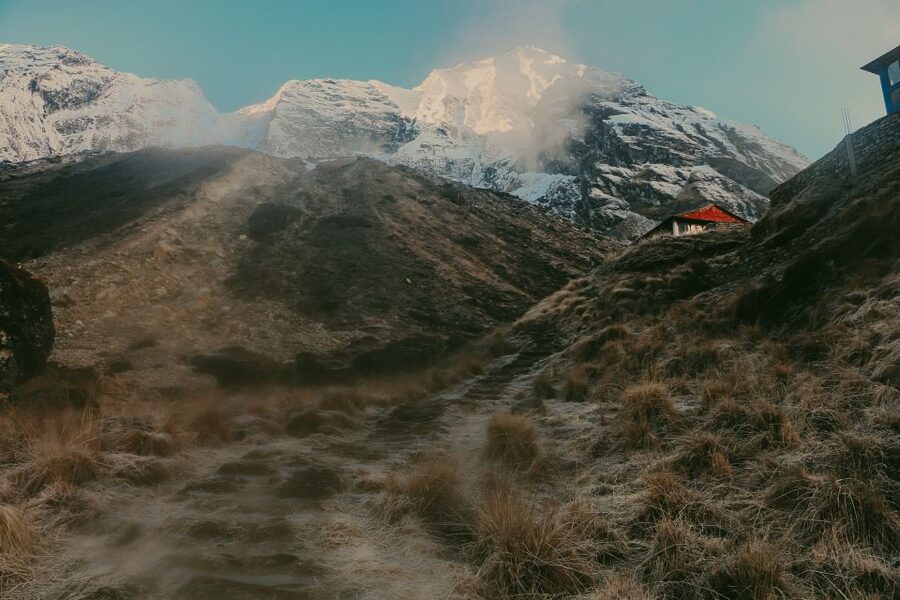
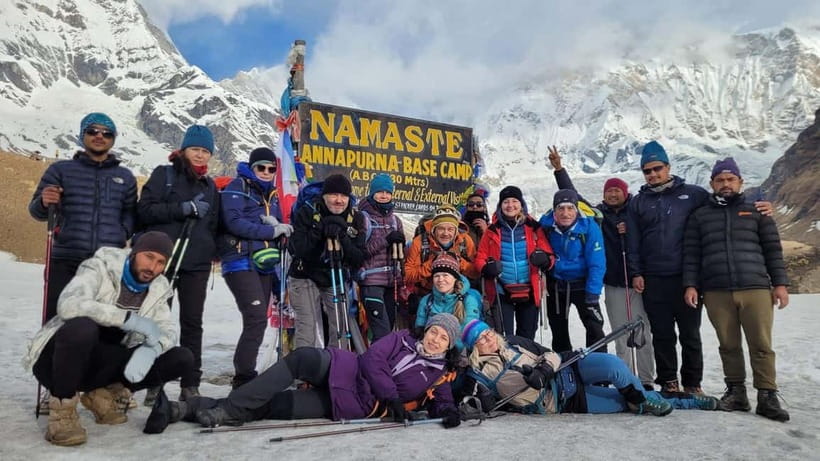
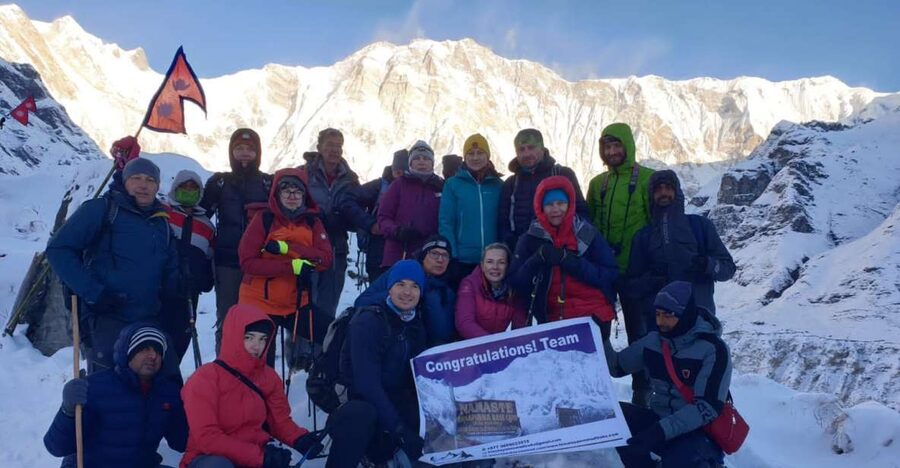
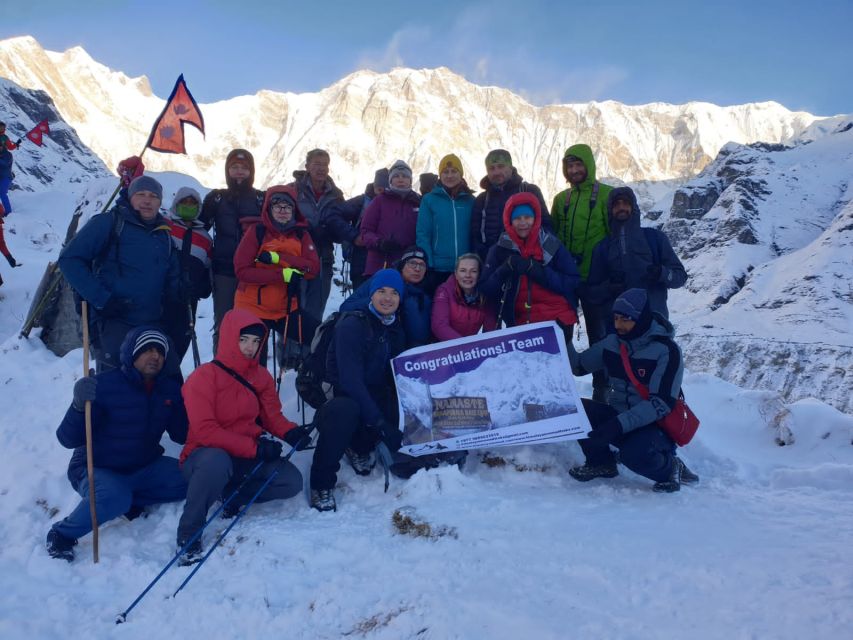
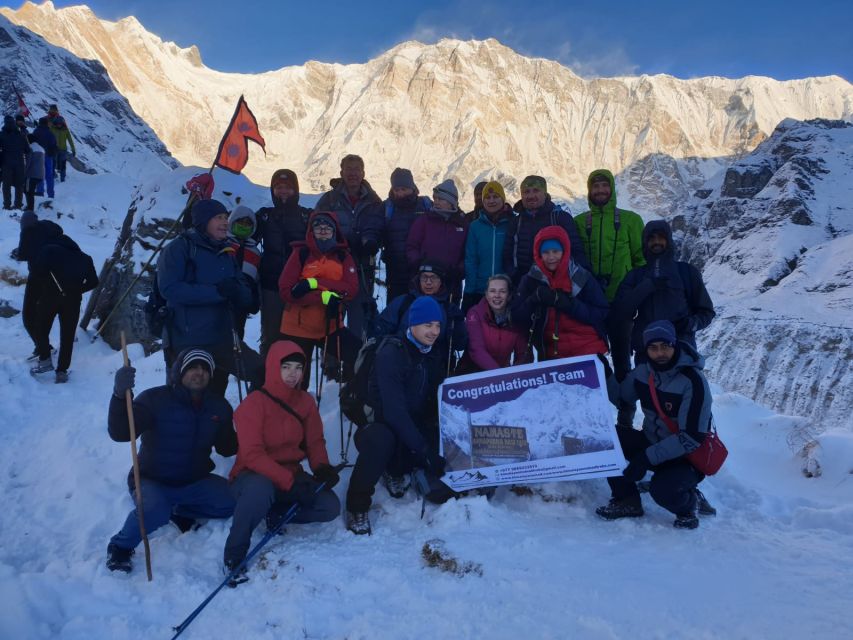
Day 4 is the central event. You walk from Deurali to Annapurna Base Camp, reaching 4,130 meters after about six hours.
The route leads you into the famous mountain bowl often called the Annapurna Sanctuary. Snowy summits and glaciers surround the Base Camp area, creating the dramatic finish promised by the trip. This is not just a viewpoint beside a road. You arrive on foot after several days of steady ascent, which gives the destination real weight.
The distance is manageable on paper, but the altitude changes everything. At 4,130 meters, you may move slowly and need more breaks. The cold, wind, and reduced oxygen can make this your hardest day, even if you are accustomed to hiking at lower elevations.
Your guide’s job matters most here. A good guide watches the group, keeps the pace sensible, and helps you judge when to rest. You should not feel embarrassed about slowing down. The goal is to reach Base Camp safely and enjoy the setting, not to win a race.
Allow yourself time to look around. The great value of this day is not only reaching a marked destination. It is standing inside a huge mountain setting where the trail, glaciers, and peaks come together.
Day 5: Returning from Base Camp to Sinuwa
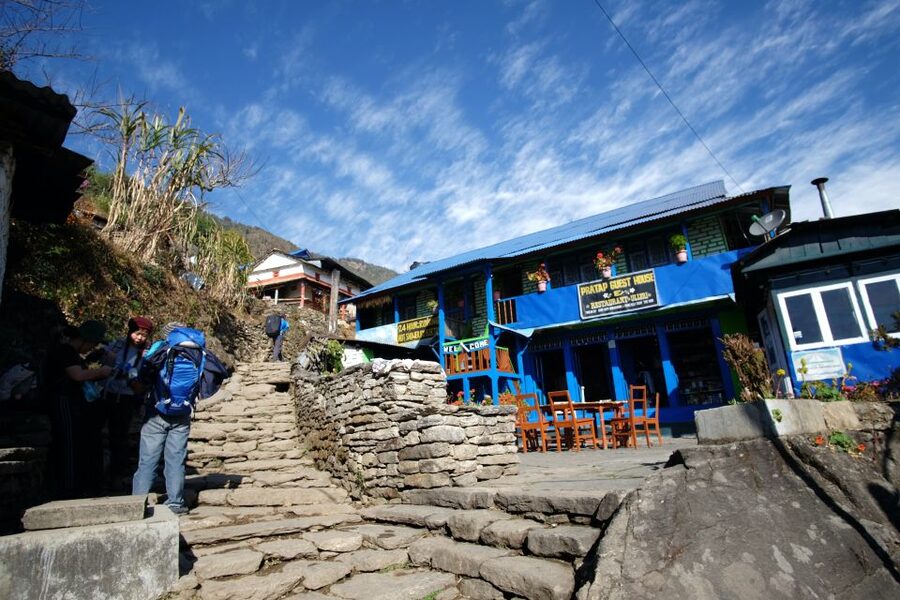
After time at Annapurna Base Camp, you retrace the route toward Sinuwa at 2,200 meters. The walking time is around seven hours, making this one of the longest days.
The descent gives you a second view of the valley. Details you missed while climbing often become clearer on the way down, and the lower elevation usually brings a little more energy. Still, seven hours on tired legs is serious work.
Downhill walking can be hard on knees and ankles, especially on stone steps and uneven sections. Trekking poles can help, and you should keep your boots securely fitted. A porter is available for an extra charge, and I would consider one if you are not used to carrying your own bag for a week.
Sinuwa is a practical overnight stop rather than the emotional climax of the trek. That is fine. After the long return from Base Camp, a simple meal and a bed can be exactly what you need.
Day 6: Sinuwa to Jhinu Dada and the natural hot spring
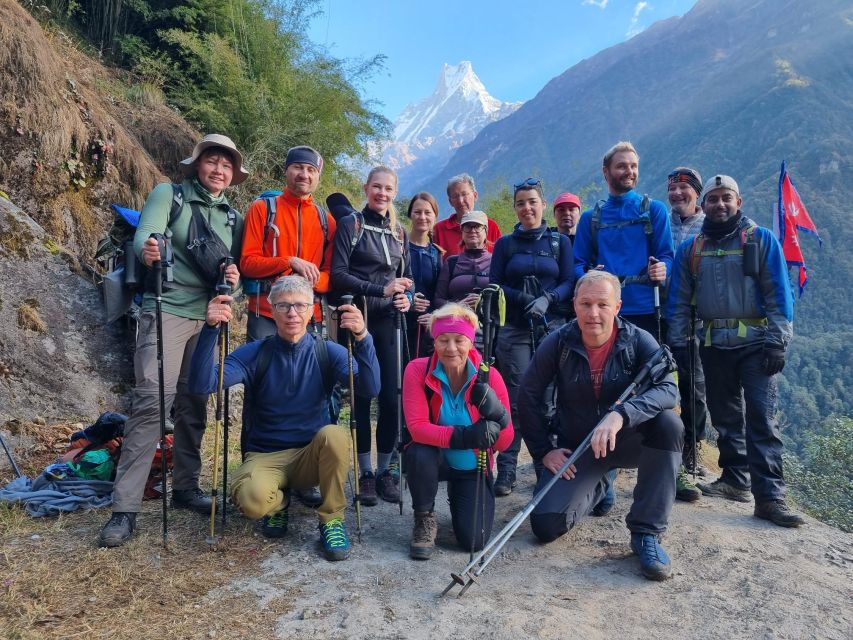
The sixth day takes about five hours from Sinuwa to Jhinu Dada at 1,600 meters. You continue downhill, then make time for the natural hot spring.
This is a smart finish to the hiking section. The hot water gives your legs a chance to recover after the Base Camp push and long descent. It is not a side attraction added to fill time. It changes the rhythm of the trip and gives you a calm final evening in the mountains.
You should bring a towel and cash, both listed among the suggested items. Personal drinks, bottled or boiled water, showers, laundry, and other extras are not included, so keep a little money available for costs along the way.
Jhinu Dada also helps balance the trip for people who enjoy comfort as much as exertion. You still have to walk to reach the spring, but you finish the demanding high-altitude section before the final day.
Day 7: Jhinu Dada back to Lakeside Pokhara
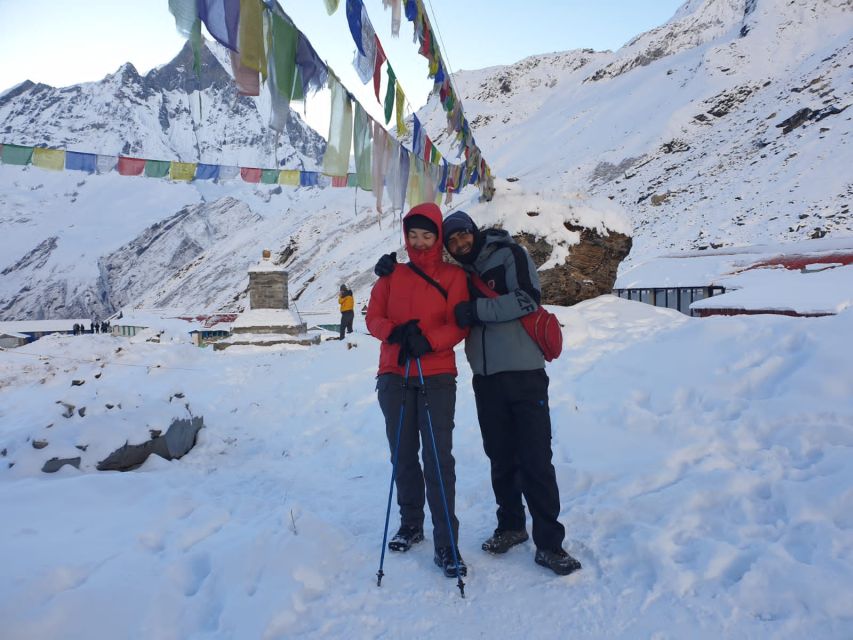
After breakfast, you hike for about two hours before taking a jeep back to Lakeside Pokhara. The road return gives you time to think over the week without another long mountain day hanging over you.
Pickup and drop-off are included from the Pokhara area. Kathmandu pickup can be arranged for an extra cost, but the listed route begins in Pokhara, so you should plan to be in the city before the trek starts.
The return to Lakeside is not just a transport detail. Pokhara gives you a clear contrast with the trail, from mountain quiet to lakeside restaurants, shops, and city comforts. Lunch and evening meals in Pokhara are not included, so budget for those separately.
What the $200 price really covers
At $200 per person, the trip looks strong on value, but you need to check which package you are buying. The full package includes accommodation during the trek, all breakfasts, lunches, and dinners, deluxe transport according to the number of people, the guide, permits, paperwork, medical kit, taxes, and the guide’s food, lodging, salary, equipment, insurance, and transport.
That is a large amount of logistical coverage for a seven-day trek. The guide’s own expenses are not quietly added later, and permits and the Trekkers’ Information Management System fee are included.
The non-full-package option uses shared bus transport, and meals are not included in the same way. Ask for the exact package terms before paying so you can compare the headline price fairly. You will still need to pay for drinks, personal expenses, bottled or boiled water, battery charging, laundry, showers, porter service, and meals in Pokhara.
Travel and rescue insurance is also excluded. I would treat that as essential rather than optional for a high-altitude trek.
Accommodation, meals, and the private group format
Accommodation varies along the route but is considered adequate for the mountain setting. You should expect practical trekking accommodation rather than hotel comfort. The appeal is its location and convenience at the end of each hiking day, not luxury.
Full-package meals include breakfast, lunch, and dinner during the trek. Meal options are available along the route, but drinks and personal extras cost more. A sleeping bag is on the suggested packing list, so bring one even if you expect bedding at the accommodation.
The private group format is a real advantage for pacing. You are not locked into the speed of a large mixed group, and the guide can respond to the needs of your own party. It also makes the trip a better fit for families or friends who want to share the challenge together, provided everyone is ready for the same high-altitude demands.
Guides and the human side of the trek
The guide may be the difference between a smooth trek and a stressful one. Jeet is described as experienced with the area and good at keeping the route running smoothly. Prakash is associated with patience, motivation, safety, and explanations about Nepal’s geography and culture.
Ghanshyam Silwal is noted for adjusting the daily pace and helping when a participant became ill. Another guide, Niraj, is praised for making the trek memorable. The names matter because they show that the experience can depend on the individual guide assigned to your booking.
Guides have also helped create a social atmosphere on the trail, including games, dancing, and conversation in the evenings. You should not assume every group will have the same mood, but the trip is not presented as a silent march from lodge to lodge.
A porter is available for purchase. I recommend considering this service if you are unsure about carrying your own equipment over seven days. You still need a daypack with essentials, but reducing the main load can make the steep sections more enjoyable.
What to pack and how to prepare
The suggested list includes a passport or ID card, camera, sunscreen, sleeping bag, T-shirts, cash, shorts, hiking shoes, long pants, jacket, towel, trekking gear, and sunglasses.
The list is brief, so use it as a starting point rather than a full packing plan. Your footwear matters most. Choose sturdy hiking shoes that you have already worn in, since the trail includes forests, bridges, descents, and uneven ground.
Bring layers. Pokhara, the lower villages, and Base Camp can feel very different, and the trip moves from 800 meters to 4,130 meters. Sunscreen and sunglasses are useful even on cooler days, and cash is needed for personal costs.
The reviews give two especially useful preparation tips: ask the operator for clothing advice before departure, and consider hiring a porter at the start rather than waiting until the load becomes a problem.
Who should book this trek?
I would choose this trip if you want a recognized Himalayan destination, a private guide, and a clear seven-day plan from Pokhara. It suits reasonably fit walkers who are happy with five to seven hours of hiking on several days.
I would not choose it if you want a soft adventure with short walks and hotel-style comfort. The route reaches 4,130 meters, includes a seven-hour return day, and requires you to take altitude and weather seriously.
The tour is also a good match for people who value practical help. Permits, transport, meals, guide costs, and accommodation can be organized through the full package, while the guide can adjust the pace and help with problems on the trail.
Should you book the Pokhara ABC trek?
Book it if Annapurna Base Camp is your main goal and you like the idea of earning it through changing scenery, village stops, and forest trails. The hot spring at Jhinu Dada is a particularly good touch, giving your body a chance to recover before returning to Pokhara.
Before booking, confirm the exact package, ask which guide will lead your group, and decide if you want a porter. If you are prepared for altitude, basic accommodation, and long hiking days, the $200 full-package price offers substantial practical value. If you want a gentler trip, look for a shorter lower-altitude walk instead.
FAQ
How long is the Annapurna Base Camp trek?
The trek lasts seven days, beginning and ending in the Pokhara area.
What is the highest point of the trek?
The highest point is Annapurna Base Camp at 4,130 meters.
Where does the trek start?
The trek starts with pickup from Lakeside Pokhara, Pokhara Airport, or elsewhere in the Pokhara Valley.
Is transportation included?
Transportation is included according to the package. The full package provides deluxe transportation as described in the schedule, while the non-full-package option uses shared bus transport.
Are meals included?
Breakfast, lunch, and dinner during the trek are included with the full package. Lunch and evening meals in Pokhara are not included.
Is accommodation included?
Available accommodation during the trek is included. Extra nights in Pokhara caused by early arrival, late departure, or an unscheduled early return are not included.
Is a guide included?
Yes. The trip includes an authorized English-speaking guide, and guides can also speak Hindi and Nepali. Guide expenses, including meals, accommodation, salary, equipment, insurance, and transportation, are included.
Can I hire a porter?
Yes. Porter service is available for an additional cost.
What happens at Jhinu Dada?
You stop at the natural hot spring at Jhinu Dada and have time to soak in the hot water after the descent from Annapurna Base Camp.
Can I cancel the booking?
You can cancel up to 24 hours in advance for a full refund. The trip also offers reserve now and pay later booking.
Week-long hot spring trips around Nepal
- Pokhara: 7-Day Annapurna Base Camp Via PoonHill & Hot Spring
★ 5.0 · 6 reviews - Pokhara: 7-Day Annapurna Base Camp Trek & Hot Spring
★ 4.0 · 3 reviews - 7 Days Annapurna Base Camp Trek from Pokhara with Hot Spring
★ 5.0 · 2 reviews - 7 Day Iceland with Reykjavik Northern Light | Blue Lagoon | Golden Circle ……
★ 5.0 · 5 reviews
New places to soak around Nepal
- 7 Days Annapurna Base Camp Trek from Pokhara with Hot Spring★ 5.0 · 2 reviews
- Lower Mustang Jomsom Muktinath Hot Spring Tour in 4 WD Jeep★ 4.5 · 2 reviews
- Unlimited Sauna Steam and Jacuzzi★ 5.0 · 2 reviews
- POON HILL HOT SPRING – 10 Days Trek★ 5.0 · 3 reviews
- 5-Day Annapurna Base Camp Trek with Natural Hot Springs★ 5.0 · 3 reviews
- Pokhara: 5-Day Trek to Annapurna Base Camp and Hot Springs★ 5.0 · 4 reviews
- Pokhara: 7-Day Annapurna Base Camp Trek & Hot Spring★ 4.0 · 3 reviews
- Pokhara: 7-Day Annapurna Base Camp Via PoonHill & Hot Spring★ 5.0 · 6 reviews
Hot Spring Hiking Tours: more water worth the trip.
Bali: Mount Batur Sunrise Guided Hike and Natural Hot Spring
Read our review →
Mount Batur Sunrise Hike and Natural Hot Spring Option
Read our review →
Private Tour Mount Batur Sunrise Trekking and Natural Hot Spring
Read our review →
Mount Batur Sunrise Hike, Breakfast & Hot Spring
Read our review →
National Park Hike & Finnish Smoke Sauna Experience with Campfire Lunch
Read our review →
Montanejos Hiking Tour & Thermal Pools from Valencia
Read our review →
Landmannalaugar Hike and Hot Springs from Reykjavik & Hella
Read our review →Lists this soak appears on