
Review · JAPAN
Hands On Pottery Workshop in Arima Onsen
The best part of this Arima Onsen workshop is the chance to work at a real potter’s wheel, not simply paint a ready-made cup. You’ll knead the clay, center it, and shape it with help from a professional potter who has more than 20 years of experience. I like that beginners can try several pieces, even though only one will be fired.
I also like the local touch. You can choose from several glazes, including one made with mineral-rich Arima Onsen water, and you receive a small ceramic keepsake before you leave. The main drawback is patience: your finished piece takes about three months, and international shipping costs extra.
Key points to know before booking
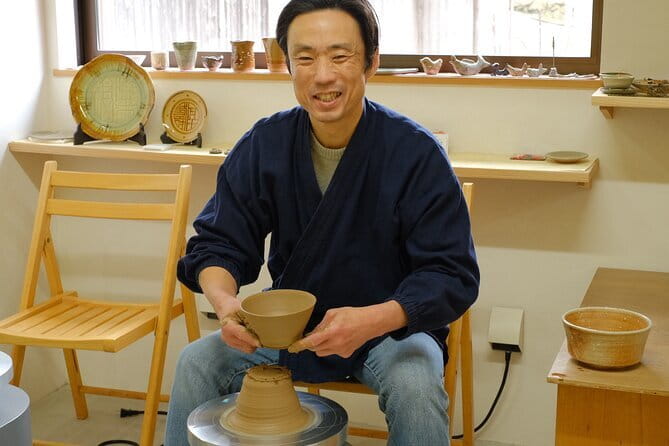
- Real wheel-throwing: Knead clay, then shape a plate, tea bowl, or cup on an electric potter’s wheel.
- Private instruction: Only your group takes part, with guidance from a potter who has more than 20 years of experience.
- Try several pieces: You may make multiple items, but just one is selected for glazing and firing.
- Arima-specific glaze: One glaze uses water from the famous hot spring area.
- Included value: Materials, equipment use, and firing are included in the $52.02 price.
- Plan ahead: Your finished work takes about three months, with international shipping available for an added fee.
What makes this Arima Onsen pottery class worthwhile
Arima Onsen is best known for its hot springs, but this workshop gives you another way to connect with the town. Instead of buying a souvenir from a shop, you make one with your own hands. That difference matters. A small bowl you shape yourself carries a memory of the place in a way a mass-produced trinket usually cannot.
The activity lasts about 90 minutes, which is long enough to learn the basic process without taking over your whole day. You can fit it around time in the hot springs, a meal, or a walk through Arima Onsen. I see it as a good counterpoint to sightseeing: quiet, focused, and tactile.
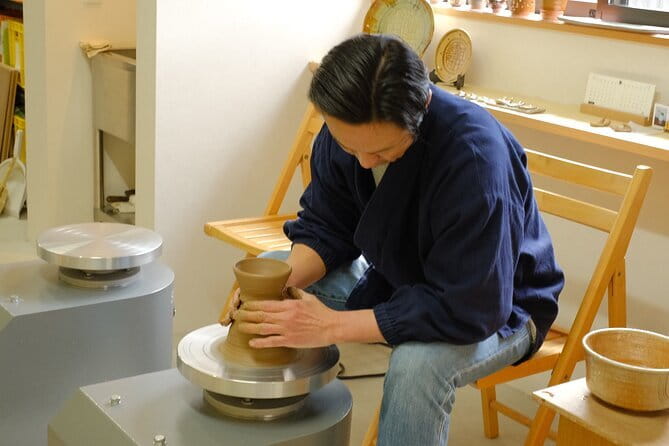
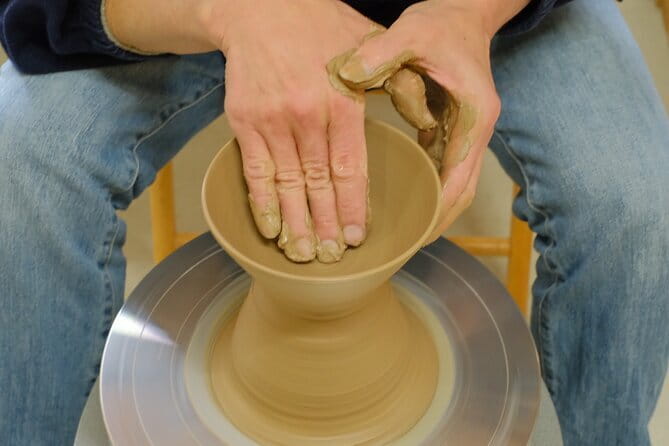
You work with an electric wheel, so this is a proper wheel-throwing session rather than a simple hand-building craft. The potter first helps you prepare the clay, then shows you how to shape it as the wheel turns. If you have never handled clay before, expect a learning curve. The material can feel unruly at first, and the shape may not behave as planned. That is part of the fun, but you should not expect a perfect professional vessel on your first attempt.
More Japanese Onsen Tours in Japan:
- From Osaka: Himeji Castle, Arima Onsen & Mt. Rokko Day Tour
★ 4.6 · 339 reviews - From Tokyo: Private Tour to Fuji/Hakone – Onsen, Art, Nature
★ 5.0 · 116 reviews - Mt. Fuji, Hakone Private Tour from Tokyo – Onsen, Arts and Nature
★ 5.0 · 79 reviews
Starting with clay kneading
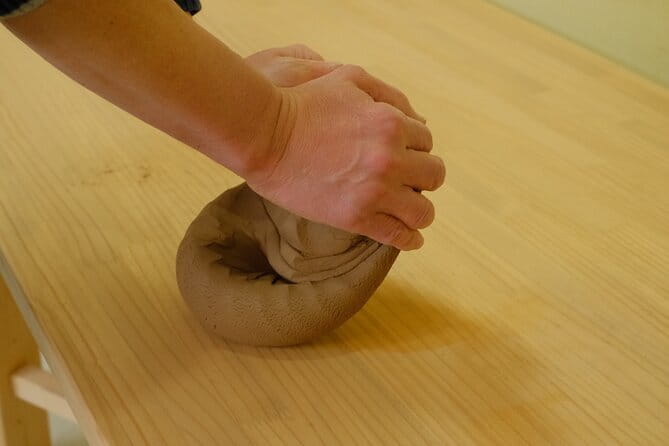
The session begins with clay preparation. You knead the clay by hand before moving to the wheel. This step helps prepare the material and gives you a first feel for its texture and resistance.
For a beginner, kneading is useful because it slows you down before the more demanding part begins. At the wheel, small changes in pressure can alter the whole form. Starting with your hands makes the clay less mysterious and gives you a better sense of how it responds.
The workshop is hands-on from the start. You are not watching a demonstration for most of the 90 minutes while someone else does the work. The point is to handle the clay yourself, make mistakes, and adjust your technique with the potter’s help.
You should arrive ready to concentrate. Pottery is often described as relaxing, and it can be, but the first attempts also require attention. Keeping the clay centered and applying even pressure takes practice. The private format helps here because instruction is directed only at your group rather than a large class.
Learning the electric potter’s wheel
Once the clay is prepared, you move to an electric potter’s wheel. You can shape a plate, tea bowl, or cup, depending on the form you want to attempt.
The potter guides you through the basic wheel-throwing process. You will need to control the clay with your hands while the wheel spins, and the result depends on steady pressure and timing. The guidance from a professional with over 20 years of experience is especially useful for first-timers, since a small correction at the right moment can save a piece from collapsing.
You may try more than one piece. This is one of the strongest features of the class. Your first attempt may teach you more than it produces, and a second or third try gives you a chance to apply what you learned. The important limitation is that only one piece will be fired and finished, so you should think of the extra attempts as practice rather than additional souvenirs.
That arrangement also keeps the price reasonable. At $52.02 per person, you are paying for instruction, clay, equipment, and the firing of one finished piece. You are not paying to have every experiment professionally completed.
Choosing between a plate, tea bowl, and cup

The choice of form affects the difficulty and the finished character of your piece. A plate may seem simple, but creating an even, stable shape still takes control. A cup or tea bowl requires more attention to the walls and the opening.
I would choose the form that appeals to you most rather than chasing the shape that seems easiest. The workshop is designed for beginners, and the potter can guide you through the process. Your goal is not to produce a flawless object. Your goal is to make something that still feels like your own work after the firing.
A tea bowl has a natural connection to Japanese pottery and makes a meaningful keepsake from time in Japan. A cup may be more familiar for daily use. A plate gives you a wider surface where the shape and glaze can make a clear impression. The experience information does not promise that every piece will be usable or perfectly symmetrical, so keep your expectations realistic.
You can make a personal choice without needing technical pottery knowledge. The potter provides the instruction, and no previous experience is required.
Workshops on bath days around Japan:
- Hot Spring Dyeing Workshop in Beppu
★ 5.0 · 4 reviews - Marrakech Hammam, Massage & Berber Carpet Weaving Workshop
★ 4.6 · 48 reviews - Exclusive Culinary Workshop and Hammam Relaxation in Marrakech
★ 5.0 · 2 reviews - Istanbul: Turkish Hamam Kese/Foam Workshop with Starter Kit
★ 5.0 · 2 reviews
The Arima Onsen glaze option

After you shape your piece, you choose from unique glaze options. One glaze is made with mineral-rich water from Arima Onsen, giving the finished object a direct connection to the town.
This is the detail that makes the souvenir feel specific to Arima rather than interchangeable with pottery made anywhere else. You are not simply taking home a cup from a craft class. You are choosing a finish tied to the hot spring area where the workshop takes place.
The actual glazing and firing are handled by the potter. They are not part of the hands-on portion, so you will not sit at the wheel and apply the final glaze yourself. That is worth knowing before you book. The activity teaches you the clay preparation and wheel work, while the specialist completes the later technical stages.
Because the final glaze can affect the appearance of your piece, selecting it is an important part of the experience. The exact finished color and surface cannot be guaranteed from the information provided, so think of the waiting period as part of the craft process rather than a fast custom order.
A private class with a calm pace
This is a private tour or activity, meaning only your group participates. That gives the session a more personal feel than a large public class. You can ask questions, receive direct corrections, and work at a pace suited to your group.
The private format should be particularly helpful if your group includes people with different levels of confidence. One person may quickly enjoy the spinning wheel, while another may need more help keeping the clay centered. With only your group present, the potter can focus on each person.
A private class does not mean the clay will instantly cooperate. Pottery remains a physical skill, and the wheel may take time to understand. But you are less likely to feel rushed by strangers or worry about holding up a larger class.
Most people can take part, but there is one clear practical restriction: long fingernails make the activity difficult. Clay work requires your fingers to press and shape the material closely. If your nails are long, you may have trouble controlling the clay and risk damaging the form.
What you take home, and when

You receive a mini ceramic piece as a keepsake from the workshop. This means you leave with something in hand even though your main pottery piece is still unfinished.
Your selected plate, tea bowl, or cup will be ready in about three months. The potter handles the firing and finishing, and international shipping is available for an additional fee. Shipping is not included in the advertised price, so ask about the added cost if you are visiting from outside Japan.
The three-month wait changes the way you should think about the activity. This is not a same-day souvenir workshop. If you live abroad, you will likely need the finished item shipped to you. If you are staying in Japan for a longer period, you may have another option, but the supplied details only confirm that international shipping is available.
I like the delayed finish because it reflects how pottery actually works. You make the form, choose the glaze, and then allow the technical work to happen later. Still, if you need a finished object before leaving Japan, this may not be the best choice.
Price, timing, and what the fee covers
The price is $52.02 per person. For a 90-minute private pottery class, that is fair value because the fee includes the materials, equipment use, and firing fee.
The value is strongest if you care about the process, not just the final object. You receive instruction from an experienced potter, use a real electric wheel, may try multiple pieces, and have one item fired. The mini ceramic souvenir adds a second small reminder of the class.
The price does not include shipping. That is the main extra cost to consider, especially for international visitors. You should also remember that only one piece is fired, despite the chance to make several. If you are comparing this with a simple painting or decorating session, this class costs more because it includes a real pottery process and professional firing.
The activity is booked, on average, 19 days in advance. That suggests you should reserve ahead rather than assume you can find a place on the same day, especially if your time in Arima Onsen is limited.
Finding the workshop in Arima Onsen
The meeting point is 温馨窯1114, Arimachō, Kita Ward, Kobe, Hyogo 651-1401, Japan. The activity begins and ends at the same location.
The workshop is near public transportation, which makes it practical to combine with other plans in Arima Onsen. The exact route and transit details are not provided here, so check your map and allow time to find the address before the start.
Because the class lasts only about 90 minutes, arriving late could cut into the part you most want to try. I would plan to reach the meeting point with time to spare, especially if you are navigating Arima Onsen for the first time.
The setting itself is part of the appeal. The workshop is in the heart of the hot spring town, in a beautiful traditional-style house according to the experience details. The setting gives the pottery session a stronger sense of place than a generic craft studio in a shopping center.
Who should book this experience
I would recommend this workshop to you if you want a quiet, creative activity during a stay in Arima Onsen. It suits first-timers, couples, families, and small private groups who are happy to spend 90 minutes making rather than simply sightseeing.
It is also a good choice if you value an authentic souvenir. The piece you take home will not be perfect, and that is precisely why it can be meaningful. You will remember the pressure of the clay, the difficulty of centering it, and the decision about which glaze to use.
You should think twice if you need instant results, dislike getting your hands dirty, or have long fingernails that cannot be trimmed for the session. The three-month wait may also be frustrating if you want to carry the finished pottery home immediately.
The class works best as part of a slower Arima Onsen day. Pair it with hot spring time and a meal, rather than trying to squeeze it between several distant Kobe sights. The workshop gives you a break from a packed schedule and lets you pay attention to one small task.
Should you book the Arima Onsen pottery workshop?
Book it if you want more than a quick souvenir and like the idea of making a Japanese ceramic piece from raw clay. The private format, experienced potter, local Arima glaze, included firing, and chance to try several forms make the $52.02 price sensible.
Skip it if your priority is a finished item today or if international shipping would be inconvenient. For everyone else, this is a thoughtful way to spend 90 minutes in Arima Onsen, with a mini keepsake in hand and a larger reminder of the town arriving about three months later.
FAQ
How long does the pottery workshop last?
The workshop lasts approximately 1 hour and 30 minutes.
Do I need previous pottery experience?
No. The activity is beginner-friendly, and no previous experience is required.
What can I make during the class?
You can shape a plate, tea bowl, or cup on an electric potter’s wheel.
Can I make more than one pottery piece?
Yes. You can try multiple pieces, but only one piece will be fired and finished.
Is firing included in the price?
Yes. Material costs, equipment usage, and the firing fee are included. Shipping is not included.
When will my finished pottery be ready?
Your finished piece should be ready in about three months. International shipping is available for an additional fee.
New places to soak around Japan
- Private Car Day Trip to the Kobe Mountains, Gardens and Hot Springs from Osaka★ 4.5 · 16 reviews
- Solaniwa Onsen: Osaka Bay Tower★ 5.0 · 4 reviews
- Osaka: Nara, Todaiji, Uji Matcha, and Hot Spring Tour★ 4.0 · 7 reviews
- Kobe Night View Mt Rokko Kitano Ijinkan Arima Onsen Day Trip★ 5.0 · 5 reviews
- Deluxe Private Tour: Hita, AOT Statues and Onsen from Fukuoka★ 5.0 · 4 reviews
- Hot Spring Capital of Yufuin Rickshaw Tour★ 5.0 · 32 reviews
- Osaka River Rapids Hike and Natural Hot Spring tour★ 5.0 · 2 reviews
- Personalized Private Guided Tour from Myoko Kogen★ 5.0 · 2 reviews
Japanese Onsen Tours: more water worth the trip.

Bangkok: All-Day Pass to Yunomori Sathorn Onsen Bath and Spa
Read our review →

From Fukuoka: Mount Aso, Kurokawa Onsen, and Shrine Tour
Read our review →
Snow Monkey & Shibu Onsen Afternoon Tour (Depart: Iiyama & Nozwa)
Read our review →
Bangkok: Yunomori Sukhumvit Onsen Hot Springs Spa Pass
Read our review →Lists this soak appears on