
Review · JAPAN
Kyoto: Kujo-yu Sento Traditional Japanese Instrument Concert
Kyoto’s Kujo-yu concert turns an old bathhouse into a small music hall. The koto and shamisen sound especially vivid in this hard-surfaced setting, where each note travels through the former bathing space. I like the unusual venue and the fact that the program can include Japanese classics, modern arrangements, and original works. The main drawback is practical: the site is not suitable for wheelchair users, and 50 minutes may feel brief if you want a longer concert.
I also like how easy this fits into a Kyoto day. Kujo-yu is near Kyoto Station, about one stop from the station by train via Kujo Station, and close enough to combine with Fushimi Inari or Toji Temple. The small, warm atmosphere feels more personal than a large concert hall, but you should come for focused listening rather than a full sightseeing program.
Key points at a glance
- A former neighborhood bathhouse: The renovated Kujo-yu gives the concert a setting you will not find in an ordinary theater.
- Two classic Japanese instruments: Listen to the bright, layered koto and the expressive sound of the shamisen.
- A changing 50-minute program: Music may range from classical pieces to contemporary arrangements and original compositions.
- Useful Kyoto location: Kujo-yu is near Kyoto Station, with Fushimi Inari, Toji Temple, Kyoto Tower, and Kiyomizu-dera within reasonable reach.
- Good value for a short cultural stop: At $32 per person, the concert offers a direct encounter with Japanese music without taking up half your day.
- Important access note: The venue is not suitable for wheelchair users.
Why a bathhouse makes an unusual concert hall
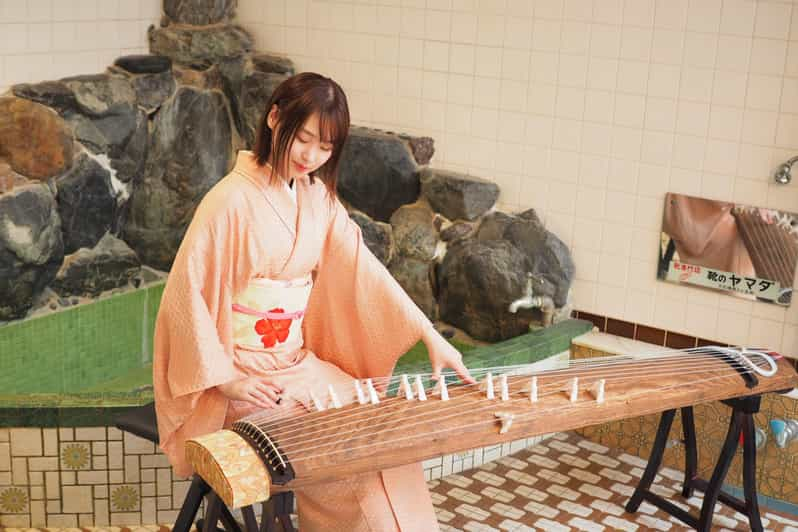
Kujo-yu was once a local sento, or public bathhouse. It has been renovated for new use, but the setting still gives the concert its character. Instead of sitting in a formal auditorium, you enter a place tied to everyday neighborhood life.
That matters because the music does not arrive in a neutral room. The hard surfaces and open feel of the former bathhouse help the sound travel. The koto’s plucked strings can ring clearly, while the shamisen brings a sharper, more percussive tone. Together, they fill the room without needing a grand stage.
I would choose this experience for the setting as much as for the instruments. Kyoto has plenty of temples, gardens, and formal cultural sites. A former public bathhouse offers a different view of the city, one connected to ordinary local routines rather than sightseeing landmarks.
The room also creates a close connection between you and the performers. The atmosphere is described as warm and intimate, and that is an important part of the appeal. You are not going to disappear into a crowd of hundreds. The music has room to feel direct and personal.
One practical point: the space may not feel like a polished concert venue in the usual sense. That is part of its charm, but if you expect theatrical lighting, a large orchestra, or a formal recital hall, this will be a smaller and more informal experience.
More Japanese Onsen Tours in Japan:
- From Osaka: Himeji Castle, Arima Onsen & Mt. Rokko Day Tour
★ 4.6 · 339 reviews - From Tokyo: Private Tour to Fuji/Hakone – Onsen, Art, Nature
★ 5.0 · 116 reviews - Mt. Fuji, Hakone Private Tour from Tokyo – Onsen, Arts and Nature
★ 5.0 · 79 reviews
Hearing the koto and shamisen together
The koto is a traditional Japanese string instrument with a long, horizontal body. Its notes are plucked, giving the music a clean, delicate quality. The shamisen is also a string instrument, but its sound is more pointed and rhythmic. Hearing both together gives the program contrast.
The koto can create a flowing line, while the shamisen adds bite and movement. In a room with strong acoustics, those differences should be easy to notice. You do not need prior knowledge of Japanese music to follow the basic conversation between the two instruments.
The concert is performed by a koto player and a shamisen player. The activity information does not provide their names, so do not expect a named celebrity performance. The focus is on the instruments, the music, and the special room.
The program is not fixed as a single permanent set. It changes with the season and the performers. You might hear classical Japanese masterpieces on one visit, then contemporary arrangements or original pieces on another. That makes the experience less predictable, but it also means the concert can feel distinct from one visit to the next.
For a first encounter with Japanese music, this variety is useful. Classical pieces give you a connection to older musical traditions. Modern arrangements make the program easier to approach if you are not used to traditional forms. Original works show how these instruments continue to be used today.
What the 50-minute concert feels like
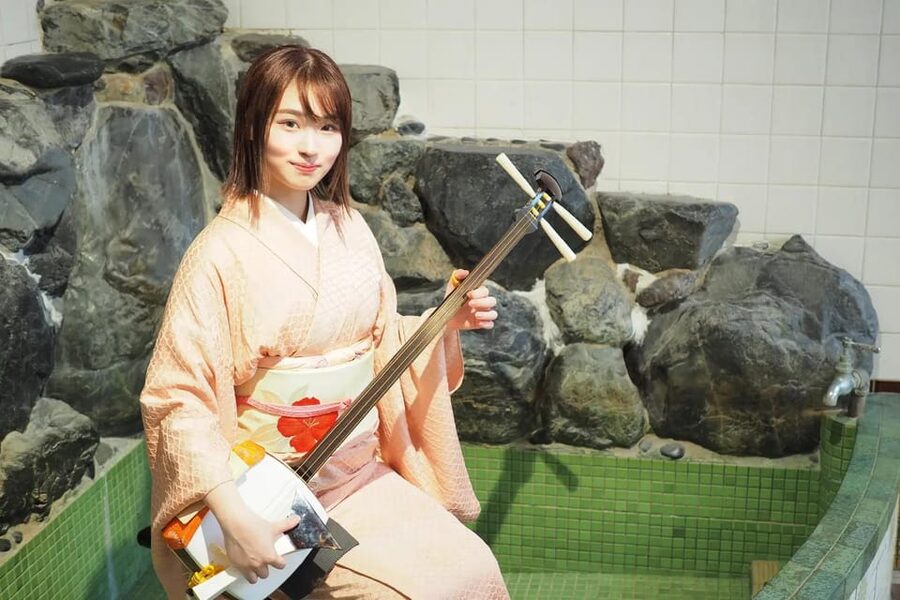
The concert lasts 50 minutes. That is long enough for a proper musical program, but short enough to fit around other Kyoto plans. You will not spend an entire afternoon inside, which is helpful in a city where every hour can disappear between temples, trains, and meals.
The information provided does not give a detailed minute-by-minute schedule, so you should think of this as one continuous concert rather than a sightseeing tour with several stops. The main event is the performance inside Kujo-yu.
You can expect an English-speaking host or greeter. English is listed as the available language, but the central experience is musical rather than lecture-heavy. If you want a long historical explanation of the bathhouse or a detailed lesson on instrument technique, this may feel light. If you want to hear the music in a memorable setting, the format makes sense.
The room’s acoustics are a key feature. The music resonates through the space and becomes part of the surroundings. That does not mean every note will sound perfectly controlled in the way it might in a modern concert hall. Instead, you get the character of the building, including the sense that the room itself is helping shape the sound.
A 50-minute performance also works well for families and for people who are curious about Japanese culture but unsure about committing to a long formal event. Children who enjoy music may find the instruments visually interesting, though the quiet concert format still calls for respectful listening.
The program: old pieces, new arrangements, and seasonal changes
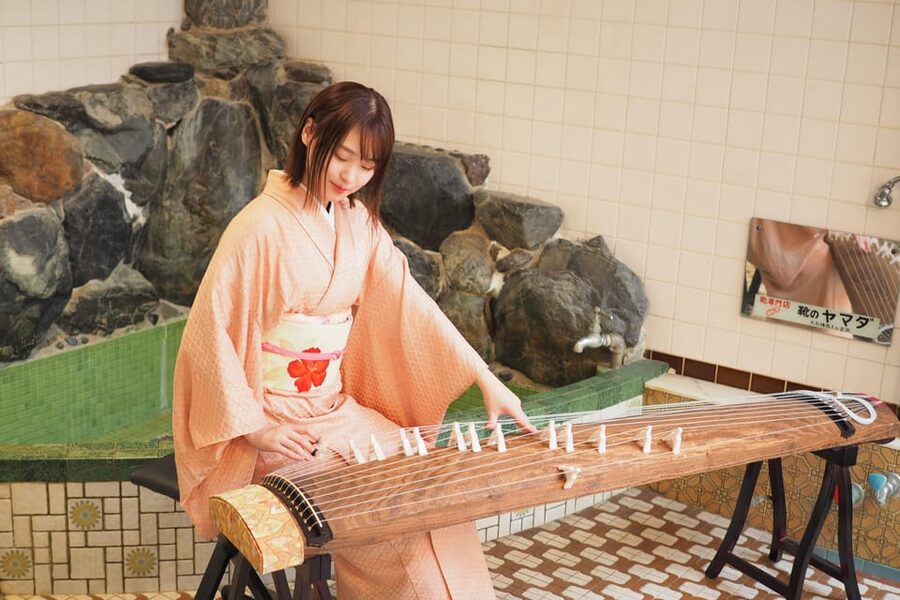
The repertoire covers several types of music. Classical Japanese masterpieces provide the traditional foundation. Contemporary arrangements bring familiar or newer musical ideas into the sound of the koto and shamisen. Original compositions add another layer, showing that these instruments are not limited to museum-piece traditions.
This range is one of the strongest reasons to book. A program made only of older works might feel demanding if you are new to Japanese music. A program made only of modern arrangements could lose some of the cultural context. Here, you may get a mix.
The exact selections depend on the season and the performers. That is useful information if you are planning a repeat visit, but it also means the booking details may not tell you every piece in advance. Go with an open mind rather than expecting one famous tune.
The setting and the music support each other. A bathhouse is not simply a decorative backdrop. Its shape and surfaces affect the sound, while the music gives the renovated building a new purpose. You are hearing traditional instruments in a place that has moved from public bathing to public performance.
That connection between old use and new use is the heart of the experience. It offers a small lesson in how Kyoto can preserve the feel of an older place without freezing it in time.
Music nights at the baths around Japan:
- Kyoto: Traditional Concert at Townhouse or Bathhouse
★ 4.9 · 224 reviews
Fitting Kujo-yu into your Kyoto plans
Kujo-yu is near Kyoto Station, making it a practical choice on a day built around southern Kyoto. Kujo Station is one stop from Kyoto Station, and the area can connect easily with major sights.
Kyoto Tower and the station area are about 15 minutes away by train and on foot. You could visit the tower, explore the station complex, and then continue to the concert. The station area is not Kyoto’s oldest quarter, but it is useful for transport, food, and an easy start or finish to the day.
Fushimi Inari Taisha is about 2 kilometers away, around 10 to 15 minutes by taxi. The taxi fare is expected to be just under ¥1,000. This is one of the best pairings if you want to visit the shrine’s famous torii gates and then attend the concert without a long cross-city journey.
Toji Temple is about 15 to 20 minutes from Kujo-yu by bus and on foot. Its five-story pagoda is one of Kyoto’s familiar sights, and the temple gives you a strong historical contrast to the contemporary concert use of the bathhouse.
Kiyomizu-dera takes about 30 minutes by bus and on foot. It is farther away, so I would not squeeze it into a tight schedule around the performance. Still, it can work if you plan enough time and want to combine a major temple visit with an evening of music.
The exact concert starting times depend on availability. Check the time before building the rest of your day, especially if you plan to use buses. Kyoto buses can take longer than a map suggests, and walking between stops can add up.
Is $32 a fair price?
At $32 per person, this is not the cheapest cultural activity in Kyoto. You can visit many temples for less, and public areas around Kyoto Station cost nothing to enter. The comparison is not quite fair, though. You are paying for a live performance, a special setting, and a compact program led by two skilled musicians.
The value is strongest if you already plan to spend time near Kyoto Station or southern Kyoto. You do not need to give up half a day, and there are no extra admission fees listed for the concert. The performance, the venue, and the English-speaking host are included.
I would also compare it with the cost of a larger theater performance. A major show may offer more production and a longer running time, but it may not give you the same close feeling or the same connection to a former local bathhouse.
For someone who wants a short, distinctive cultural activity, $32 is reasonable. For someone who simply wants background music during a sightseeing day, it may feel expensive. This is an activity that rewards attention. You should want to sit quietly and listen.
Who should book this experience?
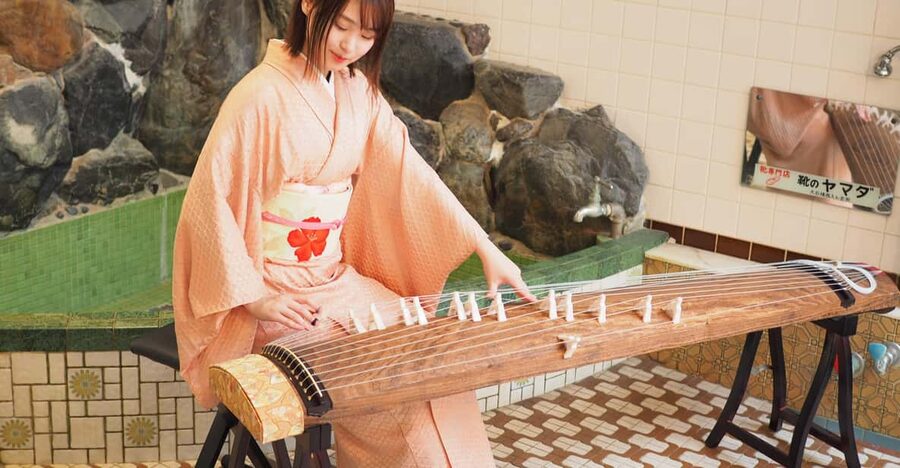
I would recommend Kujo-yu to several kinds of visitors.
If you are curious about Japanese instruments but do not want a full lecture or workshop, this is a good middle ground. You hear the instruments in action and get a sense of their different sounds without needing technical preparation.
Families may also like the short format. Fifty minutes is manageable, and the unusual building gives children something concrete to notice. Still, the concert requires quiet behavior, so it is not ideal for very young children who cannot sit through a performance.
This also suits people staying near Kyoto Station. The location makes it easy to add before dinner, after visiting Kyoto Tower, or alongside Fushimi Inari and Toji Temple.
I would be more cautious if you use a wheelchair, since the venue is specifically listed as unsuitable for wheelchair users. I would also reconsider if you want a large-scale event, a long explanation in English, or a fixed list of famous compositions.
The activity has received a 5 out of 5 score from two verified bookings. One German visitor praised the musicians and the bathhouse acoustics. A Danish visitor also found the old bathhouse interesting and the music fascinating. Those points match the experience’s clearest strengths: the building and the quality of the two-person performance.
Booking details worth knowing
You can cancel up to 24 hours before the activity for a full refund. A reserve-now, pay-later option is also available, which helps if your Kyoto schedule is still changing.
Nothing extra is listed as excluded. The traditional instrument concert and the performance by the koto and shamisen players are included.
The host or greeter speaks English. The available duration is 50 minutes, but starting times vary, so check the schedule before booking.
The venue is a renovated sento, not a functioning bathhouse experience. You are going to a concert in a former bathhouse, not for bathing.
Should you book Kujo-yu?
Book it if you want a short and unusual cultural experience that connects traditional Japanese music with an everyday Kyoto building. The acoustics, intimate room, and changing program give it more character than a standard concert in a neutral hall.
Skip it if you need wheelchair access, dislike quiet performances, or want a large production with a long program. For most visitors who are curious about the koto and shamisen, the $32 price is fair, especially when you pair Kujo-yu with Fushimi Inari, Toji Temple, or Kyoto Station.
FAQ
Where is the Kujo-yu concert held?
The concert is held at Kujo-yu, a renovated traditional sento, or Japanese bathhouse, near Kyoto Station in Kyoto.
How long does the concert last?
The performance lasts 50 minutes.
Which instruments are played?
The concert features the koto and shamisen, performed by a koto player and a shamisen player.
What kind of music is included?
The program can include classical Japanese masterpieces, contemporary arrangements, and original compositions. The selections change according to the season and the performers.
Is the activity available in English?
Yes. English is listed as the available language, and an English-speaking host or greeter is provided.
How much does the concert cost?
The listed price is $32 per person.
Is the venue wheelchair accessible?
No. The activity is not suitable for wheelchair users.
Can I cancel the booking?
Yes. You can cancel up to 24 hours in advance for a full refund. A reserve-now, pay-later option is also available.
New places to soak around Japan
- Private Car Day Trip to the Kobe Mountains, Gardens and Hot Springs from Osaka★ 4.5 · 16 reviews
- Solaniwa Onsen: Osaka Bay Tower★ 5.0 · 4 reviews
- Kobe Night View Mt Rokko Kitano Ijinkan Arima Onsen Day Trip★ 5.0 · 5 reviews
- Osaka: Nara, Todaiji, Uji Matcha, and Hot Spring Tour★ 4.0 · 7 reviews
- Deluxe Private Tour: Hita, AOT Statues and Onsen from Fukuoka★ 5.0 · 4 reviews
- Hot Spring Capital of Yufuin Rickshaw Tour★ 5.0 · 32 reviews
- Osaka River Rapids Hike and Natural Hot Spring tour★ 5.0 · 2 reviews
- Personalized Private Guided Tour from Myoko Kogen★ 5.0 · 2 reviews
Japanese Onsen Tours: more water worth the trip.

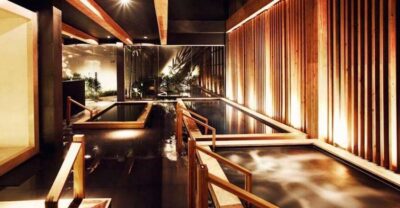
Bangkok: All-Day Pass to Yunomori Sathorn Onsen Bath and Spa
Read our review →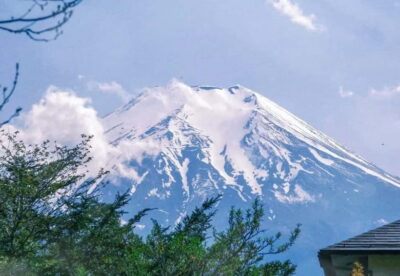

From Fukuoka: Mount Aso, Kurokawa Onsen, and Shrine Tour
Read our review →
Snow Monkey & Shibu Onsen Afternoon Tour (Depart: Iiyama & Nozwa)
Read our review →
Bangkok: Yunomori Sukhumvit Onsen Hot Springs Spa Pass
Read our review →Lists this soak appears on