
Review · TOKYO
Onsen Spa in Tokyo and Asakusa Bar Hopping with Local Guide
Tokyo has a fine way to turn a day off into a small ritual: soak in a hot onsen, warm up in bedrock baths, then eat and drink with friends. This six-hour outing links that local routine with a walk from Ryogoku to Asakusa. I like the practical onsen briefing and the easy shift from quiet bathing to a casual meal on Hoppy Street. The main catch is clear: the $160 price does not include the onsen entrance or restaurant bill.
I also like that this is a private group, so the route can be adjusted to your wishes rather than run like a rigid parade. Guide Takeshi earned especially strong praise for making the day feel personal, and the food stop may include sashimi and Japanese drinks. You should know that the guide does not enter the baths with you, tattoos must be covered or small enough to be ignored, and the experience is not suitable for pregnant women.
Key points at a glance
- Edoyu is only about five minutes from Ryogoku Station, making the opening part simple and low-stress.
- You receive an onsen etiquette briefing before bathing, useful if this is your first Japanese public bath.
- The guide waits outside the onsen, giving you privacy during the bathing portion.
- Hoppy Street provides the evening shift, with local food, sashimi, and Japanese alcohol at an izakaya-style restaurant.
- Guide Takeshi is specifically named in the strongest comments, and English or Japanese guiding is available.
- The $160 fee covers the guide and tour structure, not the onsen or restaurant costs, so budget extra.
Why this six-hour Tokyo outing works
This experience is less about checking off famous sights and more about seeing how a Tokyo resident might spend a free afternoon. You begin in Ryogoku, known as the meeting point, then move toward Asakusa for food, drink, and local streets.
That order makes sense. The onsen comes first, when you can slow down and warm your body. The meal follows, when you are ready to sit, eat, and talk about the area you have just walked through. It is a pleasant change from the usual Tokyo plan of temples, shopping streets, and crowded observation decks.
The outing lasts six hours, with about three hours assigned to guided sightseeing and walking, followed by about two and a half hours of more sightseeing and scenic views along the way. The timing is not presented as a minute-by-minute schedule, so expect the pace to depend on the group and the chosen route.
I see this as a good match for someone who wants ordinary local life rather than a formal sightseeing circuit. It is also useful after several busy days in Japan, when your feet need a break and you want an evening that does not demand much planning.
More Japanese Onsen Tours in Tokyo:
- From Tokyo: Private Tour to Fuji/Hakone – Onsen, Art, Nature
★ 5.0 · 116 reviews - Mt. Fuji, Hakone Private Tour from Tokyo – Onsen, Arts and Nature
★ 5.0 · 79 reviews - From Tokyo: Private Motorcycle Tour – Fuji, Hakone, Onsen
★ 4.9 · 12 reviews
Meeting at Ryogoku Station West Exit
The tour starts at the West Exit of Ryogoku Station. This is a sensible meeting point because the first onsen, Edoyu, is said to be about a five-minute walk away.
You will meet your guide there and receive an explanation of onsen manners before entering. That small lesson matters. Japanese bathhouses have clear customs, and a visitor who knows the basics can relax instead of worrying about making a mistake.
The provided details do not specify the exact train route to Ryogoku, so you should check your own route before the day begins. Allow enough time to find the West Exit. Tokyo stations can have several exits and long underground paths, and arriving rushed is a poor way to start a bathing day.
The guide is listed as English and Japanese speaking. Takeshi is the guide named in the strongest comments, but the available information does not guarantee that he leads every departure. If having an English-speaking guide is essential, confirm it when booking.
Learning the rules before entering Edoyu
The briefing is one of the most useful parts of the tour for a first-time visitor. You are advised about onsen manners before you enter, rather than being left to copy people around you.
The exact script is not provided, so do not expect a full cultural lecture. The value is practical: you get guidance before changing and bathing, while there is still time to ask questions. The guide then does not go into the onsen with you. That arrangement may be important if you feel shy about public bathing, because it gives you privacy once the explanation is finished.
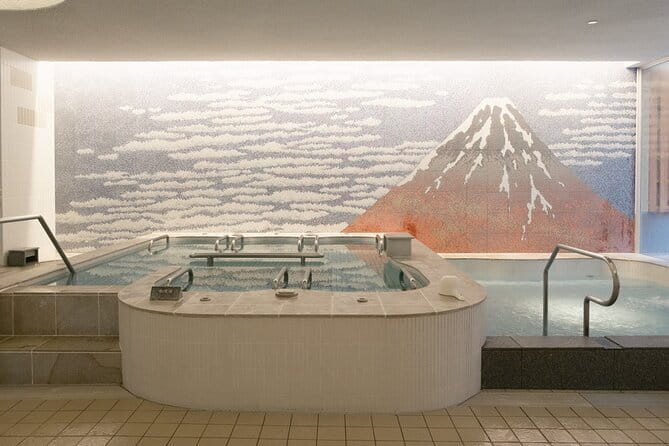
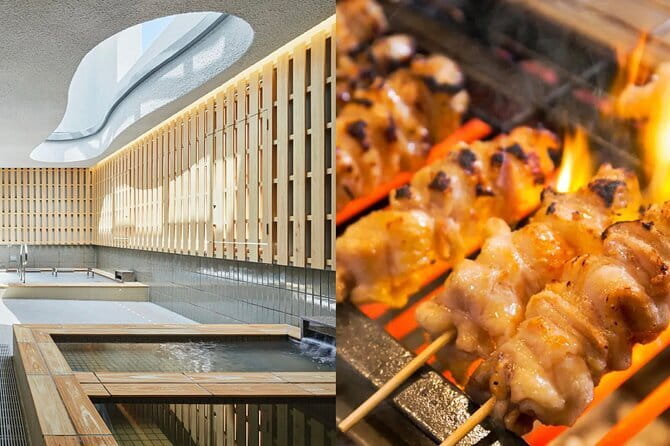
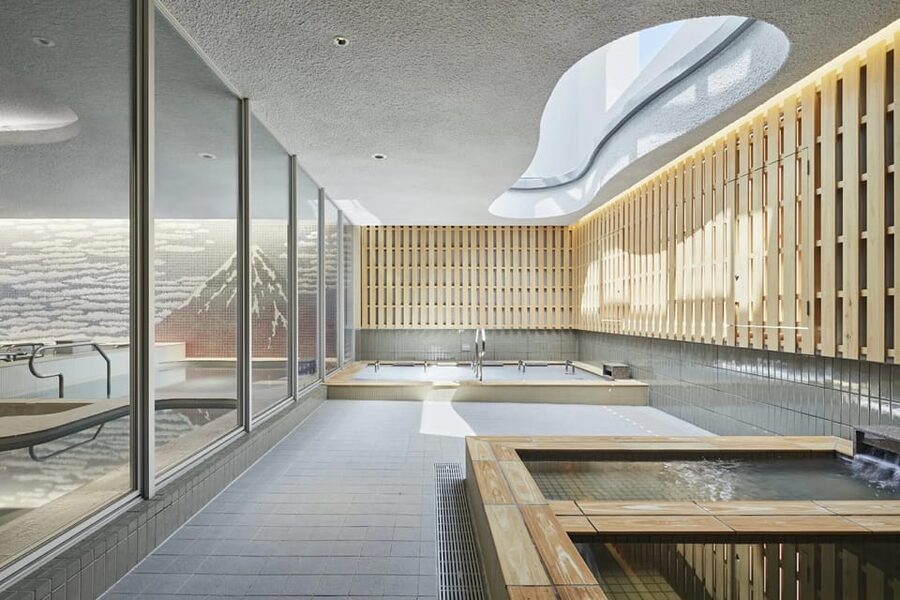
The onsen portion includes hot baths, bedrock baths, and spa facilities. The supplied information does not describe every bath or treatment, so keep your expectations sensible. This is a local bathing stop, not a full-day luxury spa package.
You will need comfortable clothes and shoes for the walking portions. After bathing, you should also be ready to dress and continue to Asakusa. The tour description does not say whether towels, toiletries, or bathing supplies are included, so ask before arrival if you prefer to bring your own items.
Tattoo rules and who should think twice

Tattoo policy is the most important practical issue. Tattoos are prohibited at the onsen, but the guide may help you cover one, and a small tattoo may be ignored. This is not a guarantee of entry, so you should disclose tattoos before booking and ask exactly what the facility will accept.
The guide can advise you, but the final decision belongs to the bathing facility. If you have a tattoo that cannot be covered, this tour may create stress instead of relaxation.
Pregnant women should not book this activity, as it is listed as unsuitable for them. No other restrictions are supplied, so questions about health conditions should be directed to the provider before reserving.
The bathing stage is also not ideal for anyone who wants a guide beside them at every moment. The guide intentionally stays out of the bath area. I see that as a privacy benefit, but it means you must be comfortable following the briefing on your own.
Same steam, a different pool:
- Tokyo: Mt Takao Tour with Ramen and Tattoo-Okay Hot Spring
★ 5.0 · 69 reviews - [Seasonal Limited] Mt. Fuji 5th Station &Hot Spring Day Tour
★ 4.5 · 53 reviews - Full Day Hiking Tour at Mt.Takao including Hot Spring
★ 5.0 · 52 reviews - Tokyo: Mt Fuji Lake Kawaguchi & Yamanaka Hot Spring Day Tour
★ 4.0 · 14 reviews
From quiet bathing to Asakusa streets
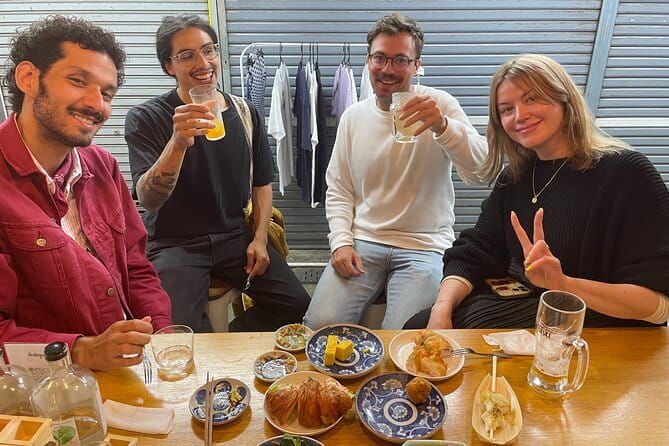
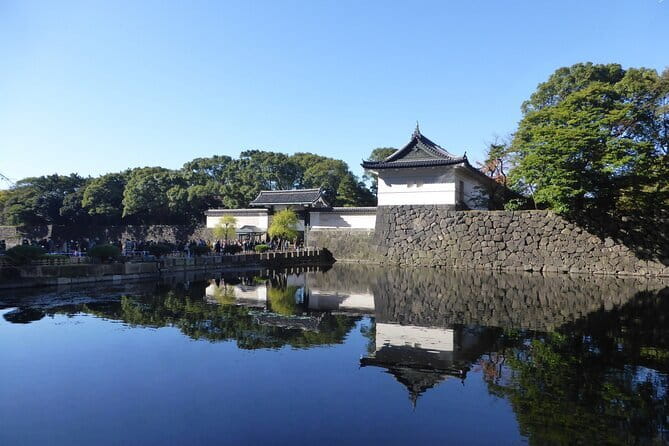
After the onsen, the group heads to Asakusa. The walk is part of the experience, not just transport between two booked stops. You will see local parts of the area and receive information about Asakusa’s culture and history.
The route includes sightseeing and scenic views on the way, but the supplied details do not name every street, landmark, or temple. That is worth noting if you want a precise famous-sights itinerary. You are getting a flexible neighborhood walk, not a promised list of major attractions.
Asakusa works well after an onsen because the district offers a different mood. The first half is quiet and restorative. The second half is social and food-focused. You can walk, look around, and let the guide point out details you might pass without noticing.
The private-group setup should help here. You can ask questions about the streets, local customs, or the history of the area without competing with a large group. You can also ask for changes, since the tour can be customized to your desires. Still, customization is described broadly, not as an unlimited promise. Confirm any special request before the tour.
Hoppy Street and the evening meal
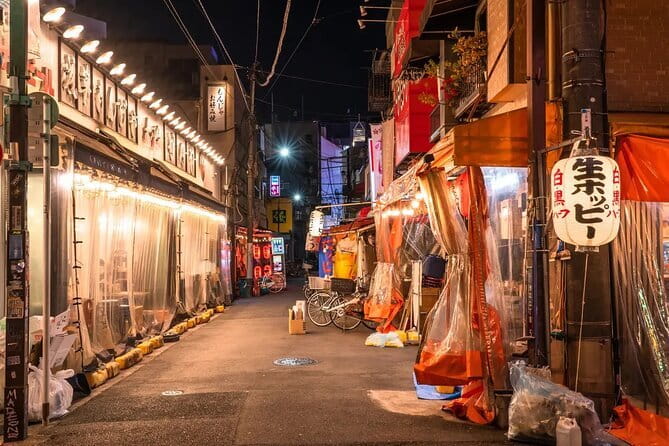
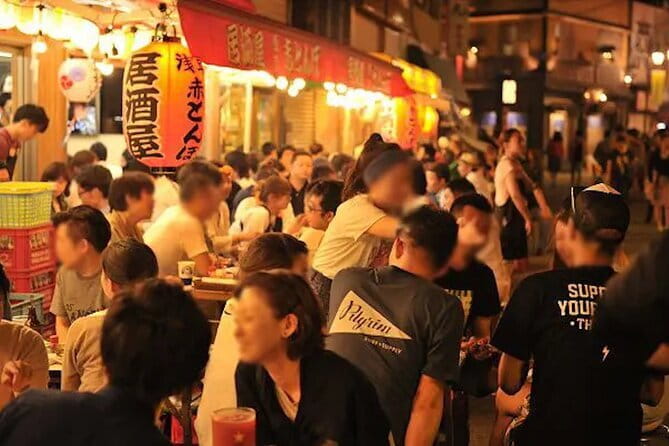
The final main stop is Hoppy Street in Asakusa, where you will have a late lunch or early dinner. The area is known in the tour description for local restaurants and Japanese alcohol, and the meal takes place at an izakaya-style restaurant.
This is the point where the outing feels most like a local day off. You are not being taken to a formal dining room for a polished tasting menu. You are being guided toward a casual place where food, conversation, and drinks share the table.
The food can include sashimi. One particularly strong account singled out the sashimi as possibly the best meal of that person’s Japan trip. That does not guarantee a fixed dish or menu, so treat it as a sign of the meal’s potential rather than a promise.
Japanese alcohol is part of the plan, and beer was praised as a welcome follow-up to the hot bath. You do not need to drink alcohol to enjoy the stop, but the supplied information does not explain the nonalcoholic options. Ask the guide or restaurant staff if that matters to you.
The restaurant charge is not included in the $160 tour fee. This is important because the final cost depends on what you order. The same goes for the onsen entrance fee. You should think of the advertised price as payment for the private guide, walking tour, cultural explanation, and arrangement of the experience, with food and bathing paid separately.
What $160 buys you
At $160 per person, this is not a cheap way to visit a bathhouse and eat dinner. The value rests in the private format and the local guidance.
You are paying for a six-hour experience, an onsen introduction, a neighborhood walk, and help choosing or reaching a local eating area. You also avoid having to work out the social rules of a Japanese bathhouse by yourself. For a first visit, that support can be worth more than the basic admission price.
The price is harder to justify if you already know Japanese bathhouse etiquette, speak Japanese comfortably, and can arrange your own meal in Asakusa. In that case, you could likely split the experience into separate activities and keep more control over the bill.
The separate charges also make comparison harder. Ask for the current onsen entrance fee and clarify how the restaurant bill is handled. The information supplied here does not state those amounts, and they may affect your final budget.
I would view the $160 as a reasonable splurge for a private, guided introduction to a part of Tokyo’s social life that many people might otherwise miss. It is less attractive for someone seeking a fixed-cost package.
Why the private format matters
A private group changes the feel of this tour. You are not walking with a large crowd through Asakusa or waiting for a guide to gather people at every corner.
You can ask about customs as they come up. You can also discuss your comfort with the onsen, food preferences, and desired pace. The tour says it can be customized, which gives you some room to shape the day.
The tradeoff is that a private tour is usually more expensive per person than a shared outing. At $160 before the onsen and restaurant costs, you are paying for personal attention. If you are traveling alone, the price may feel steep. If you are with a small group of friends or family, the private format may make more sense.
Guide Takeshi receives especially warm praise in the supplied comments. His role appears to be a major part of the experience, particularly in connecting the bathhouse, walking tour, and meal into one easy afternoon. Since guide assignments can vary, confirm who will lead your date if that is important to you.
Timing, comfort, and what to bring
Wear comfortable shoes. You will walk from the station to the onsen, continue through Asakusa, and take part in sightseeing along the way.
Choose comfortable clothes that are easy to change out of and back into. You do not want complicated clothing after bathing. The tour does not state a dress code beyond comfortable clothing.
The schedule can begin at different times, since you are told to check availability for starting hours. The meal is planned as a late lunch or early dinner, not necessarily a standard dinner at night. Plan the rest of your day around that flexible timing.
A six-hour activity can take a large part of your day, but that is also its strength. You are not squeezing the onsen and Asakusa into a rushed two-hour stop. There is enough time for bathing, walking, and food without treating each part as a quick photo stop.
Keep your expectations clear about the exact route. The activity includes scenic views and local sightseeing, but no fixed list of landmarks is provided. If you have one must-see place in Asakusa, ask if it can be included before the tour begins.
Who will enjoy this most
I would recommend this outing to a first-time visitor who wants help with Japanese bathhouse etiquette and prefers a private guide. It also suits anyone who has spent several days walking Tokyo and wants a slower afternoon.
Food-minded visitors should like the Hoppy Street finish, especially if casual izakaya dining, sashimi, beer, and Japanese alcohol appeal to you. The experience gives you a chance to eat in a local setting rather than simply stopping for a quick meal between attractions.
It may also suit couples, friends, or a small family group that wants a flexible day. The private format lets you ask questions and request adjustments without worrying about a large group’s schedule.
I would hesitate to recommend it to a strict budget traveler, someone who dislikes public bathing, or anyone with a tattoo that cannot be covered. It is also not suitable for pregnant women. You should not book it expecting the guide to bathe with you, since the guide stays outside.
Should you book this onsen and Asakusa tour?
Book it if you want a guided introduction to a Tokyo onsen, value privacy in a small group, and like the idea of ending the day with sashimi and drinks on Hoppy Street. The strongest part is the combination: bathhouse etiquette, relaxation, a local Asakusa walk, and a casual meal with guide support.
Skip it if you want a fully prepaid price, a luxury spa, or a detailed sightseeing route with every landmark named in advance. The extra entrance and restaurant charges need to be added to your budget, and tattoo rules require careful checking.
For the right person, this is a very pleasant way to experience Tokyo beyond the usual headline sights. You get a warm bath, a neighborhood walk, and a table where the day can finish at an unhurried pace.
FAQ
Where does the tour begin?
The meeting point is the West Exit of Ryogoku Station.
Where does the tour finish?
The tour finishes at Asakusa Station.
How long does the experience last?
The activity lasts six hours.
Is the onsen entrance fee included?
No. The onsen entrance fee is paid separately.
Is the restaurant bill included?
No. The restaurant fee is paid separately.
Can people with tattoos enter the onsen?
Tattoos must be covered or small enough to be ignored. The guide may advise you about covering a tattoo, but you should confirm your situation before booking.
Is the guide in the onsen with the group?
No. The guide gives you an onsen manners briefing, then does not enter the onsen with you, allowing you privacy.
New places to soak around Tokyo
- Tokyo: Private Morning Run with Sento Bath Experience★ 5.0 · 9 reviews
- Tokyo: Mt Takao Tour with Ramen and Tattoo-Okay Hot Spring★ 5.0 · 69 reviews
- Tokyo: Japanese Spa & Sento Experience with Local★ 5.0 · 2 reviews
- Tokyo: Mt Fuji Lake Kawaguchi & Yamanaka Hot Spring Day Tour★ 4.0 · 14 reviews
- Tokyo: 2-Day Mt. Fuji, Kamakura and Izu Hot Springs Tour★ 3.3 · 3 reviews
- [Seasonal Limited] Mt. Fuji 5th Station &Hot Spring Day Tour★ 4.5 · 53 reviews
- Private 2-Day Tour: Mt Fuji Hakone & Kamakura + Onsen Ryokan★ 5.0 · 3 reviews
- Mt. Fuji Skiing Experience- YETI Ski Resort & Onsen Day Trip★ 4.2 · 8 reviews
Japanese Onsen Tours: more water worth the trip.
Bangkok: All-Day Pass to Yunomori Sathorn Onsen Bath and Spa
Read our review →
From Fukuoka: Mount Aso, Kurokawa Onsen, and Shrine Tour
Read our review →
Snow Monkey & Shibu Onsen Afternoon Tour (Depart: Iiyama & Nozwa)
Read our review →
Bangkok: Yunomori Sukhumvit Onsen Hot Springs Spa Pass
Read our review →Lists this soak appears on