
Review · BEPPU
Become a local! A Walking Tour of Arts, Crafts & Onsen Culture
Beppu’s best stories are often found away from the famous hot-spring sights. This small-group walk leads you through market lanes, a century-old bamboo workshop, artist studios, and old downtown streets where daily life still carries on. You get a close look at how local makers work, not just a quick photo stop.
I like the small group of no more than eight, which gives guides such as Masahiro Ide, known as Masa, room to answer questions. I also like the chance to meet working artists and see bamboo craft made with local Oita bamboo. The main catch is simple: this is not a tour of the Hells, and you will not go inside an onsen building.
Key points at a glance
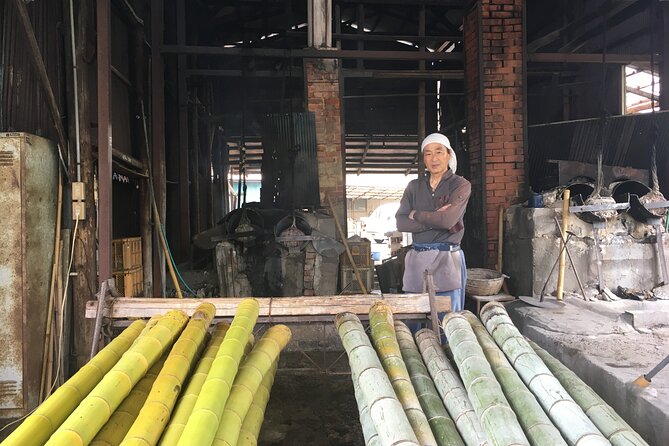
- A working bamboo factory founded in 1908: See artisans make bamboo goods by hand using bamboo from Oita Prefecture.
- Real downtown Beppu streets: The walk favors markets, alleys, old buildings, and local businesses over the city’s major sightseeing stops.
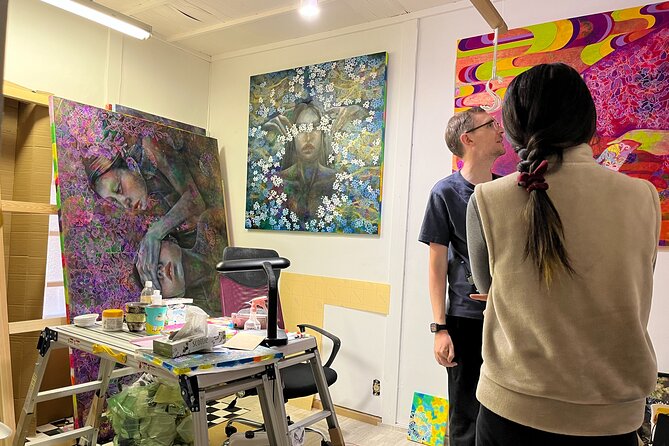
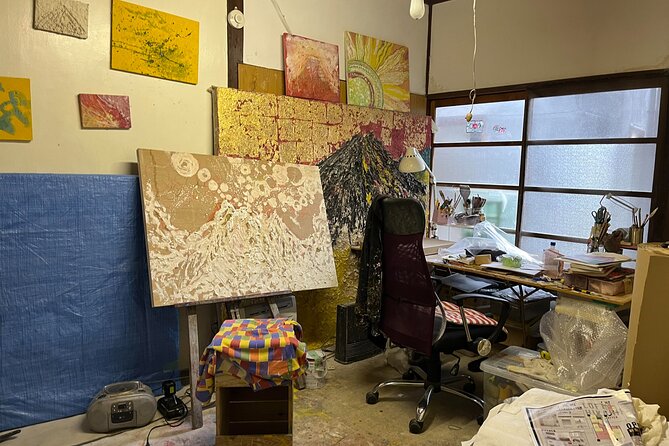
- Artists at work: Visit Kiyoshima Apartment, a creator residence and studio where you may meet people working on current projects.
- Space Beppu’s old photographs: End in a century-old Japanese house with a gallery, shop, and room devoted to Beppu’s past.
- A flexible route: The workshop schedule and business hours can change, so the exact stops are not fixed.
- Good value for culture-minded visitors: The $59.30 price includes admission fees, but not food, drinks, or souvenirs.
Why this walk shows you a different Beppu
Beppu is famous for hot springs, but the city is not only a place to soak. It is also a working town with small factories, creative studios, market stalls, old houses, and bathhouse neighborhoods. This tour gives you a useful look at that everyday side.
I like the way the route links craft with place. The bamboo factory is not a decorative stop added for tourists. It is a long-running workplace, and seeing the materials and tools helps you understand why bamboo matters in Oita. The artist visits then show another side of Beppu, where older buildings have found new life as studios and cultural spaces.
The tour lasts about two hours to two and a half hours. That is long enough to make the walk feel substantial without taking over your day. You can fit it around a train arrival, a later hot-spring visit, or an evening meal.
The walk begins at WANDER COMPASS BEPPU inside the Beppu BIS shopping area near JR Beppu Station. It ends at Space Beppu, about a 12-minute walk from the station. The guide can explain how to return to the station or continue to your next stop.
More Japanese Onsen Tours in Japan:
- From Osaka: Himeji Castle, Arima Onsen & Mt. Rokko Day Tour
★ 4.6 · 339 reviews - From Tokyo: Private Tour to Fuji/Hakone – Onsen, Art, Nature
★ 5.0 · 116 reviews - Mt. Fuji, Hakone Private Tour from Tokyo – Onsen, Arts and Nature
★ 5.0 · 79 reviews
Starting at Beppu Station Market
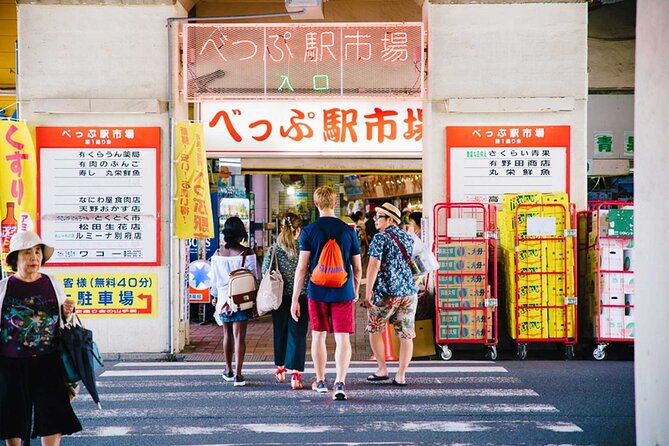
The first stop is Beppu Station Market, where you see fresh fish and vegetables and get a quick look at local shopping habits. The scheduled visit is about 10 minutes, so this is more of an introduction than a full market tour.
That short opening works well. You begin with a place used for ordinary errands rather than a staged cultural display. Your guide can help explain what you are seeing and may help bridge the gap between a market stall and the wider story of life in Beppu.
Do not expect a long food tasting session. Food and drinks are not included, and the market stop is brief. If you enjoy local markets, you may wish you had more time, but the compact visit keeps the tour moving toward the craft and art stops.
Inside a bamboo workshop with a century of practice
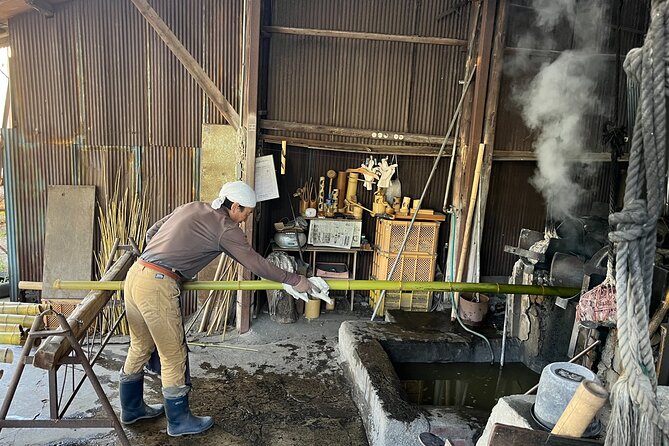
The bamboo factory is the strongest stop for many people, and I can see why. Nagai Seichiku, written 永井製竹(株), has operated since 1908. Here, you watch skilled artisans shape products from bamboo grown in Oita Prefecture.
This is the kind of visit that rewards close attention. You can see the material being worked rather than simply viewing finished objects in a shop. The craftsmanship gives you a better sense of the patience and hand skill behind Japanese bamboo goods.
The stop lasts about 30 minutes, with admission included. That is enough time to observe the process and ask questions, though it is not a long technical workshop. You should also remember that a factory is a working business. The experience is about watching artisans at their jobs, not taking over the work yourself.
I would plan to browse carefully before buying anything. Souvenirs are not included in the tour price, but a bamboo item purchased here or later at Space Beppu can carry more meaning after you have seen how it is made. Some visitors have particularly enjoyed bamboo speakers, though availability and stock can change.
The changing artist workshop
The next stop is 別府風流人, a workshop visit that lasts about an hour when the instructor is available. This is the least predictable part of the route. It is irregular and unscheduled, so it cannot be promised for every departure.
That uncertainty is worth understanding before you book. If the workshop is operating, it may become the most hands-on and personal section of the walk. If it is not available, the route or timing can change because local businesses do not all keep identical opening hours.
The tour’s art focus is not limited to looking at finished objects. One especially memorable possibility described for this experience includes meeting a local artist at home, playing the harp, having tea, and trying origami. You should not treat those exact activities as guaranteed, but they show the kind of direct contact the tour can sometimes offer.
This stop suits you if you enjoy conversation and small creative spaces. It may suit you less if you want a tightly fixed schedule with every activity guaranteed in advance.
More places to soak around Japan:
- Osaka: Nara and Uji Day Trip with Deer Park and Hot Spring
★ 4.4 · 302 reviews - Kyoto: Traditional Concert at Townhouse or Bathhouse
★ 4.9 · 224 reviews - Tokyo: Mount Fuji 5th Station & Onsen Day Trip
★ 4.3 · 75 reviews - From Fukuoka: Mount Aso, Kurokawa Onsen, and Shrine Tour
★ 4.6 · 72 reviews
Meeting artists at Kiyoshima Apartment
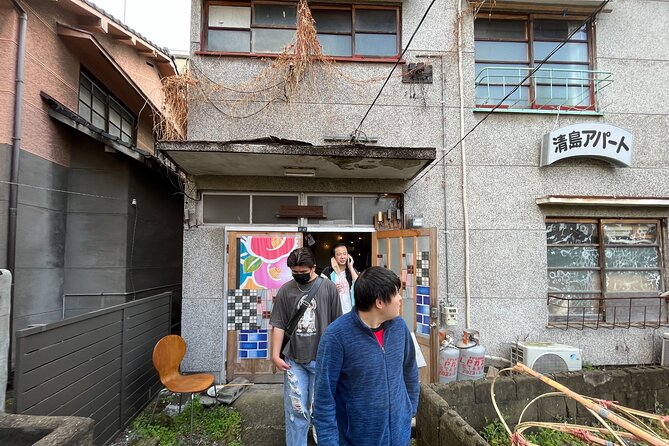
Beppu’s Kiyoshima Apartment is a creator residence and studio in the downtown area. The name may suggest a normal apartment building, but its role here is more unusual: it gives artists a place to live and work, and it lets visitors see a side of Beppu’s creative life that is easy to miss on a standard city walk.
The scheduled visit takes about 20 minutes. That is enough for a focused introduction, a look at studios, and, when available, a conversation with residents. You may see where artists work and learn how older urban spaces are being used for creative projects.
I like this stop because it connects the city’s past with its present. Beppu is not presented as a museum frozen in time. You see old structures, working residents, and new creative activity sharing the same downtown streets.
The short duration also sets a limit. You are not getting a full studio tour or a long artist talk. The value comes from the access and the setting, especially if you would not know where to find the building on your own.
Ending at Space Beppu
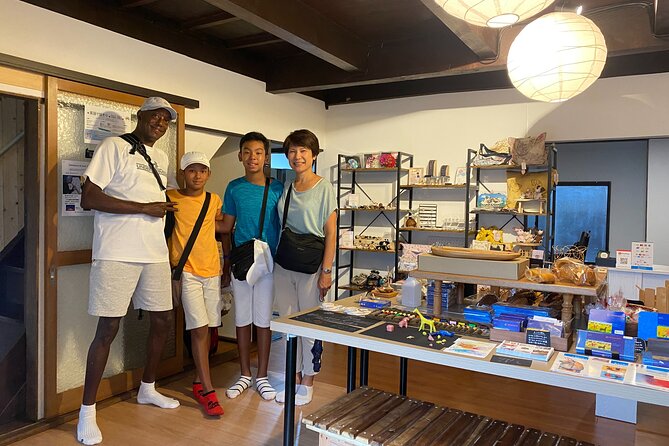
Space Beppu is the final stop and the endpoint of the tour. It occupies a century-old Japanese house that has been renovated as a community space, contemporary art gallery, and gift shop.
The building gives the tour a strong finish. You move from the practical world of markets and manufacturing into a space that brings art, local memory, and shopping together. A history room displays old photographs of Beppu, offering a visual look at how the city has changed.
You have about 20 minutes here. That is enough for a quick look around, though you may want to return later if the gallery or shop catches your attention. Purchases are separate from the tour price.
Space Beppu is also where the tour ends, not where it begins. The walk back to JR Beppu Station takes about 12 minutes, and the guide can explain the route. That makes the finish fairly easy to manage if you have a train, though you should allow extra time rather than rushing straight from the final stop to a departure.
What the tour really means by onsen culture
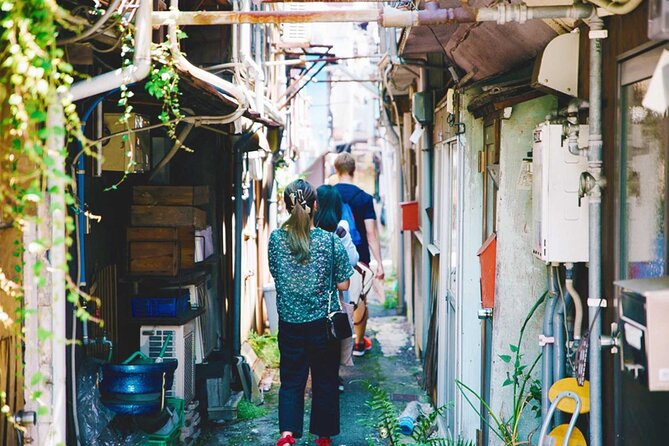
The title points toward Beppu’s onsen culture, but the important limitation is clear: you are not shown inside an onsen building. The tour presents the streets, buildings, and local life around Beppu’s bath culture rather than offering a bathing experience.
That distinction matters if you are booking because you want to enter a hot spring. You will need to arrange that separately. A guide may offer suggestions for a later soak, but the tour itself does not include an onsen visit or bathing fee.
For me, this broader approach still has value. Beppu’s hot springs shaped the city, its neighborhoods, and its visitor economy, but a city is best understood through more than its headline attraction. This walk gives you the cultural setting around the hot springs without pretending to be a bathhouse tour.
Guides, group size, and walking comfort
The experience is capped at eight people. That is a useful size for narrow streets, small studios, and conversations with craftspeople. A group this small also makes it easier to hear the guide and ask questions without turning every stop into a formal presentation.
Masahiro Ide, usually called Masa, is one guide associated with the experience. He is described as offering excellent English, a good sense of humor, and clear explanations of Beppu’s past. Lou, also written as Loi in one response, is another guide praised for leading visitors through the back streets and the bamboo factory.
The route requires moderate physical fitness. You should be comfortable walking through downtown streets and alleys for up to two and a half hours. The information provided does not give a precise distance or promise seating at every stop, so wear practical shoes and avoid carrying more than you need.
The tour begins near public transportation and service animals are allowed. Confirmation arrives at booking, and mobile tickets make the start easier to manage.
Is $59.30 a fair price?
At $59.30 per person, this is not the cheapest way to spend two hours in Beppu. You can walk downtown on your own for free. The price makes more sense when you count what a guide helps you notice: a factory that is easy to miss, artist residences you might not locate, historic buildings, local customs, and small cultural spaces with limited public visibility.
Admission fees are included. Food, drinks, bottled water, and souvenirs are not. The tour is strongest as a guided introduction, not as a shopping package or food tour.
I would call it good value if you care about access and context. You are paying for a small group, English-language guidance, and connections to local makers. If you mainly want the Hells, an onsen bath, or Beppu’s major sights, spend your money elsewhere and arrange those separately.
Group discounts are available, so the price may work better for families or friends booking together. Check the final booking terms for the actual discount before assuming a particular saving.
Who should book this Beppu walk?
I would choose this tour if you want to:
- See downtown areas beyond the standard sightseeing circuit
- Meet artists and craftspeople in working spaces
- Learn about bamboo production in Oita
- Hear local stories from an English-speaking guide
- Visit a historic Japanese house used for modern art and community work
- Keep the group small and the schedule fairly compact
It is a good fit for art lovers, curious walkers, repeat visitors to Japan, and anyone spending a short time in Beppu who wants more than a quick look at the station area.
I would think twice if your priorities are the Hells, a bathhouse visit, a food-focused tour, or a guaranteed hands-on workshop. The route can change, and the workshop at 別府風流人 depends on instructor availability.
The walk works in light rain too, and wet streets can give the old downtown areas a different mood. Still, the weather is one more reason to wear suitable shoes and bring protection from rain. Bottled water is not provided.
Booking and cancellation details
The experience is often booked about 51 days in advance, which suggests you should reserve ahead if your Beppu dates are fixed. You can cancel for a full refund up to 24 hours before the start time. Changes or cancellations inside that 24-hour window are not accepted for a refund, with cut-off times based on local time.
The route and stops may change because businesses can have different opening hours. Think of the tour as a guided look at Beppu’s creative downtown life, with a planned shape but some local flexibility.
FAQ
How long does the walking tour last?
The tour lasts approximately two hours to two hours and 30 minutes.
Where does the tour begin?
It begins at WANDER COMPASS BEPPU inside Beppu BIS, near JR Beppu Station in Ekimaechō.
Where does the tour end?
It ends at Space Beppu in Chiyomachi. Space Beppu is about a 12-minute walk from JR Beppu Station, and the guide provides directions for continuing to the station or another destination.
Does the tour visit the Hells of Beppu?
No. The route focuses on lesser-known cultural streets and alleys rather than popular sights such as the Hells.
Does the tour include entering an onsen?
No. You will not be shown inside an onsen building, and bathing is not included.
What is included in the price?
Admission fees for each facility are included. Food, drinks, bottled water, and souvenirs are not included.
Should you book it?
Book this walk if you want Beppu to feel like a lived-in town, not just a list of hot-spring attractions. The bamboo factory, Kiyoshima Apartment, and Space Beppu give the tour a clear sense of place, while a guide such as Masa or Lou can help you notice details you would likely pass by alone.
The best reason to book is the combination of small-group access and working local culture. Just remember that the workshop may not operate, the route can change, and the tour does not include a bath or the Hells. If those limits match what you want, $59.30 buys a thoughtful and unusual introduction to downtown Beppu.
New places to soak around Japan
- Private Car Day Trip to the Kobe Mountains, Gardens and Hot Springs from Osaka★ 4.5 · 16 reviews
- Solaniwa Onsen: Osaka Bay Tower★ 5.0 · 4 reviews
- Kobe Night View Mt Rokko Kitano Ijinkan Arima Onsen Day Trip★ 5.0 · 5 reviews
- Osaka: Nara, Todaiji, Uji Matcha, and Hot Spring Tour★ 4.0 · 7 reviews
- Deluxe Private Tour: Hita, AOT Statues and Onsen from Fukuoka★ 5.0 · 4 reviews
- Hot Spring Capital of Yufuin Rickshaw Tour★ 5.0 · 32 reviews
- Osaka River Rapids Hike and Natural Hot Spring tour★ 5.0 · 2 reviews
- Personalized Private Guided Tour from Myoko Kogen★ 5.0 · 2 reviews
Japanese Onsen Tours: more water worth the trip.
Bangkok: All-Day Pass to Yunomori Sathorn Onsen Bath and Spa
Read our review →
From Fukuoka: Mount Aso, Kurokawa Onsen, and Shrine Tour
Read our review →
Snow Monkey & Shibu Onsen Afternoon Tour (Depart: Iiyama & Nozwa)
Read our review →
Bangkok: Yunomori Sukhumvit Onsen Hot Springs Spa Pass
Read our review →Lists this soak appears on