
Review · JAPAN
Kyoto: Traditional Concert at Townhouse or Bathhouse
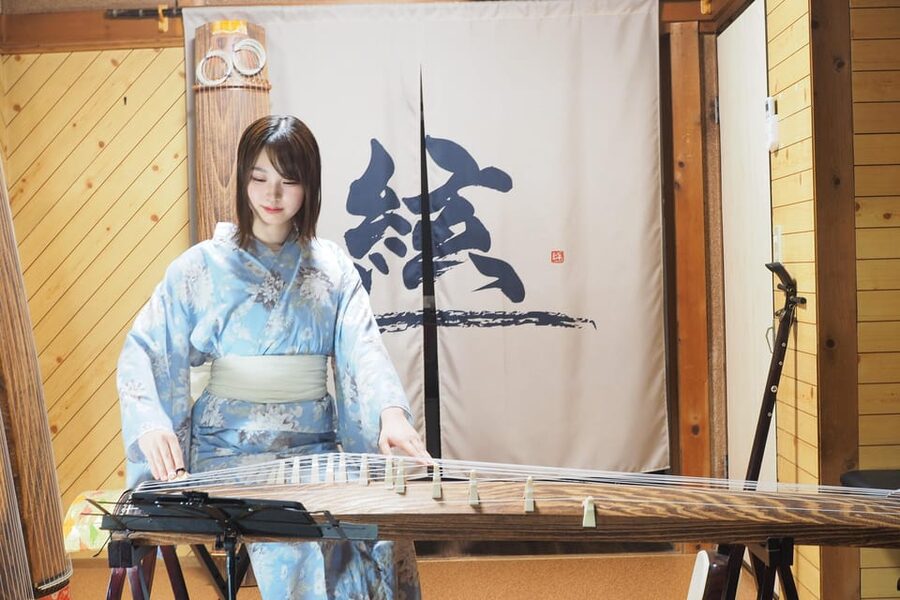
A koto concert in a Kyoto townhouse is about as far from a large tourist show as you can get. You sit close to the musician, often with only a handful of other people, while Gen and hosts such as Shohei, Shima, or Samuel explain the instruments, notation, and stories behind the music. The alternate bathhouse hall offers a bigger sound, with tiled walls that give duet performances a dramatic echo.
I like the small audience, which lets you see the player’s hands and ask real questions. I also like the mix of old and new music, plus the optional koto lesson, where you can try a short phrase yourself. The main consideration is that the townhouse can feel tight with a full group, and the bathhouse program runs only on irregular Mondays. The meeting point also changes by option, so check your booking details carefully.
Key points at a glance
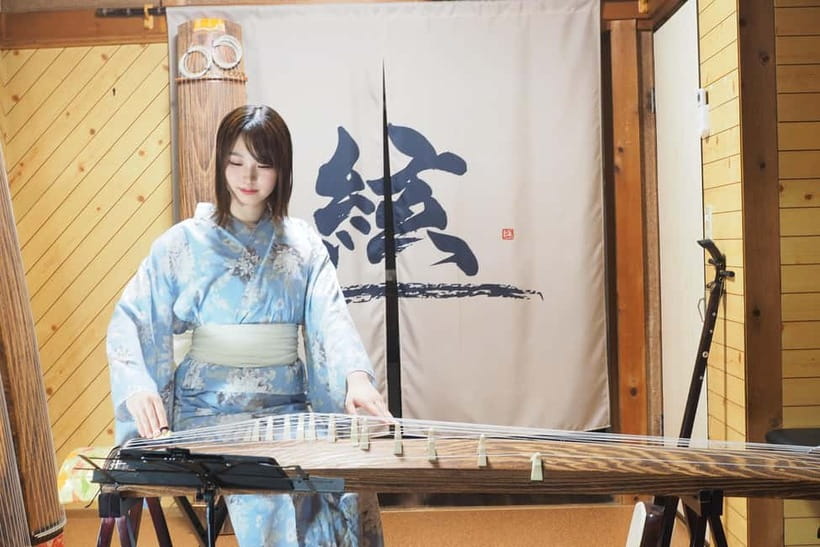
- Two very different venues: Choose a cozy townhouse for a solo concert and workshop, or a former bathhouse hall for a larger duet program.
- Close-up musicianship: The townhouse holds about 11 people, making the movement of the picks, bridges, and strings easy to see.
- Koto and shamisen, not just a recital: Expect explanations in Japanese and English, plus background on notation, materials, and musical traditions.
- A practical hands-on option: Townhouse bookings can include a 35 to 40 minute koto lesson with sanitized instruments.
- Flexible timing: The full experience lasts about 45 to 105 minutes, depending on the workshop and venue.
- Good location for a cultural evening: You can pair it with Nijō Castle, Nishiki Market, Kinkaku-ji, or Arashiyama.
A close-up introduction to Kyoto’s traditional music
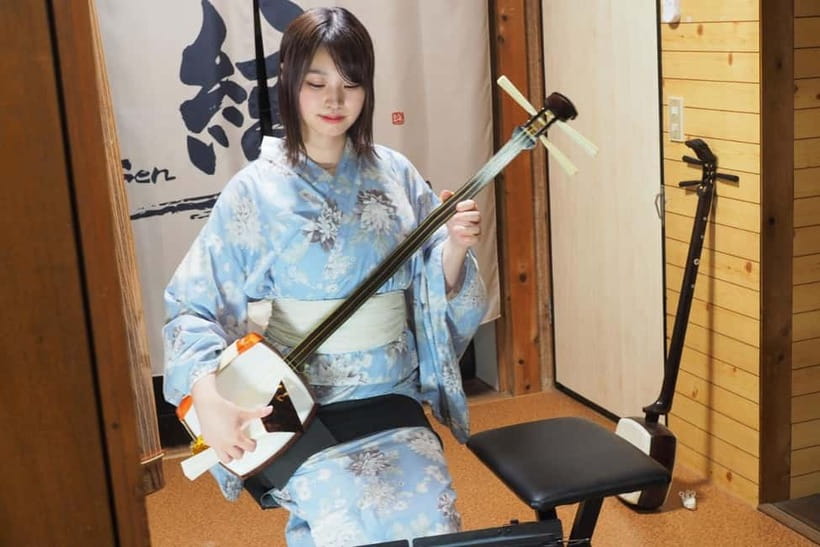
The best part of this experience is the distance between you and the performer. In a concert hall, you may admire the music from far away. Here, you can watch a hand press a string, hear the change in tone, and see how the player uses picks or a shamisen bachi.
The program normally includes four or five pieces. It can move from Japanese classical music to contemporary arrangements and original work. Sample koto pieces include Kajimakura, Chidorino Kyoku, and Kaede no Hana, although the exact selection changes with the musician and season.
The explanations matter. Before the music begins, you learn how the instruments are built, how they are played, and how Japanese notation differs from the musical staff most Western visitors know. That makes the concert easier to follow without turning it into a lecture.
The presentation is bilingual in Japanese and English. Hosts including Gen, Shohei, Shima, and Samuel have helped explain the program and translate questions. The exact host and artist depend on the date, but the format is designed for people who know little or nothing about Japanese music.
Music nights at the baths around Japan:
- Kyoto: Kujo-yu Sento Traditional Japanese Instrument Concert
★ 5.0 · 2 reviews
The townhouse: quiet, personal, and best for the workshop
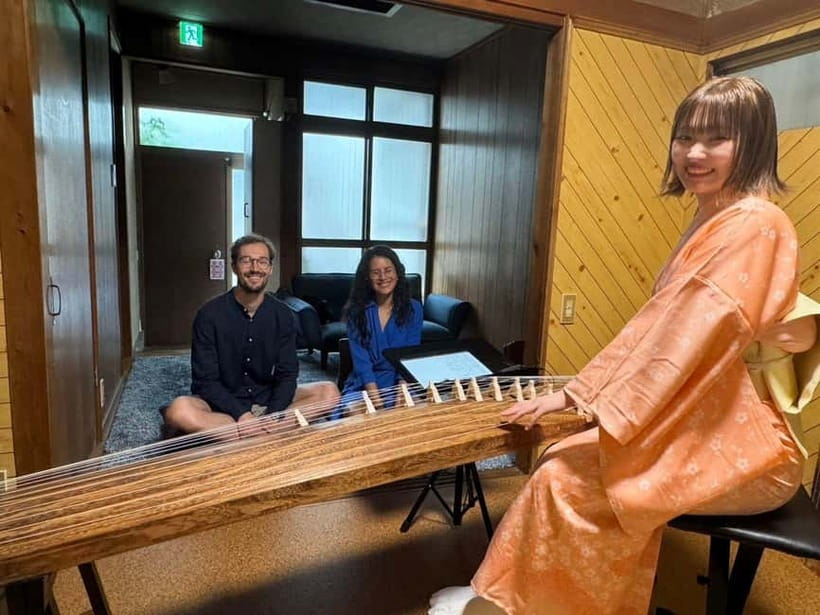
The traditional townhouse is the everyday choice. Performances are held almost every day, and the room accommodates up to about 11 people. You sit on cushions or chairs in a home-like setting, usually close enough to see the instrument clearly.
This is the option I would choose if you want a calm cultural evening rather than a formal stage production. The room has a living-room feel, and the small size helps the music feel personal. A performer may sing while playing, and the unamplified sound reaches you without much distance between the instrument and your ears.
The solo program usually includes four or five classical and contemporary pieces. A musician may switch between koto and shamisen, showing how different the instruments feel. The koto has a long rectangular body and movable bridges, while the shamisen has a smaller body, a long neck, and a sharper attack.
The townhouse setting also allows more direct conversation. After the concert, you have time for questions and photos. You can ask about a piece, the instrument’s materials, or the meaning of a musical technique. The exchange is part of the value, particularly if this is your first contact with Japanese traditional music.
The only drawback is space. Eleven people is a small group, but a full room may feel close. If you prefer a spacious seat and formal concert acoustics, this may not be your ideal setting. If you prefer access to the performer, the limited room is an advantage.
The bathhouse hall: tiled acoustics and duet programs
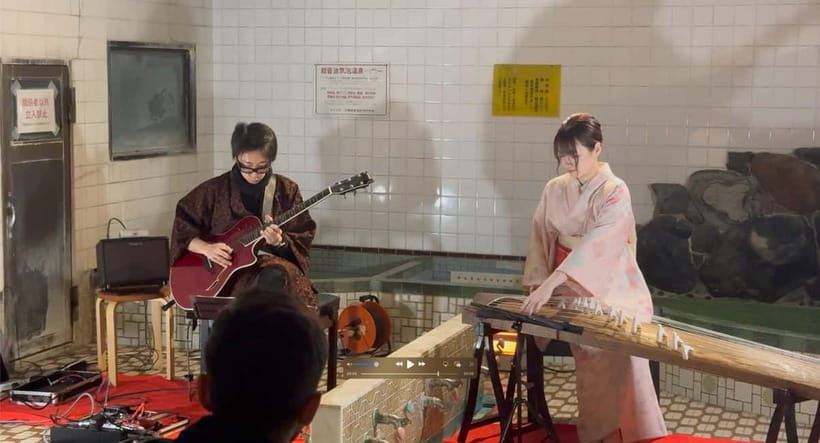
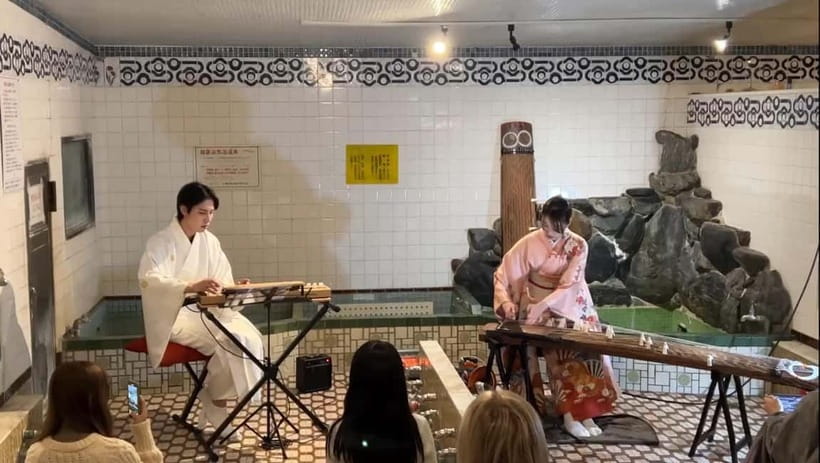
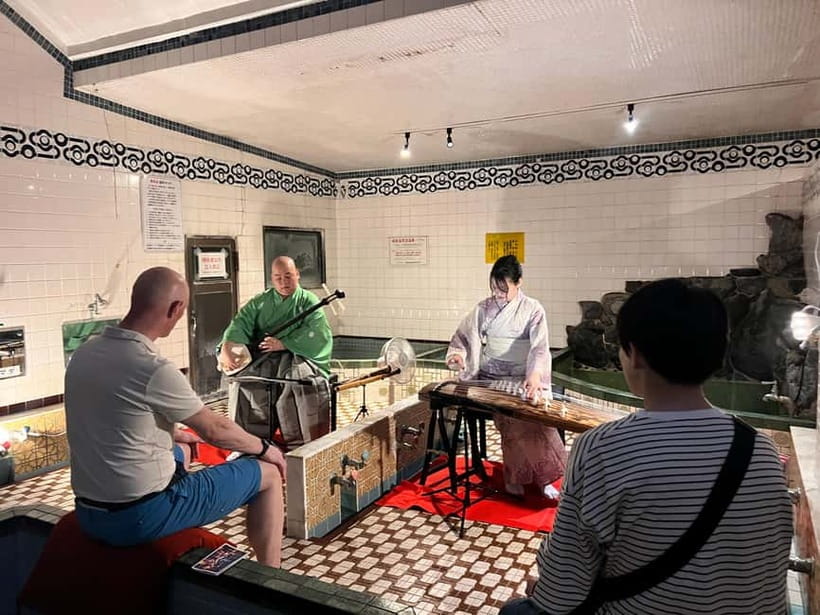
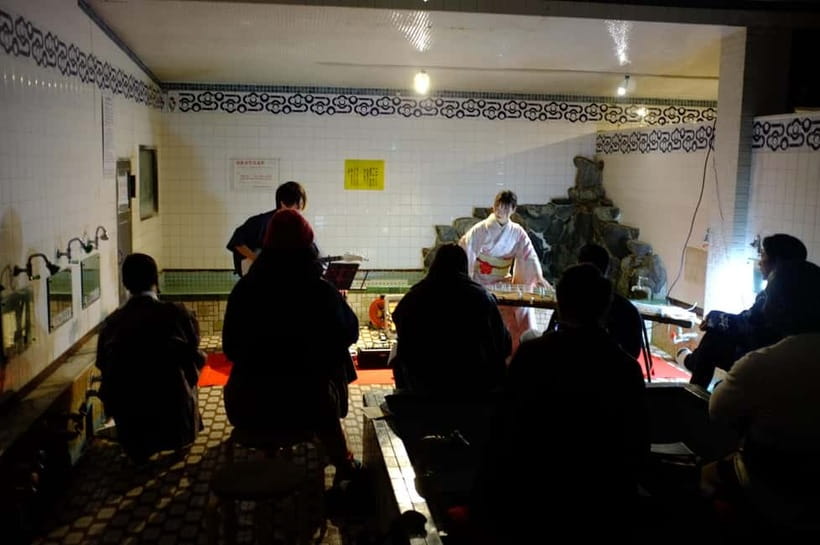
The historic bathhouse hall offers a different kind of evening. It holds up to about 30 people, with seating arranged in rows. The tiled walls create natural reverberation, so the sound can feel larger and more enveloping than in the townhouse.
Do not confuse the venue with a bathing experience. Bathing, food, and drinks are not included, and there is no entry to bathhouse facilities. You are attending a concert in a former bathhouse setting.
The program combines solo works with duets. The koto may be paired with shamisen, shakuhachi, taishōgoto, flute, guitar, or another instrument. That variety gives you a broader picture of how traditional Japanese instruments can work with one another and with newer musical colors.
The hall’s sound is especially suited to sustained notes and flute-like tones. A shakuhachi can seem to hang in the air, while plucked instruments gain extra resonance from the walls. The effect is more theatrical than the townhouse program, though it may be less intimate.
This option is offered irregularly on Mondays. Check the calendar before building your day around it. If the date does not work, the townhouse is the more dependable choice.
What happens from arrival to the final note
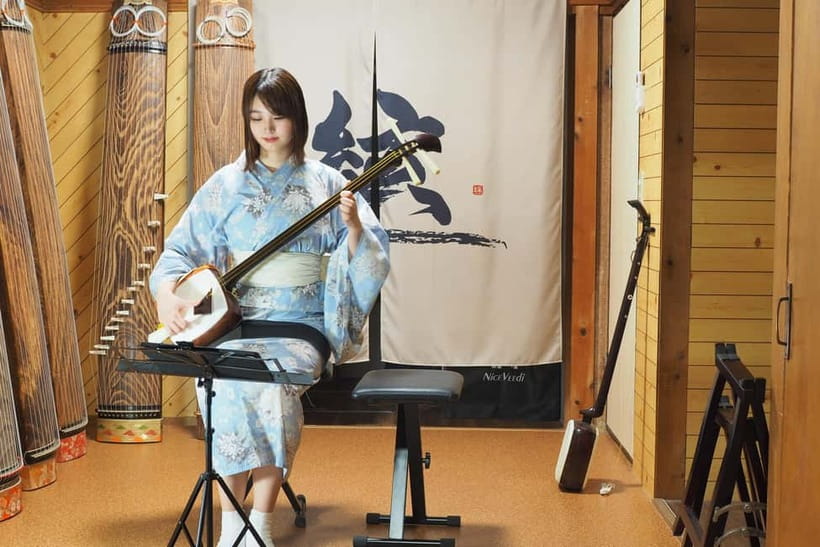
The opening five to ten minutes are for check-in, seating, and a short explanation of venue etiquette. Depending on the room, you may sit on a cushion or in a chair. This is a good time to settle in, since the townhouse can be difficult to locate if you rely only on a street address.
The instrument introduction takes about 10 to 15 minutes. You learn about the strings, bridges, picks, body materials, and notation. The explanation gives you something to watch for during the music, especially if you have never seen a koto or shamisen performed up close.
The concert itself runs about 25 to 30 minutes. Expect four or five pieces, with commentary between them. The program can include classical songs, modern arrangements, singing, and original compositions. Some performances focus more on koto, while others give the shamisen a larger role.
At the end, allow five to ten minutes for questions and photographs. You can meet the musician, ask about the pieces, and take a photo with the performer. Photography is permitted during the experience according to the supplied details, though it is sensible to follow the host’s instructions during the music.
The townhouse workshop adds another 35 to 40 minutes. You learn basic koto techniques and try a short phrase with guidance. The lesson is intended for beginners, and sanitized instruments are provided. It is not a full music class, but it gives you a physical sense of how difficult it is to produce a clean, controlled sound.
For timing, plan on 45 to 50 minutes for the concert format without the workshop. With the hands-on lesson, the experience can reach roughly 105 minutes. Check the starting time and selected option, since the meeting point and total duration vary.
More places to soak around Japan:
- From Osaka: Himeji Castle, Arima Onsen & Mt. Rokko Day Tour
★ 4.6 · 339 reviews - Osaka: Nara and Uji Day Trip with Deer Park and Hot Spring
★ 4.4 · 302 reviews - From Tokyo: Private Tour to Fuji/Hakone – Onsen, Art, Nature
★ 5.0 · 116 reviews - Mt. Fuji, Hakone Private Tour from Tokyo – Onsen, Arts and Nature
★ 5.0 · 79 reviews
Why the explanations improve the music
Traditional music can be hard to approach when you do not know what you are hearing. A short introduction changes that. You begin to notice the tension of a string, the force of a pluck, the pause between phrases, and the contrast between a solo line and a duet.
The notation discussion is particularly useful. Japanese musical notation does not look like the sheet music many international visitors have seen. Understanding that it is not simply a different way of writing the same thing helps you appreciate the performer’s training.
The hosts also explain the background of the instruments and the significance of the pieces. You do not need prior knowledge, and most people attending are beginners. I would still encourage you to ask questions, even if they seem basic. The format is built for that kind of exchange.
This is also why the experience works for families with older children. The music is not presented as a silent museum object. You can see how the instrument works, hear the difference between styles, and then try the koto yourself if you choose the townhouse option. Babies under one year are not suitable for the activity.
The music: classical pieces with room for modern sounds
You should not expect every concert to follow one fixed set list. The performer selects pieces according to personal style, training, season, and venue. That keeps the programs from feeling identical.
A townhouse solo program may move between a traditional ballad, an instrumental work, a contemporary piece, and a song. Some musicians sing while playing, which adds another layer to the sound. The combination can be both gentle and powerful, particularly in the quiet home setting.
The bathhouse program gives more room for contrast. A koto solo may be followed by a koto and shamisen duet, then a pairing with shakuhachi, flute, guitar, or taishōgoto. The sound is less predictable, but that is part of its appeal.
The exact balance between koto and shamisen can vary. If you especially want to hear the shamisen, check the description for your selected date rather than assuming it will receive equal time. Some programs feature more koto, while others give both instruments a clear role.
Price and value at $32
At $32 per person, this is a reasonable cultural purchase in Kyoto. You are paying for a professional performance, bilingual instruction, a question period, photographs, and seating in a small venue. The price becomes particularly strong if you value personal contact over a large, polished production.
The townhouse workshop improves the value for people who want participation rather than listening alone. You spend an additional 35 to 40 minutes learning a basic phrase, with help from the hosts and musician. That makes the experience more memorable, especially for families and curious first-time visitors.
The bathhouse option offers a different form of value. The larger room and unusual acoustics make it feel more like a concert, while the duet format gives you more instrumental variety. It is the better pick if sound and collaboration matter more to you than a very small audience.
There are limits. Transportation is not included, and neither are food, drinks, or bathing. The townhouse location can be tricky to find, so leave extra time. One visitor found that using latitude and longitude was easier than relying on the address. Since the meeting point changes, confirm it before setting off.
Free cancellation is available up to 24 hours ahead for a full refund, and you can reserve while paying later. Those terms are useful when you are arranging several Kyoto day trips, though they do not remove the need to check the venue and start time.
Pairing the concert with a Kyoto day
The location works well as part of a wider day. From Saiin, Arashiyama takes about 25 minutes using a walk to Saiin Station, the Hankyu line to Katsura, and a transfer to the Randen Line. You can visit the bamboo area and temples earlier, then return for music, or attend the concert first and continue toward Arashiyama.
Nijō Castle is about 20 minutes away. It is a natural pairing for visitors who want a day of Kyoto history followed by an evening of traditional music. The route is described as one stop from Saiin on the Tozai subway line.
Kinkaku-ji takes about 20 minutes by bus from Nishioji Sanjō, followed by a short walk. Nishiki Market is about 25 minutes away by direct Hankyu service to Karasuma or Kawaramachi. That combination works well if you want to eat or shop before your concert, since food is not part of the booking.
Do not pack the schedule too tightly. The townhouse can be hard to find, and the bathhouse meeting point may be different. A little extra time prevents a rushed arrival and gives you a chance to enjoy the opening explanation.
Who will enjoy this most
I would recommend the townhouse to you if you prefer:
- Small groups and a home setting
- Close views of the musician’s hands
- A mix of koto, shamisen, singing, and commentary
- A beginner-friendly workshop
- A quiet break from Kyoto’s crowded sights
Choose the bathhouse hall if you want:
- A room for up to about 30 people
- Strong natural reverberation
- Duets and unusual instrument pairings
- A more formal row-seating arrangement
- A concert date that fits its irregular Monday schedule
Music lovers will get the most from the details, but you do not need to be a specialist. The experience is also a good match for anyone who has visited temples and gardens all day and wants a slower cultural activity at night.
It may not suit you if you want a long concert, a meal, a bath, or a large stage production. The performance portion is only about half an hour, and the rest of the time is explanation, questions, and, if selected, the workshop.
Should you book this Kyoto concert?
Book it if you want traditional Japanese music presented by real performers in a setting where you can ask questions. At $32, the townhouse is especially good value for a small group, and the koto workshop adds a hands-on memory that a standard concert cannot provide.
Pick the bathhouse when its Monday schedule works and you want fuller acoustics and duet arrangements. Just confirm the date, venue, meeting point, and instrument lineup. For most first-time visitors, I would start with the townhouse because it runs more often and gives you the clearest personal introduction to koto and shamisen.
FAQ
How long does the Kyoto traditional concert last?
The experience lasts about 45 to 105 minutes. The concert and explanation take about 45 to 50 minutes, while the optional townhouse koto workshop adds roughly 35 to 40 minutes.
What instruments will I hear?
The programs feature koto and shamisen. Depending on the venue and date, the bathhouse duet may also include shakuhachi, taishōgoto, flute, guitar, or another instrument.
Is the concert suitable for beginners?
Yes. No prior knowledge of Japanese instruments or music is required. The bilingual introduction explains the instruments, notation, materials, and repertoire before the performance.
Can I try playing the koto?
Yes, but the hands-on lesson is available only with the traditional townhouse option. It lasts about 35 to 40 minutes and covers basic techniques and a short phrase using sanitized instruments.
Is the bathhouse option a bathing experience?
No. The bathhouse venue is used as a concert hall. Bathing, food, drinks, and access to the bathhouse facilities are not included.
How far are nearby Kyoto sights?
Arashiyama is about 25 minutes away, Nijō Castle about 20 minutes, Kinkaku-ji about 20 minutes, and Nishiki Market about 25 minutes, based on the supplied route information. Allow extra time for navigation because the meeting point depends on the option booked.
New places to soak around Japan
- Private Car Day Trip to the Kobe Mountains, Gardens and Hot Springs from Osaka★ 4.5 · 16 reviews
- Solaniwa Onsen: Osaka Bay Tower★ 5.0 · 4 reviews
- Kobe Night View Mt Rokko Kitano Ijinkan Arima Onsen Day Trip★ 5.0 · 5 reviews
- Osaka: Nara, Todaiji, Uji Matcha, and Hot Spring Tour★ 4.0 · 7 reviews
- Deluxe Private Tour: Hita, AOT Statues and Onsen from Fukuoka★ 5.0 · 4 reviews
- Hot Spring Capital of Yufuin Rickshaw Tour★ 5.0 · 32 reviews
- Osaka River Rapids Hike and Natural Hot Spring tour★ 5.0 · 2 reviews
- Personalized Private Guided Tour from Myoko Kogen★ 5.0 · 2 reviews
Japan Hot Springs: more water worth the trip.

From Fukuoka: Mount Aso, Kurokawa Onsen, and Shrine Tour
Read our review →
Tokyo: Mt Takao Tour with Ramen and Tattoo-Okay Hot Spring
Read our review →
Snow Monkey & Shibu Onsen Afternoon Tour (Depart: Iiyama & Nozwa)
Read our review →
[Seasonal Limited] Mt. Fuji 5th Station &Hot Spring Day Tour
Read our review →
Full Day Hiking Tour at Mt.Takao including Hot Spring
Read our review →
Lists this soak appears on