
Review · BEPPU
Discover Beppu and Yufuin Nature and Onsen Trip
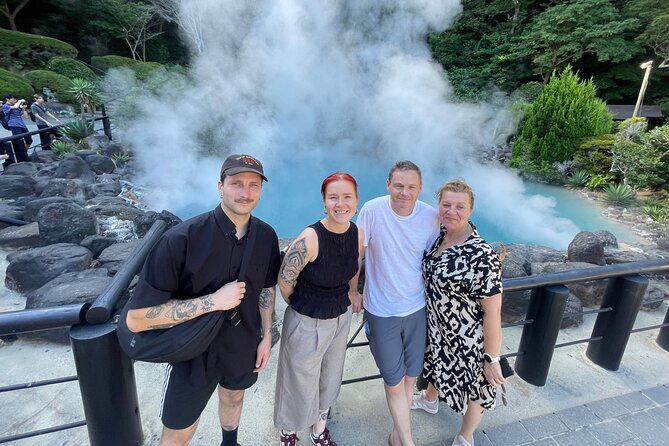
Beppu’s hot springs are at their most dramatic at Umi Jigoku, where cobalt-blue water steams inside an old volcanic crater, and at Oniishi Jigoku, a rougher, less polished stop with bubbling geothermal activity. Add the 10-minute ride to Mt. Tsurumi, then finish with free time in Yufuin, and you get a fine cross-section of northern Kyushu in about six hours.
I like two things right away: the private air-conditioned car and English-speaking guide make the Beppu portion easy, while the self-guided Yufuin section lets you stop for coffee, shops, or an onsen without being rushed. The main catch is that the guide leaves before Yufuin, and the ¥1,500 ropeway fare, ¥1,000 hot-spring entrance fee, lunch, bus, and bath are extra.
Key points to know before booking
- Two famous Beppu hells: See Umi Jigoku’s blue pool and Oniishi Jigoku’s more rugged hot-spring grounds.
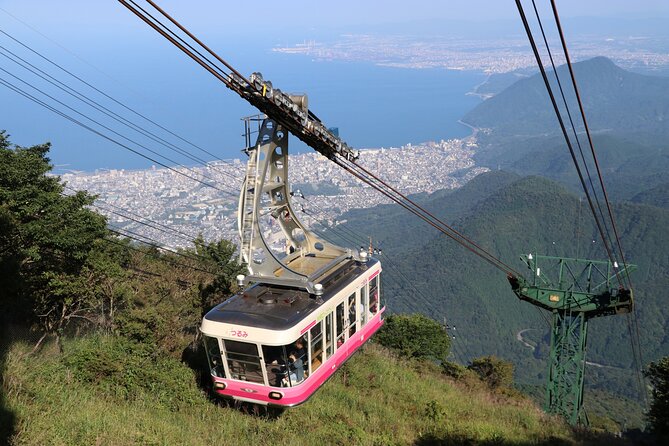
- Mt. Tsurumi by cable car: The Beppu Ropeway climbs to 1,375 meters in about 10 minutes, with views toward Beppu Bay and Mt. Yufu.
- A guide only for Beppu: Your English-speaking guide travels with you by private car through the first section, but you take a local bus alone to Yufuin.
- Yufuin at your own pace: A custom English map points you toward Lake Kinrinko, Yunotsubo Kaido, cafés, shops, and hot springs.
- A one-way finish: The tour ends at Yufuin Station, with a direct bus back to Beppu taking about one hour.
- Good value, with add-ons: The $83.24 price covers the vehicle and guided touring, but several key costs are paid separately.
Why this Beppu to Yufuin day works
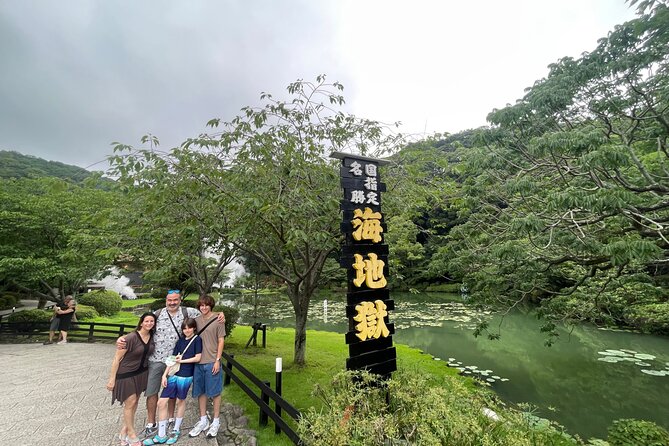
This experience links two very different sides of Oita Prefecture. Beppu is about heat, steam, volcanic force, and the famous jigoku, or hells. Yufuin is slower and more polished, with a small lake, a shopping street, cafés, and baths.
That contrast gives the day a clear shape. You begin with a guide who handles the Beppu driving and explains the geothermal sights. After Mt. Tsurumi, you shift into independent mode. That change is useful if you dislike being herded through shops or spending every minute on a group schedule.
The tour is private, so only your group takes part. That matters most in the first half, when you are moving between several sights and using a private air-conditioned vehicle. You can ask your guide to help shape the pace within the available time, though the listed stop lengths are short.
The total duration is about six hours. The planned visits add up to roughly four hours and 15 minutes, leaving time for driving, the ropeway, and the bus connection to Yufuin. Do not expect a full day in each town. This is a brisk sampler, not a slow stay in Beppu or Yufuin.
More Japanese Onsen Tours in Japan:
- From Osaka: Himeji Castle, Arima Onsen & Mt. Rokko Day Tour
★ 4.6 · 339 reviews - From Tokyo: Private Tour to Fuji/Hakone – Onsen, Art, Nature
★ 5.0 · 116 reviews - Mt. Fuji, Hakone Private Tour from Tokyo – Onsen, Arts and Nature
★ 5.0 · 79 reviews
Umi Jigoku, Beppu’s blue volcanic pool
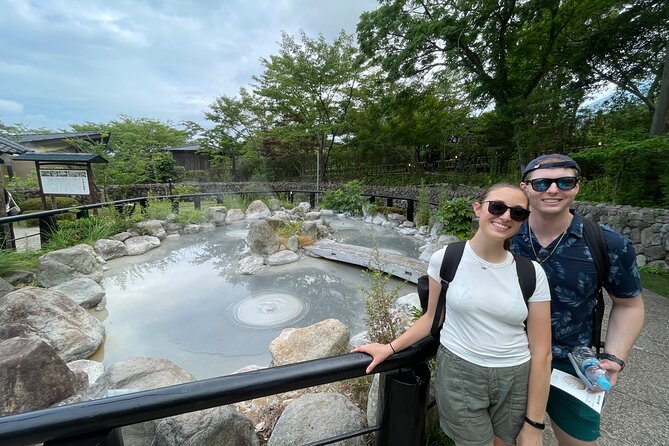
The day starts at Umi Jigoku, at 559-1 Kannawa in Beppu. The name means Sea Hell, a reference to the pool’s strong blue color. It formed after a volcanic explosion more than 1,200 years ago, and steam rises from the hot water in a way that makes the setting feel more like a volcanic site than a normal bath town.
You have about 30 minutes here. That is enough to see the main pool, take photographs, and get a basic explanation from the guide. It is not enough for a long, leisurely wander through every part of the grounds, so keep your attention on the main geothermal features.
The blue water is the visual highlight, but do not think of it as a place to bathe. These pools are viewing sites, not ordinary public onsen. The water is dangerously hot, and the attraction is the color, steam, and volcanic setting.
Admission is not included. The stated combined entrance charge for Umi Jigoku and Oniishi Jigoku is ¥1,000 per person. Since the tour price is $83.24, this extra amount is modest, but you should still carry funds for admission and the other optional costs.
Oniishi Jigoku for a rougher look at Beppu
The second stop is Oniishi Jigoku, about 30 minutes away in the schedule. Its name refers to a local story about a giant demon, or oni, said to have lived in the area.
Compared with the famous blue pool at Umi Jigoku, Oniishi Jigoku gives you a different view of Beppu’s geothermal character. The hot springs here are described as more dynamic, with steam and heated water creating a less tidy, more active-looking setting.
That difference is useful. If you saw only Umi Jigoku, you might leave with the impression that Beppu’s hells are mainly colorful pools. Oniishi adds a sense of movement and heat. You get a better idea of why this district has long been associated with steam, mineral water, and volcanic activity.
The 30-minute stop is again short. You will want to listen to the guide early, then use the remaining time for the main sights. If you prefer long museum-style visits, this pace may feel tight. If you want a clear introduction before moving on, it works well.
Mt. Tsurumi and the 10-minute ropeway ride
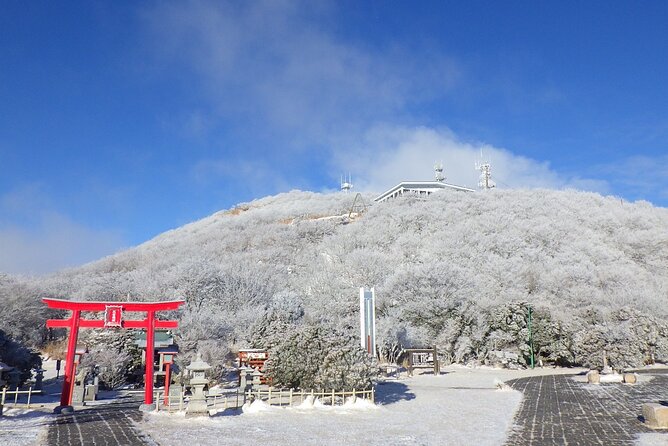
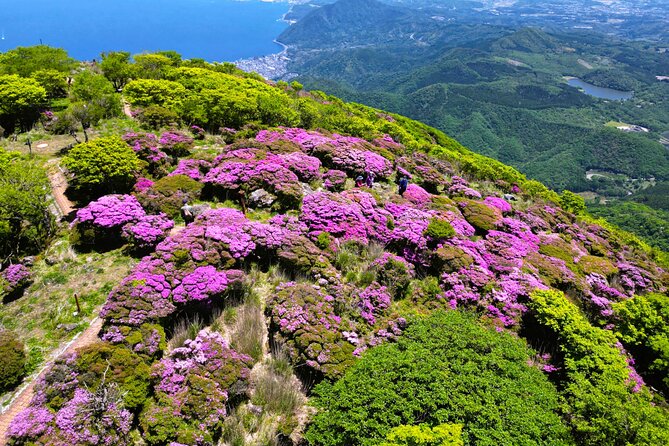
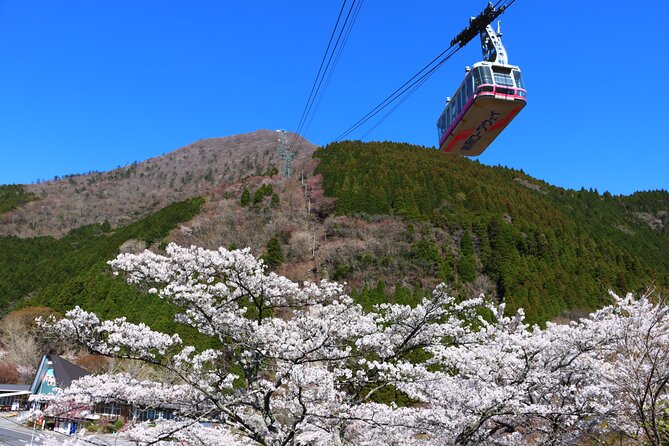
From the hot-spring district, the tour heads toward the Beppu Ropeway. The cable car ride takes about 10 minutes and reaches Mt. Tsurumi at 1,375 meters. That change in altitude is one of the day’s pleasures. Beppu’s hot, steamy setting gives way to cooler mountain air.
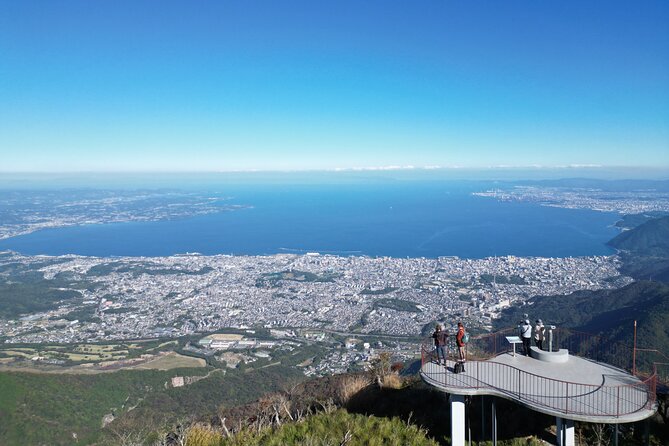
On a clear day, you can look over Beppu Bay and the city. Mt. Yufu may also appear in the distance. The views are a welcome change after the close, steaming pools, and the ride itself is long enough to feel like an attraction rather than a mere transfer.
You have about an hour for Mt. Tsurumi, including the ropeway experience and time at the summit. Bring a light layer if you are visiting during a cooler season or if you dislike the temperature change at higher elevation. The supplied information specifically points to cool mountain air, so do not assume the summit will feel like Beppu below.
The ropeway costs ¥1,500 per person and is not included. This is the largest clearly stated extra cost, but I consider it an important part of the day rather than an optional add-on to ignore. Without it, you lose the high viewpoint and the shift from hot springs to mountain scenery.
Weather will affect the value of this stop. The tour still gives you the ride and summit visit, but distant views toward Beppu Bay or Mt. Yufu may be limited in poor conditions. If wide views are your main reason for booking, keep that in mind.
More places to soak around Japan:
- Osaka: Nara and Uji Day Trip with Deer Park and Hot Spring
★ 4.4 · 302 reviews - Kyoto: Traditional Concert at Townhouse or Bathhouse
★ 4.9 · 224 reviews - Tokyo: Mount Fuji 5th Station & Onsen Day Trip
★ 4.3 · 75 reviews - From Fukuoka: Mount Aso, Kurokawa Onsen, and Shrine Tour
★ 4.6 · 72 reviews
The transport change that shapes the afternoon
After Mt. Tsurumi, the guided private-car portion ends. You board a local bus to Yufuin without the guide. This is the most important practical detail to understand before booking.
The morning is managed for you. The afternoon asks you to read the map, follow the transport instructions, and make your own choices. That format keeps the price down and gives you freedom, but it is not the same as having a private vehicle all the way to Yufuin.
The tour price includes an air-conditioned vehicle for the guided part. Private transportation by bus or taxi is listed as not included, so budget separately for the local bus connection. The experience ends at Yufuin Station, at 2-11 Yufuincho Kawakita.
This split will suit you if you are comfortable handling a simple public-transport connection. It may not suit you if you want door-to-door service or a guide explaining every stop. You can request a private driver or guide in Yufuin, but that is an optional arrangement and not part of the basic price.
Lake Kinrinko, Yufuin’s quiet starting point
Yufuin’s Lake Kinrinko is the first suggested stop after you arrive. The name means Golden Scale Lake, linked to a legend about a sacred fish whose scales shine like gold in the water.
You have about 30 minutes here. The lake is small, which makes the short visit practical. You can walk along the edge, take in the setting, and then move toward the shopping street rather than spending most of the afternoon at one viewpoint.
The lake helps slow the pace after the ropeway and bus. Beppu’s attractions are all about heat and motion. Kinrinko offers a calmer pause before you enter Yufuin’s café and shopping area.
The exact route is left to you with a custom English map. Use it as a guide, not a strict marching order. You can start at the lake, head into town, stop for food, and return toward the station as your departure time requires.
Yunotsubo Kaido for snacks, shops, and browsing
Yunotsubo Kaido is Yufuin’s main shopping street. The planned time here is about 45 minutes, although the self-guided format gives you more control if your transport schedule allows.
Expect local shops, snack stands, craft stores, hot-spring souvenirs, art galleries, and cafés. This is the most commercial section of the experience, but it is also where you can make the afternoon your own. You might stop for a drink, browse handmade goods, or pick up a small gift without waiting for a group.
Keep the timing in check. A street filled with shops can absorb your entire afternoon, especially when you have a bus connection at the end. The tour ends at Yufuin Station, so leave enough time to walk back and confirm your onward transport.
Lunch at a Yufuin café is not included. That is a useful omission for some people because you are not tied to one restaurant. It also means you should plan for the meal cost and allow enough time to eat. The supplied schedule gives 45 minutes for the Yufuin area, so a long sit-down lunch may leave little time for the lake, shops, and onsen.
Choosing an onsen in Yufuin
The final 45 minutes are set aside for the Yufuin area and the possibility of a traditional hot-spring bath. Yufuin has many onsen, and the suggested example is Shitan-yu, described as having rustic charm.
The bath is not included. You pay the entrance charge directly, and you should check the opening details and bathing rules before committing to one. The available information does not specify a particular bath reservation, towel arrangement, or changing-room setup, so do not assume those details are covered.
An onsen can be the perfect ending after the mountain air and walking. It also changes the practical side of the day. You may need extra time for changing, drying off, and getting back to Yufuin Station. If you plan to take the direct bus to Beppu, keep your watch visible.
If you prefer not to bathe, use the time for another café, a final walk, or a slower look at the town. The self-guided format is valuable here because you are not forced into an activity that does not suit you.
What the $83.24 price really covers
At $83.24 per person, the tour gives you a private guided vehicle and an English-speaking guide for the Beppu section, plus the planned route to the ropeway and onward connection to Yufuin. For a private activity, that can be fair value, especially if your group would otherwise pay for separate taxis between the Beppu sights.
Still, the final cost is higher than the advertised base price. Set aside money for:
- ¥1,500 per person for the Beppu Ropeway
- ¥1,000 per person for the Umi Jigoku and Oniishi Jigoku entrance fee
- The local bus or other transport to Yufuin
- Lunch or café food
- Any Yufuin onsen admission
- Optional private driving or guiding in Yufuin
The tour is booked, on average, 47 days in advance. That does not guarantee that you must book that early, but it suggests planning ahead is sensible if your schedule is fixed.
A mobile ticket is provided, and confirmation arrives at booking. Cancellation is free up to 24 hours before the start time. Changes or cancellations inside that 24-hour window are not accepted for a refund. Travel insurance is not included, and valid overseas coverage is recommended.
Who will get the most from this format
I would choose this experience if you want to see Beppu’s major geothermal sights and Yufuin in one compact day, but you do not need a guide beside you every minute. Couples, families, and small private groups who value flexibility should find the format appealing.
It also suits anyone arriving with limited time. The guide handles the Beppu portion, and the route ends in Yufuin rather than returning you to Beppu. You can take a direct bus back to Beppu in about one hour, or stay overnight in Yufuin.
I would be more cautious if you want a fully guided Yufuin visit, dislike public buses, or need a slow pace at each attraction. The move from private car to local bus is not a minor detail. It is the dividing line between the supported morning and independent afternoon.
The activity appears very safe, and most people can participate, but no tour can remove ordinary travel concerns. Carry the contact details you receive, watch the timing, and have overseas travel insurance in place.
Should you book this Beppu and Yufuin trip?
Book it if your ideal day includes volcanic pools, a mountain cable car, a scenic town, and the freedom to choose your own café or bath. The combination is efficient, and the private Beppu portion gives you more comfort than a basic public-bus sightseeing loop.
Skip it if the added fares will frustrate you or if you expect a guide to stay with you in Yufuin. The best reason to book is the contrast: blue steaming water, cool mountain air, then a self-guided walk through Yufuin. The main condition is that you must be ready to manage the second half yourself.
FAQ
How long does the experience last?
The experience lasts about six hours. The listed stops include Umi Jigoku, Oniishi Jigoku, Mt. Tsurumi, Lake Kinrinko, Yunotsubo Kaido, and time in the Yufuin area.
Where does the tour start?
It starts at Umi Jigoku, 559-1 Kannawa, Beppu, Oita 874-0045, Japan.
Where does the tour end?
It ends at Yufuin Station, at 2-11 Yufuincho Kawakita, Yufu, Oita 879-5114, Japan.
Is an English-speaking guide included?
Yes. An English-speaking guide accompanies the Beppu portion in a private air-conditioned vehicle. The guide does not accompany you on the local bus to Yufuin or during the self-guided Yufuin portion.
Is the Beppu Ropeway included in the price?
No. The ropeway costs ¥1,500 per person and is paid separately.
Are the Umi Jigoku and Oniishi Jigoku entrance fees included?
No. The stated entrance fee for the two sites is ¥1,000 per person.
Can I take a bus from Yufuin back to Beppu?
Yes. You can take a direct bus from Yufuin Station back to Beppu, and the trip takes about one hour.
Is a Yufuin onsen included?
No. Onsen admission is not included. You may choose a bath in Yufuin, such as the suggested Shitan-yu, and pay any applicable fee separately.
New places to soak around Japan
- Private Car Day Trip to the Kobe Mountains, Gardens and Hot Springs from Osaka★ 4.5 · 16 reviews
- Solaniwa Onsen: Osaka Bay Tower★ 5.0 · 4 reviews
- Kobe Night View Mt Rokko Kitano Ijinkan Arima Onsen Day Trip★ 5.0 · 5 reviews
- Osaka: Nara, Todaiji, Uji Matcha, and Hot Spring Tour★ 4.0 · 7 reviews
- Deluxe Private Tour: Hita, AOT Statues and Onsen from Fukuoka★ 5.0 · 4 reviews
- Hot Spring Capital of Yufuin Rickshaw Tour★ 5.0 · 32 reviews
- Osaka River Rapids Hike and Natural Hot Spring tour★ 5.0 · 2 reviews
- Personalized Private Guided Tour from Myoko Kogen★ 5.0 · 2 reviews
Japanese Onsen Tours: more water worth the trip.
Bangkok: All-Day Pass to Yunomori Sathorn Onsen Bath and Spa
Read our review →
From Fukuoka: Mount Aso, Kurokawa Onsen, and Shrine Tour
Read our review →
Snow Monkey & Shibu Onsen Afternoon Tour (Depart: Iiyama & Nozwa)
Read our review →
Bangkok: Yunomori Sukhumvit Onsen Hot Springs Spa Pass
Read our review →Lists this soak appears on