
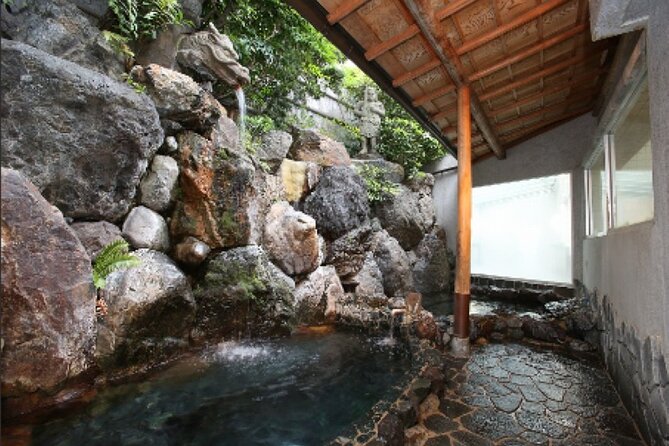
Review · JAPAN
Guide tour of Japanese bathing culture at Funaoka Onsen
Japanese bathing culture is not simply about getting clean. It is a careful ritual built around respect, quiet, and relaxation. This 90-minute experience begins with a lesson at Sarasa Nishijin, a cafe made from a former public bathhouse, then moves to historic Funaoka Onsen for the real thing.
I like two things right away: the small maximum of five people keeps the lesson personal, and guide Atsuki explains the steps before you face the bathhouse on your own. The price of $45.72 includes the cafe session and bath admission, which is fair for a first-time visitor who wants more than a quick soak. The main catch is simple: you bathe nude, and men and women use separate areas, so couples cannot bathe together.
Key points to know before booking
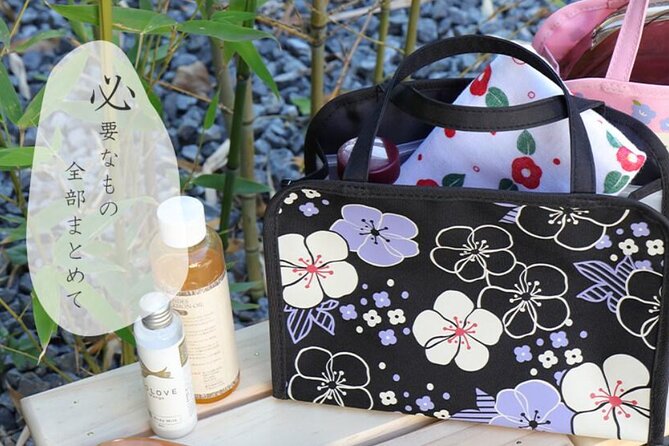
- Sarasa Nishijin is a former public bathhouse: You begin with a drink and a short lesson in a setting tied directly to Kyoto’s bathing culture.
- Atsuki explains the rules before you enter: This helps take the worry out of your first sento or onsen visit.
- Funaoka Onsen is a working local bathhouse: You are not visiting a staged cultural display. You are learning how to use a real public facility.
- Bathing is nude and gender separated: Couples and mixed-gender groups split up for the bathing portion.
- The group is capped at five people: The format suits solo visitors and anyone who wants room for questions.
- You need to avoid the bath if you are unwell or medically restricted: Alcohol, fever, certain serious conditions, and a doctor’s warning are all reasons not to participate.
Why this Kyoto bath experience feels different
Kyoto offers endless shrines, gardens, and old streets. A public bath gives you a different kind of cultural contact. You learn how ordinary Japanese bathing works, not just how it appears in a polished spa or hotel.
This experience is useful because the hardest part of a first bathhouse visit is often uncertainty. You may wonder where to wash, how long to stay in the tub, what to do with your towel, or how to avoid offending people around you. Atsuki deals with those questions before you enter Funaoka Onsen.
The lesson also gives context. Japanese bathing has its own etiquette and health traditions, much as the tea ceremony has its own order and meaning. You are not just told to take a shower before entering the tub. You learn why the process matters and how to approach it in a way that lets everyone relax.
The setting helps. Sarasa Nishijin was renovated from a public bathhouse, so the opening discussion takes place in a space connected to the subject. You sit with a drink, hear about the history of Japanese public baths, and receive a guide to proper bathing techniques that you can keep using after the tour.
More Japanese Onsen Tours in Japan:
- From Osaka: Himeji Castle, Arima Onsen & Mt. Rokko Day Tour
★ 4.6 · 339 reviews - From Tokyo: Private Tour to Fuji/Hakone – Onsen, Art, Nature
★ 5.0 · 116 reviews - Mt. Fuji, Hakone Private Tour from Tokyo – Onsen, Arts and Nature
★ 5.0 · 79 reviews
Starting at Sarasa Nishijin, a cafe with a past life
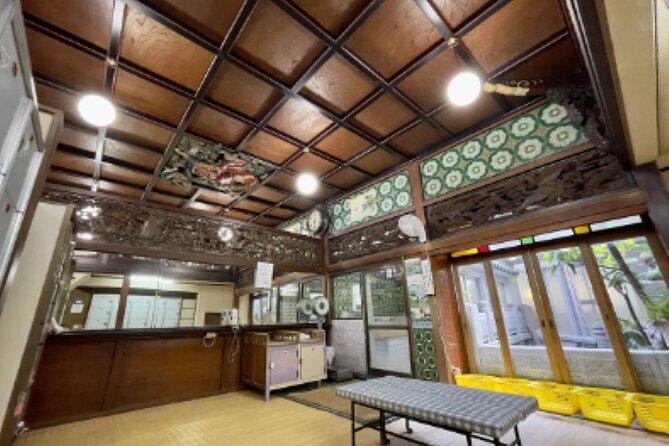
The first stop lasts about 15 minutes. Sarasa Nishijin is more than a convenient cafe. Its building was once a public bathhouse, giving you an immediate sense of how deeply the bathing tradition is tied to everyday Japanese life.
This part is short, but it does useful work. Atsuki introduces the background of sento and onsen bathing, explains the meaning of the ritual, and covers basic behavior before you reach the bath. The informal cafe setting should make it easier to ask questions than it might be in a changing room.
You also get a take-home guide to bathing techniques. That is a practical touch. The value of this experience does not end when you leave Funaoka Onsen, since the same basic steps apply at other Japanese hot springs and public baths.
Do not expect a long cafe visit or a full historical lecture here. Fifteen minutes is enough for orientation, not a museum-style presentation. The strength of this stop is its focus: it gets you ready for the bath without taking up most of your time.
Learning the rules before you reach the water
At Funaoka Onsen, Atsuki uses materials to explain the bathing method in more detail. This is the part that can make or break a first visit. You receive guidance before you are expected to act, which means you can concentrate on enjoying the bath instead of worrying that you are doing something wrong.
The instruction covers the proper sequence and etiquette of Japanese bathing. The central idea is that you wash before entering the shared bath. The bath is for soaking and relaxing, not for scrubbing yourself clean.
Atsuki also explains the health benefits and the relaxing side of the practice. That matters because a bathhouse visit works best when you slow down. If you treat it like a rushed shower, you miss the point.
The guide is a local Japanese person, but the English is not described as strong. You should be prepared for a simple explanation rather than polished, fluent commentary. The small group helps here. With a maximum of five people, you can ask for clarification and watch the demonstrations closely.
Atsuki is an independent guide, not an employee of Funaoka Onsen. That distinction is worth knowing. The tour provides instruction and support, but the bathhouse itself remains a functioning public facility with its own rules and atmosphere.
Funaoka Onsen, a Kyoto institution with a story
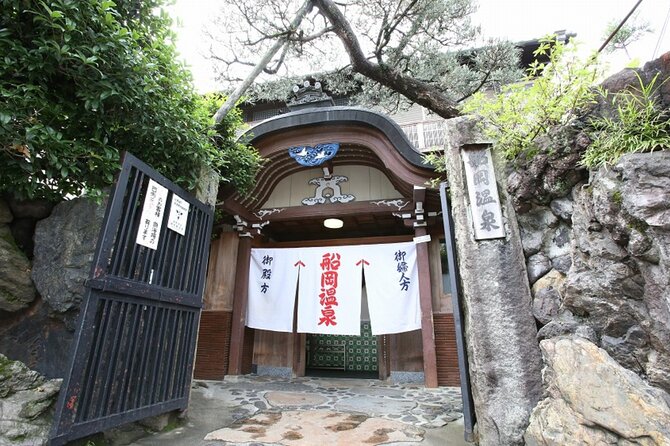
The main stop lasts about one hour. Funaoka Onsen is a well-known Kyoto bathhouse with a long local connection, and its story adds depth to the visit. You learn how its founders competed with traditional geothermal hot springs, which helps explain why public bathing in Japan has never depended only on natural hot water.
The bathhouse is described as beautifully preserved and used by Kyoto residents for generations. That does not mean the experience is staged for sightseeing. You are entering a real bathhouse where people come to bathe, so respectful behavior matters.
The setting may be especially appealing after a day of shrine visits. A soak offers a change of pace from standing, walking, and looking. One of the strongest features of this activity is the chance to experience Japanese culture through the body, not only through buildings and explanations.
Atsuki remains available to guide you through the process. For a nervous first-timer, that support is valuable. You can focus on the heat, the quiet, and the unusual pleasure of following a local bathing routine instead of wondering if you missed an important step.
Guided soaking days around Japan:
- Samurai Guide Sho’s Mt. Takao Hike, Temple & Onsen from Shinjuku
★ 5.0 · 9 reviews - Kobe Guided Tour Including Port Area and Arima Onsen Town
★ 4.5 · 5 reviews - Onsen Spa in Tokyo and Asakusa Bar Hopping with Local Guide
★ 5.0 · 3 reviews - Kobe Guided Tour Including Port Area and Arima Onsen Town
★ 5.0 · 3 reviews
The part many people need to think about: bathing nude
You must be comfortable bathing without a swimsuit. Japanese public baths use nude bathing, and the bathing areas are separated by gender. There is no mixed-gender group soak for couples or friends.
This arrangement is standard for the culture being presented, but it will not suit everyone. If you are uncomfortable changing in front of others, or if you specifically want a shared experience with a partner, this is probably the wrong activity.
The separation also means the guide cannot accompany every person into the same bathing area. The explanation takes place before the bath, and the practical support available during the soak depends on the gender arrangement and the facility’s setup. You should understand that the tour is designed to teach you how to participate, not to create a private bath reserved for your group.
For many first-time visitors, the advance lesson is enough to make the process feel manageable. Still, nude bathing is not a minor detail. Treat it as the main booking decision.
What the $45.72 price gives you
At $45.72 per person, this is not the cheapest way to enter a Japanese bathhouse. You are paying for interpretation, preparation, and admission, not just for access to the water.
The value is strongest if you are new to sento or onsen bathing. A low-cost independent visit may save money, but you would need to work out the etiquette yourself. For some people, the cost of avoiding that uncertainty is worthwhile, especially during a short Kyoto stay.
The maximum group size of five also supports the price. This is not a large bus tour where the guide gives a quick speech and disappears into a crowd. The format allows personal questions and gives you a better chance to follow the process at your own pace.
The experience takes about 90 minutes, including the 15-minute cafe introduction and roughly one hour at Funaoka Onsen. That makes it easy to fit into a day of sightseeing, though you should allow some extra time around the scheduled start if you do not know the area.
The activity is booked, on average, 34 days ahead. That suggests you should reserve early if the experience fits a fixed Kyoto schedule, especially since only five people can join. Confirmation arrives at booking, and the mobile ticket is convenient for a day when you are moving between sights.
Who will get the most from this experience
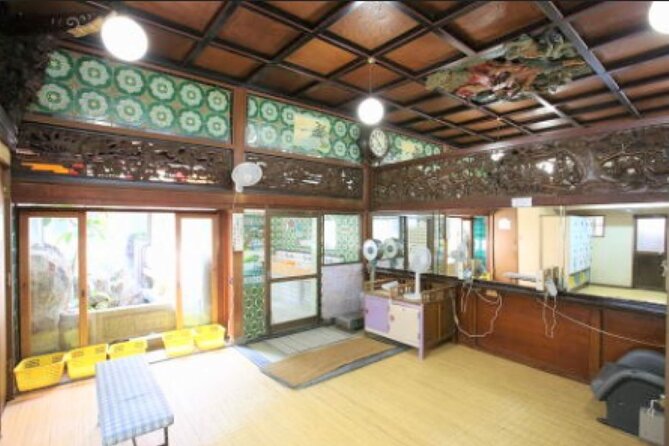
I would recommend this to a first-time visitor who wants a local custom explained clearly before trying it. Solo visitors are especially well suited because the guide gives you structure and reassurance without requiring you to figure out the bathhouse alone.
It also works well for anyone interested in wellness, mindfulness, or daily Japanese traditions. The experience is less about sightseeing and more about learning a behavior that local people use to rest and care for themselves.
You may also like it if you have already visited many shrines and temples and want a different side of Kyoto. The bathhouse offers a useful counterpoint to formal landmarks. Here, the focus is on an ordinary activity with social rules and local meaning.
I would think twice if you want a private spa treatment, a mixed-gender activity, or a long English-language lecture. The guide is enthusiastic and supportive, but the English may be limited. You should be comfortable with a practical explanation and with nude, gender-separated bathing.
Health rules and physical comfort
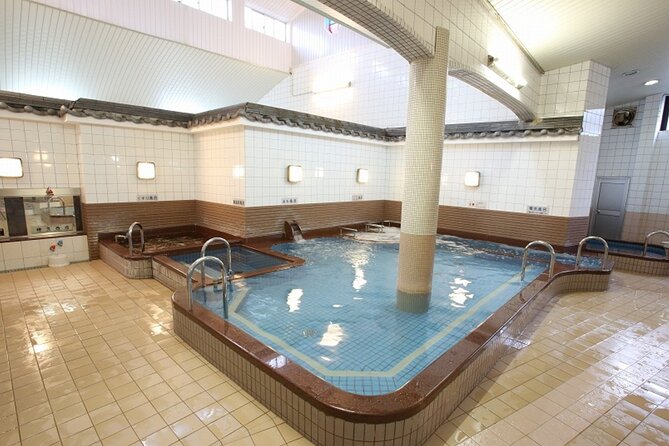
You should not join if you feel unwell on the day, have a fever, or have consumed alcohol. The experience also excludes people with certain contraindications for hot springs, including severe heart or lung disease, recent gastrointestinal bleeding, advanced malignant tumors, or severe anemia.
If your doctor has told you to avoid hot springs, you need to follow that advice. This is not a situation where you should push through discomfort for the sake of a cultural experience.
Even without a listed medical condition, pay attention to how you feel. Hot water can be demanding, and the point is relaxation, not endurance. The guide can explain the bathing method, but you remain responsible for deciding if the heat is right for you.
Timing, meeting point, and cancellation
The stated meeting point is Funaoka Onsen, at 82-1 Murasakino Minamifunaokacho, Kita Ward, Kyoto, 603-8225. The experience ends back at the meeting point. The program also includes the short visit to Sarasa Nishijin, so check the exact meeting instructions carefully when you book.
Funaoka Onsen is near public transportation, which makes the activity practical to reach. A mobile ticket is included, and confirmation is provided at the time of booking.
You can cancel for a full refund up to 24 hours before the start time. Cancellations or changes made less than 24 hours ahead are not accepted for a refund. The cutoff uses Kyoto local time, so keep that in mind if you are booking from another time zone.
Why the guide matters here
A bathhouse is easy to enter but not always easy to understand. Atsuki’s role is to remove the social guesswork. The strongest part of the experience is not simply access to Funaoka Onsen. It is the explanation of how to use a bath respectfully and comfortably.
That guidance can change the experience from a tense checklist into a genuine pause in your day. Once you know the basic sequence, you can stop monitoring yourself and pay attention to the warm water, the quiet, and the feeling of doing something ordinary in a new culture.
Atsuki also gives you knowledge you can use elsewhere. The bathing steps and etiquette apply to other public baths and hot springs, so the lesson has lasting value if you plan to visit more than one bath during your time in Japan.
Should you book the Funaoka Onsen experience?
Book it if you want a small, guided introduction to Japanese bathing and you are comfortable with nude, gender-separated facilities. The former bathhouse cafe, Funaoka Onsen’s local setting, and Atsuki’s practical instruction give the experience a clear purpose.
Skip it if you need a private soak, mixed-gender bathing, or fully fluent English instruction. You should also skip it if hot springs are medically unsafe for you or if you plan to drink beforehand.
For the right person, $45.72 is a sensible price for a cultural experience that teaches you a skill you can use again. It is a good fit for a solo visitor, a curious first-timer, or anyone ready to trade another landmark visit for a quieter look at everyday Kyoto.
FAQ
How long does the bathing culture experience last?
The experience lasts approximately 1 hour and 30 minutes. About 15 minutes takes place at Sarasa Nishijin, followed by roughly one hour at Funaoka Onsen.
Where does the experience meet?
The stated meeting point is Funaoka Onsen at 82-1 Murasakino Minamifunaokacho, Kita Ward, Kyoto, 603-8225, Japan. The activity ends back at the meeting point.
What happens at Sarasa Nishijin?
You visit a cafe renovated from a former public bathhouse. While having a drink, you learn about Japanese public bath history and proper bathing methods, and you receive a guide to take home.
Is Funaoka Onsen a real public bathhouse?
Yes. Funaoka Onsen is a public bathhouse used by local residents and known for its preserved character and long connection to Kyoto.
Do I have to bathe nude?
Yes. The bathing portion requires nude bathing, and the bathing areas are separated by gender.
Can couples bathe together?
No. The facilities are separated by gender, so couples will be apart during the bathing portion.
Who leads the experience?
The guide is a local Japanese guide named Atsuki. Atsuki is an independent guide and is not an employee of Funaoka Onsen. English ability is limited, so explanations may be simple.
Can I cancel for a refund?
You can receive a full refund if you cancel at least 24 hours before the experience start time. Cancellations or changes made less than 24 hours in advance are not accepted for a refund.
New places to soak around Japan
- Private Car Day Trip to the Kobe Mountains, Gardens and Hot Springs from Osaka★ 4.5 · 16 reviews
- Solaniwa Onsen: Osaka Bay Tower★ 5.0 · 4 reviews
- Kobe Night View Mt Rokko Kitano Ijinkan Arima Onsen Day Trip★ 5.0 · 5 reviews
- Osaka: Nara, Todaiji, Uji Matcha, and Hot Spring Tour★ 4.0 · 7 reviews
- Deluxe Private Tour: Hita, AOT Statues and Onsen from Fukuoka★ 5.0 · 4 reviews
- Hot Spring Capital of Yufuin Rickshaw Tour★ 5.0 · 32 reviews
- Osaka River Rapids Hike and Natural Hot Spring tour★ 5.0 · 2 reviews
- Personalized Private Guided Tour from Myoko Kogen★ 5.0 · 2 reviews
Japanese Onsen Tours: more water worth the trip.
Bangkok: All-Day Pass to Yunomori Sathorn Onsen Bath and Spa
Read our review →
From Fukuoka: Mount Aso, Kurokawa Onsen, and Shrine Tour
Read our review →
Snow Monkey & Shibu Onsen Afternoon Tour (Depart: Iiyama & Nozwa)
Read our review →
Bangkok: Yunomori Sukhumvit Onsen Hot Springs Spa Pass
Read our review →Lists this soak appears on